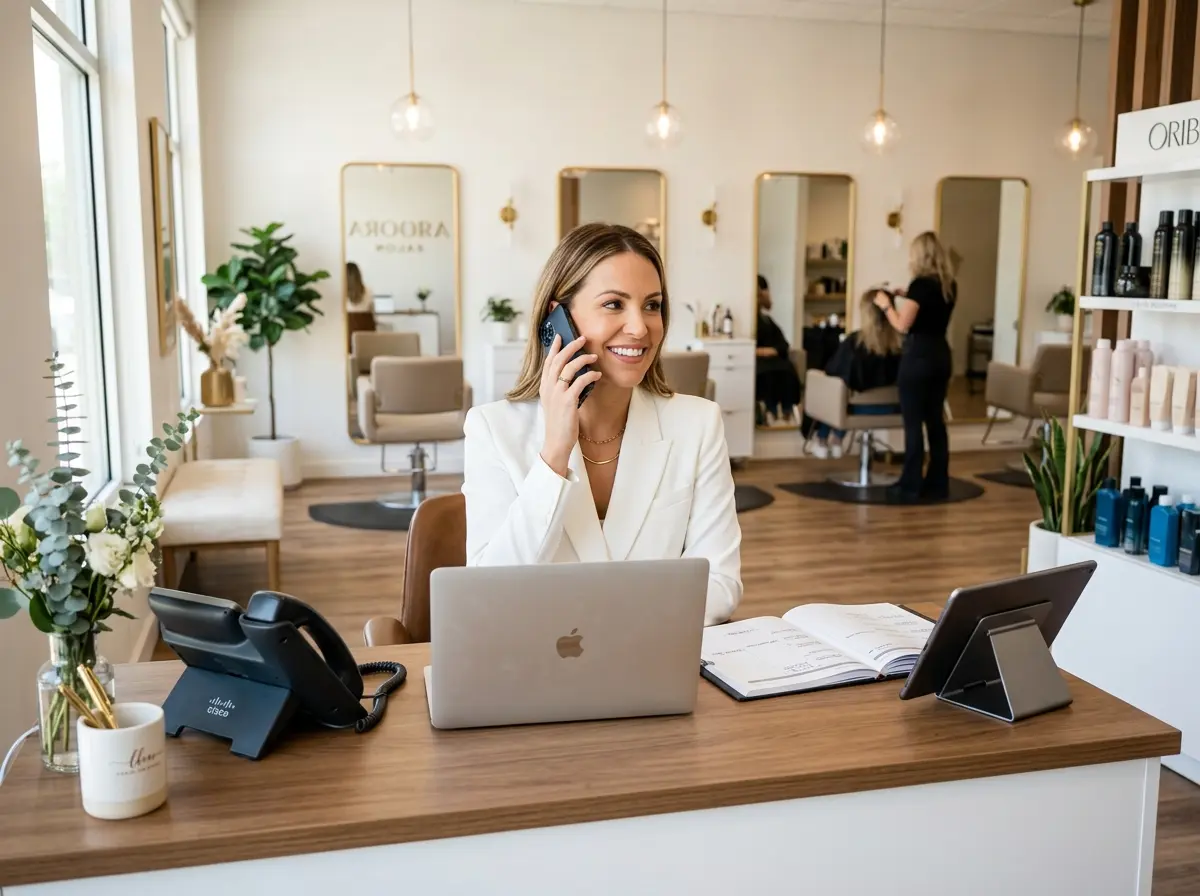
Introduction: The Phone Chaos That's Quietly Costing You Clients
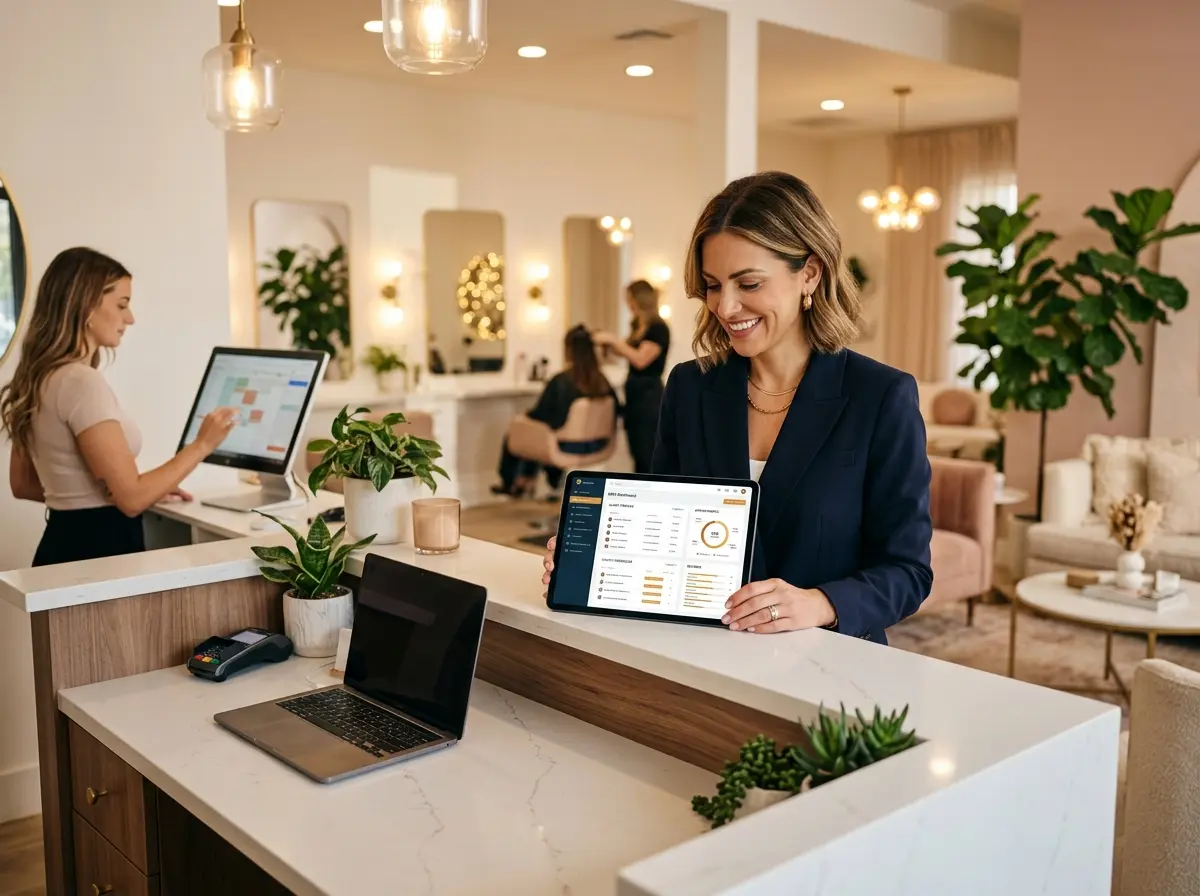
Picture this: It's a busy Saturday morning at your salon. Every chair is full, the blow dryers are roaring, and your receptionist is trying to check in a walk-in client while simultaneously fielding three phone calls — one from a vendor, one from a client asking about your hours, and one from someone who really needs to book a balayage appointment before her sister's wedding. Something is going to fall through the cracks. Spoiler: it's probably the booking.
If your salon is running all of its phone traffic through a single main line — vendor calls, booking requests, client questions, supply deliveries, the occasional wrong number — you already know the chaos this creates. What you might not have fully quantified yet is how much it's actually costing you. According to industry data, missed calls translate directly to missed revenue, and salons that don't respond to booking inquiries within a few minutes risk losing that client to a competitor who will.
A dedicated booking line isn't just a nice organizational touch. It's a strategic decision that separates the salons that grow from the ones that stay stuck. Let's talk about why — and how to set it up properly.
The Real Cost of a Cluttered Main Line
You're Mixing Business Calls With Booking Calls — and Both Are Suffering
Your main business number does a lot of heavy lifting. It handles supplier inquiries, callbacks from your accountant, calls from job applicants, and the occasional person who found your number on a four-year-old Yelp listing and is asking if you do nail extensions (you don't). When revenue-generating booking calls are competing with all of that noise, they inevitably get deprioritized — not because your staff doesn't care, but because there's simply no system to distinguish them in real time.
The result? Booking calls get put on hold too long. They get returned hours later. They go to voicemail and never get listened to until Tuesday. Each of these outcomes represents a client who booked somewhere else — probably within the next ten minutes of not hearing back from you.
Your Staff Pays the Price Too
There's also a very real human cost here. When your stylists or receptionist are constantly interrupted by a mixed bag of calls, their focus and service quality suffer. A stylist pulled away to answer the phone mid-consultation isn't giving that chair client the attention they paid for. A receptionist managing too many call types at once is more likely to make errors — double bookings, missed details, incorrect appointment times. These aren't personal failures; they're system failures. And a dedicated booking line is a system fix.
It's Harder to Track What You Can't Separate
One underrated benefit of separating your booking line is the data clarity it creates. When every call type flows through one number, it's nearly impossible to measure how many booking calls you're actually receiving, what your answer rate is, or how many opportunities you're losing. A dedicated line gives you a clean lens through which to evaluate the performance of one of your most important revenue channels.
How a Dedicated Booking Line Actually Works in Practice
Setting It Up Is Simpler Than You Think
Good news: you don't need a new phone system, a second receptionist, or a complicated IT setup to run a dedicated booking line. Most VoIP providers allow you to add a second number to your existing plan for a few dollars a month. You then route that number to a dedicated device, a specific staff member during business hours, or — increasingly — an AI phone receptionist that handles booking calls around the clock without breaks, burnout, or bad moods.
The key is to make this number the only number that appears on your booking-related touchpoints: your website's "Book Now" page, your Instagram bio, your Google Business Profile, and any promotional materials tied to appointments. Your main number stays for everything else. Clean separation, clear routing, better outcomes.
Where Stella Comes In
This is exactly where Stella becomes genuinely useful for salon owners. Stella is an AI robot employee and phone receptionist that can answer your dedicated booking line 24/7 — handling intake questions, collecting client information through conversational intake forms, promoting current specials, and forwarding calls to human staff when the situation calls for it. She's also built with a CRM that automatically captures and organizes client details from every interaction, so no booking inquiry disappears into the void.
And while Stella's phone capabilities are the obvious fit here, salons with a physical location can also deploy her as an in-store kiosk — greeting walk-ins, answering product questions, and keeping clients engaged while staff are occupied. At $99/month with no upfront hardware costs, it's a practical upgrade that pays for itself quickly.
Making Your Dedicated Booking Line Work Harder for You
Train the Line, Not Just the Staff
A dedicated booking line is only as effective as the experience it delivers. Whether a human or an AI is answering, the booking line should have a consistent, professional greeting that immediately signals to the caller they've reached the right place. Something as simple as "Thank you for calling [Salon Name] bookings — how can I help you today?" sets the right tone instantly and reduces caller anxiety about whether they've dialed the right number.
Beyond the greeting, think about what information your booking line needs to collect consistently: preferred service, preferred stylist, date and time preferences, contact information, and any relevant intake details (color history, allergies, etc.). When that process is standardized — whether through a trained receptionist or an AI intake flow — your booking quality improves and your no-show rate tends to drop.
Promote It Everywhere That Matters
A dedicated booking number only works if clients actually use it. Audit every client-facing touchpoint where your phone number appears and update them accordingly. Your Google Business Profile, your website contact page, your email signature, your Instagram and Facebook bios, appointment reminder texts, and any print materials should all reflect the dedicated booking line if that's where you want booking calls to go.
It's also worth training your existing clients during their next visit. A simple "Hey, if you ever need to book, here's the direct number — you'll get through faster" goes a long way. Clients appreciate efficiency, and making it easier for them to book is always good for retention.
Use the Data You're Now Collecting
Once your booking line is isolated, you have a clean channel to measure. Track call volume by day and time to identify your peak booking windows. Monitor missed call rates to determine whether staffing or automation needs adjustment. Review how many calls convert to actual appointments versus how many drop off. These insights allow you to optimize your booking operation the same way you'd optimize any other part of your business — with real numbers instead of gut feelings.
Quick Reminder About Stella
Stella is an AI robot employee and phone receptionist designed for businesses exactly like yours — including salons that need a professional, always-available presence without adding headcount. She answers calls, collects client information, promotes your specials, and manages a built-in CRM, all for $99/month. Whether she's staffing your dedicated booking line after hours or greeting clients at your front kiosk, she shows up every single day without fail.
Conclusion: One Simple Change, Measurable Results
The idea of a dedicated booking line might seem like a small operational detail, but small details compound. A cleaner call experience means fewer missed bookings. Fewer missed bookings means more appointments on the books. More appointments means more revenue — without adding a single new marketing dollar.
Here's how to get started this week:
- Get a second number. Contact your VoIP provider or look into services like Google Voice, Grasshopper, or OpenPhone. Many offer additional lines for under $10/month.
- Define your routing rules. Decide who answers the booking line, when, and what happens when they can't — whether that's a voicemail, a forwarding rule, or an AI receptionist.
- Update your touchpoints. Swap in the new booking number everywhere clients might look when they want to schedule an appointment.
- Standardize your intake process. Decide what information needs to be collected on every booking call and make sure it happens consistently.
- Measure and adjust. Give it 30 days and review the data. You'll likely be surprised by what you find.
Growing salons don't happen by accident. They happen because their owners make deliberate decisions about the client experience — including what happens when someone picks up the phone to book an appointment. A dedicated booking line is one of those decisions. And unlike most things in the salon industry, it won't require a two-hour color correction to fix if you get it slightly wrong the first time.