Why Your Yoga Studio Is Missing Out on One of Its Biggest Growth Opportunities
You've spent years perfecting your adult yoga offerings — the flow classes, the restorative sessions, the occasional goat yoga experiment that was either a brilliant idea or a complete disaster depending on who you ask. But there's a room full of potential members you might be overlooking entirely: the tiny humans waiting in the car while their parents roll out their mats.
Kids' yoga is one of the fastest-growing segments in the wellness industry, and for good reason. Parents are increasingly looking for screen-free, movement-based activities that help their children manage stress, build focus, and develop body awareness. According to the Yoga Alliance's Yoga in America Study, over 8 million children practice yoga in the United States — and that number keeps climbing. More importantly for your bottom line, when kids have a reason to be at your studio, the whole family tends to follow.
Launching a kids' yoga program isn't just about teaching downward dog to a six-year-old (though that mental image is admittedly adorable). It's about strategically expanding your community, increasing household revenue, and building loyalty that lasts for years. Let's walk through how to do it right.
Building a Program That Parents Actually Want to Sign Their Kids Up For
The hard truth about kids' programming is that you're really selling to two audiences simultaneously: the child who needs to actually enjoy themselves, and the parent who needs to trust you with their most prized possession. Getting both right requires thoughtful planning from the start.
Define Your Age Groups and Class Structure
One of the most common mistakes yoga studios make when launching kids' programs is treating "kids" as a monolithic group. A three-year-old and a twelve-year-old are not the same kind of yogi — one wants to pretend to be a dinosaur doing warrior pose, and the other is starting to care about what their friends think of them. Structuring your classes by age group isn't optional; it's essential.
A practical starting framework might look like this: Little Yogis (ages 3–5) with 30-minute classes focused on animal poses, storytelling, and basic breathing; Kids' Yoga (ages 6–9) with 45-minute classes incorporating games, partner poses, and mindfulness activities; and Tween Yoga (ages 10–13) with 45- to 60-minute classes that introduce more traditional practice elements with age-appropriate modifications. Each tier can be priced and packaged separately, which also gives families room to upgrade as their children grow.
Train the Right Instructors
Your best adult yoga instructor may not be your best kids' yoga instructor — and that's okay. Teaching children requires a completely different energy, pacing, and classroom management skill set. Look for instructors who hold or are willing to pursue a Registered Children's Yoga Teacher (RCYT) credential through Yoga Alliance, which requires a minimum of 95 hours of specialized training. Beyond credentials, prioritize teachers who are naturally playful, patient, and calm under the delightful chaos that is a room full of children doing tree pose.
Don't overlook background check requirements. Every instructor, substitute, and staff member who works with minors should be cleared through a reputable screening service. This is non-negotiable from both a legal and trust-building standpoint, and you should communicate your screening process clearly to parents.
Create a Safe, Engaging Physical Space
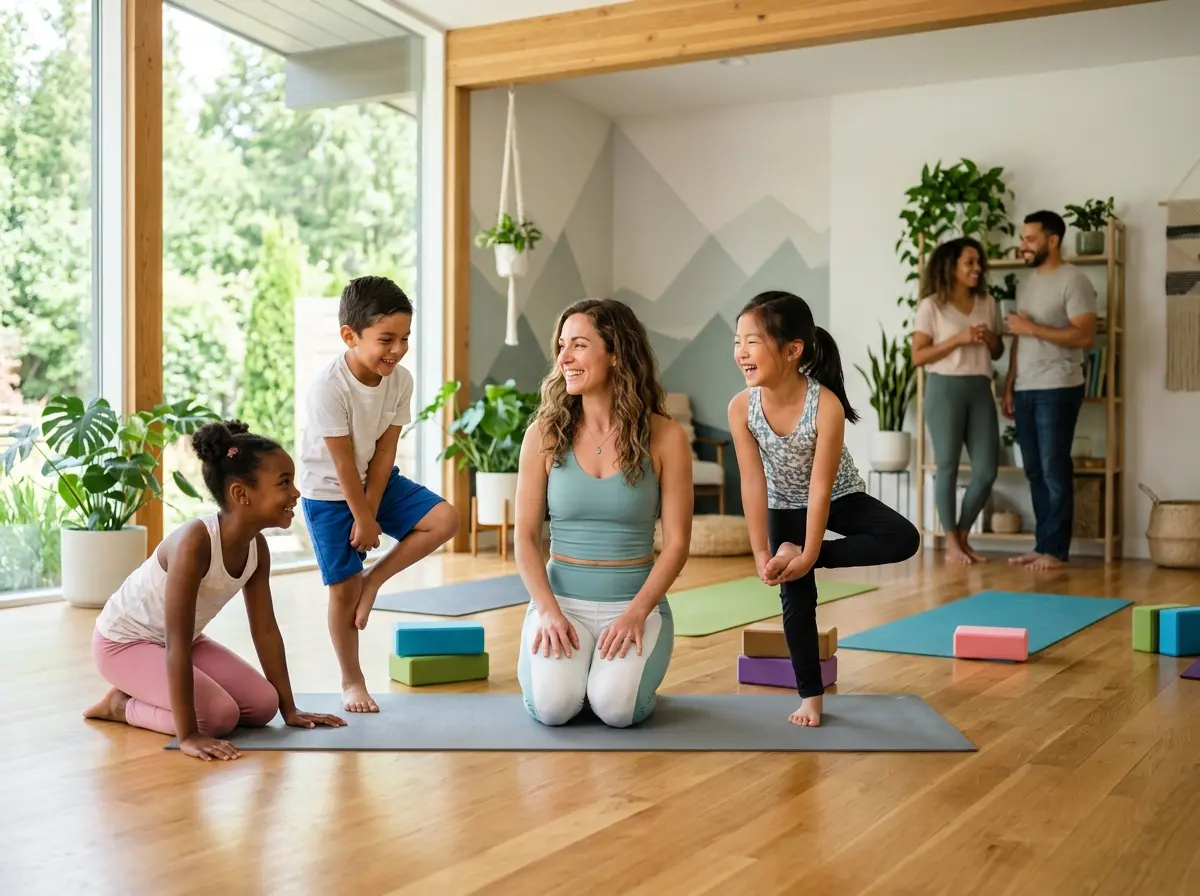
Kids need a space that feels like it was designed for them, not just a regular class where the mats are a little smaller. Consider dedicating a specific time slot where the studio is visually transformed — colorful props, fun wall decals, kid-sized blocks and bolsters. If budget allows, even a small designated corner with cubbies for shoes and hooks for little backpacks goes a long way in making families feel welcome and expected.
Safety logistics matter just as much as aesthetics. Establish clear drop-off and pick-up protocols, maintain appropriate child-to-instructor ratios (generally recommended at no more than 8–10 children per instructor for younger age groups), and have a written policy for late pick-ups, allergies, and behavioral concerns ready before your first class.
Streamlining Enrollment and Communication with the Right Tools
Here's where a lot of well-intentioned studio owners start to feel the operational weight of expansion. Adding a kids' program means more inquiries, more scheduling questions, more "what does my kid need to bring?" phone calls, and more parents who will absolutely call after hours to ask something they could have found on your website — but didn't.
Let Technology Carry the Load
Stella, the AI robot employee and phone receptionist, is genuinely built for this kind of situation. Inside your studio, she can stand at the front and proactively greet families as they walk in, answer questions about your kids' programming, explain age group breakdowns, and even walk parents through enrollment details — all without pulling your front desk staff away from what they're doing. On the phone side, she answers calls 24/7, meaning the parent who finally remembered to call about signing up their kid at 9:47 PM on a Tuesday actually gets real, accurate information instead of a voicemail.
Stella's built-in CRM and conversational intake forms make it easy to collect parent and child information during enrollment calls or at the kiosk, so your team has everything they need organized and ready before the first class. No more sticky notes. No more "I thought someone else followed up with them." Just clean, tagged contact records with AI-generated summaries and notes your whole team can actually use.
Marketing Your Kids' Program to Bring Whole Families In
A great program that nobody knows about is just a well-organized secret. Marketing a kids' yoga program requires leaning into the specific motivations of your target audience — parents who are stressed, overscheduled, and actively searching for enriching, calming activities for their children.
Lead with Parent Pain Points, Not Yoga Jargon
Your marketing copy should speak directly to what parents are experiencing: anxious kids who have trouble sleeping, children who struggle to focus at school, families looking for a shared activity that doesn't involve a screen or a referee. Position your kids' program as a solution, not just an offering. Phrases like "Give your child tools to calm their mind — and enjoy a class of your own at the same time" do more work than a description of your curriculum. Speaking the parent's language builds trust before they ever walk through your door.
Social media, particularly Instagram and Facebook, is highly effective for this audience. Short video clips of a kids' class in session (with appropriate consent documentation from all parents) tend to perform extremely well because they're inherently joyful and shareable. Partner with local parent groups, mommy bloggers, and elementary school PTAs to extend your reach into the communities where your future members already gather.
Build Family Packages That Incentivize Dual Enrollment
This is your secret weapon for turning a kids' program into a whole-family revenue driver. Design your pricing structure with bundles in mind: a Family Membership that covers one adult unlimited class access plus one child enrolled in a weekly kids' class at a meaningful discount versus buying separately. You could also offer a "Yoga Together" add-on for periodic parent-child classes that give families a shared experience while also exposing adult members to your broader schedule.
Strategically schedule kids' classes back-to-back with popular adult classes so that parents can drop off their child, roll out their own mat in the next room, and pick up their kid afterward. This isn't just convenient — it's the kind of thoughtful scheduling that converts a curious family into two paying members. Studios that implement this model consistently report higher adult membership retention simply because the logistical convenience becomes part of their weekly routine.
Leverage Word-of-Mouth Through Community Events
Consider hosting one free or donation-based kids' yoga event per quarter — a themed class around a holiday, a "bring a friend" session, or a family wellness morning with light refreshments. These events lower the barrier to entry for families who are curious but uncommitted, and they generate exactly the kind of organic word-of-mouth that no paid ad can fully replicate. One happy parent talking to three friends at school pickup is worth more than a boosted post to cold audiences.
Quick Reminder About Stella
Stella is an AI robot employee and phone receptionist that works both as an in-store kiosk and a 24/7 phone answering service, starting at just $99/month with no upfront hardware costs. She greets customers, promotes your programs, collects intake information, manages contacts through her built-in CRM, and handles calls so your human team can focus on what they do best. She doesn't take breaks, doesn't call in sick, and never forgets to mention your current promotions.
Conclusion: Your Smallest Members Could Drive Your Biggest Growth
Launching a kids' yoga program is one of the most impactful strategic moves a yoga studio can make — not because children are particularly high-revenue members on their own, but because they reliably bring adults with wallets and loyalty along with them. When families build your studio into their weekly routine, they stay longer, refer more often, and become the kind of community members who show up to your anniversary events and leave glowing reviews unprompted.
Here's your actionable starting point:
- Define your age groups and design age-appropriate curriculum for each one before you announce anything publicly.
- Recruit and credential the right instructor — someone who genuinely lights up around kids and holds appropriate certifications.
- Set up your operations first — intake forms, safety policies, drop-off protocols, and your CRM so enrollment doesn't become chaos.
- Schedule strategically so kids' classes align with popular adult classes, enabling family dual-enrollment.
- Launch with an event — a free community class that gets families in the door and talking about you.
The families in your community are already looking for exactly what you're about to offer. Build it thoughtfully, market it clearly, and let the right tools handle the operational load so you can stay focused on what you opened a yoga studio to do in the first place: help people breathe a little easier. Even the tiny ones.