Ah Yes, the Punch Card — A True Classic
You've seen them. You've probably handed them out by the thousands. Little paper cards with ten little circles, and if a customer gets all ten stamped, they earn a free coffee. Or a discount. Or maybe just the warm feeling of accomplishment. Punch cards have been the backbone of retail loyalty programs since roughly the dawn of time — or at least since someone realized that giving customers a reason to come back was better than just hoping they would.
But here's the thing: your customers have changed. They carry smartphones with apps that track their steps, their sleep, and their emotional state in real time. They get personalized recommendations from Netflix, Spotify, and Amazon. They expect experiences, not just transactions. And yet, many retail stores are still handing out the same laminated card that their parents used to collect at the dry cleaner in 1987.
Loyalty programs work — there's no question about that. Research from Bond Brand Loyalty consistently shows that loyalty program members spend 12–18% more per year than non-members. The problem isn't loyalty itself. The problem is that most programs are boring, forgettable, and do absolutely nothing to make a customer feel special. So let's fix that.
Rethinking What Loyalty Actually Means
Before we dive into tactics, it's worth stepping back and asking: what are we actually trying to accomplish with a loyalty program? The obvious answer is repeat purchases. But the real answer — the one that separates thriving businesses from average ones — is emotional connection. When a customer feels genuinely valued by your business, they don't just come back. They bring their friends. They leave five-star reviews. They defend you on social media when someone complains. That's the loyalty worth building.
Move Beyond Discounts and Think in Experiences
The easiest mistake in loyalty program design is defaulting to discounts. Yes, everyone loves saving money, but discounts train customers to wait for the deal rather than buying at full price. Worse, they can quietly eat your margins alive. The smarter move is to reward loyalty with experiences that money can't easily replicate elsewhere.
Think about early access to new products before they're officially released. Or an exclusive in-store event just for loyalty members — a styling session, a wine tasting, a product demo night. A boutique clothing store, for example, could host a "members-only preview evening" the night before a major new collection drops. No discount required — just access and a glass of champagne. People remember how you made them feel far longer than they remember the 10% off they got in January.
Gamify the Journey Without Being Gimmicky
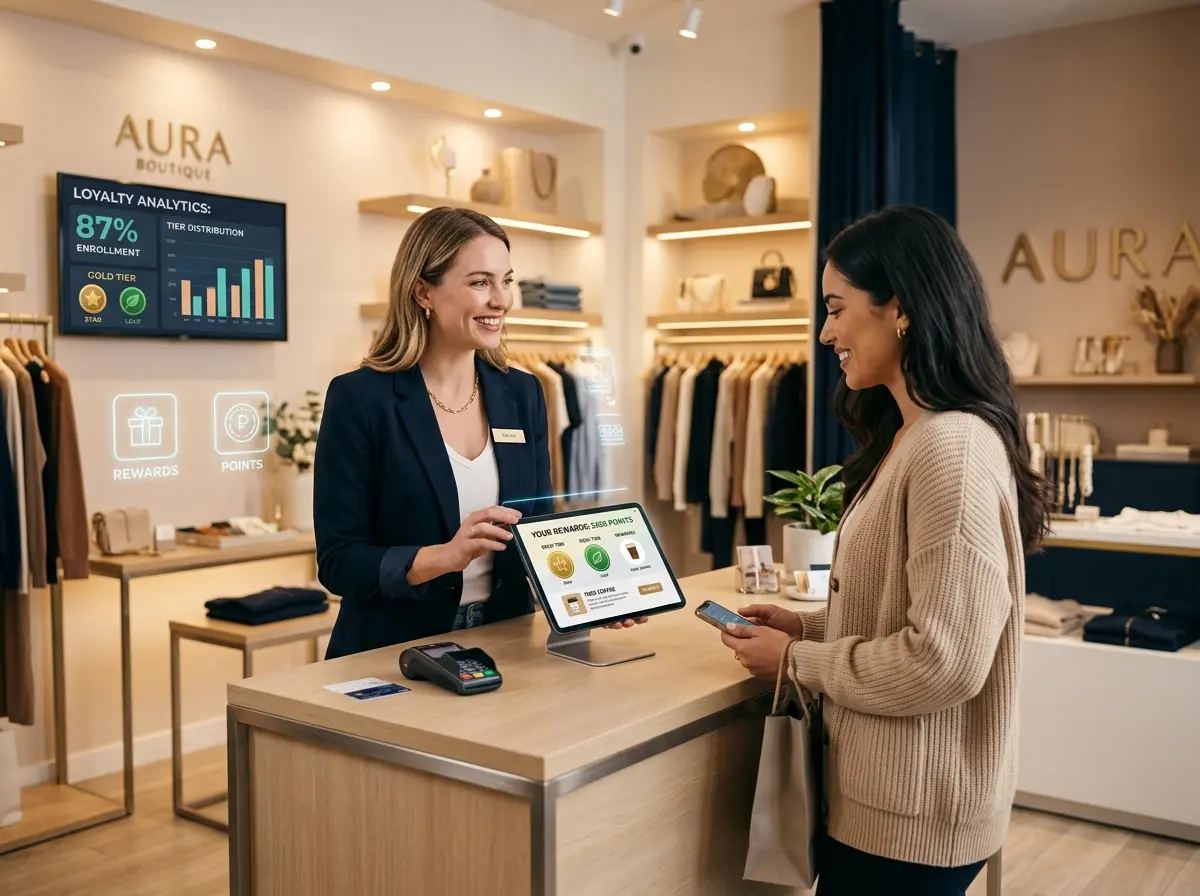
Gamification — when done well — taps into something deeply human: the desire to progress, achieve, and win. Tiered loyalty programs (think Bronze, Silver, Gold, or something more on-brand for your store) give customers a visible ladder to climb. Each tier unlocks better perks, and the psychology of being one level away from something better is a surprisingly powerful motivator.
You can also introduce challenges and bonus point events. "Earn double points this weekend only." "Complete three purchases in June and unlock a mystery reward." These create urgency and excitement without permanently slashing your prices. A specialty pet store, for instance, could run a "Pampered Pet Challenge" — customers earn bonus points for trying new product categories, which naturally drives them to explore parts of the store they'd normally walk past.
Make It Personal — Actually Personal
Personalization is the word every marketer loves to throw around, but few businesses actually execute it well in a retail setting. At its most basic, this means knowing your customer's name when they walk in. At its best, it means knowing that Mrs. Johnson always buys the lavender candles, her birthday is in March, and she mentioned last time that she was redecorating her living room. That kind of detail transforms a transaction into a relationship.
The good news is that you don't need a team of data scientists to get there. A solid CRM, good intake habits, and staff who are trained to actually use customer information will take you most of the way. The businesses that win at loyalty aren't necessarily the biggest — they're the ones paying attention.
Let Technology Do Some of the Heavy Lifting
Running a loyalty program sounds great until you realize it requires someone to actually manage it. Collecting customer information, keeping track of who's at what tier, following up with personalized outreach — it adds up fast, especially when your staff is already juggling everything else on the floor.
How Stella Can Help Your Retail Store
This is where Stella, the AI robot employee and phone receptionist, becomes genuinely useful for retail businesses. Standing right in your store, Stella greets every customer who walks by, answers their questions about products and promotions, and can collect customer information through conversational intake forms — meaning your loyalty program sign-ups happen naturally as part of the shopping experience rather than as an awkward clipboard moment at checkout. Every interaction is logged and feeds into her built-in CRM, complete with custom fields, tags, and AI-generated customer profiles, so you always know who your customers are and what they care about.
Stella also handles your phones 24/7, which means a customer calling after hours to ask about your loyalty program perks or current promotions gets a real, informed answer — not voicemail. For retail stores trying to build genuine customer relationships, having a consistent, knowledgeable presence both in-store and on the phone removes a lot of friction from the process.
Turning Loyal Customers Into Brand Advocates
A loyalty program that only rewards purchases is leaving enormous value on the table. Your most loyal customers are also your most powerful marketing channel — if you give them a reason to talk about you.
Build Referral Mechanics Into Your Program
Referral rewards are one of the highest-ROI tactics available to retail stores, and they're surprisingly underused. When a loyal customer refers a friend who makes a purchase, both parties should get something meaningful. The key word is meaningful — a 5% discount on their next purchase is forgettable. A significant points bonus, a free product, or an upgrade to the next loyalty tier is the kind of reward that gets people actively recruiting their friends.
According to Nielsen, 92% of consumers trust recommendations from people they know above all other forms of advertising. That's a statistic worth reading twice. Your loyalty program can become your most effective marketing channel if it's designed to spread.
Reward Engagement, Not Just Purchases
Consider expanding what earns points beyond just buying things. Leaving a Google review, following your social media accounts, sharing a photo in-store, attending an event, or even just completing their customer profile — all of these actions have real business value, and rewarding them encourages behavior that helps you grow. A home goods store might award points for customers who submit a photo of their space decorated with products they purchased. Now you have authentic user-generated content, a more engaged customer, and a story you can share — all from a single loyalty mechanic.
Celebrate the Relationship, Not Just the Sale
Birthdays are the classic example here, and they work for good reason — getting a personalized offer or gift on your birthday from a business you love feels genuinely thoughtful. But don't stop there. Anniversary rewards (the date a customer first joined your program), milestone rewards (celebrating their 50th purchase or their one-year anniversary as a Gold member), and "we miss you" campaigns for lapsed customers all reinforce the message that your business sees them as a person, not just a transaction. These touchpoints don't need to be expensive. They need to be timely and sincere.
A Quick Reminder About Stella
Stella is an AI robot employee and phone receptionist built for businesses like yours — she stands in your store engaging customers, answers your phones around the clock, manages customer data through a built-in CRM, and keeps your operation running smoothly without breaks, bad days, or turnover. At $99/month with no upfront hardware costs, she's one of the more practical investments a retail store can make in delivering a consistently excellent customer experience.
Time to Retire the Punch Card (Or At Least Give It Some Backup)
The punch card isn't evil. If it's working for you, keep it — simplicity has value. But if your loyalty program feels stale, if customers aren't signing up, or if you're not seeing repeat visits the way you'd like, it's time for an honest evaluation. The modern retail customer wants to feel known, appreciated, and part of something. A well-designed loyalty program delivers all three.
Here's where to start:
- Audit what you have. Is your current program actually being used? What's your sign-up rate, redemption rate, and average visit frequency for members vs. non-members?
- Pick one upgrade to implement this quarter. Don't overhaul everything at once. Add a referral mechanic, launch a tiered structure, or start collecting better customer data through intake forms.
- Invest in the right tools. A CRM, a way to collect customer information seamlessly, and a reliable presence in your store and on your phones will do more for customer loyalty than any marketing campaign.
- Tell your customers about it. A loyalty program nobody knows about is just an expense. Promote it in-store, on social, and on the phone — consistently.
Your best customers are already loyal. The goal of a great loyalty program is to make them feel like it was the obvious choice all along.