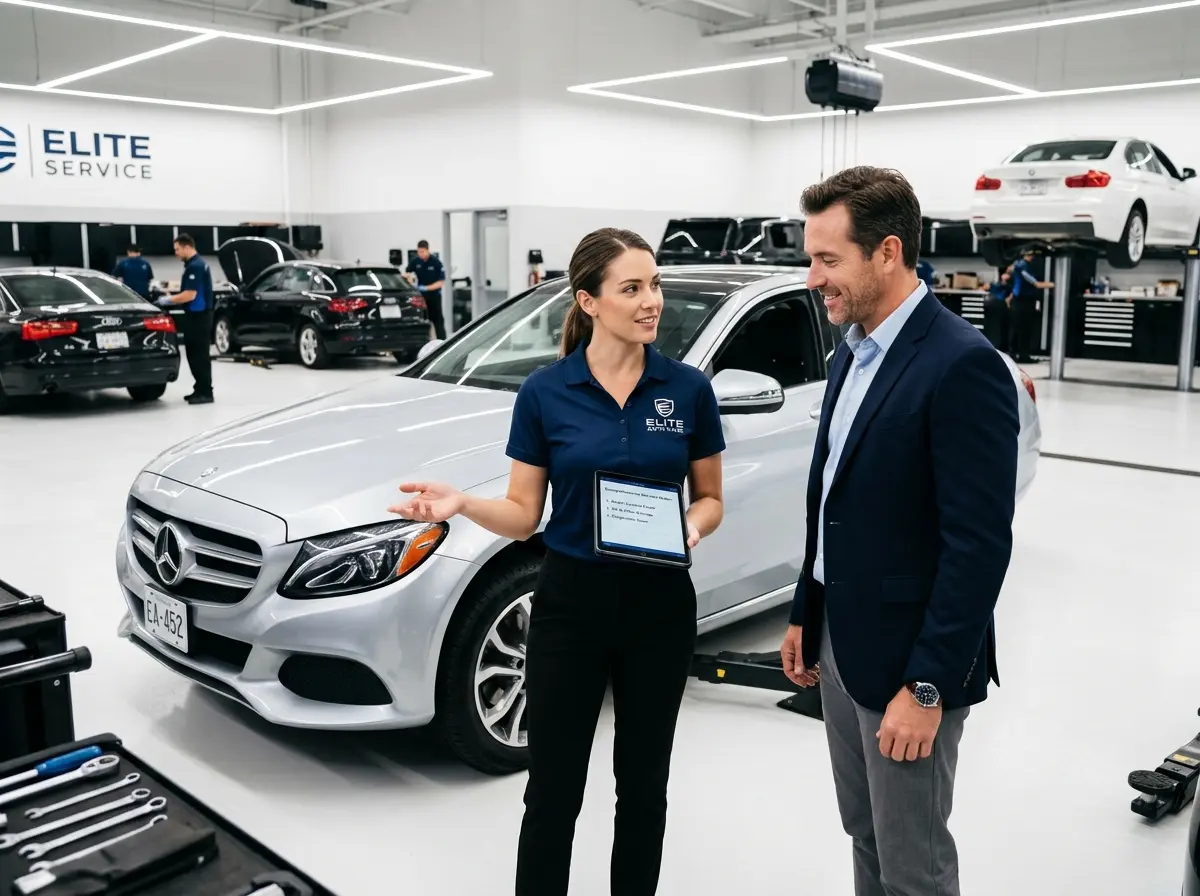
Introduction: The Art of Selling More Without Feeling Like a Used Car Salesman
Let's be honest — when most people hear the phrase "increasing ticket size," they picture a slick salesperson in a shiny polo shirt trying to upsell an air freshener to someone who just came in for an oil change. It's a stereotype that has done the auto service industry no favors. The truth is, ethical upselling isn't about manipulation — it's about communication. And when done right, your customers will actually thank you for it.
The average auto repair shop leaves significant revenue on the table every single day — not because they're bad at fixing cars, but because they're inconsistent at communicating value. Studies suggest that a well-trained service advisor can increase average repair order value by 15–30% simply by improving how they present recommendations. That's not snake oil; that's just better conversation.
So if you're a shop owner tired of watching cars roll out the door with deferred services that the customer didn't even know they needed, this post is for you. We're going to walk through practical, ethical strategies your service advisors can use to increase ticket size on every single visit — and yes, we'll even talk about how a little technology can take some of the weight off your team's shoulders.
The Foundation: Building Trust Before Building Tickets
Transparency Is Your Most Profitable Tool
It sounds counterintuitive, but the fastest way to increase what customers spend is to stop trying to sell them things and start trying to help them understand things. Customers are remarkably willing to approve additional services when they genuinely understand why those services matter. The problem is that most service advisors default to technical jargon — "your serpentine belt is showing signs of glazing" — which means absolutely nothing to the average driver who thinks serpentine belts belong on a snake farm.
Train your advisors to translate technical findings into real-world consequences. Instead of listing a repair, explain what happens if it's deferred. "We noticed your brake fluid has absorbed a lot of moisture, which can lower your stopping effectiveness, especially in wet weather." Now the customer isn't buying a brake flush — they're buying peace of mind for their family. That's a completely different conversation, and it's an honest one.
The Multi-Point Inspection as a Revenue Engine
A thorough multi-point inspection (MPI) performed on every vehicle is one of the simplest systems you can implement to ethically and consistently surface additional service opportunities. The keyword here is consistently. An MPI only works as a revenue tool if it's completed on every vehicle, every time — not just when the shop is slow and the technician has extra time to wander around with a clipboard.
Consider presenting MPI results visually — many shop management systems offer red/yellow/green condition reports. When a customer can see that their coolant is deep red instead of bright green, you've just made your advisor's job significantly easier. You're no longer asking them to trust a stranger's word; you're showing them evidence. And evidence, as it turns out, is very persuasive.
Deferred Service Follow-Up: The Money You're Leaving in the Parking Lot
Every time a customer declines a recommended service, that's not a dead end — it's a future opportunity, provided you track it and follow up. Shops that implement a structured deferred service follow-up process report meaningful increases in return visits and approvals on previously declined work. A simple reminder call or text at 30, 60, or 90 days saying, "Hey, we noticed you deferred your transmission service last visit — want to get that taken care of?" is not pushy. It's professional. Most customers will appreciate that you remembered.
How Technology Can Quietly Do the Heavy Lifting
Let Your Digital Team Member Handle What Your Human Team Forgets
Here's the uncomfortable truth: your service advisors are human. They get busy, they forget to mention the tire rotation, they skip the follow-up call because they had six cars come in at once. That's not a character flaw — it's just reality. This is where a tool like Stella, the AI robot employee and phone receptionist, can quietly fill the gaps without adding to your payroll.
In the waiting area, Stella's in-store kiosk presence means customers sitting in your lobby can be proactively engaged with information about current specials, seasonal service reminders, and promotions — all without your advisors having to juggle the front counter and the phone simultaneously. Meanwhile, Stella answers incoming calls around the clock, ensures no customer inquiry goes unanswered, and can promote relevant services during every interaction. She never has a bad day, never forgets to mention the oil change special, and never puts a customer on hold for 12 minutes. For a shop trying to create consistent, professional customer touchpoints, that kind of reliability is genuinely hard to put a price on — though at $99/month, someone already did.
Advisor Training: The Human Element You Can't Automate Away
The Language of Service: What Your Advisors Say Matters
Role-playing is uncomfortable. Every service advisor on your team will groan when you announce it. Do it anyway. The difference between an advisor who consistently closes additional services and one who doesn't is almost never technical knowledge — it's language. Specifically, it's the difference between presenting a service as an option versus presenting it as a recommendation.
"Would you like us to rotate your tires?" gives the customer easy permission to say no. "We're recommending a tire rotation today — your front tires are showing uneven wear and rotation will extend their life significantly. Want us to include that?" is a professional recommendation with a reason attached. One is a question. The other is advice from an expert. Train your advisors to be experts out loud.
Incentive Structures That Reward Ethical Sales
If your advisors are paid purely on hours flagged or flat-rate work, they have no financial motivation to do thorough inspections or spend time educating customers. Consider implementing a bonus structure tied to approved additional services — but pair it carefully with customer satisfaction scores. This keeps your team motivated to sell more while ensuring they're doing it in a way that keeps customers happy and coming back. The last thing you want is advisors pushing unnecessary services to hit a bonus, which brings us right back to the used car salesman problem we were trying to avoid in the first place.
Consistency Is the Real Strategy
The most effective way to increase average ticket size across your shop isn't one dramatic tactic — it's a dozen small habits executed consistently on every vehicle, every visit. That means every car gets a full MPI. Every finding gets communicated clearly. Every declined service gets logged and followed up. Every customer interaction is treated as a long-term relationship, not a one-time transaction.
Shops that build these habits into their culture — not just their training manual — are the ones that see sustained revenue growth. A customer who trusts your shop will not only approve more services; they'll refer friends, leave reviews, and come back for years. The compounding value of a loyal customer makes that initial honest conversation worth every minute it takes.
A Quick Reminder About Stella
Stella is an AI robot employee and phone receptionist designed to support businesses like yours — handling customer greetings in-store, answering phone calls 24/7, promoting specials, and ensuring no customer interaction falls through the cracks. For auto shops specifically, she's a reliable front-of-house presence that keeps customers informed and engaged while your human team focuses on the work that actually requires them. At $99/month with no upfront hardware costs, she's worth a serious look.
Conclusion: Start Small, Stay Consistent, and Watch the Numbers Move
Increasing ticket size ethically isn't a gimmick — it's the result of building a shop culture centered on transparency, communication, and genuine customer care. Here are the actionable steps to take this week:
- Implement or formalize your multi-point inspection process and make sure it's completed on every vehicle, every visit — no exceptions.
- Audit how your advisors present recommendations. Are they asking, or are they advising? Run a role-play session and see what comes up.
- Set up a deferred service tracking system in your shop management software and create a follow-up schedule at 30, 60, and 90 days.
- Review your advisor incentive structure and ensure it rewards both additional service sales and customer satisfaction — not one at the expense of the other.
- Explore how technology can support consistency in your customer touchpoints — whether that's your shop management system, follow-up automation, or an AI tool like Stella handling your phones and in-store engagement.
Your customers are already in the building. They've already trusted you with their vehicles. The biggest opportunity in your shop isn't getting more cars through the door — it's having better conversations with the customers who are already there. Start those conversations with honesty, back them up with evidence, and train your team to be the experts your customers deserve. The revenue will follow.