The Elephant in the Operatory
You've invested in the best equipment. Your team is trained, certified, and genuinely talented. Your dentists catch problems early and recommend treatment plans that could genuinely change a patient's oral health trajectory. And then... the patient smiles politely, says "let me think about it," and you never hear from them again. Sound familiar?
Treatment plan acceptance is one of the most quietly devastating challenges in dental practice management. According to industry data, the average dental office sees treatment plan acceptance rates hovering somewhere between 50% and 70% — which means that up to half of the clinical work your team recommends never gets done. That's lost revenue for your practice, yes, but it's also unaddressed health issues for your patients. Nobody wins when a patient walks out the door with a cracked molar and a vague intention to "schedule something soon."
The good news? Presentation is a skill, not a personality trait. It can be taught, practiced, refined, and systematized. This post walks you through how to train your dental office staff to present treatment plans in a way that actually resonates — so patients say yes more often, feel good about it, and come back.
Building the Foundation: What Great Treatment Presentation Really Requires
It Starts with Trust, Not Tactics
Before your treatment coordinator ever pulls up a dollar figure on a screen, a patient needs to feel safe. This isn't soft, feel-good advice — it's the hard science of how humans make decisions. When patients feel rushed, confused, or talked at rather than talked with, they default to inaction. "Let me think about it" is almost never about the money. It's about uncertainty.
Train your staff to prioritize connection before content. That means actively listening during intake, reflecting back what the patient has shared ("You mentioned you've been avoiding chewing on the left side — that's actually really helpful context"), and acknowledging any anxiety before launching into clinical findings. A patient who feels heard is significantly more likely to engage with a treatment plan than one who feels like they just sat through a sales pitch.
Know the Difference Between Informing and Presenting
Here's a trap many well-meaning dental teams fall into: they confuse thoroughness with persuasion. Handing a patient a printed breakdown of six recommended procedures with procedure codes and insurance estimates is informing. It is not presenting. Presenting is storytelling. It answers the patient's unspoken question: "Why does this matter to me, in my life, right now?"
Teach your treatment coordinators to lead with patient-centered language. Instead of "You have two areas of decay that require composite restorations," try "We found two spots we'd like to address before they turn into something more serious — and catching them now actually keeps this pretty straightforward and affordable." Same clinical information. Completely different emotional response. This reframing isn't manipulation — it's communication done well.
Train for Objections Like Athletes Train for Game Day
Your staff will face objections. Every single day. The cost is too high. The timing isn't right. They want to check with their spouse. Insurance won't cover it. These aren't dead ends — they're invitations to problem-solve. But only if your team is prepared.
Run regular role-playing sessions where staff practice responding to the five most common objections your office hears. Script thoughtful, empathetic responses in advance. Make sure every team member knows your financing options inside and out — including CareCredit, in-house payment plans, and any promotional offers — so they can pivot confidently when cost is the concern. A staff member who stumbles over financing details is going to lose the patient's confidence at exactly the wrong moment.
Technology That Sets the Stage Before the Conversation Begins
First Impressions and Intake Are More Powerful Than You Think
The treatment presentation doesn't start when the treatment coordinator sits down with the patient. It starts the moment a potential patient interacts with your practice — whether that's a phone call, a visit to your website, or walking through your front door. When that first experience feels professional, warm, and organized, it primes the patient to trust your team before a single X-ray is taken.
This is where Stella, the AI robot employee and phone receptionist, can quietly do a lot of heavy lifting for dental offices. In the waiting room, Stella's kiosk presence greets patients, answers common questions about services and office policies, and creates a polished, tech-forward first impression that signals your practice takes professionalism seriously. On the phone side, Stella handles incoming calls 24/7, collects patient information through conversational intake forms, and ensures no new patient inquiry ever falls through the cracks — even after hours. Her built-in CRM captures and organizes that intake data so your treatment coordinator walks into the consultation already knowing the patient's concerns, history, and expectations. That kind of preparation is a quiet but significant advantage when it comes time to present treatment.
The Presentation Itself: Structure, Language, and Follow-Through
Use a Consistent Presentation Framework
Consistency is the backbone of a high-performing treatment coordinator. When every presenter follows the same general framework, you can identify what's working, train to specific gaps, and set measurable improvement goals. A reliable structure might look like this: begin with an empathy statement, summarize the clinical findings in plain language, explain the patient-centered "why" behind each recommendation, present the financial investment with confidence (not apology), offer solutions to barriers, and close with a clear next step.
That last piece — the clear next step — is where so many presentations fall apart. Ending with "So, what do you think?" leaves the patient in the driver's seat with no map. Instead, train your staff to assume the close: "Let's go ahead and get you scheduled. Do mornings or afternoons tend to work better for you?" A confident, assumptive close isn't pushy — it's leadership. Patients often want to be guided, especially when they're anxious about dental work.
Visual Aids Are Non-Negotiable
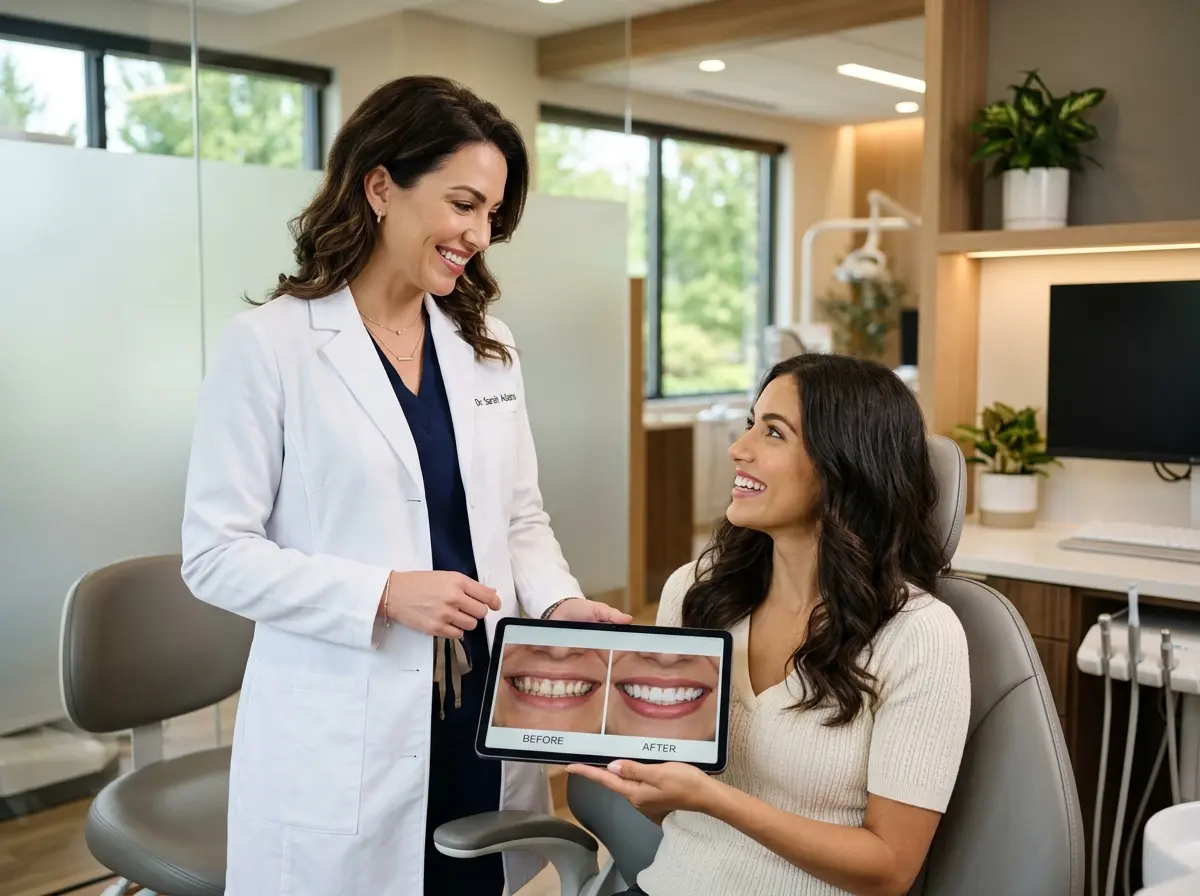
Patients are not dentists. Telling someone they have a "periapical lesion with early bone loss" and expecting them to feel motivated to schedule treatment is, generously speaking, optimistic. Show them. Use intraoral camera images, digital X-rays, and comparison photos to make the clinical reality visible and real. When a patient can actually see the crack in their tooth or the early gum recession, the abstract becomes concrete — and concrete problems inspire concrete action.
Consider using treatment presentation software that visually maps out each procedure, estimated timelines, and costs in a clean, digestible format. The visual experience should feel informative and empowering, not overwhelming. Practice presenting with these tools as a team so the technology feels natural rather than clunky during actual appointments.
Follow Up Like You Mean It
The presentation doesn't end when the patient leaves the office. Most patients who decline treatment initially aren't saying "never" — they're saying "not yet." A structured, respectful follow-up system can convert a surprising number of those soft declines into scheduled appointments.
Create a follow-up protocol for unaccepted treatment plans: a personal phone call within two to three days, a follow-up email at the two-week mark, and a reactivation outreach at three months. Make sure your team knows how to have a follow-up conversation that feels caring rather than pushy — "We just wanted to check in and see if you had any questions after your visit" goes over considerably better than "You still haven't scheduled your crown." Document everything in your patient management system so nothing slips through and no patient gets called twice by two different people.
Quick Reminder About Stella
Stella is an AI robot employee and phone receptionist that works inside your practice as a kiosk and answers your phones around the clock — no breaks, no sick days, no turnover. For dental offices focused on improving the patient experience from first contact to treatment acceptance, Stella handles the front-end touchpoints that set the tone for everything that follows. At just $99/month with no upfront hardware costs, she's the kind of team member that pays for herself quickly.
Turning Training Into a Culture, Not a One-Time Event
Here's the most important thing to understand about treatment plan presentation: it is not a script you hand your coordinator once during onboarding and then forget about. It is a culture. It is something your entire team — front desk, hygienists, dental assistants, and doctors — either reinforces or undermines every single day through how they communicate with patients.
Start by auditing your current acceptance rate and identifying where in the process patients are most commonly dropping off. Is it sticker shock at the financial presentation? Is it a lack of urgency being communicated by the clinical team? Is it poor follow-up? Once you know your specific weak points, you can train to them precisely rather than just holding generic "communication training" sessions that feel good in the moment and change nothing by Monday.
Commit to monthly team huddles where you review real (anonymized) case examples, celebrate wins, and problem-solve challenges together. Recognize staff who improve their acceptance numbers — publicly, with genuine enthusiasm. Build a practice culture where great communication is valued as much as great clinical work, because frankly, your patients are experiencing both simultaneously, and they can't always tell the difference between the two.
Your patients want to say yes to better oral health. Give your team the tools, language, and confidence to help them get there — and watch your acceptance rates climb right alongside your patient satisfaction scores. That, as it turns out, is good for everyone.