When Your Front Desk Becomes a Bottleneck (And What One Med Spa Did About It)
Let's paint a familiar picture: it's a Tuesday afternoon, your aesthetician is mid-treatment, the phone is ringing off the hook, three new clients are waiting to check in, and your front desk coordinator is somehow expected to do all of this simultaneously while also looking calm and professional. Spoiler alert: nobody looks calm. Nobody is calm.
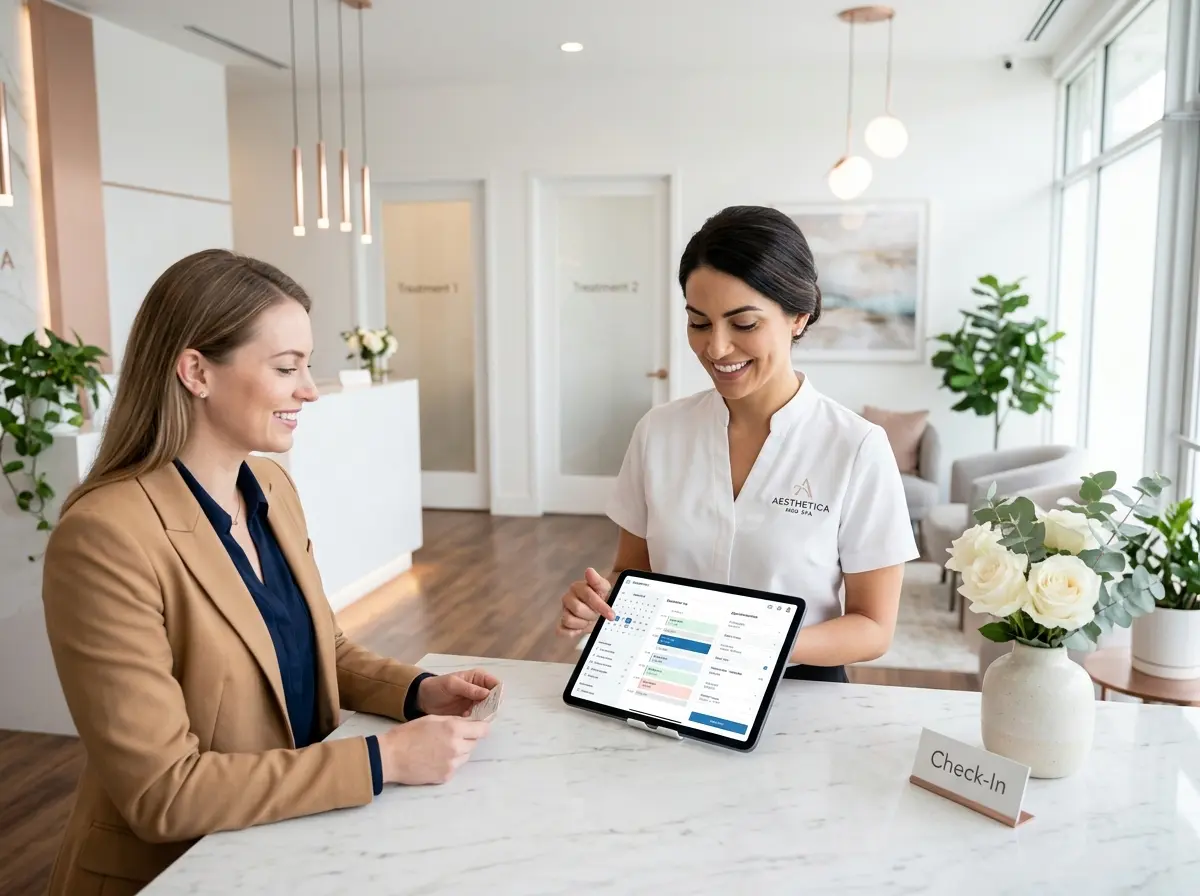
For Radiance Medical Spa — a mid-sized medspa offering injectables, laser treatments, and skincare services — this was Tuesday. And Wednesday. And pretty much every other day of the week. Between managing appointment scheduling, fielding repetitive phone inquiries, and trying to actually serve the clients standing right in front of them, their administrative staff was burning through hours at an alarming rate. Over 15 hours per week, to be specific, were being consumed by tasks that, frankly, a well-designed system could handle without breaking a sweat — or, you know, having a breakdown in the break room.
So they automated. Here's what they did, what they learned, and how you can steal their strategy for your own medical spa.
Understanding the Real Cost of Manual Booking
It's Not Just the Time — It's the Compounding Cost
Most spa owners think about their booking problem in terms of minutes per call. And sure, the average inbound scheduling call runs about 4–7 minutes. But that calculation misses the bigger picture. Every time a staff member picks up the phone mid-task, there's a context-switching cost — research suggests it can take up to 23 minutes to fully regain focus after an interruption. Multiply that across a dozen daily calls and you're not losing hours, you're losing entire workdays.
For medical spas specifically, the stakes are even higher. Your staff aren't just receptionists — they're often trained skincare professionals, client coordinators, or medical assistants who carry real value in their clinical roles. Every minute they spend reading back appointment availability over the phone is a minute they're not doing the work that actually differentiates your spa.
The Missed Revenue Nobody Talks About
Here's where it gets uncomfortable: manual booking systems don't just waste time, they actively lose you money. After-hours calls that go to voicemail and never get returned. Clients who call during a rush, get put on hold, hang up, and book somewhere else. Follow-up calls that fall through the cracks. These aren't hypothetical scenarios — they're the invisible revenue leaks that don't show up on any report because the transaction simply never happened.
Radiance estimated that their front desk was missing roughly 20–25% of after-hours calls entirely. When you consider that a single new injectable client can be worth $500–$2,000 annually, that's not a rounding error. That's a problem worth solving.
The Repetition Tax on Your Best Employees
Ask any front desk employee what they spend most of their time on and they'll tell you: answering the same questions over and over. "What's the price for a lip filler?" "Do you take insurance?" "How long does a HydraFacial take?" "What should I do to prep for my appointment?" These questions are important — they deserve good answers — but they do not require a trained human being to deliver them for the 40th time this week. That's not a good use of your payroll, and it's certainly not a good use of your employee's talent or patience.
How Automation (Done Right) Changed the Game
Where Stella Fits Into the Medspa Model
Stella, an AI robot employee and phone receptionist, became a central piece of Radiance's solution. In the lobby, Stella's physical kiosk presence greets arriving clients, answers common pre-treatment questions, and highlights current promotions — all without pulling a single human staff member away from clinical duties. On the phone, Stella handles inbound calls 24/7, answers questions about services and pricing, and collects client intake information conversationally before the appointment even begins.
What made this particularly effective for a medical spa was Stella's built-in CRM and intake form capability. New client consultations that once required a lengthy phone call to collect medical history basics, skin concerns, and service preferences are now handled automatically. By the time a client arrives for their first appointment, their profile is already populated — and the aesthetician walks in prepared, not playing catch-up.
At just $99/month with no upfront hardware costs, the math was embarrassingly one-sided in favor of automating.
Building a Booking Automation System That Actually Works
Step 1 — Audit Before You Automate
Before you implement anything, spend one week tracking where your administrative time actually goes. This doesn't have to be complicated — a simple tally sheet categorizing each interruption (phone call, walk-in question, scheduling task, follow-up, etc.) will reveal patterns quickly. Most medspa owners are genuinely surprised by how concentrated the problem is. Often, 70–80% of the time drain comes from just 3–4 recurring task types, which means you don't need to automate everything — you just need to automate the right things.
Radiance found that scheduling calls, pricing inquiries, and new client intake accounted for nearly 80% of their front desk interruptions. Solving those three things was enough to reclaim their 15 hours.
Step 2 — Choose Tools That Integrate, Not Complicate
One of the most common automation mistakes is stacking tools that don't talk to each other. You end up with a booking platform over here, a CRM over there, a phone system somewhere else, and a staff member manually copying information between all three — which defeats the entire purpose. When evaluating automation tools, prioritize integration. Your booking system should sync with your client records. Your phone solution should capture lead information that flows directly into your CRM. Your intake forms shouldn't require a separate login, a separate export, and a small prayer to function properly.
The goal is a system where a client's journey — from first phone call to post-treatment follow-up — leaves a clean, connected data trail that your team can actually use.
Step 3 — Define What Still Needs a Human Touch
Not everything should be automated, and pretending otherwise is how you accidentally create a cold, frustrating client experience. Medical spas in particular deal with sensitive health topics, aesthetic concerns, and clients who may be nervous or vulnerable. There are moments in that client journey — a complicated consultation, a complaint, a client with specific medical contraindications — where a warm human voice is not optional, it's essential.
The smart approach is to define your escalation rules clearly. Routine scheduling? Automate it. General pricing questions? Automate it. Complaint about a treatment outcome? Route it immediately to a senior staff member. When you draw these lines deliberately, automation becomes an asset rather than a liability, and your human team is freed up to show up fully for the moments that actually require them.
Quick Reminder About Stella
Stella is an AI robot employee and phone receptionist built for businesses like yours — she works the front of your spa as a physical kiosk, greets clients, answers questions, promotes services, and handles your phones 24/7 so nothing falls through the cracks. She's $99/month, requires no upfront hardware investment, and is ready to work the moment you set her up. Think of her as your most consistent, never-late, never-has-a-bad-day team member.
Ready to Get 15 Hours Back? Here's Where to Start
Radiance Medical Spa didn't overhaul their entire operation overnight. They started with one focused audit, identified their biggest time drains, and implemented solutions that addressed those specific pain points first. Within a month, their front desk coordinator described her job as "actually manageable for the first time in two years." That's the goal — not a flashy technology deployment, but a genuinely better day at work for your team and a smoother experience for your clients.
Here's your action plan:
- Spend one week auditing your administrative interruptions. Categorize every task that pulls your staff away from high-value work and count the frequency.
- Identify your top three time drains — these are your automation targets.
- Evaluate tools that address those specific drains with integrated data flow, not added complexity.
- Define your human escalation rules so your automation supports your team rather than replacing the moments that require genuine care.
- Measure and adjust. Track time saved, missed calls reduced, and client satisfaction scores in the first 30 and 60 days.
The medical spa industry is competitive, client expectations are high, and the window between a phone call answered and a booking made is shorter than ever. You can keep running on the heroic effort of your staff — or you can build a system that makes heroic effort unnecessary. One of those options scales. The other one burns people out.
Choose wisely. And maybe let your front desk coordinator take a real lunch break for once.