Introduction: The Forgotten Frontier of Your Restaurant
Let's paint a picture. Your dining room is immaculate. The lighting is perfect. Your servers are trained to upsell like seasoned pros, your host greets every guest with a warm smile, and your chef is back there plating dishes like they're competing on a cooking show. Everything is dialed in.
And then someone orders takeout.
Suddenly, that same beautiful experience gets stuffed into a paper bag, handed off at a chaotic counter, and driven across town in a car that may or may not smell like french fries. The customer who ordered online waited 20 minutes longer than expected, got no communication about the delay, and opened their bag to find a lukewarm entrée and a missing side dish. No greeting. No apology. No ambiance. Just vibes — and not the good kind.
Here's the uncomfortable truth: your takeout experience is a direct reflection of your brand, whether you've invested in it or not. With takeout and delivery now accounting for a significant slice of restaurant revenue — some estimates put it at over 40% of total sales for many establishments — ignoring it is like renovating your storefront while your back door is falling off its hinges.
The good news? Fixing it doesn't require a complete operational overhaul. It requires intention, systems, and a willingness to treat your off-premise guests like they actually matter. Let's get into it.
The Takeout Experience Starts Long Before the Food Is Ready
Most restaurant owners think the takeout experience begins when a customer picks up their order. It doesn't. It begins the moment they decide they want to eat your food — which means the ordering process, the communication, and the pickup flow are all part of the experience. And right now, those touchpoints might be quietly destroying your reputation.
Your Ordering Process Should Be Painless, Not a Puzzle
Whether customers are ordering through your website, a third-party app, or — brace yourself — calling your restaurant, the experience needs to be frictionless. A clunky online menu with outdated items, missing prices, or zero mobile optimization will send customers straight to your competitor. And if they're calling in? If your staff is slammed during a Friday dinner rush, that phone might ring six times before someone picks up, sighs audibly, and rushes through the order while simultaneously running food to table nine.
The fix here is twofold: audit your online presence regularly to ensure your menu is accurate and easy to navigate, and make sure your phone ordering experience doesn't feel like a punishment. Customers who call in often want a specific customization, have an allergy question, or simply prefer talking to a human (or something that acts like one). Meet them where they are.
Accuracy Is Non-Negotiable
According to the National Restaurant Association, order accuracy is one of the top factors customers cite when evaluating their takeout experience. It sounds obvious, yet wrong orders are among the most common complaints in online reviews. A missing sauce, a swapped protein, or a forgotten utensil set might seem trivial in the kitchen — but to the customer who drove 15 minutes to pick up their food and doesn't discover the mistake until they're home, it's the whole story.
Build a system. Use printed ticket checklists, dedicated packaging stations, and a final confirmation step before every bag is sealed. Train your staff to treat every takeout order like it's going to a VIP — because in a world where a single Google review can reach thousands of potential customers, every order effectively is.
Communication Keeps Customers Calm
Nobody expects perfection. Kitchens get slammed, ingredients run out, and sometimes life just happens. What customers do expect is communication. A quick heads-up that their order is running 15 minutes behind does more for loyalty than a discount ever could. Set up automated text or email notifications through your POS or ordering system, and make sure your team knows to proactively reach out when things go sideways rather than hoping nobody notices.
How the Right Tools Can Take the Pressure Off Your Team
Here's where we acknowledge the elephant in the room: your staff is already stretched thin. Asking them to simultaneously cook, serve dine-in guests, package takeout orders, and answer the phone is a recipe for burnout and mistakes. This is exactly where smart technology can step in and actually make a difference.
Handling the Phone So Your Staff Doesn't Have To
Stella, the AI robot employee and phone receptionist, is built for situations like this. She can stand inside your restaurant as a kiosk and engage walk-in customers naturally — answering questions about your menu, specials, and hours — while simultaneously handling incoming phone calls 24/7 with the same knowledge and professionalism. During your busiest service windows, instead of a rushed employee fumbling through a phone order, Stella handles the call with consistency, accuracy, and zero attitude. She can also collect customer information through conversational intake forms and store it in her built-in CRM, which means you're building a contact list and customer profile database without anyone lifting a finger. That's not just convenience — that's a competitive advantage.
Packaging, Presentation, and the Unboxing Moment
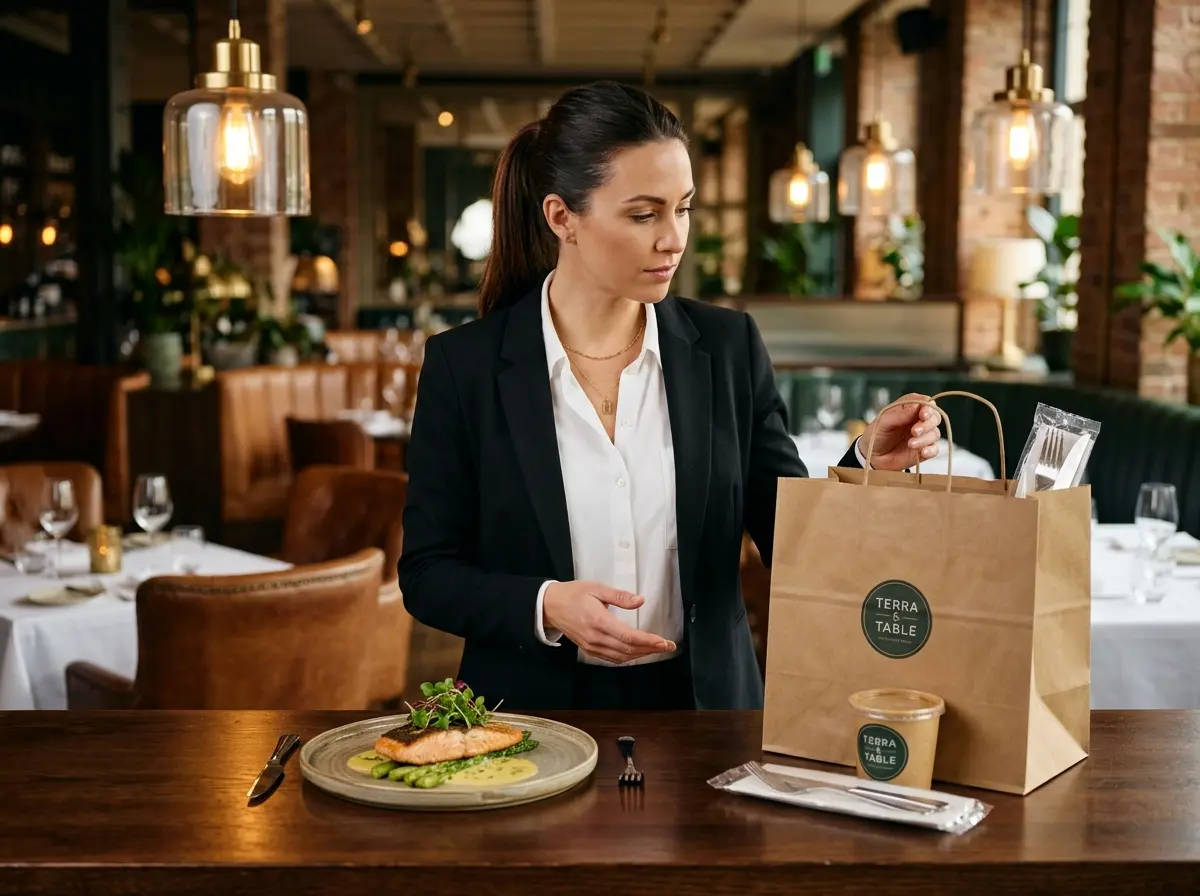
If dine-in is theater, takeout is a care package — and care packages should feel like they were, well, cared about. The moment a customer opens their takeout bag is your last opportunity to make an impression, and it's one that far too many restaurants squander with leaky containers, soggy fries, and a napkin situation that can only be described as "one sad square."
Invest in Packaging That Works
Good packaging isn't just about aesthetics — it's about food integrity. Vented containers keep fried items from steaming themselves into mush. Separate compartments prevent sauces from turning everything into soup. Tamper-evident seals build customer trust. Yes, quality packaging costs more. But so does losing a repeat customer because their pasta arrived as a single congealed mass. Do the math, then make the call.
Beyond function, branding your packaging — even modestly, with a stamped logo or branded sticker — signals that you've thought about the experience. It turns a paper bag into a marketing moment. Customers photograph their food constantly, and a well-branded unboxing is free advertising.
The Little Things That Make a Big Difference
Think about what your dine-in guests receive that your takeout customers don't: a warm greeting, attentive service, the ability to flag someone down if something is wrong. You can't replicate all of that — nor should you try — but you can add thoughtful touches that show you value off-premise customers just as much.
Consider including a handwritten (or printed) thank-you note, a small treat, a QR code linking to your loyalty program, or simply a card with a direct line to call if anything is missing. These gestures cost almost nothing and generate disproportionate goodwill. In an industry where margins are tight and competition is fierce, goodwill is currency.
Designate a Pickup Experience That Doesn't Feel Like a Warehouse
The physical pickup moment matters more than most restaurants realize. A clearly marked, organized pickup area — ideally separate from your dine-in flow — signals operational competence and respects your customer's time. If takeout customers are awkwardly hovering near the host stand while servers dodge around them, that's not a neutral experience. It's an actively bad one. Designate the space, label it clearly, and train your team to acknowledge pickup customers promptly even when they can't get to them immediately. A simple "We'll have that right out for you!" goes a long way.
Quick Reminder About Stella
Stella is an AI robot employee and phone receptionist available for just $99/month with no upfront hardware costs. She works in-store as a friendly, human-sized kiosk and answers phone calls around the clock — keeping your team focused on the work that actually requires a human touch. For restaurants managing the chaos of dine-in and takeout simultaneously, she's the kind of reliable, tireless presence that doesn't call in sick on a Saturday night.
Conclusion: Treat Takeout Like the Revenue Stream It Is
Your takeout customers aren't second-class guests — they're a significant and growing portion of your business, and they deserve an experience that reflects your restaurant's actual standards. The gap between a forgettable takeout order and a loyalty-building one is smaller than you think, and it mostly comes down to intention.
Here's your action plan:
- Audit your ordering process — Is your online menu accurate, mobile-friendly, and easy to navigate? Is your phone ordering experience pleasant or chaotic?
- Build accuracy systems — Implement checklists, a dedicated packaging station, and a final verification step before every order goes out the door.
- Communicate proactively — Use automated notifications and train your team to reach out when delays happen, not after complaints come in.
- Upgrade your packaging — Choose containers that protect food integrity, and add branding wherever possible.
- Create a real pickup experience — Designate the space, train the team, and make off-premise guests feel acknowledged.
- Let technology carry some of the load — Tools like Stella can handle phone inquiries and customer engagement so your staff can focus on execution.
The restaurants that will win the next decade aren't just the ones with the best food — they're the ones that deliver (pun fully intended) a consistently great experience across every channel. Start treating your takeout operation like the serious revenue driver it is, and your customers — and your bottom line — will notice.