So You Want to Welcome Pets Into Your Store (Without Losing Your Mind)
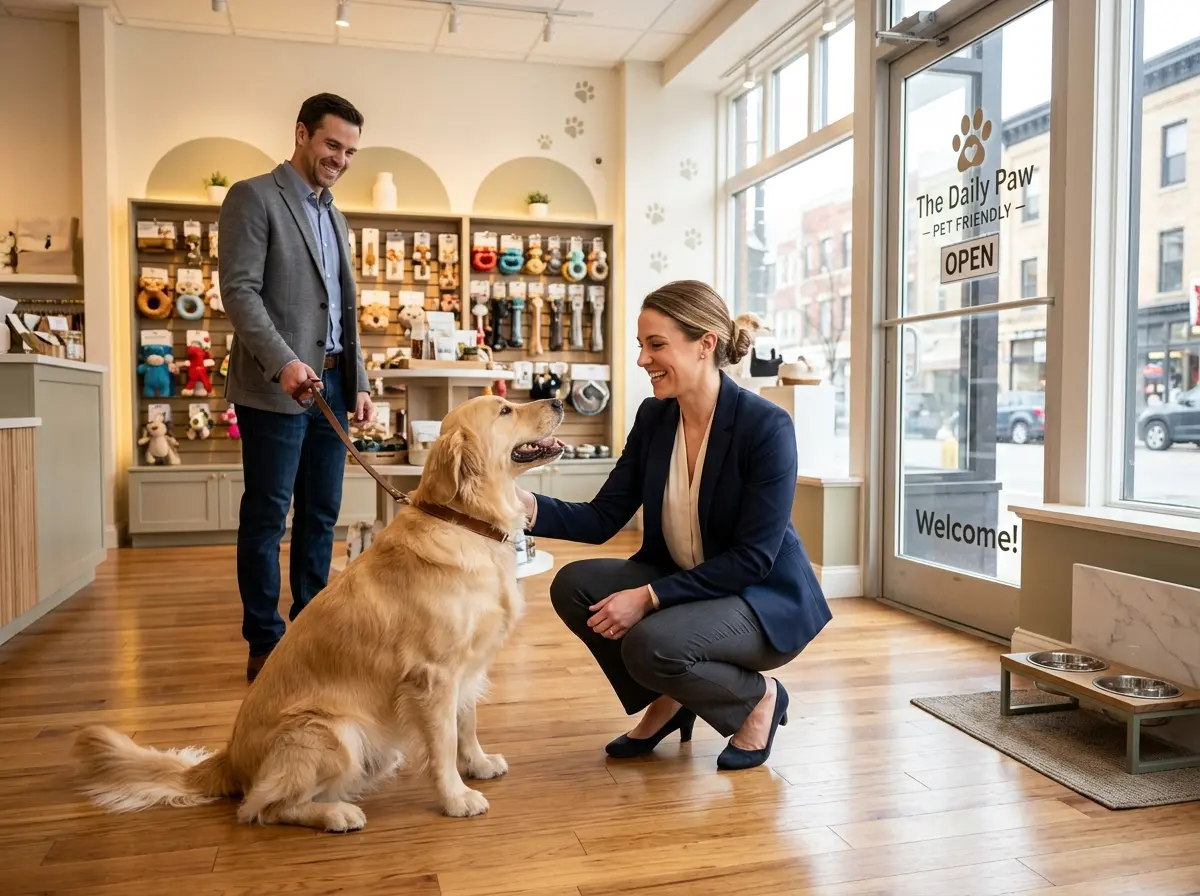
Picture this: A customer walks in with an absolutely adorable golden retriever. Your staff melts. Other customers pull out their phones to take pictures. Sales are happening, vibes are immaculate — and then the dog relieves himself on your display merchandise. Welcome to the wonderful, unpredictable world of pet-friendly retail.
More businesses than ever are opening their doors to four-legged guests, and for good reason. According to the American Pet Products Association, Americans spent over $147 billion on their pets in 2023. Pet owners are passionate, loyal customers — and they notice which businesses treat their companions like family. A thoughtful pet-friendly policy can be a genuine competitive advantage. A thoughtless one can be a liability nightmare dressed in fur.
The good news? You don't have to choose between welcoming pets and maintaining a professional, orderly business. You just need a policy that's clear, consistent, and actually enforced. Let's talk about how to build one that works for everyone — including the humans who are mildly terrified of dogs.
Building the Foundation of Your Pet Policy
Start with the Legal and Liability Basics
Before you post that adorable "Paws Welcome Here" sign in your window, do your homework. Pet policies aren't just about goodwill — they intersect with local health codes, zoning regulations, and your business insurance. Food establishments, for example, are generally prohibited from allowing pets in areas where food is prepared or served, with the exception of trained service animals (which, by the way, are legally required to be accommodated under the Americans with Disabilities Act — no policy document overrides that).
Check with your local health department and your insurance provider before launching any pet-friendly initiative. Some business insurance policies require notification when you change the nature of your customer environment. A quick phone call to your agent now is infinitely better than a conversation with a claims adjuster later. You should also review your lease if you're renting — some landlords have restrictions on animals in commercial spaces.
Define What "Pet-Friendly" Actually Means for Your Business
Here's where a lot of business owners go wrong: they announce they're "pet-friendly" without defining what that means. Does that include all pets? Just dogs? What about the customer who shows up with a macaw? (It happens.) Being specific in your policy saves you from awkward conversations at the door and protects you from the edge cases you didn't anticipate.
A solid pet policy should clearly address the following:
- Which animals are welcome — most businesses stick to leashed dogs under a certain size, which is entirely reasonable
- Vaccination and behavior requirements — pets should be up to date on vaccinations and under control at all times
- Owner responsibility — spell out that owners are responsible for any damage, messes, or incidents involving their pet
- Where pets are and aren't allowed — if certain areas of your store are off-limits, say so clearly
- The right to refuse — reserve the right to ask a pet (and its owner) to leave if behavior becomes disruptive or unsafe
Post this policy visibly — at the entrance, on your website, and anywhere else customers might look before visiting. Ambiguity is the enemy of consistent enforcement.
Train Your Team to Handle Pet Interactions Professionally
Your staff will be the front line of your pet policy, which means they need to be prepared for everything from the perfectly behaved Labrador to the anxious chihuahua who has opinions about strangers. Set clear expectations for how employees should greet pet-owning customers, how to handle policy questions, and — critically — what to do if something goes wrong.
Make sure your team knows they are empowered to enforce the policy without apology. A friendly, matter-of-fact approach works best: "We love that you brought your pup in! Just a reminder, we ask that all dogs stay on leash near our product displays." No drama, no confrontation — just clear, consistent communication.
Let Technology Handle the Repetitive Stuff
Communicate Your Policy Before Customers Even Walk In
One of the most common friction points with any store policy — pet-related or otherwise — is customers who show up uninformed. They're frustrated, you're apologetic, and everyone's day gets a little worse. The fix is proactive communication, and that's where Stella comes in handy.
As an AI robot kiosk stationed inside your store, Stella can greet customers as they enter and naturally mention relevant policies, current promotions, or anything else you want front-of-mind. On the phone side, she answers calls 24/7 and can clearly communicate your pet policy to anyone who calls ahead to ask — which, if you've ever worked retail, you know is a surprisingly common question. No more staff spending ten minutes explaining leash requirements to a caller while a line builds at the register. Stella handles it, consistently and professionally, every single time.
Making Your Policy Work Day-to-Day
Set Up Your Physical Space for Pet-Friendly Success
A good policy on paper needs physical infrastructure to back it up. If you're going to welcome pets, give some thought to the layout and amenities of your space. Small adjustments can make a big difference in both customer experience and damage prevention.
Consider adding a water bowl near the entrance — it's a small touch that signals genuine welcome and keeps dogs calm and hydrated. If your merchandise includes anything at nose or tail height, think about how displays are arranged. Fragile items and wagging tails are not friends. You might also keep a small cleanup kit (waste bags, paper towels, enzymatic cleaner) on hand for the inevitable accidents. Having it ready means a fast, discreet response instead of a panicked scramble through the back room.
If your space allows, designating a specific "pet-friendly zone" — perhaps near the entrance or in a more open area — gives you a natural way to manage where animals go without having to track every customer individually.
Gather Feedback and Adjust Over Time
Your first pet policy doesn't have to be your final one. In fact, treating it as a living document is smart business. Talk to your staff regularly about what's working and what isn't. Are there recurring issues you didn't anticipate? Are customers consistently confused about a particular rule? Is the policy being enforced uniformly across your team?
Customer feedback is equally valuable. A brief survey, a comment box near the exit, or even just paying attention to what people say during their visits can surface insights that improve your policy over time. Some businesses find that their initial size restrictions were too broad; others discover that adding a simple sign-in requirement (name, pet's name, vaccination acknowledgment) gives them a useful record and makes owners take the policy more seriously. Iterate based on real data, not assumptions.
Handle Incidents with Professionalism and Documentation
Even the best-run pet-friendly stores will eventually have an incident. A dog nips at another customer. An exotic bird escapes its carrier and makes a dramatic tour of your store ceiling. Whatever happens, your response matters enormously — both for the immediate situation and for how the story gets told later.
Document incidents in writing as soon as possible. Note the date, time, what happened, the pet owner's contact information if available, and any witnesses. This protects your business if a liability claim arises later. Notify your insurance provider if the incident is serious. Follow up with any affected customers to demonstrate that you take their experience seriously. And review the incident as a team to determine whether your policy or your space needs adjustment as a result.
Quick Reminder About Stella
Stella is an AI robot employee and phone receptionist that helps businesses like yours greet customers, answer questions, promote offers, and handle calls 24/7 — all for just $99/month with no upfront hardware costs. Whether you need her standing in your store welcoming pet-owning customers or answering after-hours calls about your policies, she's always on, always professional, and never needs a break. Not a bad teammate to have around.
Your Next Steps Toward a Policy That Actually Works
Creating a pet-friendly store policy isn't complicated, but it does require intention. The businesses that get it right aren't just the ones that slap a paw print sticker on the door — they're the ones that think through the details, train their teams, communicate clearly, and adapt as they learn.
Here's a simple action plan to get started:
- Consult your local health department and insurance provider before going public with any pet-friendly announcement.
- Draft a written policy that specifies which animals are welcome, behavioral expectations, owner responsibilities, and restricted areas.
- Post your policy everywhere — your entrance, your website, your Google Business profile, and anywhere else customers research you before visiting.
- Brief your entire team on the policy and give them the language and confidence to enforce it kindly but consistently.
- Prepare your space with water bowls, cleanup supplies, and thoughtful display arrangements.
- Build in a review cycle — revisit the policy every six months and adjust based on real-world experience.
Done well, a pet-friendly policy turns casual visitors into loyal regulars and gives your business a memorable identity in a crowded market. Done carelessly, it creates headaches that no amount of "good boy" energy can fix. Put in the work upfront, and you'll have a policy that makes your store a place people — and their pets — genuinely love to visit.