So You Want to Sell More Than Just Great Tattoos
Let's be honest — your clients walk out the door with fresh ink, a sheet of aftercare instructions, and approximately zero confidence about whether they're supposed to use unscented lotion or that mystery balm their cousin swore by. Meanwhile, you're leaving real money on the table every single day by sending them to the drugstore to figure it out themselves. That's not just a missed revenue opportunity. That's you funding your competition's shelf space.
The good news? Building a premium aftercare product line for your tattoo studio is one of the most genuinely sensible ways to add retail revenue without completely reinventing your business. Your clients already trust you with their skin — permanently. Selling them the products to protect that investment is practically a moral obligation at this point. The even better news is that you don't need to be a chemist, a branding guru, or a venture capitalist to make it happen. You just need a plan.
Let's walk through how to build an aftercare product line that feels premium, sells consistently, and makes your studio a one-stop destination for everything tattoo-related — not just the fun part.
Building Your Product Line from the Ground Up
Before you slap a label on a bottle and call it a product line, there's some groundwork to lay. A thoughtfully curated aftercare lineup isn't just about what you sell — it's about how it all fits together into a cohesive client experience that reinforces your studio's brand and expertise.
Start with the Essentials (and Don't Overthink It)
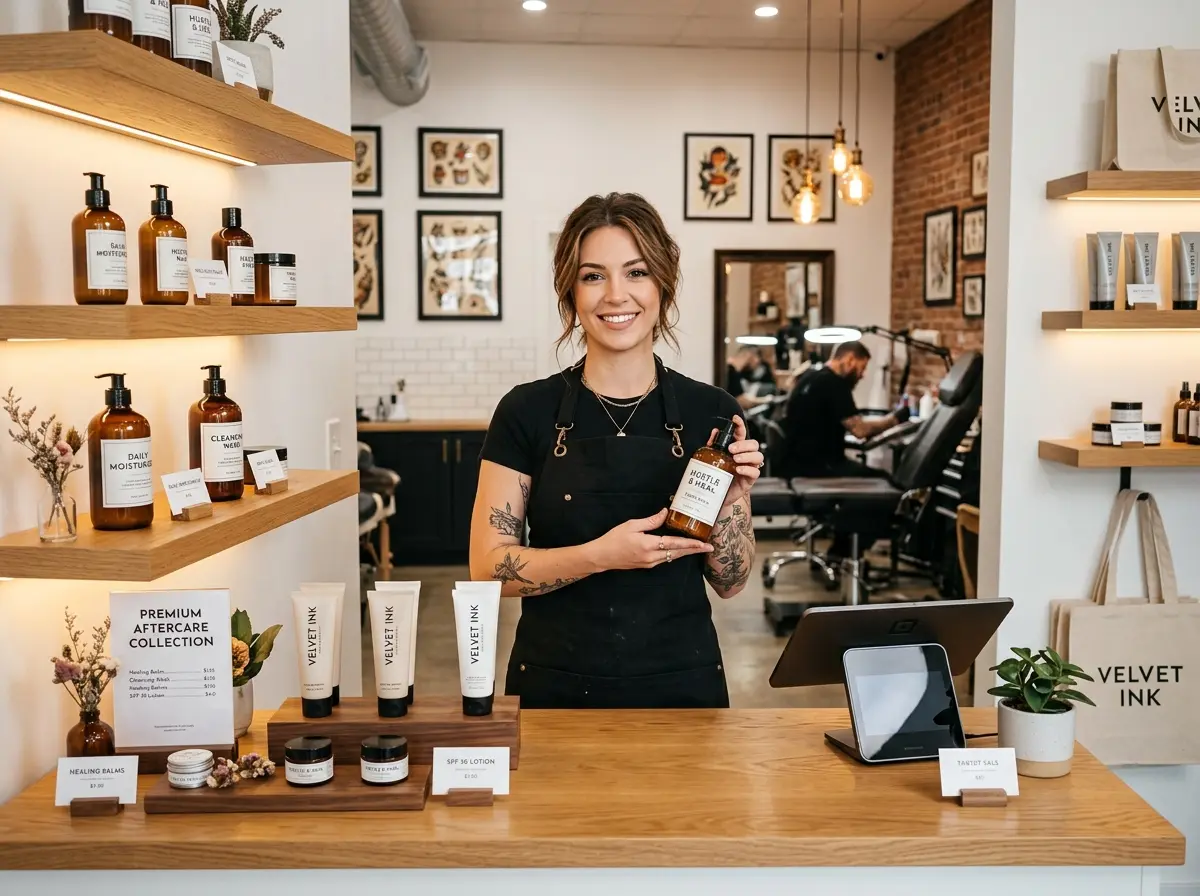
A solid tattoo aftercare line doesn't need to have seventeen SKUs to be effective. In fact, starting lean is smarter. Focus on the core products clients actually need during the healing process: a gentle tattoo-specific soap or cleanser, a healing balm or ointment for the first few days, a daily moisturizer for long-term color preservation, and an SPF product to protect healed tattoos from sun damage. These four categories cover the full healing arc and give clients a complete routine they can follow without guessing.
You can source products through reputable wholesale distributors, partner with existing tattoo aftercare brands to carry their line under a retail agreement, or — if you're feeling ambitious — work with a private label manufacturer to create your own branded products. Private labeling has a higher upfront investment (typically starting around $500–$2,000 depending on the manufacturer and order quantities), but the margin potential and brand-building value are significantly stronger. Several manufacturers specialize specifically in tattoo aftercare formulations, making compliance with skin-safe standards much more straightforward.
Price It Like It's Premium (Because It Should Be)
Here's where a lot of studio owners undersell themselves: they price their retail products like they're running a clearance rack instead of a curated, expert-recommended collection. Your clients are paying $200, $500, even $1,000+ for their tattoos. A $24 healing balm that you personally recommend and trust is not a hard sell — it's a natural extension of the service they just received.
Aim for a retail markup of 50–100% above your wholesale or production cost. If a product costs you $8 to produce or source, pricing it at $18–$22 is entirely reasonable for a studio environment. Bundling is also your friend here. A "New Ink Starter Kit" containing your cleanser, healing balm, and moisturizer sold as a bundle at a slight discount to buying separately — but still at strong margin — is an easy upsell that practically sells itself at checkout.
Make Your Branding Do the Heavy Lifting
Packaging matters more than people admit. A beautifully branded product with clean, minimal design and your studio's logo communicates professionalism and quality before a client even reads the label. You don't need to spend a fortune — a consistent color palette, a clean font, and clear product naming go a long way. If your studio has a strong aesthetic identity (and most good tattoo studios do), let that translate into your product packaging. Clients who love your studio's vibe will love products that feel like an extension of it, and they'll use them at home, tell their friends, and come back for more.
How Technology Can Quietly Supercharge Your Retail Sales
Retail doesn't sell itself — but it also shouldn't require your artists to become part-time salespeople mid-consultation. This is where smart tools make a meaningful difference, and where a little automation goes a very long way.
Let Your Greeting Do the Selling Before Anyone Says a Word
Stella, the AI robot employee and phone receptionist, is one of those tools that genuinely pulls its weight in a retail context. As a human-sized AI kiosk stationed inside your studio, she proactively greets clients, answers questions about your products and services, and promotes current offers — including whatever aftercare bundles or retail specials you're running — without requiring your front desk staff or artists to interrupt their workflow. She's also available 24/7 to answer phone inquiries, which means a client calling at 9 PM to ask whether your healing balm works on color tattoos will get a real, informed answer instead of a voicemail.
For studios looking to streamline client intake and follow-up, Stella's built-in CRM and conversational intake forms make it easy to tag clients by tattoo type, artist, or purchase history — giving you the data you need to send targeted promotions for relevant aftercare products. That's not just convenient. That's the kind of personalized experience that turns a one-time client into a repeat customer.
Selling It In-Studio and Beyond
Having the products is step one. Moving them consistently requires a little more intention — but not as much effort as you might think. The key is building retail into your existing client experience so it feels natural rather than pushy.
Make Aftercare Part of the Tattoo Appointment
The most powerful sales moment you have is the five minutes right after a client's tattoo is finished. They're emotionally invested, they trust you completely, and they're about to face the healing process on their own. That's your moment. Rather than handing them a generic instruction sheet and sending them to the front, have your artists walk through the healing routine verbally and mention the specific products you carry that align with that routine. A simple, "We actually carry the cleanser and balm I always recommend — want me to grab one of the starter kits for you?" closes the sale without any pressure whatsoever.
Consider making aftercare product recommendations a standard part of your post-tattoo wrap-up process. When it's built into the workflow, it doesn't feel like upselling — it feels like excellent customer service. Because it is.
Expand Your Reach with Online Retail and Repeat Purchases
Your physical studio is your primary sales channel, but it doesn't have to be your only one. Setting up a simple e-commerce presence — even a basic Shopify or Square Online store — allows clients to reorder products when they run out, purchase gifts for tattooed friends, and discover your brand from outside your local area. Healing balm and daily moisturizers are consumable products, which means repeat purchases are built into the model. Email a simple reminder to past clients at the four-week mark post-appointment letting them know their ink is now fully healed and their moisturizer is probably running low. That's not spam — that's thoughtful timing.
You can also explore partnerships with other local businesses that serve a compatible clientele: barbershops, alternative clothing boutiques, piercing studios. A small wholesale arrangement or co-branded product placement can introduce your aftercare line to an audience that's already predisposed to buying it.
Train Your Team Without Turning Them into Salespeople
Your artists are artists, not retail associates, and they should stay that way. But there's a big difference between aggressive selling and naturally informed recommendations. Brief, regular team conversations about which products you carry, why you carry them, and what makes them worth recommending is usually all it takes. Keep product knowledge simple and relevant — your artists don't need to memorize ingredient lists, they just need to be comfortable saying, "Yeah, this is the stuff I tell everyone to use." Authenticity sells far better than a scripted pitch, and your clients can tell the difference.
A Quick Reminder About Stella
Stella is an AI robot employee and phone receptionist designed to help business owners — including tattoo studio owners — handle customer interactions without burning out their team. She works in-store as a kiosk that greets and engages walk-ins, and she answers phone calls around the clock with the same knowledge she uses in person. At just $99/month with no upfront hardware costs, she's one of the more surprisingly affordable tools available for studios that want a professional, always-on presence without adding headcount.
Your Next Steps Toward a Profitable Aftercare Line
Building a premium aftercare product line for your tattoo studio isn't a moonshot — it's a smart, practical extension of what you're already doing exceptionally well. You've earned your clients' trust through skilled, professional work. Offering them the products to protect that work is a natural next step, and one that adds a meaningful revenue stream without requiring a dramatic operational overhaul.
Start small and intentional: identify three to four core products, source or develop them with quality in mind, price them confidently, and integrate them into your existing appointment workflow. From there, build out your branding, explore online retail, and use tools like your studio's front-of-house presence — human or AI-assisted — to promote your offerings consistently. Track what sells, refine your lineup accordingly, and let the products speak for themselves.
The studios that will win the aftercare retail game aren't necessarily the ones with the biggest product catalogs. They're the ones that sell the right products, at the right moment, to clients who already trust them completely. You've already done the hard part. Now go put something on the shelf.