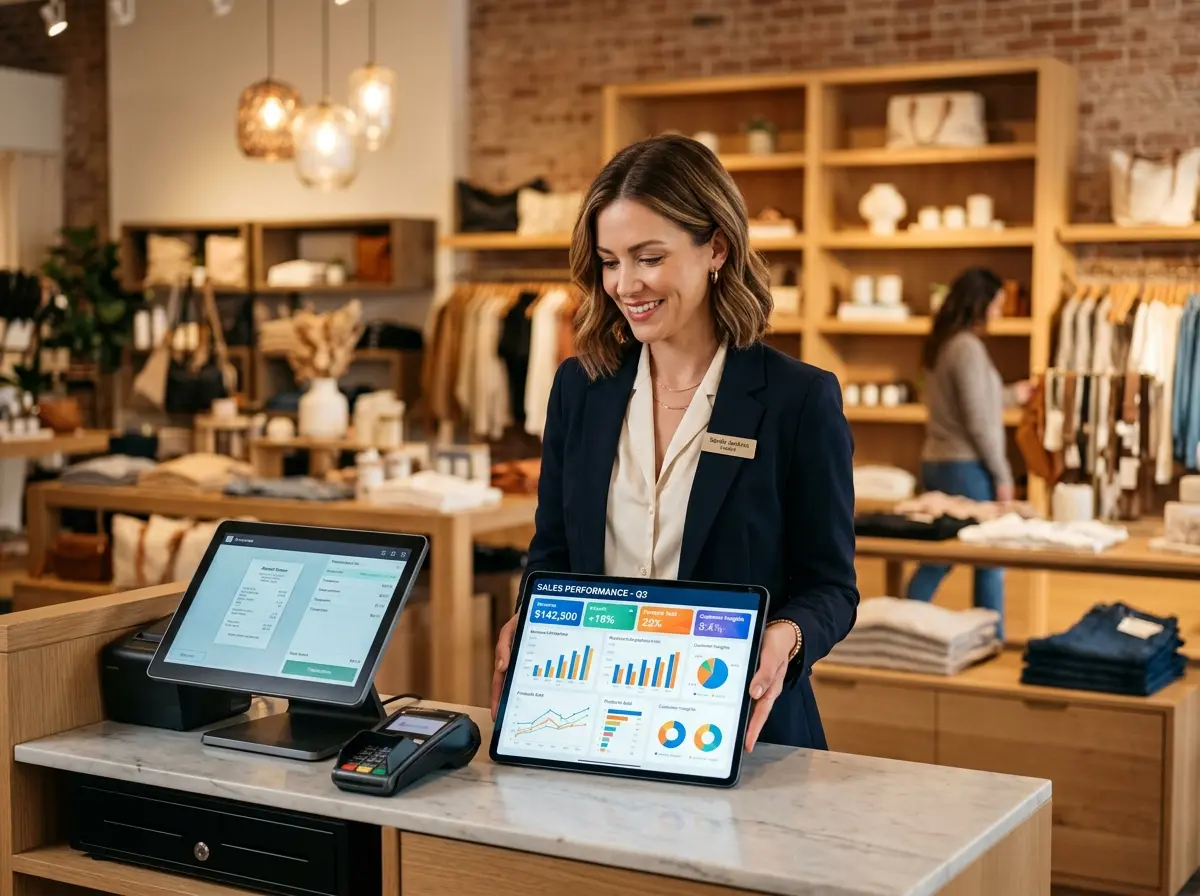
Your POS System Is Sitting on a Goldmine (Are You Actually Using It?)
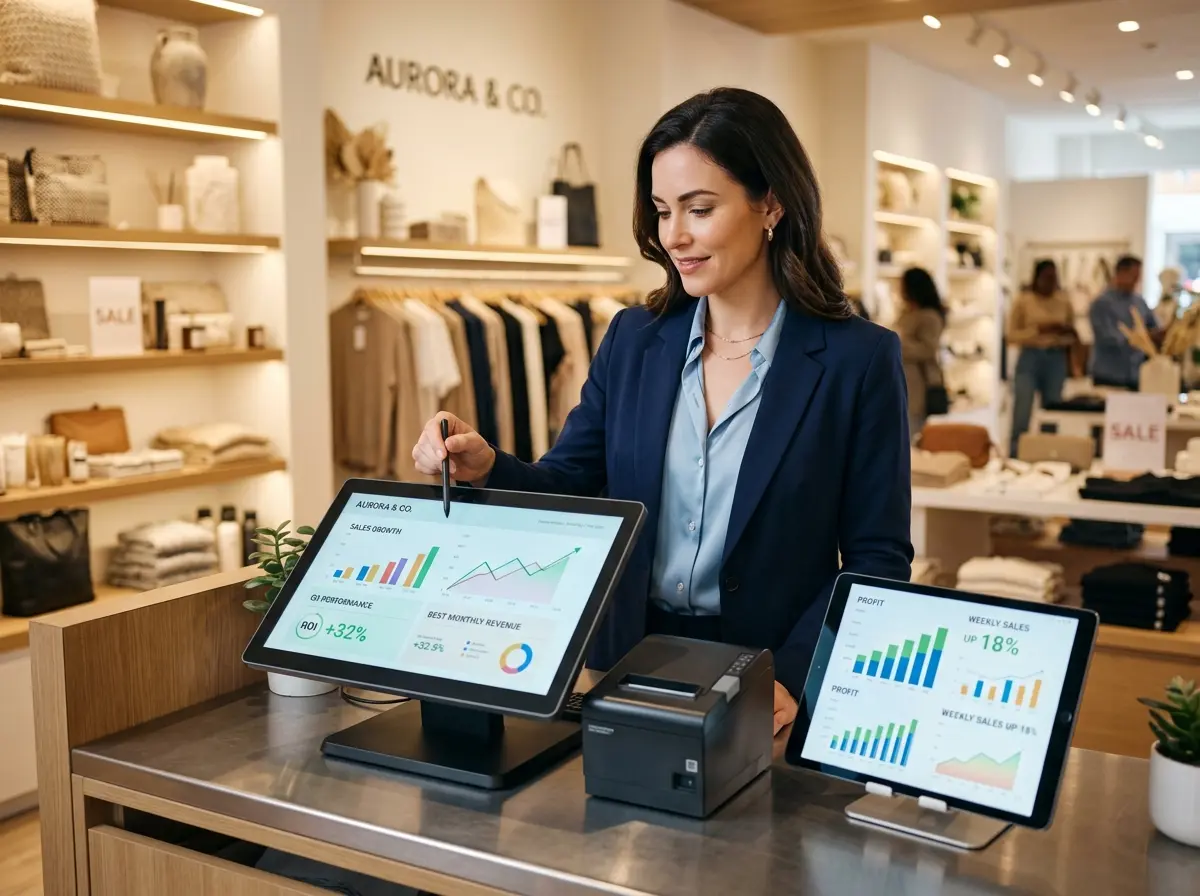
Let's be honest — most business owners set up their point-of-sale system, learn how to ring up transactions, and then completely ignore the treasure trove of data it's quietly collecting in the background. Your POS isn't just a fancy cash register. It's a real-time business intelligence engine that knows which products are flying off the shelves, which ones are quietly collecting dust, and exactly when your customers love to spend money. The question is: are you listening to it?
If you're making inventory decisions based on gut feelings, running promotions based on vibes, or staffing your store by crossing your fingers and hoping for the best — this post is for you. Good news: you don't need a data science degree to make smarter decisions with your POS data. You just need to know what to look for and what to do with it. Let's dig in.
Understanding the Data Your POS Is Already Collecting
Before you can use your POS data strategically, you need to understand what it's actually telling you. Most modern POS systems capture far more than just sales totals — they're generating a continuous stream of behavioral and operational data that can fundamentally change how you run your business.
Sales Trends and Peak Performance Windows
Your POS records the exact time, day, and date of every single transaction. When you actually pull this data and look at it, patterns emerge quickly. Maybe Tuesday afternoons are dead, but Friday evenings are absolutely chaotic. Maybe your summer slump hits harder in June than July. Knowing this lets you make smarter decisions about staffing, promotions, and even your own schedule as a business owner.
Start by pulling weekly and monthly sales trend reports from your POS and look for consistent patterns. Identify your top three busiest periods and your three slowest. Then ask yourself: are you staffed appropriately during peak times, and are you doing anything proactive during slow periods to drive traffic? If the answer to either question is "not really," you now have a starting point for improvement that's backed by actual numbers rather than memory.
Product Performance: Your Winners, Your Losers, and Your Hidden Gems
Every retail business has products that consistently outperform, products that underperform, and — this is the interesting one — products that seem mediocre on the surface but are actually highly profitable margin-wise. Your POS data can show you all three categories, but only if you look beyond raw sales volume.
Pull a product performance report sorted by gross profit margin, not just units sold. You may discover that your best-selling item is barely breaking even while a slower-moving product is delivering three times the profit per unit. Armed with that insight, you can make intentional decisions: feature the high-margin items more prominently, train staff to recommend them, or bundle them with popular sellers to boost their velocity. According to a study by McKinsey, retailers that actively use data to guide merchandising decisions outperform their peers by 15–25% in profitability. That's not a rounding error — that's the difference between a good year and a great one.
Customer Purchase Behavior and Basket Analysis
What do customers buy together? What do they buy on their first visit versus their fifth? Which products tend to appear in high-value transactions? This kind of basket analysis used to be reserved for enterprise retailers with expensive analytics teams, but your POS data makes it surprisingly accessible even for small and mid-sized businesses.
If you notice that customers who buy Product A almost always grab Product B in the same transaction, that's a merchandising and upsell opportunity staring you in the face. Move those products closer together on the shelf. Train your team to suggest the companion item. Create a bundle deal. Small changes driven by this kind of data insight can meaningfully increase your average transaction value without requiring you to acquire a single new customer.
Let Technology Work While You Focus on the Big Picture
Here's the part where we gently point out that you, as a business owner, probably have about 47 things on your plate at any given moment. Digging through POS reports is valuable — but it's one of many competing priorities. This is exactly where smart technology can quietly handle the operational legwork while you focus on strategy.
How Stella Frees Up Time for the Decisions That Matter
Stella, the AI robot employee and phone receptionist, isn't a POS analytics tool — but she directly supports the customer-facing side of your business in ways that give your data more room to work. As an in-store kiosk, she greets customers, promotes current deals, answers product and service questions, and actively upsells and cross-sells based on what you've configured her to highlight. On the phone side, she handles incoming calls 24/7, so your team isn't constantly pulled away from serving in-store customers to answer questions about your hours.
When your staff isn't buried in repetitive questions and your customers are getting consistent, professional engagement from the moment they walk in or call in, you create a better environment for your POS data strategy to actually execute. Decisions informed by data only create results if the customer experience supports them — and that's where Stella quietly earns her keep at just $99/month.
Turning POS Insights into Actionable Business Strategies
Data without action is just expensive trivia. The real value of your POS system comes from building habits and systems that translate what the numbers tell you into concrete business decisions on a regular basis. Here's how to actually do that.
Building a Simple Weekly Data Review Habit
You don't need to spend hours analyzing reports every week. In fact, the business owners who get the most value from their POS data are usually the ones who do short, consistent check-ins rather than occasional deep dives that they forget about by the following Tuesday. Set aside 20–30 minutes every Monday morning to review the previous week's data. Look at four things: total revenue versus your goal, top-performing products, slowest-moving inventory, and busiest versus slowest time windows. Write down one or two adjustments you'll make based on what you see. That's it. Consistency beats complexity every time.
Using POS Data to Plan Promotions That Actually Work
One of the most common retail mistakes is running promotions based on what feels good rather than what the data suggests. Discounting your already top-selling item might drive traffic, but it can actually hurt your overall margin if those customers were going to buy it anyway. Instead, use your POS data to identify which slower-moving but profitable products could benefit from a promotional push, and design your deals around moving those items strategically.
For example, if your data shows that a particular product has strong margin but low velocity, a limited-time bundle promotion pairing it with a bestseller can introduce it to more customers without training them to expect it at a discount long-term. Similarly, if your POS data shows a consistent sales slump on Wednesdays, that's the perfect day to run a midweek flash promotion rather than discounting on an already-busy Friday when customers are showing up regardless.
Inventory Management: Stop Guessing, Start Replenishing Strategically
Inventory errors are expensive in both directions. Overstocking ties up cash and creates storage headaches. Understocking means missed sales and frustrated customers. Your POS data gives you the velocity information you need to set smarter reorder points and avoid both extremes. Most POS systems allow you to set low-stock alerts based on historical sales rates — if yours does this and you haven't configured it yet, that's probably the highest-ROI 15 minutes you'll spend this week.
Beyond reorder alerts, use your sales velocity data to negotiate better with suppliers. If you can show a vendor that a particular SKU consistently sells through in a predictable window, you have a stronger case for better pricing on larger orders or faster restocking commitments. Data gives you leverage — even in conversations that have nothing to do with technology.
Quick Reminder About Stella
Stella is an AI robot employee and phone receptionist built for businesses of all sizes — whether you run a retail shop, a restaurant, a salon, or a service-based business. She stands inside your store engaging customers proactively and promoting your current deals, and she answers your phones 24/7 so no call goes to voicemail unattended. At $99/month with no upfront hardware costs, she's one of the most straightforward ways to add a reliable, professional presence to your business without adding to your payroll headaches.
Start Using What You Already Have
Here's the bottom line: you're already generating valuable business intelligence every single day through your POS system. The data is there. The insights are waiting. Most of your competitors aren't looking at this information nearly as carefully as they should be — which means there's a real competitive advantage available to any business owner willing to build a few simple habits around their existing tools.
Start with these concrete next steps this week:
- Pull your product performance report sorted by profit margin — not just sales volume — and identify your top five and bottom five performers.
- Review your hourly and daily sales data from the past 90 days and map out your actual peak and slow periods with fresh eyes.
- Set up one low-stock alert in your POS system for your three fastest-moving high-margin products.
- Schedule a recurring 30-minute weekly data review on your calendar and treat it like a meeting you can't cancel on yourself.
- Design one data-driven promotion for next month based on what your slow periods and underperforming margins are telling you.
You don't need to become a data analyst. You just need to stop ignoring a tool that's already working overtime to tell you exactly how to run a smarter, more profitable retail business. The POS data is talking. It's time to start listening.