Your Frames Don't Sleep — So Why Should Your Customer Service?
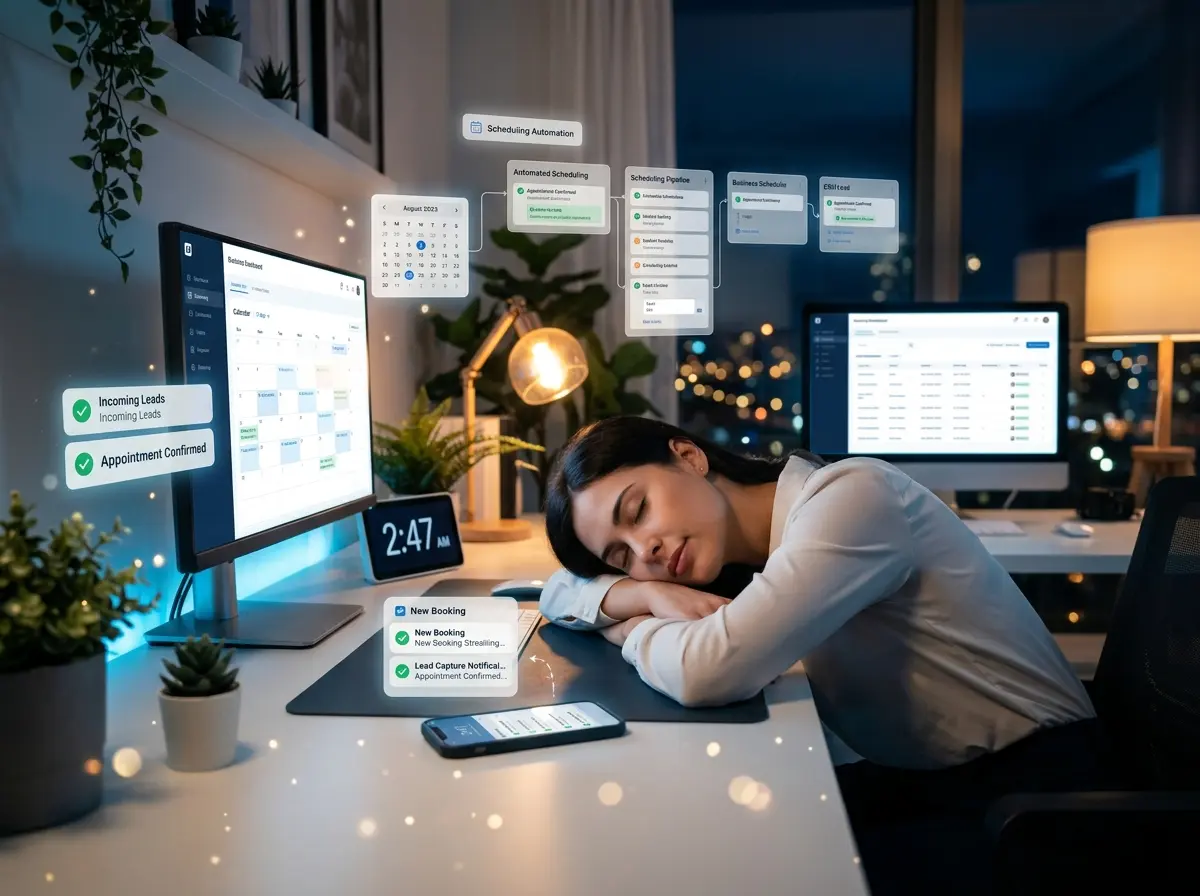
Picture this: It's 9:47 PM on a Tuesday. A potential customer just sat down after a long day, finally had a moment to themselves, and thought, "You know what? I've been meaning to get new glasses. I wonder if that optometry place near me carries those trendy titanium frames I saw online." They pick up their phone, dial your number, and get… voicemail. They hang up. They Google your competitor. You just lost a sale while you were watching Netflix.
It's not your fault — you're a human being who deserves to sleep. But your business doesn't have to. After-hours inquiries are one of the most consistently missed revenue opportunities for optometry practices, and frame selection questions are among the most common. Patients want to know what brands you carry, whether you have a particular style or material, if you accept their insurance for frames, what the price range looks like — all questions that feel simple but require someone knowledgeable to answer them well.
The good news? AI has officially entered the chat. And the optical industry is ripe for it.
Why After-Hours Frame Inquiries Are a Bigger Deal Than You Think
The Window of Intent Is Narrow
Consumer behavior research consistently shows that buyers are most likely to act on a purchase decision within minutes of their initial inquiry. Studies have found that responding to a lead within five minutes makes you up to 100 times more likely to connect with that prospect compared to waiting even 30 minutes. When someone wonders about your frame selection at 10 PM, they're not going to pencil a reminder into their calendar to call you at 9 AM. They're going to find an answer somewhere — and if it's not from you, it'll be from your competition.
Optometry is a surprisingly competitive retail environment. Between big-box optical chains, online eyewear retailers, and independent practices all vying for the same patients, first-mover advantage matters. The practice that answers the question first is often the one that earns the appointment.
Frame Selection Is Surprisingly Conversation-Heavy
Unlike buying a book or a pair of headphones online, selecting eyeglass frames is a nuanced, personal experience. Patients want to know about face-shape compatibility, available materials (acetate, titanium, stainless steel), brand selection, lens compatibility, pricing tiers, and whether their insurance covers designer frames versus budget options. These aren't questions a static FAQ page handles well — they require a back-and-forth dialogue that feels personal and informed.
This is exactly the kind of interaction where a well-trained AI assistant shines. It can hold a natural conversation, ask clarifying questions, and guide a curious browser toward becoming a booked appointment — all without a human staff member lifting a finger.
The Hidden Cost of Unanswered Questions
Beyond lost sales, unanswered after-hours inquiries create a secondary problem: they pile up. Your front desk team arrives in the morning to a queue of voicemails, missed calls, and sometimes frustrated patients who called multiple times. That backlog slows down your morning, increases stress for your staff, and creates a negative first impression for patients who expected a more responsive experience. Multiply that across a week, and you're looking at a meaningful drag on both revenue and team morale.
How AI Can Step In and Actually Help
Meet the Staff Member Who Never Clocks Out
This is where tools like Stella come in. Stella is an AI robot employee and phone receptionist that can handle after-hours calls with the same knowledge your best front desk team member would use during business hours. She can answer questions about which frame brands your practice carries, walk a caller through your pricing tiers, explain your insurance policies, and even help a patient figure out what style might suit them — all in a natural, conversational way.
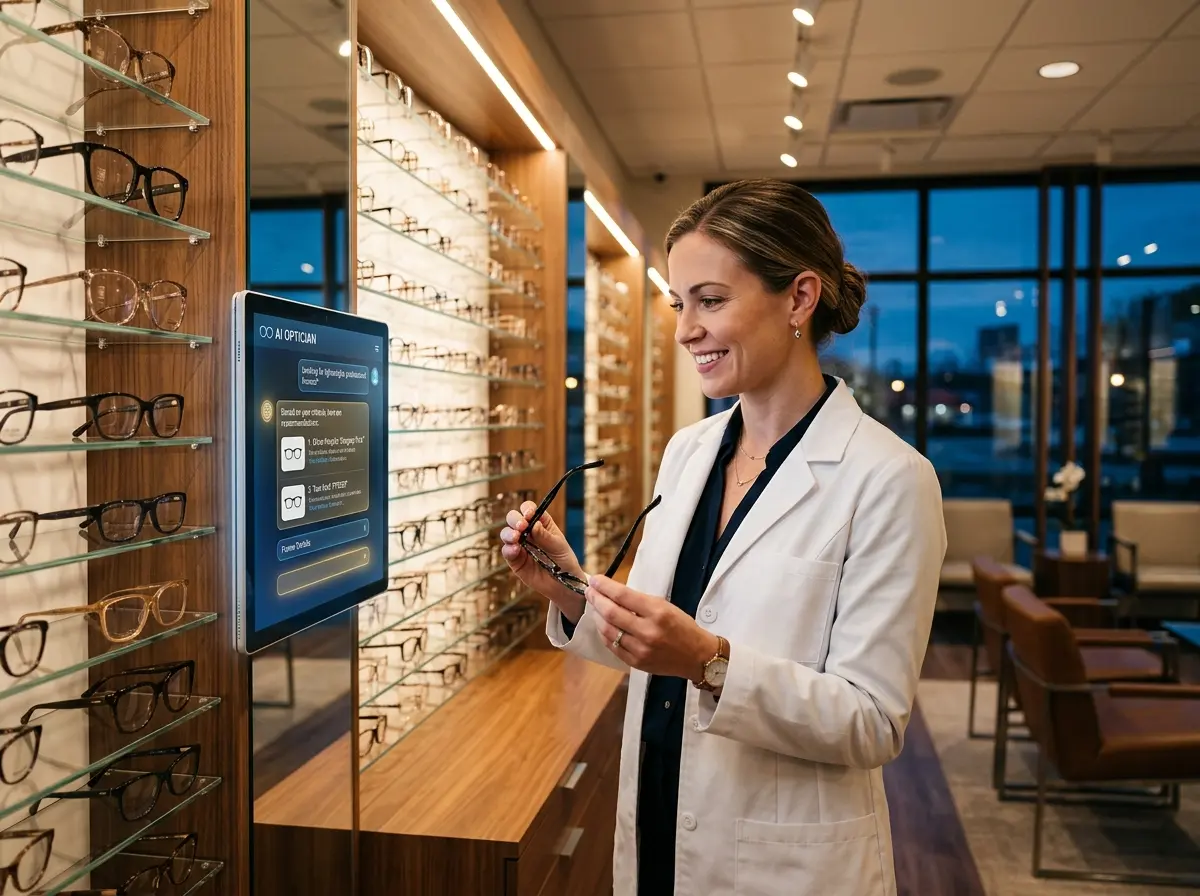
For optometry practices with a physical location, Stella also functions as an in-store kiosk — a friendly, human-sized AI presence that greets walk-in browsers, answers frame questions on the spot, and frees up your optical staff to focus on the hands-on work that actually requires a human. She can even promote current frame specials or lens upgrade deals, handling the upsell conversation so your team doesn't have to.
Her built-in CRM and intake forms mean she's not just answering questions — she's collecting caller information, logging interactions, and giving you AI-generated summaries of every conversation so you wake up informed, not overwhelmed.
Practical Ways to Set Up After-Hours Frame Inquiry Handling
Build a Comprehensive Frame Knowledge Base
Before any AI tool can help you, you need to give it something to work with. Think of this as creating the ultimate briefing document for a new employee — one who will represent your practice confidently at 11 PM on a Friday. Your knowledge base should include:
- A full list of frame brands and collections you carry, with brief descriptions of each
- Price ranges by category (budget, mid-range, designer, specialty)
- Materials you stock and their benefits (lightweight titanium, flexible memory metal, durable acetate, etc.)
- Insurance participation details and how coverage typically applies to frames
- Your current promotions or frame specials
- Your fitting and adjustment policies
The more specific and organized this information is, the more confidently and accurately your AI assistant can guide a caller. Vague information produces vague answers — and vague answers don't book appointments.
Define Clear Escalation Rules
Not every after-hours call needs to be fully resolved by AI. Some callers have urgent needs or complex situations that genuinely require a human. Set up your AI phone system with clear escalation logic: if a caller mentions a prescription emergency, an injury, or a specific complaint, the system should route them appropriately — either to an on-call number, a detailed voicemail with a next-steps message, or a promise of a priority callback in the morning.
For the majority of frame inquiries, though, the AI can handle it completely. The key is being intentional about where you draw the line, and configuring your system to reflect that clearly.
Use After-Hours Interactions to Drive Appointment Bookings
The ultimate goal of any after-hours conversation isn't just to answer a question — it's to move the customer closer to your chair. Program your AI to naturally guide frame inquiries toward a next step: booking a frame styling consultation, scheduling a comprehensive eye exam, or asking for the caller's contact information so a team member can follow up with personalized recommendations. Even if the patient isn't ready to commit at 10 PM, capturing their information and interest means your morning team starts the day with warm leads, not cold calls.
Quick Reminder About Stella
Stella is an AI robot employee and phone receptionist built for businesses like yours — available as an in-store kiosk and a 24/7 phone answering solution, starting at just $99/month with no upfront hardware costs. She's easy to set up, professionally represents your practice around the clock, and never calls in sick the day before a holiday weekend.
Stop Losing Patients to Voicemail
The optometry practices that will thrive over the next decade aren't necessarily the ones with the biggest selection or the lowest prices — they're the ones that are easiest to do business with. Responsiveness is a competitive advantage, and after-hours availability is no longer a luxury reserved for large corporate chains. With accessible AI tools, even a single-doctor independent practice can offer the kind of always-on customer experience that used to require a full-time call center.
Here's what you can do right now to start closing the gap:
- Audit your current after-hours call experience. Call your own practice at 8 PM tonight and see what a potential patient actually experiences. You might be surprised.
- Document your frame inventory and policies in a clear, organized format that could be handed off to an AI system (or a new employee, for that matter).
- Explore AI phone receptionist options that can be trained on your specific offerings and configured to match your practice's tone and policies.
- Set a goal for after-hours inquiry conversion. If you don't measure it, you can't improve it. Track how many after-hours contacts turn into booked appointments over the next 90 days.
Your frames are sitting in your display cases right now, waiting to be talked about. With the right AI setup, they don't have to wait until morning to start the conversation.