The Tuesday Night Ghost Town Problem (And How to Fix It)
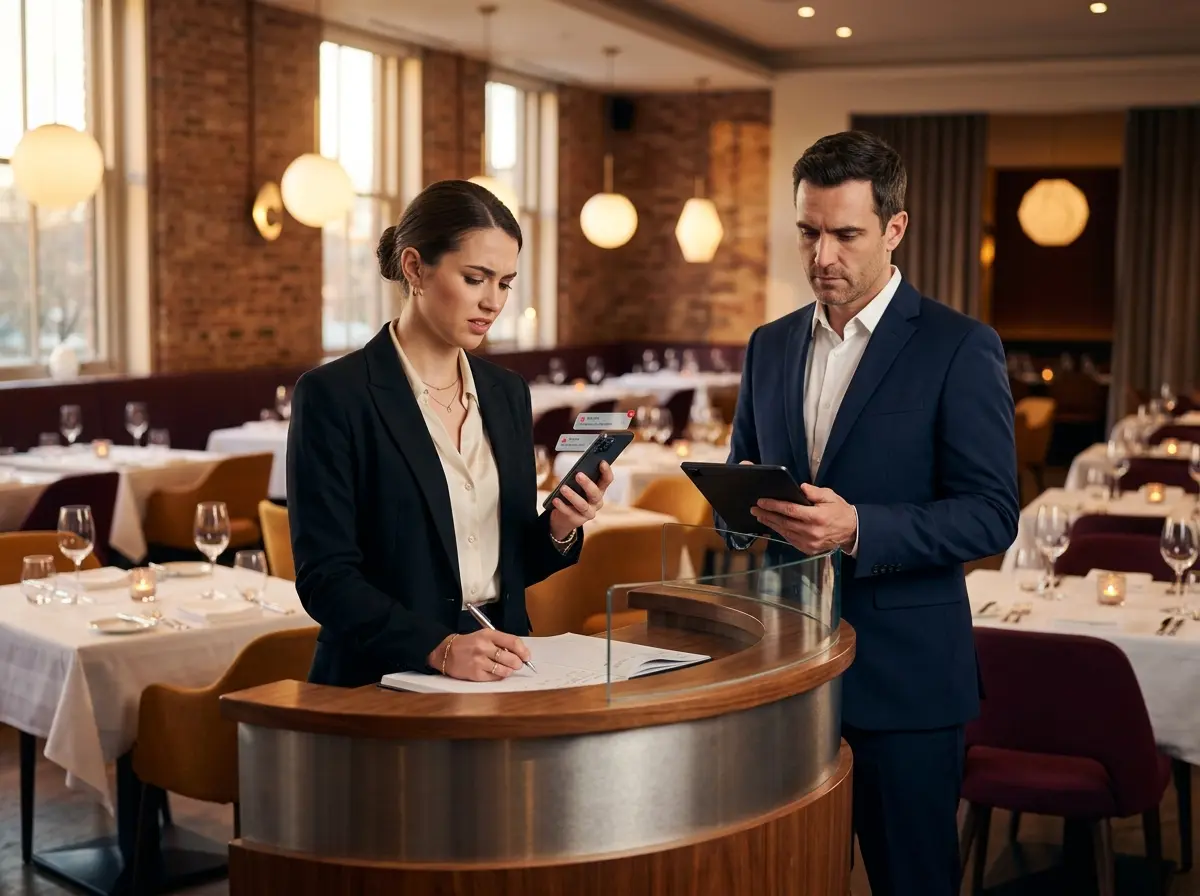
Every restaurant owner knows the feeling. Friday night? You're turning people away at the door, your staff is in full sprint mode, and the energy is electric. But Tuesday at 7 PM? You could roll a bowling ball through your dining room and not hit a single customer. The candles are flickering on empty tables, your kitchen staff is playing phone games, and your overhead costs don't care one bit that it's a slow night.
Weekday evenings are the silent profitability killer in the restaurant industry. The good news? Google Ads — when used strategically — can be one of the most effective tools for pulling hungry locals off their couches and into your seats on those sluggish weeknights. We're not talking about vague brand awareness campaigns that may or may not do something eventually. We're talking about targeted, intent-driven advertising that reaches people who are actively searching for a place to eat right now, in your neighborhood, on a Wednesday.
Let's break down exactly how to make Google Ads work for your restaurant's slow nights — without blowing your entire marketing budget before the weekend even arrives.
Building a Google Ads Strategy Designed for Weeknight Traffic
Start with Ad Scheduling — Your Most Underrated Tool
Most restaurant owners who dabble in Google Ads make the same mistake: they run their ads around the clock and wonder why their budget evaporates before Thursday. The fix is elegantly simple — ad scheduling, also known as dayparting.
Google Ads allows you to specify exactly when your ads appear. For a restaurant trying to fill weekday evening seats, you might set your ads to run Monday through Thursday from 3:00 PM to 9:00 PM — right when people are wrapping up work, feeling hungry, and searching for dinner options. You can even increase your bid amounts during peak decision-making windows, like 5 to 7 PM, to ensure your ad wins more auctions during the moments that matter most.
This approach means you're not wasting impressions at 2 AM on a Sunday when the only people Googling restaurants are insomniacs and shift workers. Every dollar works harder because it's deployed precisely when your ideal customer is making their "where should we eat tonight?" decision.
Use Hyperlocal Targeting to Reach Your Actual Neighborhood
Google Ads lets you target by geographic radius, and for a restaurant, this is everything. A person sitting 45 minutes away doesn't care about your Tuesday pasta special. But someone three miles away who just finished a long workday? That's your customer.
Set your location targeting to a tight radius — typically 3 to 7 miles depending on your market — and layer in location bid adjustments to bid more aggressively on users who are closest to your restaurant. You can also target specific zip codes or neighborhoods if your city has distinct dining districts.
Pair this with location-based ad extensions that show your address, phone number, and distance directly in the ad. According to Google, ads with location extensions see a 10% average increase in click-through rate. When someone searches "dinner near me" on a Tuesday night and your ad shows your address, your hours, and the fact that you're only 1.2 miles away — that's a compelling invitation.
Write Ad Copy That Speaks to the Weeknight Mindset
Your Friday night customer is in celebration mode. Your Tuesday night customer is tired, slightly over cooking at home, and looking for an easy, rewarding decision. Your ad copy should acknowledge that reality.
Lead with your weeknight-specific offer: a prix fixe dinner special, a two-for-one entrée deal, half-price bottles of wine on Wednesdays, or a free appetizer for reservations made before 6:30 PM. Use urgency-driven language like "Tonight Only," "Available Monday–Thursday," or "Limited Seats Available." And make sure your headline answers the searcher's actual question — which is some version of "where should I eat tonight and will it be worth it?"
Strong weeknight ad copy examples might look like: "Tuesday Date Night Special — 3-Course Dinner for $39" or "Skip Cooking Tonight — Weeknight Specials Starting at $14." Keep it specific, keep it enticing, and make the value obvious before they even click.
Converting Clicks into Actual Reservations
Make Sure Your Landing Page Does the Heavy Lifting
Here's a hard truth: a great Google Ad that sends traffic to a slow, confusing, or mobile-unfriendly website will produce exactly zero new customers. Your landing page — whether it's your homepage or a dedicated campaign page — needs to do one job: convert a curious click into a confirmed reservation or walk-in visit.
Your landing page should load in under three seconds (non-negotiable on mobile), display your weeknight offer prominently above the fold, include a one-click reservation button or link to OpenTable, Resy, or your own booking system, and show your hours and address without requiring the visitor to go hunting. Remove distractions. The goal is a single, frictionless path from "I'm interested" to "I have a table."
Let Stella Help Turn Interest into Action
Here's where things get interesting for restaurant owners. You can run the most brilliant Google Ad campaign in the world, but if a potential customer calls your restaurant at 6 PM on a Tuesday and nobody picks up — or they get put on hold for four minutes — you've lost them. That's where Stella, the AI robot employee and phone receptionist, becomes genuinely valuable.
Stella answers every call, 24/7, with full knowledge of your specials, hours, menu highlights, and current promotions — including whatever weeknight deal you're running in your Google Ads campaign. She can handle reservation inquiries, answer questions about the menu, and make sure no lead slips through the cracks during your dinner rush when your staff is too busy to pick up the phone. For restaurants with a physical location, she can also stand at the entrance as a kiosk, greeting walk-ins and proactively promoting your current evening specials before a host is even free to greet them. At $99/month, she's significantly more affordable than a missed reservation.
Measuring, Optimizing, and Not Wasting Money
Track the Metrics That Actually Matter for Restaurants
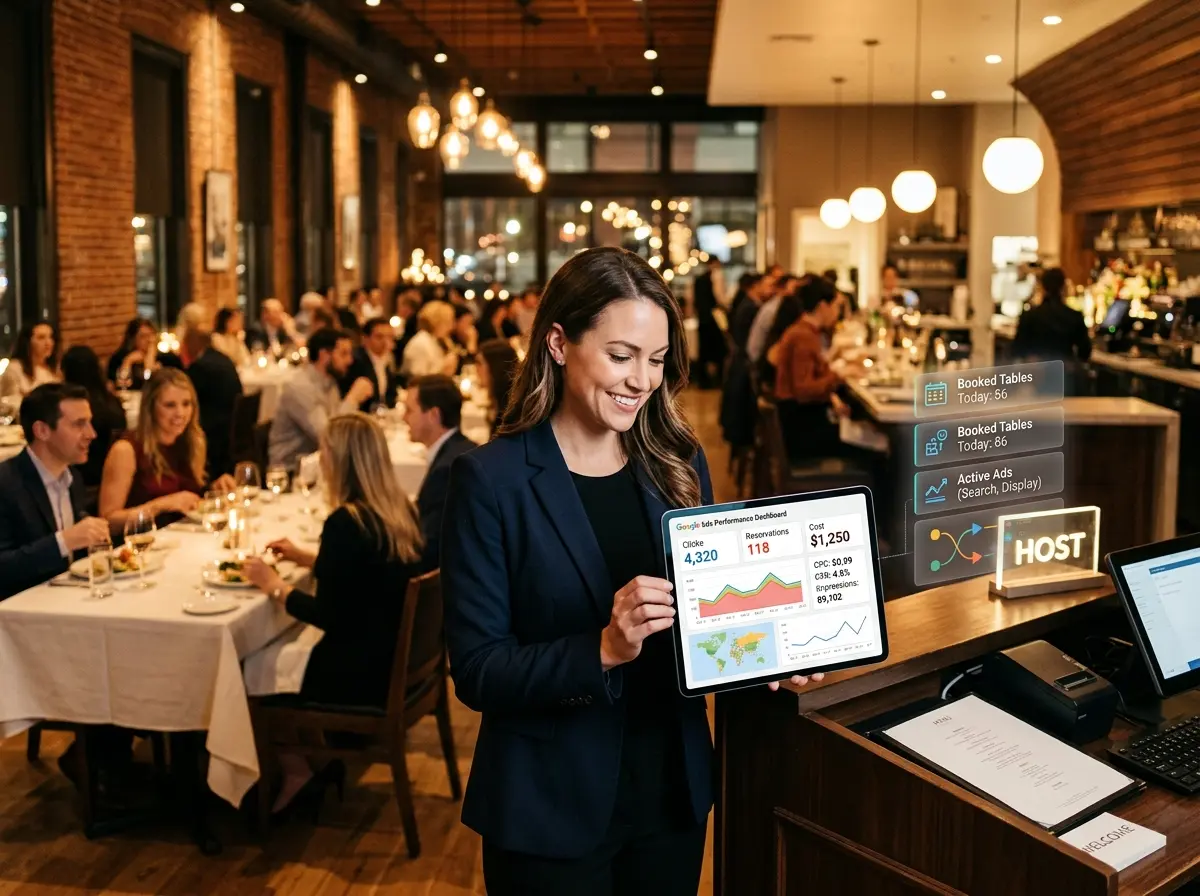
Google Ads gives you a firehose of data, and it's easy to get lost staring at impressions and average CPC without actually knowing if your campaign is working. For a restaurant focused on weeknight foot traffic, the metrics you care about most are call clicks (people who clicked your phone number directly from the ad), direction requests (people who asked for navigation to your location), and reservation conversions if you have that tracking set up on your booking page.
Set up conversion tracking in Google Ads and Google Analytics from day one. Without it, you're flying blind and making budget decisions based on vibes rather than data. Most restaurant owners skip this step and then conclude that "Google Ads doesn't work" — when in reality, they just didn't have the visibility to optimize properly.
Run Experiments and Refine Weekly
The beautiful and occasionally maddening thing about Google Ads is that it rewards active management. Don't set your campaign and forget it. Spend 20 to 30 minutes each week reviewing your search term reports — these show you the actual phrases people typed before seeing your ad. You'll often discover irrelevant traffic eating your budget (someone searching "restaurant jobs" rather than "restaurant dinner") that you can eliminate with negative keywords.
Test two or three versions of your ad headlines simultaneously using Google's responsive search ads format. Over time, Google's algorithm will learn which combinations drive the most clicks, and you'll have real data to inform what messaging resonates with your weeknight audience. Also, don't be afraid to raise your bids on Thursday evenings — research suggests that Thursday has quietly become one of the strongest restaurant nights of the week as more people treat it as a pre-weekend occasion.
Set a Realistic Budget and Scale What Works
A common question from restaurant owners new to Google Ads is: how much should I spend? For a local restaurant targeting weeknight traffic, a starting budget of $15 to $30 per day during your target windows is a reasonable entry point. This gives you enough data to evaluate performance without overcommitting. Once you identify which campaigns, keywords, and ad variations are driving real reservations, you can scale those confidently while cutting what isn't performing.
Think of your first 30 to 60 days as a paid learning phase. You're buying data as much as you're buying traffic. The restaurants that win with Google Ads are the ones that stay patient, stay curious about their data, and keep refining — rather than running one campaign for two weeks, deciding it failed, and giving up entirely.
A Quick Reminder About Stella
Stella is an AI robot employee and phone receptionist built for businesses like yours. She answers phone calls around the clock, greets customers in person at your location, promotes your specials, and handles common questions so your staff can focus on delivering a great dining experience. At just $99/month with no upfront hardware costs, she's one of the easiest ways to make sure your marketing investment doesn't leak out through missed calls and unanswered inquiries.
Go Fill Those Tuesday Night Tables
Weekday evenings don't have to be a profitability problem. With a well-structured Google Ads campaign — built around smart scheduling, tight geographic targeting, honest and enticing ad copy, and a frictionless path to reservation — you can consistently bring new and returning customers through your doors on the nights that need it most.
Here's your action plan to get started:
- Set up a Google Ads account if you don't already have one, and claim your Google Business Profile to enable location extensions.
- Define your weeknight offer — a special, a discount, a unique experience — and build your campaign around it.
- Configure ad scheduling to run Monday through Thursday during evening decision windows (3–9 PM is a solid starting point).
- Set geographic targeting to a 3–7 mile radius and layer in bid adjustments for your closest potential customers.
- Install conversion tracking before you spend a single dollar so your data is clean from day one.
- Review and optimize weekly — prune negative keywords, test new headlines, and scale what's working.
Your kitchen is ready. Your staff is ready. Your tables are waiting. The only thing missing is the customers — and now you have a concrete roadmap to go find them right where they're making their decision, on their phone, searching for somewhere worth going tonight.