Why Your Website Visitors Are Window Shopping — And How to Get Them Through Your Door
Here's a fun little scenario: A potential customer finds your website, browses around for a few minutes, maybe even checks out your hours and location page — and then... nothing. They close the tab and move on with their life. No visit. No purchase. No relationship. Just a sad little blip in your Google Analytics that you'll choose not to think about too hard.
The frustrating truth is that most website visitors never convert into paying customers — not because they weren't interested, but because nothing engaged them at the right moment. Studies suggest that the average website conversion rate hovers around a depressing 2-3%, which means roughly 97% of your visitors are leaving empty-handed. For a business with a physical location, that number stings even more, because these aren't just missed online sales — they're missed in-store visits, missed relationships, and missed revenue that was thisclose to happening.
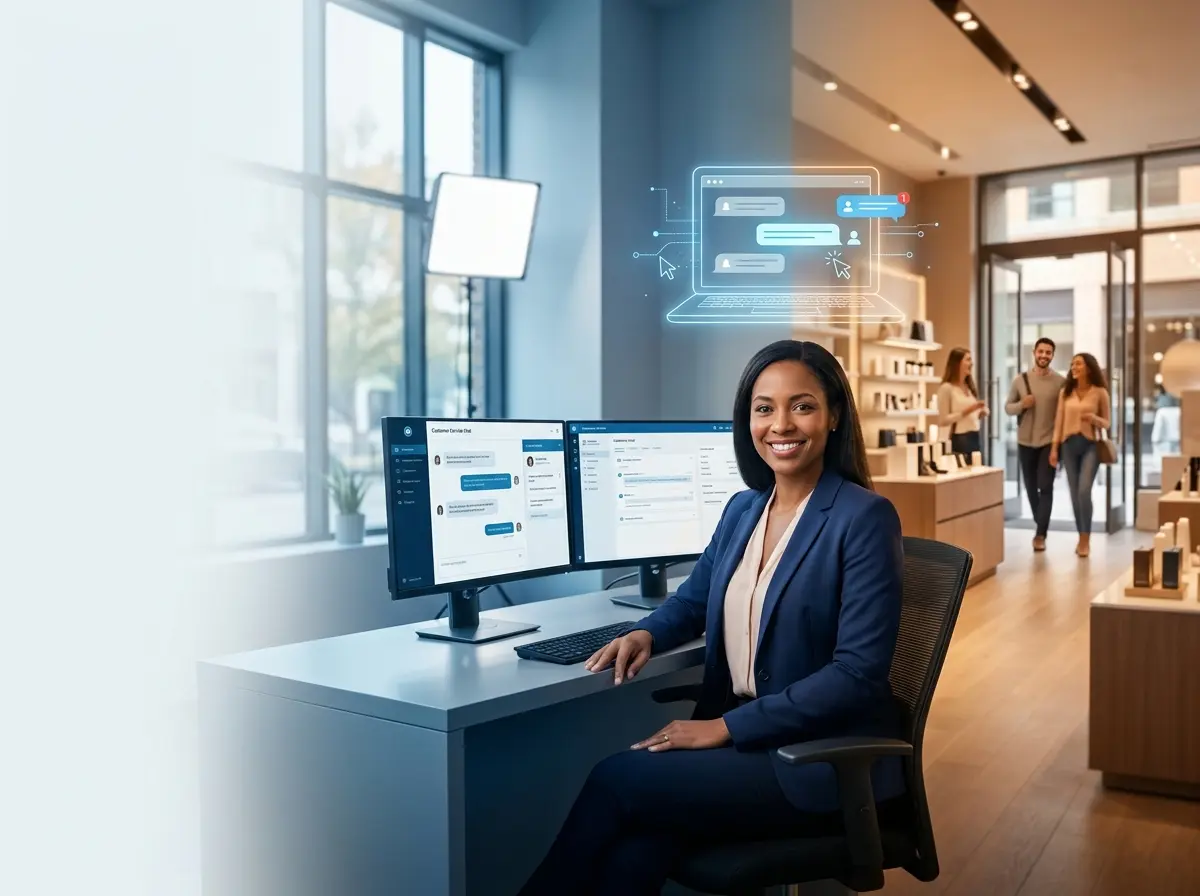
Enter live chat. Not the robotic, "Your message has been received and we'll get back to you in 3-5 business days" variety — but proactive, well-designed chat experiences that actually meet people where they are and give them a reason to make the trip. Let's talk about how to do it right.
Understanding Why Live Chat Works (When Done Right)
The Psychology of the Instant Response
People are impatient. That's not a criticism — it's just the world we live in. When someone has a question while browsing your website, they want an answer in the next 30 seconds, not tomorrow morning. Research from Forrester found that 53% of customers are likely to abandon a purchase if they can't get a quick answer to their question. Live chat bridges that gap by delivering real-time responses that keep visitors engaged instead of sending them to a competitor's site.
What makes this especially powerful for brick-and-mortar businesses is that answering a simple question — "Do you carry XYZ brand?" or "Is parking available nearby?" — can be the entire difference between a visitor who becomes a customer and one who simply disappears. The question was easy. The barrier was small. Your live chat just needed to be there to clear it.
Proactive Chat Triggers: Stop Waiting and Start Engaging
Reactive chat — where a visitor has to click a button and initiate the conversation themselves — is fine. But proactive chat is where the real magic happens. Most modern live chat platforms allow you to set up behavioral triggers that automatically open a chat window when specific conditions are met. Think of it as your digital employee tapping someone on the shoulder at exactly the right moment.
For example, you might configure your chat to pop up when a visitor has been on your "Services" page for more than 45 seconds, or when they're hovering over your hours and directions section (a clear sign they're considering a visit). These aren't random interruptions — they're timely, relevant nudges that say, "Hey, it looks like you might have a question. We're right here." Done well, proactive chat feels helpful rather than pushy, and it significantly outperforms passive chat in conversion rates.
What to Say: Scripts and Conversation Starters That Actually Work
The opening line of your chat message matters more than you'd think. A generic "How can I help you today?" is fine, but a context-aware opener is far more effective. If someone is lingering on your menu page, try: "Thinking about visiting us? We have a few specials this week you might love — want the details?" If they're on your location page: "Need help finding us or checking our current hours? Happy to help!"
The goal is to make the conversation feel natural and personalized, even if it's partially automated. Give your chat agents clear scripts for the most common questions, along with easy escalation paths for anything more complex. And always — always — end a chat interaction with a clear call to action, whether that's sharing your address, offering a discount for first-time visitors, or booking an appointment.
Bridging the Online-to-Offline Gap with Smart Tools
How the Right Technology Can Do the Heavy Lifting
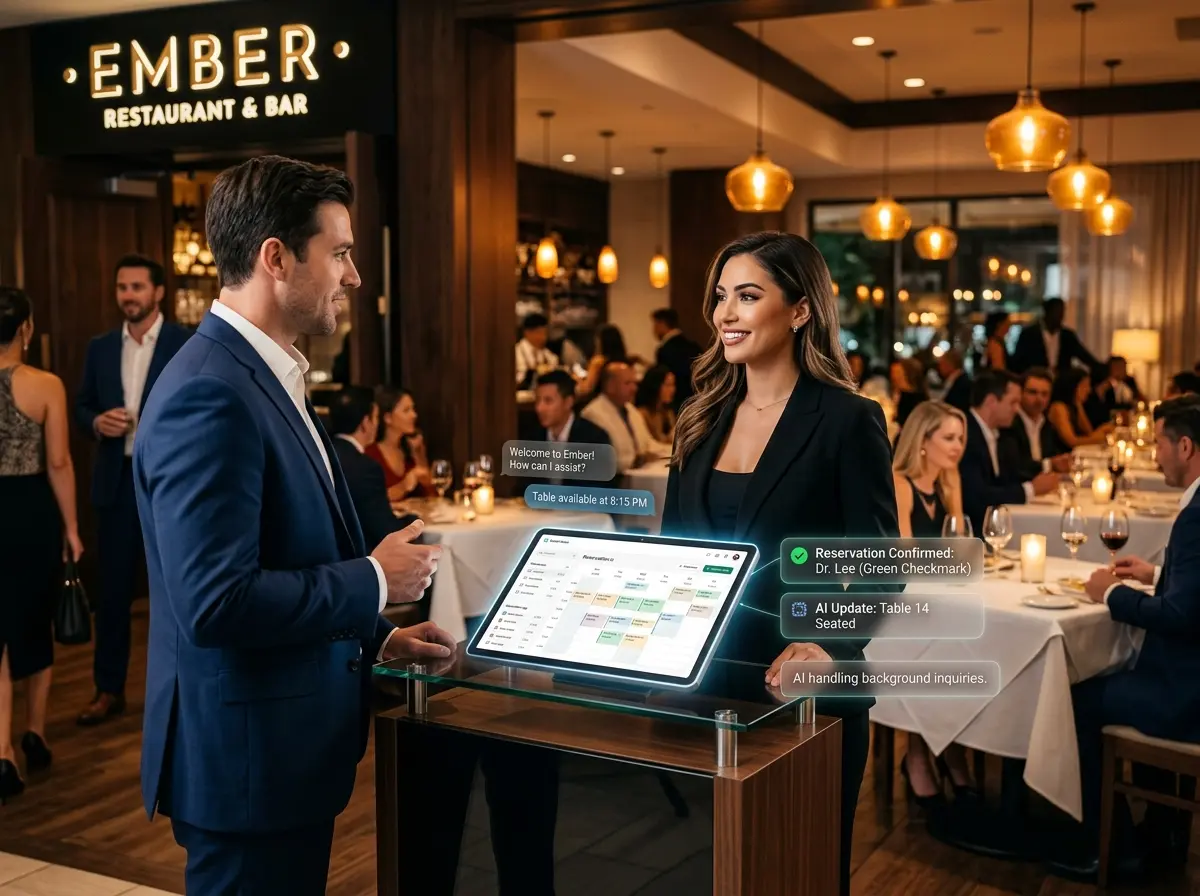
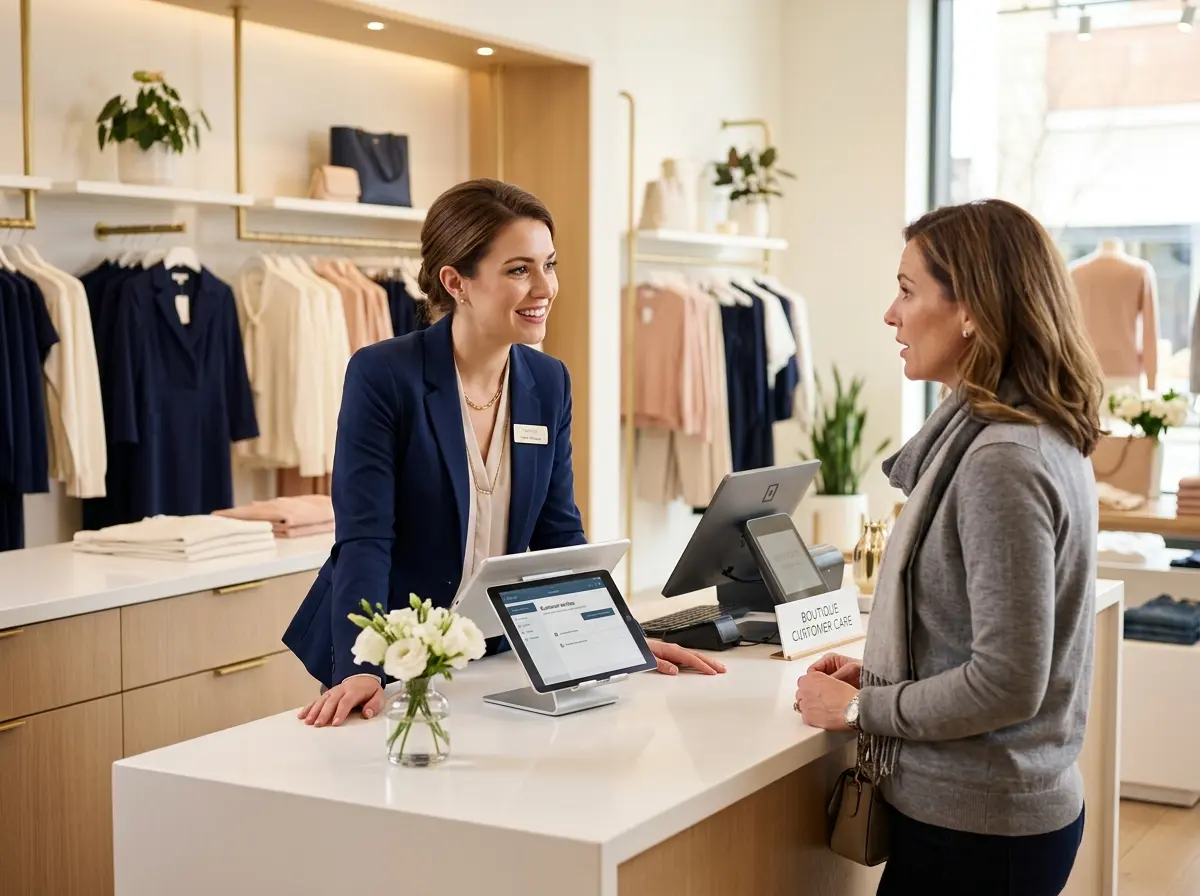
Not every business has the bandwidth to staff a live chat channel during all operating hours, let alone after them. This is where AI-powered tools start earning their keep. Stella, for instance, is an AI robot employee and phone receptionist designed specifically for businesses like yours. She handles customer questions in-person at your physical location via a friendly kiosk presence, and she also answers phone calls 24/7 with the same depth of business knowledge — products, services, promotions, hours, policies, you name it.
For businesses trying to convert online interest into real-world visits, Stella is particularly useful on the phone side of things. A visitor who chatted with your website but still has lingering questions may call your business directly before committing to a visit. If no one picks up, that's often the end of the road. But with Stella handling calls around the clock, those moments of hesitation become moments of conversion instead. She can also collect customer information through conversational intake forms — making it easy to follow up, personalize future interactions, and keep your CRM organized without any extra work on your team's part.
Turning Chat Conversations into Store Visits
Make the Next Step Irresistibly Easy
Here's where a lot of businesses fumble the handoff. The live chat goes great — the visitor is engaged, their questions are answered, they seem genuinely interested — and then the chat ends with... nothing. No clear invitation. No reason to walk through the door today rather than next week (which often means never).
Every chat interaction should end with a soft close toward an in-person visit. This doesn't have to be aggressive or salesy. It can be as simple as, "We'd love to see you in — we're open until 7 PM today if you want to stop by!" or "First-time visitors get 15% off — just mention you chatted with us online." Small, low-friction invitations make a measurable difference. You've already done the hard work of capturing their attention. Don't leave them without a reason to act.
Follow Up Like You Mean It
Live chat platforms that capture contact information before or during a conversation are goldmines for follow-up marketing. If a visitor shares their email or phone number mid-chat, that's permission (and an opportunity) to continue the conversation after they've left your website. A simple follow-up message a few hours later — "Great chatting with you earlier! Here's a little something to make your first visit worthwhile" — can re-engage cold leads and push them over the finish line.
For businesses running appointment-based models (think: salons, medical offices, gyms, law firms), integrating your chat directly with your booking system removes yet another barrier. If someone can schedule their visit within the chat window itself, you've eliminated every excuse not to show up. That's not pushy — that's just good service.
Track, Measure, and Improve
You can't improve what you don't measure, and live chat is no exception. Most chat platforms provide data on response times, conversation volume, common questions, and conversion rates. Use these insights to refine your triggers, update your scripts, and identify which website pages are generating the most chat activity. If you notice that visitors on your pricing page are frequently asking the same question, that's a sign your page needs clarification — and your chat data just told you exactly where to focus.
Treat your live chat like a living system, not a one-time setup. The businesses that get the most out of it are the ones that review their chat logs regularly, test new approaches, and stay responsive to changing customer behavior.
Quick Reminder About Stella
Stella is an AI robot employee and phone receptionist built for businesses of all types — retail, restaurants, gyms, salons, medical offices, service providers, and more. She greets customers in-store from her kiosk, promotes your current deals, answers questions about products and services, and handles phone calls 24/7 with zero breaks and zero turnover. At $99/month with no upfront hardware costs, she's one of the more practical investments you can make in your customer experience right now.
Your Next Move: From Browser to Buyer Starts Here
Live chat isn't a magic bullet, but it's one of the most underutilized tools available to businesses with physical locations. The combination of proactive engagement, smart scripting, and clear calls-to-action can meaningfully move the needle on how many of your website visitors actually become in-store customers. And when you pair that with tools that bridge the gap between digital and physical — like AI-powered phone answering, in-store engagement, and automated follow-up — you're building a system that works even when you're not in the room.
Here's where to start: Audit your current website for chat opportunities. Where are visitors spending the most time? Where are they dropping off? Set up a proactive trigger on those high-intent pages and craft a friendly, specific opening message. Then make sure your chat handoff includes a clear, compelling reason to visit — whether that's an exclusive offer, an easy booking link, or simply a warm, human invitation.
Your website is already getting traffic. It's time to actually do something with it.