Your Phone Is Ringing. Nobody's Answering. Customers Are Leaving.
Let's paint a picture you probably know all too well. It's a Tuesday afternoon, your gym floor is buzzing, your front desk staff is helping three people at once, and somewhere — probably buried under a pile of new member paperwork — your phone is ringing. And ringing. And then... silence. Voicemail. Another potential member who just wanted to ask about your membership prices has now moved on to the gym down the street that actually picked up.
For gym owners, missed calls aren't just an annoyance — they're missed revenue. Studies suggest that 85% of people whose calls go unanswered will not call back. That's not a statistic you can afford to shrug off when each new gym membership could be worth hundreds or even thousands of dollars annually. The good news? This is a completely solvable problem, and you don't need to hire a full-time receptionist to fix it. You just need a smarter system.
Why Gyms Struggle with Phone Management (It's Not Your Fault)
The Front Desk Is Already Doing Five Jobs
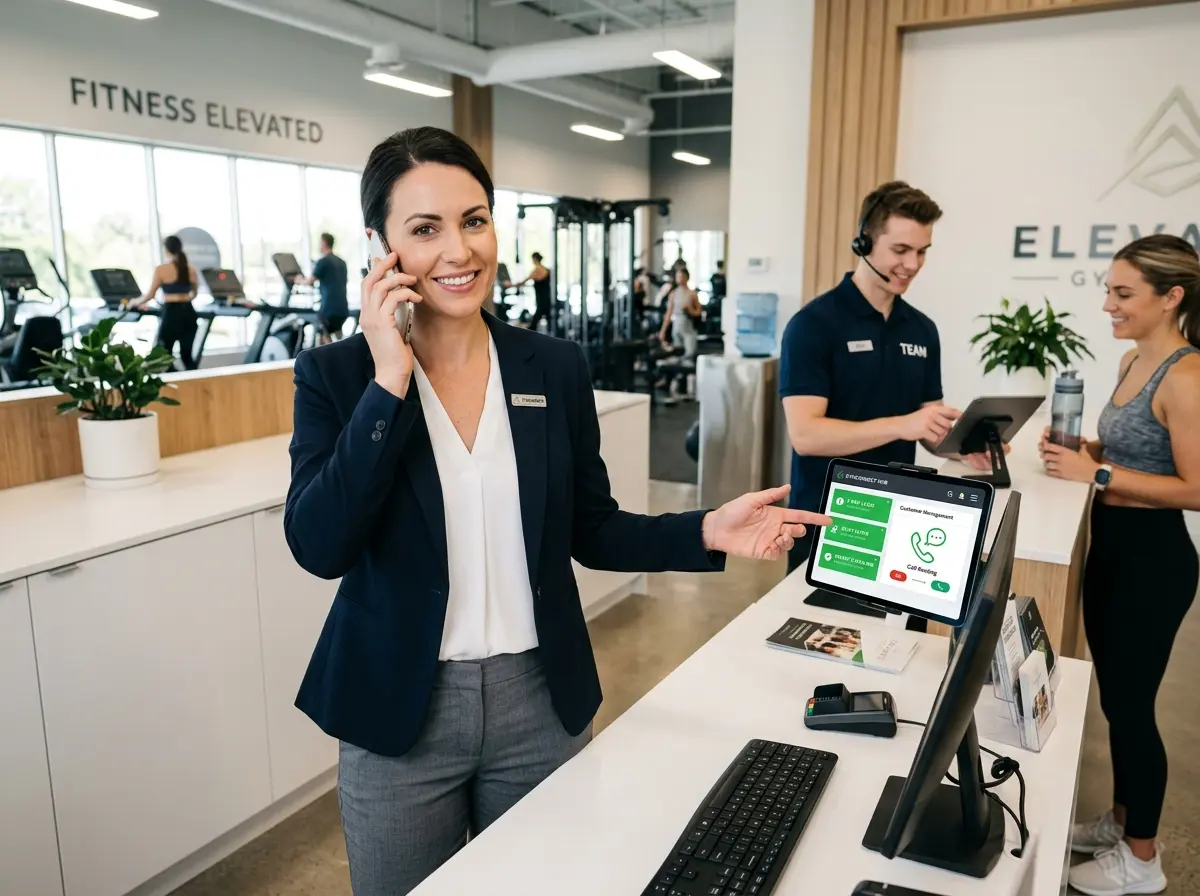
Gym front desk staff are arguably the most overworked employees in the fitness industry. At any given moment, they're checking members in, handling class sign-ups, processing payments, fielding questions about locker room keys, and trying to upsell that personal training package — all with a smile. Expecting them to also answer every inbound call with professionalism and enthusiasm is, frankly, a tall order. Something will fall through the cracks, and more often than not, it's the phone.
The problem isn't effort — your team is probably working hard. The problem is capacity. There are simply more demands than there are hands to manage them, especially during peak hours like early mornings, lunch rushes, and post-work evenings when your floor is packed and your phone is ringing off the hook simultaneously.
Peak Hours Are the Worst Time to Miss a Call
Here's the painful irony: the times when your gym is busiest are the exact times when prospective members are most likely to call. Someone finishes work at 5:30 PM, decides they want to join a gym, and picks up their phone. Your staff is slammed. The call goes to voicemail. That person hangs up, opens Google, and calls your competitor. You didn't lose that member because your gym isn't great — you lost them because nobody picked up at the worst possible moment.
This isn't a staffing failure; it's a systems failure. And the fix isn't necessarily hiring more people. It's building a communication infrastructure that handles volume without depending entirely on human availability.
Voicemail Is a Dead End (And Everyone Knows It)
Let's be honest: voicemail is where leads go to die. Even when your staff dutifully checks messages and plans to call back, those return calls often happen hours later — long after the prospect has already made a decision. And that's assuming the voicemail was even left in the first place. A large portion of callers, especially younger demographics, simply hang up when they reach voicemail. They don't leave a message. They don't try again. They're just gone.
If your phone system's backup plan is voicemail, you need a better backup plan.
A Smarter Communication System for Your Gym
Let Technology Handle What Humans Shouldn't Have To
The fitness industry has embraced technology in almost every corner — from app-based class booking to wearable fitness tracking to automated billing. Phone communication is one of the last areas where many gyms are still operating like it's 2005. That gap represents a real competitive disadvantage, and closing it doesn't have to be complicated or expensive.
Stella, an AI robot employee and phone receptionist, is built exactly for this kind of problem. She answers every inbound call — 24 hours a day, 7 days a week — with the same knowledge your best staff member would have about your gym's memberships, class schedules, personal training options, pricing, and policies. She can collect new member information through conversational intake forms right on the call, so you wake up to a CRM full of warm leads instead of a voicemail inbox full of missed opportunities. And if a call genuinely needs a human — say, a billing dispute or a complex situation — Stella can forward it based on rules you configure, so nothing important slips through.
For gyms with a physical location, Stella also operates as a friendly in-store kiosk, greeting walk-in visitors proactively, answering questions, and promoting current membership deals — so your front desk team can stay focused on the people they're already helping.
Building a Better Member Communication Strategy
Set Clear Call Routing Rules Before You Need Them
One of the most impactful things you can do right now — regardless of what tools you use — is define exactly what should happen with every type of inbound call. Not every call needs a human, but some absolutely do. A prospect asking about membership pricing? That can be handled automatically. A member reporting a broken piece of equipment? Maybe that gets routed to your manager. A billing complaint from a long-time member? Definitely human territory.
Sit down with your team and map out your most common call types. Then decide, for each one, what the ideal response looks like and who (or what) should handle it. Having this documented means you can train staff, configure tools, and set expectations consistently — instead of leaving it up to whoever happens to be closest to the phone.
Capture Every Lead, Even the Ones Who Don't Call Back
Every missed call is a missed opportunity to gather information. When someone calls your gym and hangs up at voicemail, you've lost not just the conversation but the contact. A smarter system captures caller information, logs it, and gives you a chance to follow up proactively. Whether that's through an AI receptionist that collects details during the call, a CRM that tracks inbound inquiries, or a follow-up text sent automatically after a missed call, the goal is the same: no lead should vanish into the void.
Consider also making it easy for people to reach you through multiple channels. Some people will always prefer to call. Others want to text, use a web form, or chat online. Meeting prospects where they are — rather than forcing them through a single channel — dramatically increases your chances of converting interest into membership.
Train Your Team to Handle the Calls They Do Take Better
Even with technology helping to manage volume, your human staff will still be on the phone regularly — and how they handle those calls matters. A few best practices worth reinforcing: always answer with a consistent, upbeat greeting; ask discovery questions rather than just answering and hanging up; have a clear next step ready (schedule a tour, offer a free trial class, send a membership breakdown via text); and follow up when you say you will. These small habits compound into significantly better conversion rates over time.
Consider doing a quick monthly review of how inbound calls are being handled. Listen to recordings if your system supports it, identify patterns in what people are asking, and use that information to update your scripts, your FAQ responses, and your overall communication approach.
Quick Reminder About Stella
Stella is an AI robot employee who works as both an in-store kiosk greeter and a 24/7 phone receptionist — answering questions, collecting lead information, promoting your gym's current offers, and forwarding calls to staff when needed. She runs on a $99/month subscription with no upfront hardware costs, is easy to set up, and never calls in sick. For gyms that are tired of losing members to missed calls and overwhelmed front desks, she's worth a serious look.
Start Answering Every Call — Starting Today
Missing calls at your gym isn't just a customer service issue — it's a revenue issue. Every unanswered call is a potential member who may never walk through your doors. The fix isn't working harder; it's working smarter by building systems that handle communication reliably even when your team is stretched thin.
Here's where to start:
- Audit your current call handling. How many calls are you actually missing? Check your voicemail volume, review any missed call logs, and get an honest picture of the gap.
- Map your call types and ideal responses. Know what a great answer looks like for every common inquiry before the next call comes in.
- Explore AI phone receptionist tools like Stella that can close the gap between call volume and staff capacity without adding headcount.
- Build a follow-up process for any lead that doesn't convert on the first contact — and make it automatic where possible.
Your competitors are already dropping the ball on phone communication. That's an opportunity for you. Build a system that answers every call, captures every lead, and gives every prospective member a reason to choose your gym — and then actually shows up when they reach out.