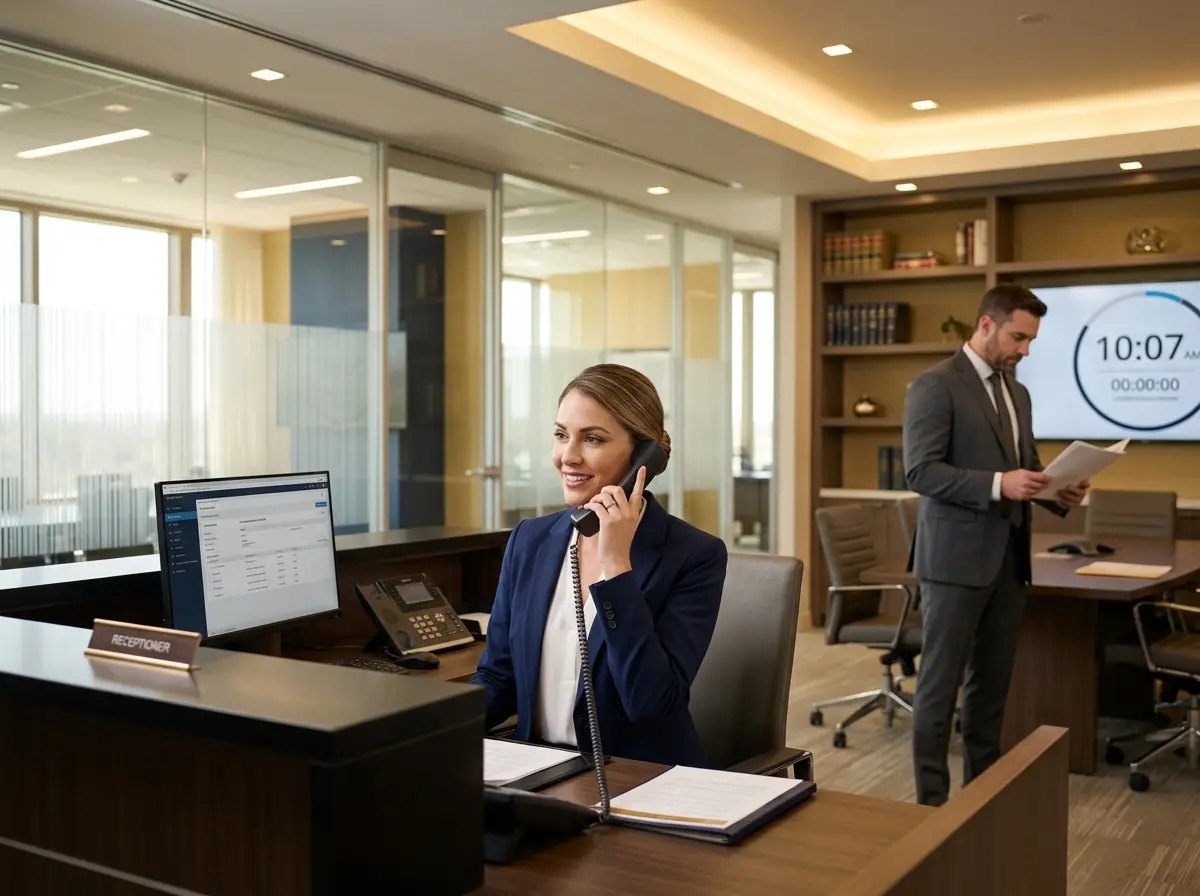
The Clock Is Already Ticking
Research consistently shows that the odds of successfully contacting and converting a lead drop by over 80% after just five minutes of delay. Some studies put the critical window even tighter — closer to three minutes. For law firms, where clients are often stressed, emotional, and actively comparing options in real time, speed to answer isn't just a nice-to-have. It's the difference between a signed retainer and an empty calendar slot.
Why Speed to Answer Is a Legal Business Issue, Not Just a Customer Service One
The Emotional State of Your Callers Changes Everything
The Hidden Cost of Missed Calls
After-Hours Calls Are Where the Real Opportunity Hides
Here's something most law firms quietly ignore: a significant portion of legal inquiries come in outside of normal business hours. People Google their legal problems at 10:00 PM when the kids are finally asleep. They call on Sunday afternoons when the anxiety becomes too much to sit with. If your phone rolls to voicemail at 5:01 PM, you're systematically missing an entire category of high-intent, emotionally motivated potential clients — people who are ready to hire right now and just need someone to answer.
How Technology Is Closing the Gap for Smart Law Firms
The Rise of AI-Powered Answering for Legal Intake
The most forward-thinking law firms aren't solving the speed-to-answer problem by overstaffing their front desk. They're deploying intelligent, always-on tools that handle initial contact professionally and consistently — regardless of time, day, or call volume. Stella, for example, is an AI robot employee and phone receptionist that answers calls 24/7 with the same knowledge and conversational quality as your best front-desk staff — without the sick days, the lunch breaks, or the turnover.
For law firms specifically, Stella can handle incoming calls by gathering initial intake information through natural conversation, answering common questions about practice areas, hours, and consultation processes, and then forwarding calls to human staff based on conditions you configure. If no one is available, she takes a detailed voicemail and sends AI-generated summaries with push notifications directly to your managers — so nothing falls through the cracks and your team can follow up quickly and intelligently. Her built-in CRM also captures caller information and generates contact profiles automatically, meaning your intake process starts the moment the phone rings, not the moment a human gets around to it.
Building a Speed-to-Answer System That Actually Works
Audit Your Current Call Handling Process Honestly
Train Your Team to Treat Every Call Like a Signed Client
Speed matters, but so does what happens in the first 60 seconds after someone answers. Your receptionist or intake coordinator needs to communicate three things almost immediately: competence, empathy, and next steps. If your front-desk staff opens with a flat, scripted greeting and then immediately asks the caller to spell their name three times, you're losing people who picked up based on speed alone.
Set Clear Escalation and Callback Protocols
Quick Reminder About Stella
Stella is an AI robot employee and phone receptionist designed for businesses of all sizes, including law firms that need reliable, around-the-clock call coverage without the overhead of additional staff. She answers calls 24/7, captures intake information conversationally, manages contacts through a built-in CRM, and keeps your team informed with AI-generated summaries — all for $99 per month with no upfront hardware costs. For firms with a physical office, she also operates as an in-person kiosk, greeting visitors and answering questions about your services and team.
Stop Losing Clients You Never Knew You Had
In that environment, being good at law is table stakes. Being reachable is what sets you apart.
Here are your actionable next steps:
- Audit your call data this week. Identify your peak missed-call windows and quantify what those gaps are costing you in estimated revenue.
- Review your intake process. Make sure everyone who answers the phone knows what to say, what to capture, and how to make callers feel genuinely helped in under 60 seconds.
- Close your after-hours gap. Whether through AI call answering, a dedicated answering service, or a combination of both, stop letting evening and weekend calls disappear into voicemail oblivion.
- Build and enforce callback protocols. Define maximum response times, assign ownership, and hold your team accountable with actual tracking.