Your Phone Goes to Bed. Your Customers Don't.
Here's a scenario that plays out for roofing companies every single day: A homeowner steps outside on a Tuesday evening, notices their roof looks like it survived a war (spoiler: it didn't), and immediately grabs their phone to find someone who can help. They call the first three roofing companies on Google. Two go to voicemail. One has a full inbox. The homeowner books the fourth company — the one that actually answered — before 9 PM rolls around.
That fourth company? It might not even be the best roofer in town. It just showed up when it mattered.
The roofing business is seasonal, weather-driven, and deeply competitive. Storms don't schedule themselves around your office hours, and neither do anxious homeowners with a bucket sitting under a drip in their living room. If your booking process only works when your team is awake and at their desks, you are — quite literally — sleeping on revenue.
Automated scheduling changes that equation entirely. In this post, we'll walk through how roofing companies can set up after-hours booking systems that capture leads, qualify prospects, and fill your calendar while your crew is getting the rest they deserve before an early job site call.
Understanding the After-Hours Opportunity in Roofing
When Do Roofing Customers Actually Call?
You might assume most roofing inquiries come in during business hours. You would be wrong — or at least significantly underselling the evening rush. Studies on home services businesses consistently show that a substantial portion of service inquiries happen between 6 PM and midnight, particularly after weather events. Hailstorms hit at 3 PM on a Wednesday. By 7 PM, half the neighborhood is on their phone comparing local roofers.
Roofing is also a high-stress, high-ticket purchase. Homeowners don't just want to leave a voicemail and hope for the best. They want to feel like something is being done. If your system can capture their information, confirm their inquiry, and set an appointment — all automatically — they feel taken care of. And a customer who feels taken care of is a customer who doesn't keep shopping around.
The Real Cost of Missed After-Hours Leads
Let's be blunt: every missed call is a potential job you didn't get. The average roofing job in the U.S. ranges from $5,000 to $15,000 or more for a full replacement. If your after-hours silence costs you even two jobs per month, you're looking at five to six figures in lost annual revenue. That's not a rounding error — that's a problem worth solving.
Beyond the lost revenue, there's the compounding effect on your reputation. Homeowners talk, reviews get written, and "I couldn't get anyone on the phone" is a review category all on its own. Automated scheduling doesn't just capture bookings — it signals that your company is organized, responsive, and professional. In a trade where trust is everything, that signal matters.
What Customers Expect Today
Modern customers — even those looking for contractors — have been trained by Amazon, Uber, and every app they've touched in the last decade to expect immediate confirmation. They want to book, get a confirmation, and move on with their evening. A callback promise is fine, but a confirmed appointment is better. Automated scheduling meets customers where they are: impatient, busy, and on their phones at 9:30 PM wondering if their insurance will cover the damage.
How Automated Scheduling Actually Works for Roofing
Setting Up a System That Works While You Sleep
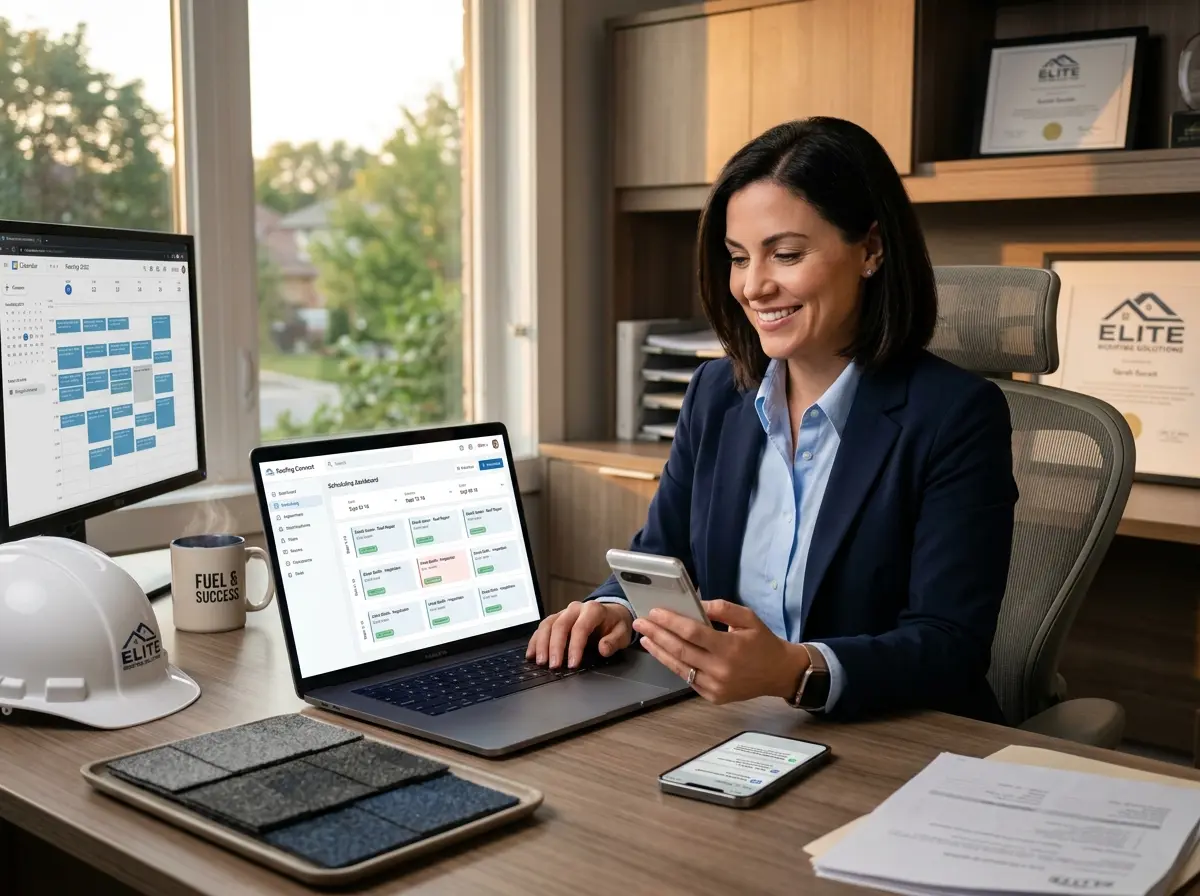
Effective automated scheduling for a roofing company isn't just slapping a calendar widget on your website and calling it a day. It's a connected system that handles the entire intake process: capturing contact information, qualifying the lead (is this a repair, replacement, or inspection?), presenting available time slots, and sending confirmation and reminder communications automatically.
The core components you need are a booking interface (web-based or phone-based), a way to collect job details upfront, calendar integration with your crew's availability, and automated follow-up messages. When these work together, a homeowner can go from "I found this company online" to "I have a confirmed inspection appointment for Thursday morning" in under five minutes — without a single human involved on your end.
Tools like Jobber, ServiceTitan, and Housecall Pro offer roofing-specific scheduling features. Pair these with a phone system that doesn't just ring endlessly or dump callers into voicemail purgatory, and you've got a serious after-hours operation.
Qualifying Leads Automatically So Your Team Shows Up Prepared
One underrated benefit of automated scheduling is that it forces structure into your intake process. When a customer books through an automated system, you decide what information they provide: address, type of roofing issue, estimated age of roof, whether they rent or own, insurance claim or out-of-pocket. Your crew arrives on-site already knowing what they're walking into, rather than finding out for the first time in the driveway.
This pre-qualification also helps you prioritize. Emergency tarping requests after a major storm are different from a "I noticed some missing shingles" inquiry. An automated system can flag urgency levels and route high-priority requests for next-morning callback, while standard inspection requests slot into your regular calendar flow.
Tools and Technology Worth Using
Stella: Your After-Hours Phone Receptionist
Stella is an AI robot employee and phone receptionist that answers calls 24/7 with the same knowledge about your business she'd use during regular hours. For a roofing company, that means she can answer questions about your services, collect intake information from callers through a conversational form, and ensure no lead disappears into voicemail oblivion at 10 PM on a Friday after a storm rolls through.
Beyond phone calls, Stella includes a built-in CRM that stores customer contacts, tags leads, generates AI-powered profiles, and keeps notes on every interaction — so when your team reviews the overnight activity on Thursday morning, they have a clean, organized picture of who called, what they need, and what was captured. She also handles intake forms conversationally, which means customers aren't filling out a cold web form — they're having a natural conversation that happens to collect all the information you need. For roofing companies juggling high call volumes during storm season, that kind of coverage is less of a luxury and more of a necessity.
Making the Most of Your Automated Booking System
Optimize Your Availability Windows Strategically
Automated scheduling is only as good as the availability you put into it. If your system shows no open slots for two weeks, a customer who needed to feel reassured at 8 PM is going to close the tab and call someone else. Consider keeping a small buffer of "inspection slots" specifically reserved for online and after-hours bookings — even just two or three per week. These slots signal availability and give urgent customers a path forward without overwhelming your crew.
Also think carefully about which days and times you open for bookings. Early morning slots on weekdays tend to book well for working homeowners who want to be home for the appointment. Saturday morning slots, if your crew allows it, can be gold during busy season. Review your booking data quarterly and adjust your available windows accordingly.
Don't Let Confirmation Be the End of the Conversation
Automated scheduling shouldn't stop at the booking confirmation email. Build a follow-up sequence that touches the customer at least twice before their appointment: once as a reminder 48 hours out, and once the morning of. Include practical details — who to expect, roughly how long it will take, what happens next after the inspection. Customers who feel informed show up to their appointments. Customers who feel forgotten... don't.
You can also use post-appointment automation to collect reviews. A simple text or email sent two days after the job wraps, asking for a Google review, dramatically increases the volume of feedback you receive. More reviews mean better local rankings. Better local rankings mean more of those 9 PM searches find you instead of your competitor.
Measure What's Working and Adjust
The beautiful thing about automated systems is that they generate data. Track where your bookings are coming from (phone, web form, referral link), what time of day most after-hours bookings occur, how many leads go from booking to completed job, and where drop-offs happen in your funnel. If a significant number of customers book appointments but cancel or no-show, that's a signal your confirmation sequence needs work. If after-hours bookings spike after storms, that's a signal to proactively increase available slots at the start of storm season.
Running a roofing company without looking at this data is like inspecting a roof from the ground — you can get a general sense of things, but you're going to miss the details that matter.
Quick Reminder About Stella
Stella is an AI robot employee and phone receptionist available for just $99/month with no upfront hardware costs. She answers calls around the clock, collects customer information through conversational intake forms, manages contacts through a built-in CRM, and ensures your roofing business never goes dark — even at midnight during a hailstorm. Easy to set up, always ready to work, and never calls in sick the day after a big weather event.
Stop Leaving Roofing Jobs on the Table
The roofing companies that win in competitive markets aren't always the ones with the best crews or the lowest prices. They're the ones that make it easy for anxious homeowners to book quickly, feel confident, and stay informed throughout the process. After-hours automated scheduling is one of the highest-leverage investments you can make in your business infrastructure — it works continuously, scales effortlessly during storm season, and pays for itself the first time it captures a job your voicemail would have lost.
Here's what to do next: audit your current after-hours experience by calling your own business at 8 PM tonight. What happens? If the answer is "it rings and goes to voicemail," you have your answer and your starting point. From there, choose a scheduling tool that integrates with your workflow, set up a basic intake form that captures the information your team actually needs, build a simple confirmation and reminder sequence, and — if you want 24/7 phone coverage that doesn't require hiring a night-shift receptionist — explore what an AI phone assistant can do for your call volume.
Your competitors are still sleeping on this. You don't have to.