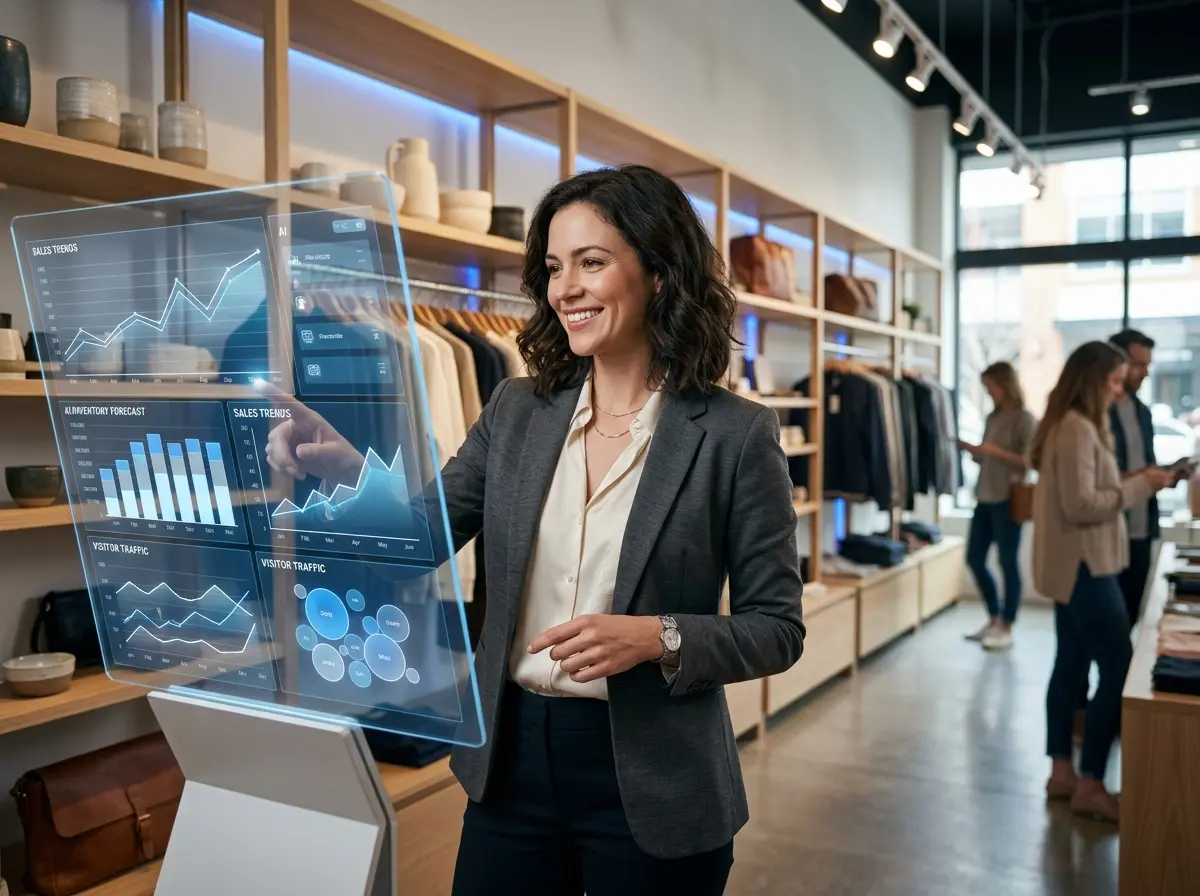
Let's Be Honest: Running a Retail Store in 2025 Is a Lot
Between managing inventory, training staff, keeping up with social media, and actually, you know, serving customers, independent retailers are expected to do the work of a small army — usually with the budget of a lemonade stand. Sound familiar? The good news is that artificial intelligence has officially graduated from "tech buzzword" to "genuinely useful business tool," and in 2025, there's a growing suite of AI-powered solutions built specifically to help independent retailers compete with the big-box giants without needing a venture capital check to do it.
This isn't a post about replacing your team or surrendering your shop to robots. It's about working smarter, saving time, and letting technology handle the repetitive stuff so you can focus on what actually makes your business special. Let's walk through the AI tools that are earning their keep in independent retail right now.
AI for Inventory, Pricing, and Demand Forecasting
If you've ever over-ordered seasonal inventory and spent three months slowly discounting your way out of a mistake, you already understand why AI-powered inventory management is having a moment. These tools analyze your sales history, seasonal trends, supplier lead times, and even local events to help you stock smarter — not just more.
Inventory Management Gets a Brain
Platforms like Lightspeed, Shopify's built-in analytics, and dedicated tools like Inventory Planner are using machine learning to surface reorder recommendations, flag slow-moving SKUs, and predict demand spikes before they happen. For an independent retailer, this means fewer stockouts on your bestsellers and fewer awkward "why do I have 200 of these?" conversations with yourself at year-end.
The practical upside is significant. According to the National Retail Federation, inventory distortion — which includes both overstocks and out-of-stocks — costs retailers globally over $1.77 trillion annually. AI-driven demand forecasting won't eliminate the problem, but it can meaningfully reduce it, even for small shops.
Dynamic Pricing Without the Spreadsheet Nightmare
AI pricing tools can monitor competitor pricing, track your own margin thresholds, and suggest adjustments in real time. Tools like Prisync or Wiser give independent retailers access to the kind of competitive pricing intelligence that used to be reserved for enterprise-level merchants with dedicated analytics teams. You set the rules, the AI does the monitoring, and you stop leaving money on the table — or accidentally underselling your premium products because a competitor dropped their price on something only loosely related.
AI Tools That Actually Talk to Your Customers
Here's where things get interesting — and where a lot of independent retailers are finding the biggest wins. AI that can engage customers directly, answer questions, and reduce the burden on your staff is no longer a futuristic fantasy. It's a $99/month subscription.
Meet the AI Employee Who Never Calls in Sick
Stella is a human-sized AI robot kiosk and phone receptionist designed for businesses exactly like yours. For physical retail locations, she stands inside your store, greets customers who walk by, answers questions about your products, services, hours, and current promotions, and even upsells and cross-sells — all without tying up your staff. For any business, she also answers phone calls 24/7 with the same knowledge she uses in person, takes voicemails with AI-generated summaries, and forwards calls to human staff when needed.
Stella also includes a built-in CRM with custom fields, tags, and AI-generated customer profiles, plus conversational intake forms that work during phone calls, on the web, or right at the kiosk. That means every customer interaction — whether someone walks in asking about your weekend sale or calls after hours to ask about your return policy — gets handled professionally and captured intelligently. At $99/month with no upfront hardware costs, she's the team member your budget has been waiting for.
AI for Marketing, Content, and Customer Engagement
Independent retailers often operate with a marketing budget that would make a corporate marketing manager wince, yet the expectation to maintain a consistent brand presence across email, social media, SMS, and in-store remains very real. AI marketing tools have quietly become one of the most valuable equalizers for small business owners in this space.
Content Creation Without the Creative Block
Tools like Jasper, Copy.ai, and even the built-in AI features inside platforms like Klaviyo and Mailchimp are helping retailers generate product descriptions, email campaigns, social media captions, and promotional copy in a fraction of the time it used to take. The quality has improved dramatically — we're well past the era of robotic, obviously AI-generated text — and most of these tools let you train the system on your brand voice so the output actually sounds like you.
A practical example: a boutique clothing retailer in Austin reported cutting her weekly email marketing prep time from four hours to under forty-five minutes after integrating an AI writing assistant into her workflow. She used the saved time to revamp her in-store visual merchandising — the kind of thing that actually drives impulse purchases and can't be automated (yet).
Smarter Email and SMS Personalization
Personalization has become table stakes in retail marketing, and AI is what makes it scalable for a small team. Modern email platforms use AI to segment your audience automatically, predict which customers are most likely to convert on a given offer, and optimize send times based on individual behavior patterns. Instead of blasting the same "20% off everything" email to your entire list and hoping for the best, you can send the right offer to the right customer at the right time — which consistently outperforms batch-and-blast campaigns by a wide margin.
Reputation Management and Review Monitoring
Your Google reviews are often the first impression a potential customer has of your store, and AI tools like Birdeye, Podium, and ReviewTrackers can automate review request campaigns, monitor mentions across platforms, and even draft personalized responses to reviews for your approval. For an independent retailer who doesn't have a dedicated marketing coordinator, this kind of automated reputation management is genuinely impactful — and the difference between a 3.8-star and a 4.6-star rating is often the difference between a new customer choosing you or your competitor down the street.
Quick Reminder About Stella
Stella is the AI robot employee and phone receptionist built for businesses that want a professional, always-on presence without the overhead. She works in-store as a customer-facing kiosk and handles phone calls 24/7 for any type of business — answering questions, promoting your offers, and capturing customer information through her built-in CRM. If you haven't looked into what she can do for your shop, it's worth two minutes of your time.
Where to Start: Your Action Plan for 2025
The most common mistake retailers make with AI is trying to do everything at once, getting overwhelmed, and doing nothing. Don't be that retailer. The tools exist, they're affordable, and the competitive advantage of adopting them early is real. Here's how to approach it without losing your mind.
Start by identifying your single biggest pain point. Is it inventory chaos? Constant phone interruptions pulling your staff away from customers? Marketing that eats your evenings? Pick one. Find the AI tool that addresses it most directly, implement it properly, and let it run for 60 to 90 days before evaluating results. Only then should you layer in the next tool.
Second, don't underestimate the value of AI that directly touches your customer experience. Inventory software saves you money behind the scenes. AI that greets customers, answers their questions, and promotes your offers drives revenue in real time. Both matter, but customer-facing AI often shows faster, more visible results for retail businesses.
Finally, keep the human element front and center. The independent retailer's greatest competitive advantage over Amazon and big-box stores has always been personal connection — the owner who knows your name, the staff member who remembers your preferences, the store that feels like a community. AI should amplify that advantage, not replace it. Use it to handle the transactional and repetitive so your team can double down on the relational.
The retailers who thrive in the next five years won't necessarily be the ones with the biggest budgets. They'll be the ones who figured out how to work smarter, show up consistently, and use every available tool without losing what makes their store worth visiting in the first place. You've got the tools. Now go use them.