January Is Coming for Your Calendar — Whether You're Ready or Not
Every dog groomer knows the feeling. December is a beautiful chaos of holiday trims, Santa Claus bandanas, and back-to-back bookings. Then January arrives, and suddenly your appointment book looks like a ghost town with tumbleweeds. Your regulars are recovering from holiday spending, the weather is miserable, and apparently nobody cares that their Goldendoodle looks like a sentient dust bunny.
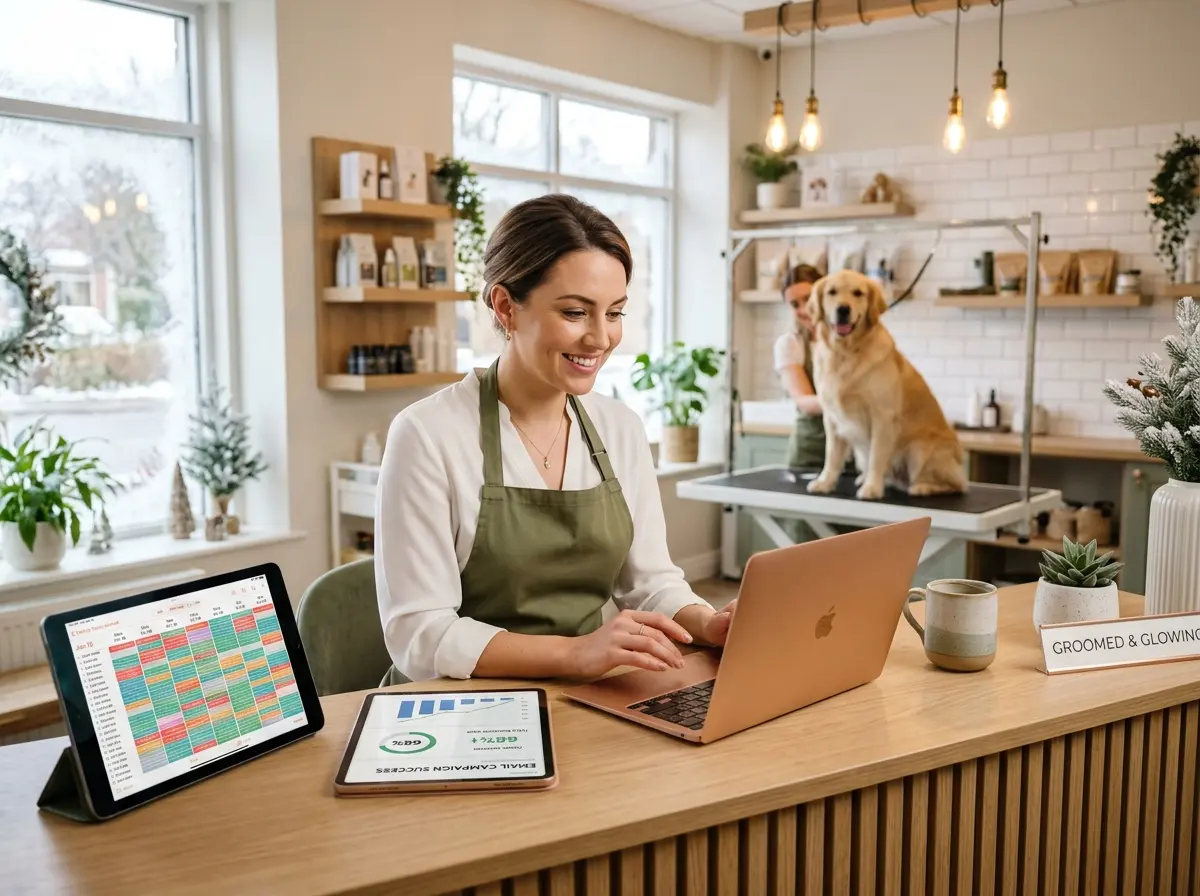
But here's the thing: January doesn't have to be slow. One smart, well-timed email campaign can wake up your dormant client list, re-engage lapsed customers, and fill your calendar before the month even starts. This is the story of how a small dog grooming business turned its slowest month into a surprisingly solid one — with nothing more than a thoughtful email strategy, a little creativity, and a willingness to actually press "send."
If you've been sitting on an email list and not using it, consider this your sign. And your gentle nudge. And maybe your mild guilt trip.
Building the Campaign: Strategy Before You Start Typing
Know Who You're Talking To
The biggest mistake business owners make with email marketing is treating their entire customer list like one homogeneous blob. Your clients are not all the same. Some are loyal weekly visitors. Some came in once in March and never returned. Some have a high-maintenance show dog; others have a scruffy mutt who tolerates exactly one bath per quarter.
Before writing a single word of copy, segment your list. At minimum, separate your active clients (visited in the last 90 days) from your lapsed clients (haven't been in for 4+ months). These two groups need completely different messages. Active clients need a reason to book sooner than they normally would. Lapsed clients need a reason to come back at all — and a gentle reminder that you exist.
The grooming business in our example had about 340 contacts in their list. They identified 180 active clients and 160 lapsed ones, and they wrote separate emails for each group. That one decision alone dramatically improved their results.
Craft an Offer Worth Opening For
A good January email offer solves a real problem for your customer. In the grooming world, that problem is usually one of two things: their dog desperately needs attention after the holidays, or they want to save a little money after December's spending spree. Ideally, your offer addresses both.
The campaign that worked used a simple "New Year, New Coat" promotion — 15% off any full groom booked in January, with a clear expiration date of January 31st. It wasn't revolutionary. It wasn't a marketing masterpiece. But it was specific, it was timely, and it gave customers a concrete reason to act. The expiration date matters more than people realize. Without urgency, most people file the email away under "I'll do this later," which is the email marketing equivalent of a black hole.
Write Subject Lines That Actually Get Opened
Your email doesn't matter if nobody opens it. The average email open rate across industries hovers around 21%, but for local service businesses with a personal relationship with their customers, you can do significantly better. The grooming business tested two subject lines:
- "Your pup deserves a fresh start in 2024 🐾"
- "January special: 15% off full grooms this month only"
The first version won by a wide margin — nearly 38% open rate versus 24%. The lesson? Emotional resonance beats a discount announcement in the subject line. Save the offer details for inside the email, where you have room to make it compelling. Lead with feeling; follow with facts.
Where Stella Fits Into Your Booking Follow-Through
Turning Email Interest Into Actual Appointments
Here's a problem nobody warns you about: email campaigns work. And when they work, your phone rings. A lot. If you're a small grooming operation with one or two staff members, a sudden spike in calls while you're elbow-deep in a Great Pyrenees is not exactly ideal. Missed calls mean missed bookings, and missed bookings mean your January campaign quietly underperforms despite generating real interest.
This is where Stella comes in handy. Stella is an AI robot employee and phone receptionist that answers calls 24/7, handles common questions about services, hours, and pricing, and can collect customer information through conversational intake — even when your hands are full (literally). For a grooming business with a physical location, Stella also greets walk-in customers from her kiosk inside your shop, so nobody feels ignored while you're busy in the back. Whether it's a post-campaign call surge or just a regular Tuesday afternoon, she makes sure every potential booking gets a professional, knowledgeable response.
Executing the Campaign: Timing, Tone, and Follow-Up
Get the Timing Right
The grooming business sent their first email on December 28th — right in that lull between Christmas and New Year's when people are bored, scrolling their inboxes, and mentally planning for the new year. That timing was intentional and smart. It gave clients a chance to book January appointments before January arrived, which meant the calendar started filling before the slow period even began.
They sent a follow-up email to non-openers on January 8th with a slightly adjusted subject line. Then a final "last chance" reminder on January 25th to anyone who had opened but not yet booked. Three emails. That's it. Not a daily barrage, not an aggressive drip sequence — just three well-timed, purposeful touchpoints that respected the customer's inbox while staying top of mind.
Tone Matters More Than You Think
The best service business emails don't read like corporate newsletters. They read like a message from someone you actually know. The grooming business wrote their emails in a warm, conversational tone — first person, light humor, genuine affection for the dogs they work with. One line in the active-client email read: "Honestly, after all those holiday treats and couch naps, [Dog's Name] probably needs us more than ever." Personalization tokens with the pet's name, pulled from their booking system, made each email feel individual rather than mass-produced.
Lapsed clients got a slightly different approach — a softer re-introduction, an acknowledgment that it had been a while, and a "we'd love to see you again" tone rather than a hard sell. Of the 160 lapsed clients emailed, 22 booked appointments in January. That's a 13.75% reactivation rate from customers who hadn't walked through the door in months. Those are not numbers to sneeze at.
Measure Everything (So You Can Do It Better Next Year)
One of the most underused parts of any small business email campaign is the post-mortem. After January wrapped up, the grooming business did a simple review: Which subject lines got the most opens? Which email drove the most actual bookings? Did the lapsed-client or active-client message convert better? What was the total revenue directly attributable to the campaign?
The answers became the foundation for their February campaign. And their March one. Email marketing compounds over time — each campaign teaches you something that makes the next one more effective. If you run one campaign and never look at the results, you're leaving that compounding effect on the table.
Quick Reminder About Stella
Stella is an AI robot employee and phone receptionist designed for businesses of all sizes — including grooming shops, salons, retail stores, and service providers. She answers phones around the clock, greets customers in-store from her kiosk, and keeps your operations running smoothly without breaks, burnout, or sick days. At $99/month with no upfront hardware costs, she's one of the more practical investments a small business can make.
Your January Playbook Starts Now
The grooming business in this story didn't do anything exotic. They used an email platform they already had, a customer list they'd already built, and an offer that was simple and honest. What they did do was actually commit to it — they planned ahead, segmented thoughtfully, wrote emails that sounded human, and followed up without being obnoxious about it.
The result? A January that came in roughly 40% busier than the previous year's. Not a record-breaking month, but a genuinely solid one that proved the slow season doesn't have to be a foregone conclusion.
Here's what you can do right now to replicate it:
- Clean and segment your email list into active and lapsed customers this week.
- Design one simple, time-limited offer that gives people a real reason to book in January.
- Write two versions of your email — one for each segment — with a conversational tone and a subject line that leads with emotion.
- Schedule your first send for late December, with a follow-up cadence of no more than two to three emails total.
- Review your results after the campaign and document what worked before you forget.
January will always try to slow you down. A little planning, a good email, and the right tools in your corner can make sure it doesn't succeed.