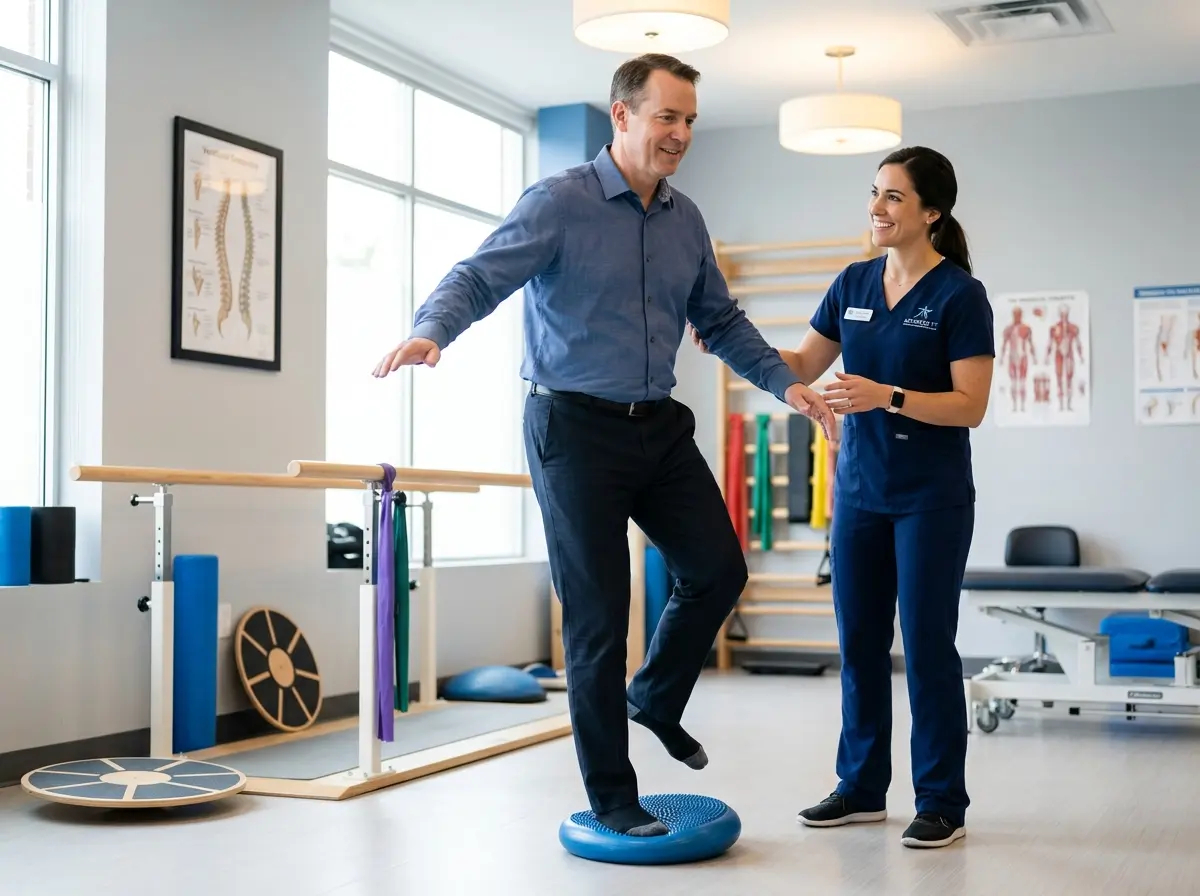
When Patients Can't Stand Still, You Need a Program That Can
Let's be honest — if your physical therapy clinic doesn't have a dedicated balance and vestibular therapy program, you're leaving a significant amount of both patient outcomes and revenue on the table. Falls are the leading cause of injury-related death among adults over 65, and vestibular disorders affect roughly 35% of adults over 40 in the United States. That's not a niche population. That's a waiting room full of people who need exactly what a well-trained PT clinic can offer — and who may currently be getting referred elsewhere because you haven't built the infrastructure to serve them.
The Clinical and Business Case for Vestibular Therapy
The Patient Population Is Larger Than You Think
Revenue Diversification Through Specialty Services
Building a balance and vestibular program adds a meaningful revenue stream that isn't dependent on high-volume orthopedic caseloads. Vestibular evaluations are thorough, billable, and often covered under Medicare and commercial insurance. Specialized assessments like the Dix-Hallpike test, dynamic visual acuity testing, and computerized balance platforms all support medical necessity documentation that justifies your billing.
Differentiation in a Crowded Market
Keeping Your Front Desk Ready for the Influx
New Programs Bring New Calls — Are You Ready?
This is where Stella — the AI robot employee and phone receptionist — can quietly save the day. Stella answers phone calls 24/7, handles common patient questions about your services and programs, and collects intake information conversationally so your staff can focus on what they do best. She also greets patients in your clinic lobby, which means no one is standing awkwardly at the front desk while your team is with a patient. For a specialty program that's actively growing its referral base, having a reliable, always-on front-of-house presence isn't a luxury — it's a practical necessity.
Building a Program That Actually Works
Start With Training and Certification
Invest in the Right Equipment
- Infrared video goggles (VNG goggles) — essential for oculomotor and positional testing
- A firm treatment plinth with adequate clearance for repositioning maneuvers
- Balance testing tools such as foam pads, balance boards, and a reliable outcome measure like the Berg Balance Scale or Dynamic Gait Index
- Computerized balance assessment (optional but powerful) — platforms like the NeuroCom SMART Balance Master or Bertec Balance Advantage offer objective, defensible data for complex cases and physician communication
Create Clear Protocols and Outcome Tracking
Structured programs live and die by their documentation and consistency. Develop standardized evaluation protocols, define your outcome measures from day one, and track them religiously. The Dizziness Handicap Inventory (DHI), the Activities-Specific Balance Confidence Scale (ABC), and functional gait assessments should be part of every vestibular patient's episode of care — at intake, midpoint, and discharge.
A Quick Reminder About Stella
As your clinic grows — especially with a new specialty program generating buzz — the last thing you want is patients getting voicemail during business hours or no answer after hours. Stella is an AI robot employee and phone receptionist that answers calls around the clock, greets patients at your front desk, and keeps your clinic running smoothly even when your human staff is fully occupied. At $99/month with no upfront hardware costs, she's the kind of hire that doesn't call in sick on a Monday morning.
It's Time to Stop Watching Dizzy Patients Walk Past Your Door
- Identify one PT on your team with interest in vestibular rehabilitation and enroll them in a foundational certification course within the next 90 days.
- Audit your current intake and scheduling process to ensure you can handle new referral volume without overwhelming your front desk staff.
- Reach out to one neurologist, ENT, or geriatrician in your market to introduce your developing program and ask about their current referral process for dizzy patients.
- Define your outcome measures and create a simple tracking system before your first vestibular patient walks through the door.