You're Running a Retail Store, Not a Mind-Reading Competition
Picture this: It's Monday morning. Your team trickles in, someone's already on their phone, someone else is rearranging the same display they rearranged last Tuesday, and nobody — nobody — knows that you're running a buy-two-get-one promotion starting today. A customer walks in, asks about it, and gets a blank stare. Fantastic start to the week.
Sound familiar? You're not alone. One of the most consistent problems in retail isn't inventory management, foot traffic, or even staffing — it's communication. Specifically, the 30-second gap between what you know as the owner and what your team actually knows when the doors open. That gap costs you sales, creates inconsistent customer experiences, and makes your hard-earned promotions land with all the energy of a wet napkin.
The fix is simpler than you think, and it doesn't require a new app, a management consultant, or a motivational poster. It's called the daily huddle — a structured, 10-minute team meeting held before your store opens every single day. Done right, it aligns your team, boosts morale, and turns your staff into a coordinated sales machine rather than a group of individuals hoping for the best.
What a Daily Huddle Actually Is (And Isn't)
Not Another Pointless Meeting
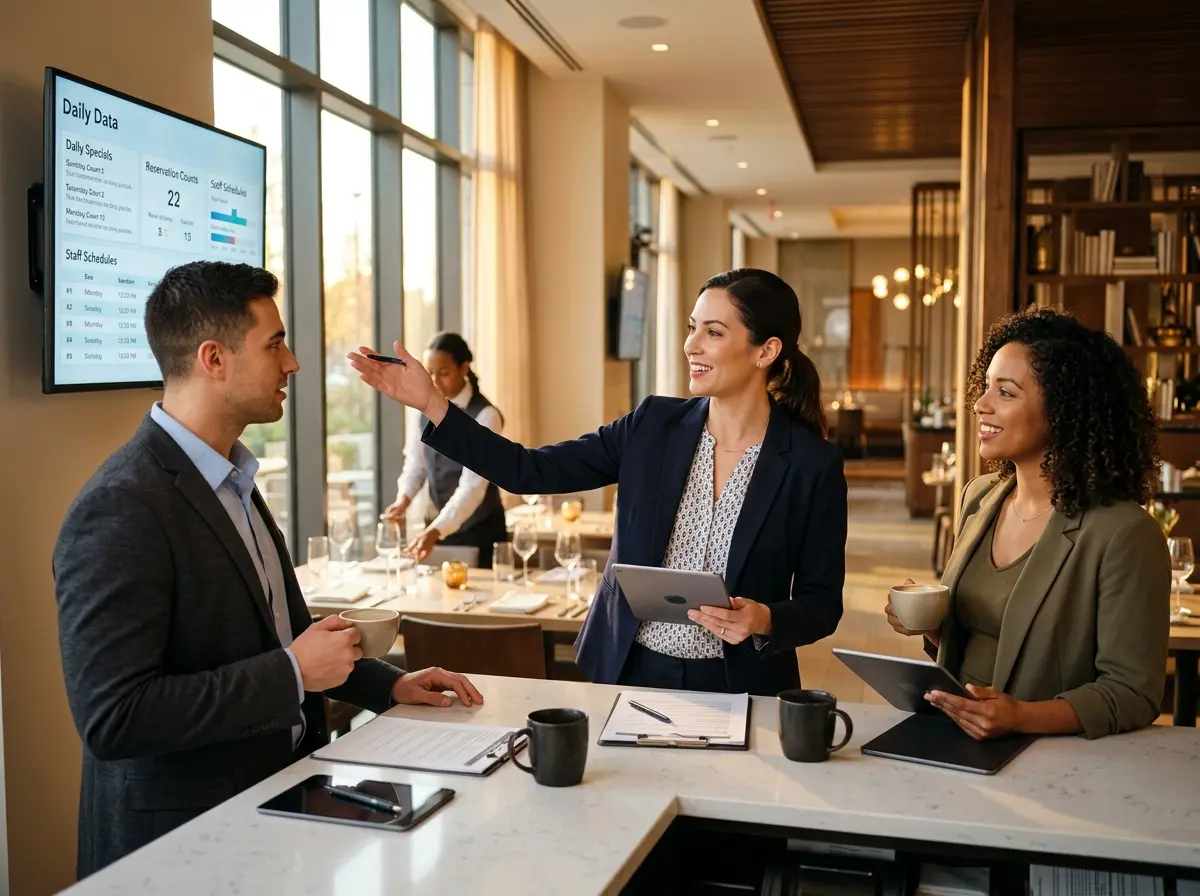
Let's address the elephant in the break room: nobody wants another meeting. Your team especially doesn't want one at 8:45 AM when they're still mentally buffering. But here's the thing — the daily huddle is not a meeting in the traditional, soul-crushing sense. There are no PowerPoint slides. There's no "circling back" or "synergizing." It's standing-room only (literally — everyone stands, which keeps it short), time-boxed to 10 minutes, and ruthlessly focused on three things: what's happening today, what's selling, and who needs to know what.
Think of it less like a corporate all-hands and more like a pre-game locker room talk. Brief, energizing, and purposeful. Research from Harvard Business Review supports this approach — teams that communicate daily about goals and priorities consistently outperform those that don't. Retail, in particular, benefits enormously because the environment changes so frequently: new promotions, different foot traffic patterns, seasonal inventory, and staff rotations all demand real-time alignment.
The Anatomy of a 10-Minute Huddle
A well-run daily huddle has a simple, repeatable structure. You don't need to reinvent it every morning — that defeats the purpose. Here's a format that works:
- Minutes 1–2: Yesterday's wins. What sold well? Did a team member upsell successfully? Celebrate it quickly. This sets a positive tone and reinforces what good looks like.
- Minutes 3–5: Today's priorities. What promotions are active? Are there any inventory constraints staff should know about? Any VIP customers expected? What's the sales goal for the day?
- Minutes 6–8: Focus product or service. Pick one item or service to spotlight. Train briefly on it — a key feature, a common customer question, or a natural upsell opportunity.
- Minutes 9–10: Questions and energy check. Open the floor for 60 seconds, then close with something brief and motivating. Even a simple "let's have a great one" beats silence.
The key is consistency. Run the huddle the same way, at the same time, every day. Within two weeks, your team will expect it — and on the rare day you skip it, they'll notice.
Who Should Lead It?
Ideally, you as the owner or your store manager leads the huddle. Rotating leadership among senior staff is also effective — it builds confidence, develops communication skills, and keeps things fresh. What you want to avoid is letting the huddle drift into a complaint session or an open-ended discussion. Designate a timekeeper, stick to the structure, and table anything that needs more than two minutes of discussion for a separate conversation.
How Technology Can Take the Pressure Off Your Team
Freeing Your Staff to Actually Focus
One reason daily huddles don't stick in retail environments is that staff feel too busy the moment doors open to retain anything. They're answering phones, greeting customers, managing the floor, and handling transactions simultaneously. When your team is constantly reactive, even the best morning alignment evaporates by 10 AM.
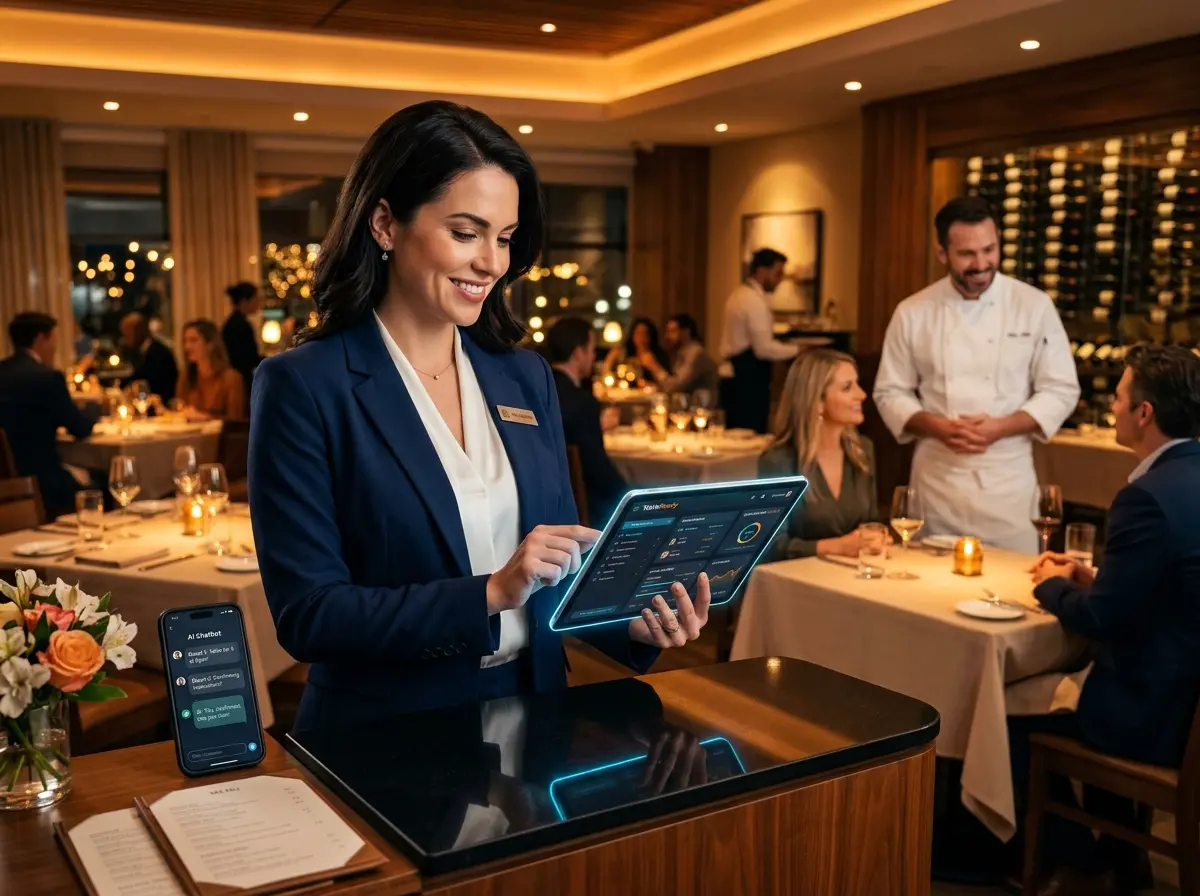
This is where Stella — the AI robot employee and phone receptionist — becomes genuinely useful for retail businesses. Stella handles the constant stream of routine interruptions that pull your staff away from actual selling: answering product questions, explaining current promotions, greeting walk-in customers proactively, and managing phone calls 24/7 so your team doesn't have to. When staff aren't buried in low-level tasks, the information you shared in your morning huddle actually has a chance to translate into action on the floor.
Stella also reinforces your promotional messaging automatically — she knows about your current deals and communicates them consistently to every customer she interacts with, whether in person at her kiosk or over the phone. That means your "focus product of the day" from the huddle gets backup support from an AI that never forgets the talking points.
Making the Huddle Stick Long-Term
Building the Habit Without the Burnout
The hardest part of the daily huddle isn't the first week — it's week four. The novelty wears off, someone calls in late, and suddenly you're holding a huddle with two people and a mop. Don't let logistical hiccups become an excuse to abandon a practice that works. Build the huddle into your opening checklist, make attendance non-negotiable for scheduled staff, and start even if one person is still clocking in. A culture of consistency is more valuable than a perfect attendance record.
Keep the content fresh by varying your focus each week. Dedicate one week to upselling techniques, another to handling specific customer objections, another to reviewing what's actually moving off the shelves versus what's collecting dust. When your team sees the huddle as a source of useful, relevant information rather than a mandatory ritual, buy-in follows naturally. According to a Gallup study, highly engaged employees are 21% more productive — and engagement starts with feeling informed and included.
Measuring Whether It's Actually Working
If you're going to invest 10 minutes every morning, you should know whether it's paying off. Track a few simple metrics over 30 days: daily sales totals, average transaction value, and the number of times your "focus product" is sold each day you spotlight it versus days you don't. You can also do informal pulse checks — ask your team at the end of the week what today's promotion was. If they can answer without hesitation, your huddle is working. If you get a lot of uncertain glances, it's time to tighten the format.
Adapting the Format for Different Team Sizes
Running a two-person shop is different from managing a team of fifteen, but the huddle works at both scales. With a small team, the format can be more conversational — you don't need a designated timekeeper when it's just you and one other person. With larger teams, structure becomes more important. Consider breaking into department or zone groups after the general huddle for a quick 2-minute sub-team check-in. The goal is always the same: everyone knows the priority, everyone knows the promotion, and everyone knows what a win looks like today.
Quick Reminder About Stella
Stella is an AI robot employee and phone receptionist built for businesses like yours — she greets customers in person from her kiosk inside your store, answers phone calls around the clock, promotes your current deals, and handles routine questions so your team can focus on higher-value interactions. She runs on a simple $99/month subscription with no hardware costs upfront, and she's ready to work from day one — no training required, no sick days, no forgetting what the promotion is.
Start Tomorrow Morning
You don't need a consultant, a new POS system, or a team-building retreat to improve how your retail store performs. You need 10 minutes before the doors open and a commitment to showing up consistently. The daily huddle is one of the highest-leverage habits a retail business owner can build — it costs nothing, takes almost no time, and directly impacts the two things that matter most: how your team performs and how your customers experience your store.
Here's your action plan for this week:
- Schedule the first huddle for tomorrow. Pick a time 10–15 minutes before opening. Put it on the calendar and communicate it to your team today.
- Write a simple agenda. Yesterday's win, today's promotion, focus product, one question. That's it. Print it out if it helps.
- Run it for 30 days without skipping. Consistency is the whole game. Don't evaluate whether it's working until you've given it a real runway.
- Track one metric. Pick daily sales, average transaction value, or focus product sales and watch it over a month.
Your team wants to do a good job. They just need to know what a good job looks like today. Give them that clarity every single morning, and you'll be amazed how quickly the culture of your store shifts — from reactive and scattered to focused and genuinely motivated. Ten minutes. Every day. Starting tomorrow.