The Membership Leakage Problem Nobody Wants to Talk About
Here's a fun little reality check for gym owners: acquiring a new member costs, on average, five times more than retaining an existing one. Yet somehow, the fitness industry continues to hemorrhage memberships at a staggering rate, with some gyms losing 50% of new members within the first 90 days. That's not a retention strategy — that's a revolving door with a monthly fee attached.
The good news? One gym figured out how to plug the leak in a remarkably straightforward way. Not with a fancy new app, not with a complete rebrand, and not by hiring a full-time "member happiness specialist" (yes, that's a real job title). They did it with a single, well-timed check-in phone call — and reduced cancellations by 35% in the process.
If you're a gym owner watching members quietly ghost their memberships like a bad first date, this one's for you.
Why Members Cancel (And Why It's Not Always About the Money)
The Real Reasons People Quit Their Gym
Most gym owners assume cancellations are about price. And sure, sometimes they are. But research consistently tells a different story. Studies show that the top reasons members cancel include lack of motivation, feeling intimidated, not seeing results, and — critically — feeling like nobody noticed they were even there. That last one stings a little, doesn't it?
The truth is that most gyms are excellent at the sales process and absolutely terrible at the post-sale relationship. A new member signs up with the best of intentions, shows up three times in the first week, disappears for two weeks, and by the time their second billing cycle hits, they're already mentally crafting their cancellation email. Nobody reached out. Nobody checked in. The gym just kept quietly charging their card while they felt increasingly guilty about not going.
The Silent Dropout Pattern
Fitness industry data reveals a predictable pattern among members who eventually cancel:
- Attendance drops significantly after weeks 2–4
- There's usually a triggering event — illness, travel, a busy work period
- The member feels awkward returning after a long absence
- Silence from the gym is interpreted as indifference
- Cancellation follows — often weeks or months after the emotional decision was already made
The window to intervene is narrow, but it's very real. And it opens right around the moment attendance starts to dip.
What the 35% Reduction Actually Looked Like
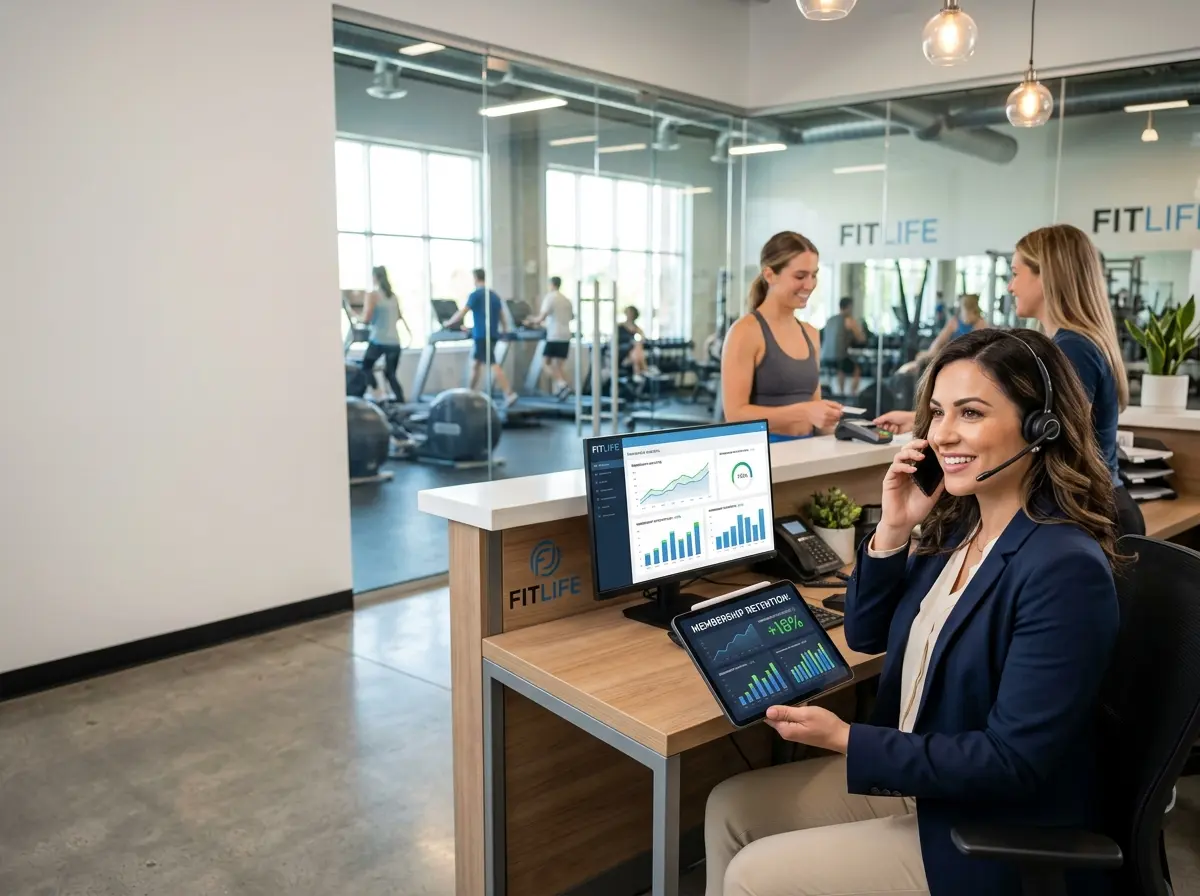
The gym in our case study implemented a simple protocol: any member who hadn't checked in for 10 consecutive days received a personal phone call from a staff member. Not an automated email blast. Not a push notification. A real phone call with a warm, human (or human-sounding) voice that said something along the lines of: "Hey, we noticed you haven't been in for a bit — just wanted to check in and see if everything's okay."
That's it. No hard sell. No guilt trip. Just genuine acknowledgment that the person existed and was missed. The result? A 35% drop in cancellations over six months, alongside a noticeable uptick in member satisfaction scores. Turns out people like being noticed. Who knew.
Building a Scalable Check-In System That Doesn't Burn Out Your Staff
How Technology Can Help You Stay Human
The obvious objection to a proactive call campaign is bandwidth. Your front desk staff is already juggling check-ins, inquiries, and whatever crisis is happening in the locker room this week. Adding "call every lapsed member" to their list isn't exactly a gift.
This is where smart tools come in. Stella, the AI robot employee and phone receptionist, can handle outbound and inbound call workflows so your human staff doesn't have to choose between serving the person standing in front of them and following up with the person who's quietly drifting away. Stella greets walk-in members at the kiosk, handles incoming calls 24/7, and can collect member information through conversational intake — all while logging interactions in a built-in CRM with custom fields, tags, and AI-generated member profiles. That means your lapsed member data is organized, actionable, and ready to trigger your check-in workflow without anyone having to dig through a spreadsheet.
The goal isn't to replace the human touch — it's to make sure the human touch actually happens, instead of getting buried under the daily chaos of running a gym.
Crafting a Check-In Call That Actually Works
Tone, Timing, and What to Actually Say
A check-in call lives or dies by its tone. The moment it sounds like a retention script, the member's guard goes up. The key is to lead with genuine curiosity and zero pressure. Your opening line should acknowledge absence without making the member feel judged for it. Something like "We haven't seen you in a little while and just wanted to make sure you're doing well" lands very differently than "We noticed your attendance has dropped and wanted to discuss your membership options."
Timing matters too. Calling on day 10 of inactivity hits the sweet spot — early enough that the habit isn't fully broken, late enough that the call feels meaningful rather than paranoid. Calling on day three is hovering. Calling on day 45 is too late — you're basically calling to say goodbye.
Keep the call short, warm, and low-stakes. Ask how they're doing. Ask if there's anything that could make their experience better. Mention a new class or promotion only if it feels genuinely relevant to what they've shared. Then let them lead.
What to Do With What You Learn
These calls are a goldmine of qualitative data that most gyms completely ignore. When a member tells you they stopped coming because they felt lost in the weight room, that's feedback for your onboarding program. When multiple members mention they don't like the new class schedule, that's a pattern worth acting on. When someone says they've been dealing with a health issue, that's a human moment — and a chance to offer a temporary membership pause instead of watching them cancel entirely.
Document everything. Create a simple log of call outcomes, common objections, and member sentiments. Over time, this data will tell you far more about your retention problems than your cancellation form ever will. Most cancellation forms, after all, offer the thrillingly vague option of "personal reasons" — which tells you approximately nothing.
Training Your Team to Make Great Check-In Calls
Even the most well-intentioned staff member can fumble a check-in call without a little guidance. A short training session goes a long way. Cover the basics: use the member's name, reference something specific if possible (a class they attended, a goal they mentioned during sign-up), avoid sounding like you're reading a script, and always end the call with a clear next step — even if that next step is just "we'd love to see you back whenever you're ready."
Role-playing awkward scenarios helps, too. What do you say when someone is genuinely upset about something? What if they say they've already decided to cancel? Having those conversations in practice means your team won't freeze when they happen in real life.
Quick Reminder About Stella
Stella is an AI robot employee and phone receptionist designed to handle the customer-facing work that keeps falling through the cracks — answering calls 24/7, greeting members at your kiosk, managing follow-up, and keeping your CRM organized without requiring a dedicated admin. She runs on a $99/month subscription with no upfront hardware costs, making her a genuinely affordable addition to any gym's front-of-house operation. Think of her as the staff member who never calls in sick, never misses a check-in, and never forgets to log a conversation.
Your 35% Starts Here
Reducing member cancellations doesn't require a massive budget, a rebrand, or a complete operational overhaul. It requires paying attention — which, as it turns out, is exactly what most members are quietly hoping you'll do.
Start with these concrete next steps:
- Define your inactivity threshold. Decide at what point (10 days is a solid starting place) a member's absence triggers a check-in call.
- Assign ownership. Someone specific needs to be responsible for making these calls — or ensure your systems are in place to support automated outreach where appropriate.
- Script the bones, not the whole conversation. Give your team an opening line and a few key talking points, then let them be human.
- Track outcomes. Log every call, every reason for absence, and every outcome. Review the data monthly.
- Iterate. What's working? What are members telling you? Let the calls inform your broader member experience strategy.
The gym in our case study didn't stumble onto a secret. They just decided to act on something most gym owners already know deep down: people don't cancel memberships from gyms that make them feel valued. They cancel from gyms that make them feel like a billing line item.
Don't be that gym.