You Picked Up. Now What?
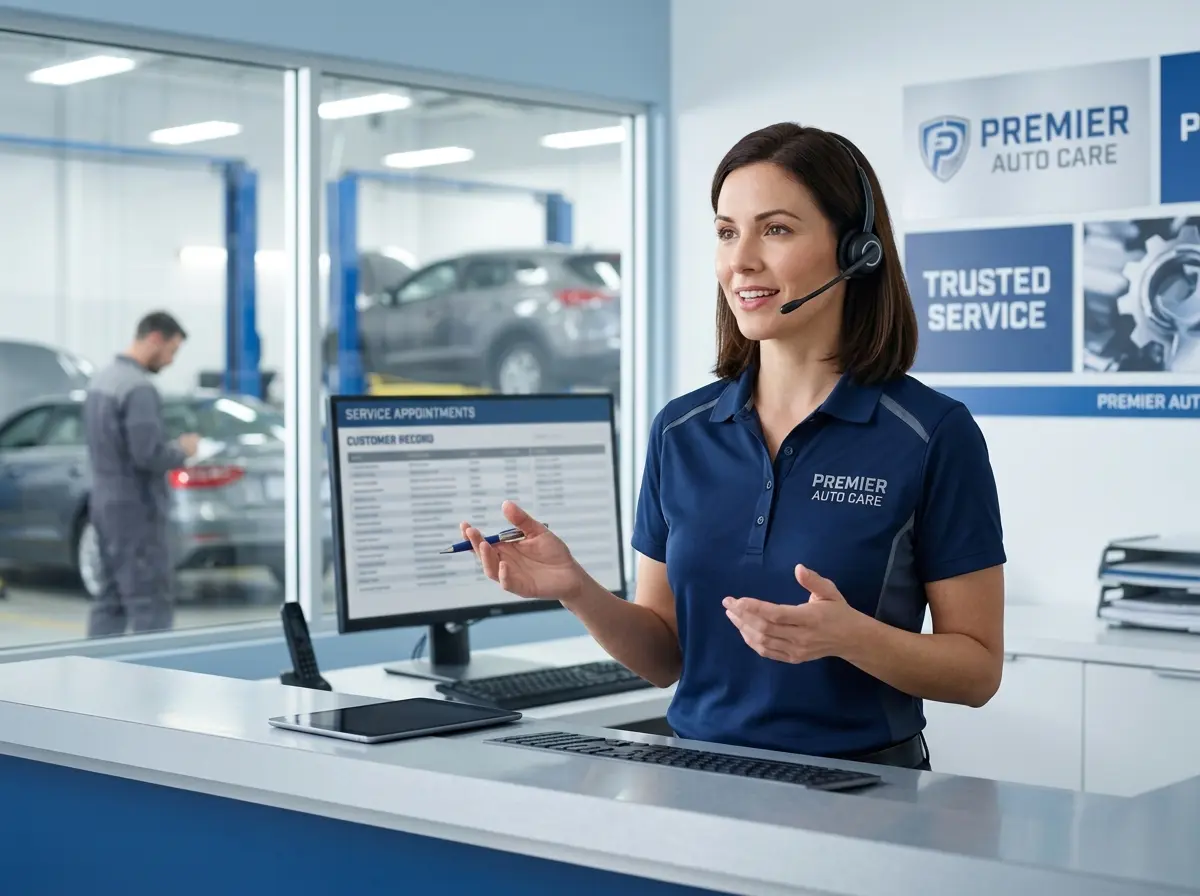
Let's be honest — in the auto repair business, answering the phone feels like a win just by itself. Between the lifts, the diagnostics, the grease, and the customer standing at the counter asking why their check engine light is still on, grabbing that ringing phone is practically an Olympic achievement. But here's the uncomfortable truth most shop owners don't want to hear: answering the phone and actually handling the call are two very different things.
One gets you points for effort. The other gets you a booked appointment.
The average auto shop misses somewhere between 20% and 40% of incoming calls — and of the ones that do get answered, a significant portion are fumbled by a rushed tech, a distracted service writer, or, let's face it, a voicemail box that hasn't been checked since Tuesday. Every one of those missed or mishandled calls is a customer who's already decided they need help. They just haven't decided it'll be your shop yet. How you handle that moment makes all the difference.
This post is about closing that gap — turning phone pickups into booked jobs, loyal customers, and a shop that runs like it actually has its act together.
What "Handling a Call" Actually Means
It Starts Before You Say Hello
Call handling isn't just about what you say — it's about the entire experience a customer has from the moment they dial your number. Are they waiting four rings before someone picks up? Are they getting routed to a voicemail during business hours? Are they being put on hold for three minutes while someone finishes torquing a lug nut? All of that is part of the call, and all of it shapes how the customer feels about your shop before a single word is exchanged.
Customers calling an auto shop are often already stressed. Their car is making a noise, their inspection is overdue, or their transmission just decided to take a personal day. They're not in a browsing mood — they're in a fix-my-problem-now mood. The shop that answers quickly, sounds professional, and moves the conversation forward efficiently wins the business. It really is that simple.
The Information Exchange Problem
Here's where most shops quietly fall apart. A call comes in, someone picks up, and then one of two things happens: either the person on the phone doesn't have the information they need to actually help the customer, or they do have it but don't communicate it clearly. Pricing questions get dodged. Appointment availability is guessed at. Service details are vague. The customer hangs up unsure whether to call back, shop around, or just show up and hope for the best.
Professional call handling means your team — or whoever is covering the phone — can confidently answer questions about services, pricing ranges, turnaround times, warranty policies, and current promotions. It means they can capture the customer's name, vehicle information, and concern accurately. And it means they can get that customer into a confirmed appointment slot before the conversation ends. If any part of that chain breaks down, you've answered the phone without actually handling the call.
The Art of the Warm Handoff
Not every call needs to be handled by your best service advisor. But every call does need to end up in the right hands if it can't be resolved immediately. A warm handoff — where the customer is briefly introduced to whoever is taking over, rather than just transferred into the void — dramatically reduces drop-off and builds trust. Train your team to communicate what they've already learned from the customer before passing the call. It's a small thing that makes a big difference, and it signals to the customer that your shop actually communicates internally. Groundbreaking concept, we know.
Where Stella Fits Into Your Front Desk Strategy
Covering the Gaps Without Adding Headcount
If you've ever thought "I just need someone to answer the phones so my team can focus on actual work," you're not alone — and you're not wrong. Stella is an AI robot employee and phone receptionist designed to do exactly that. She answers calls 24/7 with full knowledge of your shop's services, hours, pricing, and current promotions. She can qualify callers, collect vehicle and contact information through conversational intake forms, and either forward calls to your team based on conditions you configure or handle the whole conversation herself.
For shops with a physical location, Stella also stands inside the shop as a human-sized kiosk, greeting walk-ins, answering questions, and promoting specials — all while your service writers handle the actual service writing. Her built-in CRM captures customer details, tags contacts, and generates AI-powered profiles so your team always knows who they're dealing with. At $99/month with no upfront hardware costs, she's the front desk upgrade that doesn't require hiring, training, or providing health insurance.
Turning Calls Into Booked Appointments
Stop Letting Calls End Without a Next Step
This is the single most important habit shift for auto shop owners: every phone call should end with a defined next step. Not "call us back when you're ready" or "we'll have someone reach out." A real next step — an appointment on the calendar, a follow-up call scheduled, or at minimum the customer's contact information captured so your team can be proactive. Studies consistently show that customers who make an appointment are significantly more likely to follow through than those who say they'll "swing by." Give them a time slot. Commit to it. Fill your schedule intentionally instead of reactively.
Ask Better Questions
Great call handling isn't just about answering questions — it's about asking the right ones. When a customer calls about a brake noise, a trained service advisor (or a well-configured AI receptionist) should be gathering details: Which wheels? How long has it been happening? Any vibration or pulling? This does two things simultaneously. First, it makes the customer feel heard and demonstrates expertise. Second, it gives your technicians a head start before the vehicle even arrives, which means faster diagnosis and a more impressed customer. People don't just want their car fixed — they want to feel like they're in capable hands from the very first conversation.
Follow Up Like You Mean It
The call doesn't end when you hang up. For callers who didn't book, a simple follow-up call or text within 24 hours can recover a significant percentage of lost business. Most shops don't do this — not because they don't care, but because there's no system in place to make it happen consistently. Building that follow-up loop into your process, whether it's a CRM reminder, an automated message, or a daily task for your service advisor, turns "we'll think about it" customers into actual appointments. In a competitive market, the shop that follows up is often the shop that wins.
Quick Reminder About Stella
Stella is an AI robot employee and phone receptionist built for businesses like yours — handling calls, greeting walk-ins, capturing customer information, and keeping your front desk covered without burning out your staff. She works around the clock, never has a bad day, and costs less per month than most shops spend on shop supplies. If your phones are a weak point, she's worth a look.
Your Next Move Starts With a Honest Audit
Here's the actionable part. This week, do something most shop owners never do: call your own shop. Call during your busiest hour. Call right before close. Call on a Saturday. Listen to how the phone is answered, how long it takes, how questions are handled, and whether anyone tries to move the conversation toward a booked appointment. You might be pleasantly surprised. You might be horrified. Either way, you'll know exactly where to start.
From there, focus on three practical improvements:
- Set a pickup standard. Every call should be answered within three rings during business hours — no exceptions. If that's not happening, figure out why and fix it.
- Script your key responses. Pricing questions, service explanations, and appointment booking should have a clear, confident script that anyone covering the phone can follow.
- Build a follow-up system. Every unanswered call and every caller who didn't book should go into a follow-up queue that gets worked the same day.
Answering the phone is table stakes. Handling the call — with professionalism, information, and a path to a booked appointment — is what separates the shops that stay busy from the ones that stay frustrated. The good news is that none of this requires a massive overhaul. It requires intention, a little training, and the right tools in place. Start with the audit. Build from there. Your bays will thank you.