The First Impression Problem Nobody Talks About
Let's play a quick game. Think about the last time you walked into a business as a customer and felt genuinely welcomed — not in a forced, "welcome-to-Walmart" kind of way, but in a way that made you think, "These people have their act together." How long ago was that? If you're having to think too hard, that's a problem. And if you're a service business owner, there's a decent chance your customers are having that same experience right now — just on the other side of the counter.
The first visit is everything. Research consistently shows that customers form lasting impressions within the first seven seconds of an interaction, and businesses that create a structured, welcoming first experience see significantly higher retention rates. Yet most service businesses — from salons to auto shops to law firms — leave this critical moment entirely to chance. Some days the front desk person is having a great day. Some days they're buried in paperwork. And some days nobody picks up the phone at all.
A First Visit Protocol changes all of that. It's not a rigid script or a corporate checklist — it's a deliberate, repeatable system that ensures every single customer who contacts or walks into your business gets a consistently excellent experience from the very first moment. And yes, there are smart ways to automate parts of it without losing the human touch. Let's dig in.
What a First Visit Protocol Actually Looks Like
Defining the Touchpoints Before They Arrive
A solid First Visit Protocol begins before the customer ever sets foot in your door — or even before they decide to call you. It starts with every touchpoint in the pre-visit journey: your website, your Google listing, your social media presence, and critically, your phone. This is where most service businesses quietly lose customers without ever knowing it. A potential client calls after hours to ask a simple question about pricing or availability, nobody answers, and they move on to the next business in the search results. No callback. No second chance.
Mapping your pre-visit touchpoints means asking honest questions: What happens when someone calls during lunch? What happens at 8pm on a Tuesday? Is the information on your website accurate enough that a first-time visitor won't feel misled when they arrive? Inconsistency at this stage plants seeds of doubt, and first-time customers are already skeptical. They don't know you yet. Every gap in the experience confirms their hesitation.
The In-Person First Impression Framework
Once a customer walks through your door for the first time, the clock is ticking. Your protocol should define exactly what happens in those first 60 seconds. Are they greeted by name if they have an appointment? Is there a clear signal — visual or verbal — that their presence has been acknowledged? Is someone responsible for the greeting, or does everyone assume someone else will handle it?
The most effective in-person first visit frameworks include four elements: a warm acknowledgment within seconds of arrival, a brief orientation to the space or process, a clear next step (sit here, fill this out, I'll let them know you're here), and a moment of genuine human connection. That last part is the one you can't manufacture with a sign on the wall. It has to be built into your culture — but the first three can absolutely be systematized.
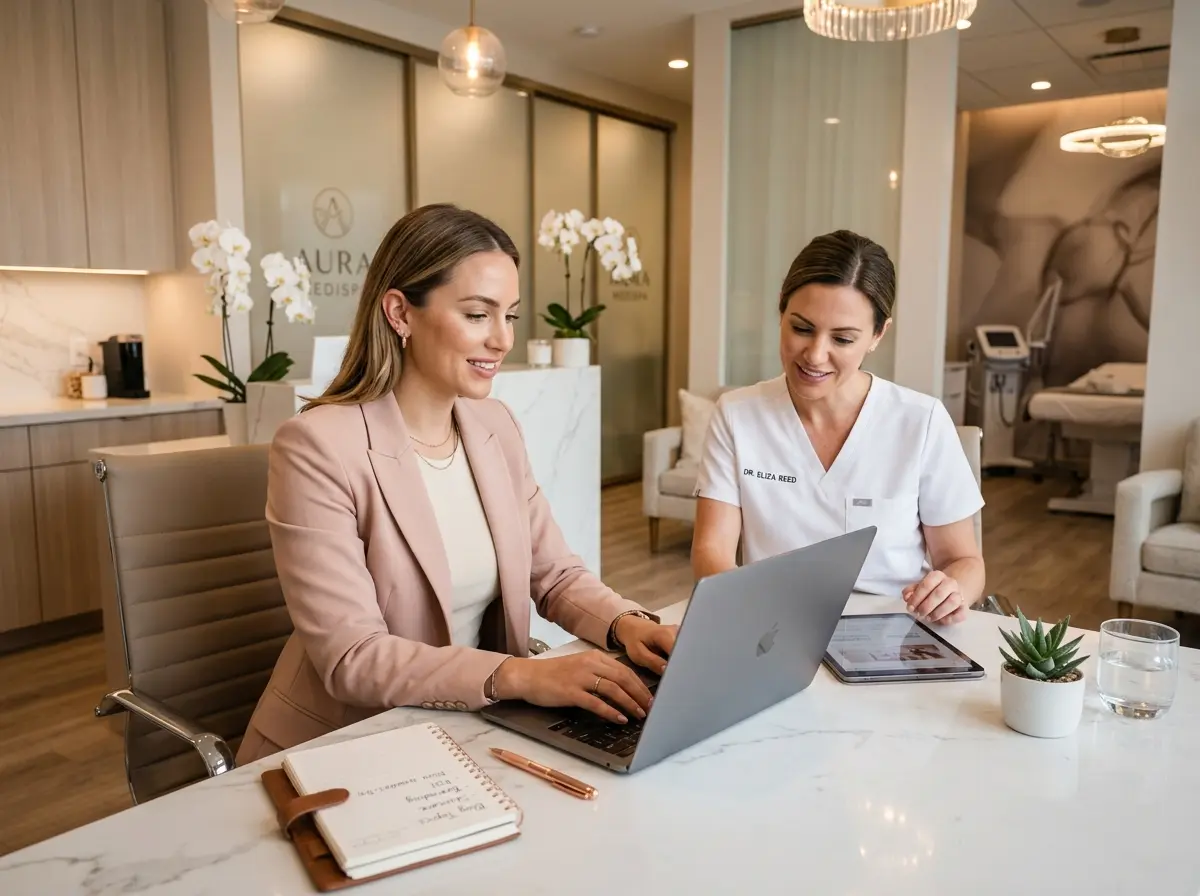
Consider a medical spa that implemented a simple greeter rotation among their front desk staff during peak hours. Customer satisfaction scores jumped 22% in the first month, not because the services changed, but because arrivals stopped feeling chaotic and started feeling intentional.
Capturing Information Without Feeling Like an Interrogation
First visits are goldmines of customer data — preferences, referral sources, service goals, contact details — and most businesses either don't collect it at all or make the process feel like filing your taxes. The key is embedding information collection into the natural flow of the welcome experience. A conversational intake approach, whether through a friendly staff member, a digital form, or a well-designed kiosk interaction, gathers the information you need while making the customer feel heard rather than processed.
What you collect on the first visit should serve two purposes: personalizing the current visit and building a foundation for the long-term relationship. At minimum, capture contact information, how they found you, what they're hoping to accomplish, and any relevant preferences or needs. This isn't just administrative — it's the beginning of a customer profile that, when maintained properly, turns one-time visitors into loyal regulars.
How Technology Can Carry the Load
Letting Automation Handle the Predictable Parts
Here's the honest truth: your staff is good at what they were hired to do, and that is rarely "delivering a perfectly scripted welcome experience 40 hours a week while also juggling phones, paperwork, and actual service delivery." The predictable, repeatable parts of your First Visit Protocol are exactly where smart automation earns its keep — not to replace the human connection, but to protect it.
Stella, the AI robot employee and phone receptionist, is purpose-built for this kind of role. For businesses with a physical location, Stella stands inside the store as a friendly, human-sized AI kiosk that proactively greets customers, answers questions about services and specials, and collects customer information through natural conversation — all without pulling your staff away from what they do best. For any business, she also answers phone calls 24/7, ensuring that the first touchpoint in your protocol is never a voicemail box or a missed opportunity. Her built-in CRM automatically builds customer profiles from those interactions, so the information gathered during the first visit is organized, searchable, and ready to use long before the second appointment is booked.
Building Consistency Across Your Team
Documenting the Protocol So It Survives Turnover
Here's the uncomfortable reality about service businesses: turnover happens. The person who perfected your greeting process leaves, takes their institutional knowledge with them, and suddenly your first visit experience is back to being whatever the newest hire improvises on a given morning. The only antidote to this is documentation — and not the dusty-binder-in-the-back-office kind.
Your First Visit Protocol should be a living document that covers every scenario: walk-ins versus appointments, single customers versus groups, phone inquiries versus in-person visits, and everything in between. It should include what to say, what to ask, what to hand off and to whom, and what to record and where. Short training videos work exceptionally well for this — a five-minute walkthrough of the greeting process is far more effective than a written paragraph that nobody reads. When the protocol is documented clearly enough that a new hire can execute it competently in their first week, you've built something durable.
Training for Authenticity, Not Just Compliance
There is a version of the First Visit Protocol that backfires spectacularly: the over-scripted, robotically delivered welcome that feels like a customer service parody. Customers can smell a forced script from across the room, and it does more damage than an imperfect but genuine greeting. The goal of your training shouldn't be compliance — it should be competence and confidence.
When your team understands why each element of the protocol exists — why the greeting matters, why capturing information serves the customer — they execute it with genuine intention rather than mechanical repetition. Role-play scenarios during onboarding, monthly protocol reviews, and brief team huddles around real examples of strong first visits all reinforce the culture without turning your staff into customer service robots. (That's what Stella's for, after all — and she actually enjoys it.)
Measuring Whether It's Working
A protocol without measurement is just a wish. The good news is that the metrics you need to track your First Visit Protocol's effectiveness are likely already available to you — you may just not be looking at them through the right lens. First-visit-to-return-visit conversion rate is the most direct indicator: what percentage of new customers come back? If that number is lower than you'd like, your first visit experience is probably part of the problem.
Supplement that with post-visit surveys (short, two or three questions maximum), staff observation, and periodic secret shopper exercises. Look at referral rates over time — customers who have a standout first experience are significantly more likely to recommend your business to others. And if you're using any technology to support your protocol, dig into the interaction data it provides. Patterns in what customers ask, where they hesitate, and what information they seek are direct feedback on where your protocol can improve.
Quick Reminder About Stella
Stella is an AI robot employee and phone receptionist designed for service businesses of all kinds — from retail and salons to medical offices, gyms, law firms, and beyond. She greets in-store customers proactively, answers phones around the clock, collects customer information, and supports your team without ever calling in sick. At $99/month with no upfront hardware costs, she's one of the more practical investments a service business can make.
Your Next Steps Start Today
If you've made it this far, you already understand that a great First Visit Protocol isn't optional — it's the difference between a business that grows on reputation and one that constantly chases new customers because it can't hold onto the ones it has. The work of building this protocol is genuinely not that complicated, but it does require intentionality that most owners haven't carved out the time to apply.
Here's where to start:
- Audit your current first visit experience honestly. Walk through it as a customer would — phone call first, then arrival, then the first five minutes inside. Write down every gap you find.
- Define the ideal version of each touchpoint. What should happen at each step? Who is responsible? What does success look like?
- Document it simply and train your team on the why, not just the what. Keep it short enough that someone actually reads it.
- Identify where automation can fill the gaps — particularly on phones and after-hours inquiries — so your protocol works even when your team doesn't.
- Measure your first-visit return rate now so you have a baseline to compare against in 90 days.
Your competitors are probably winging it. A structured, thoughtful First Visit Protocol is one of those rare advantages that is both genuinely impactful and surprisingly uncommon. Build yours, and you won't just make a better first impression — you'll build a business that customers actually come back to.