Introduction: The Walk-In vs. Appointment Dilemma (A Tale as Old as Nail Polish)
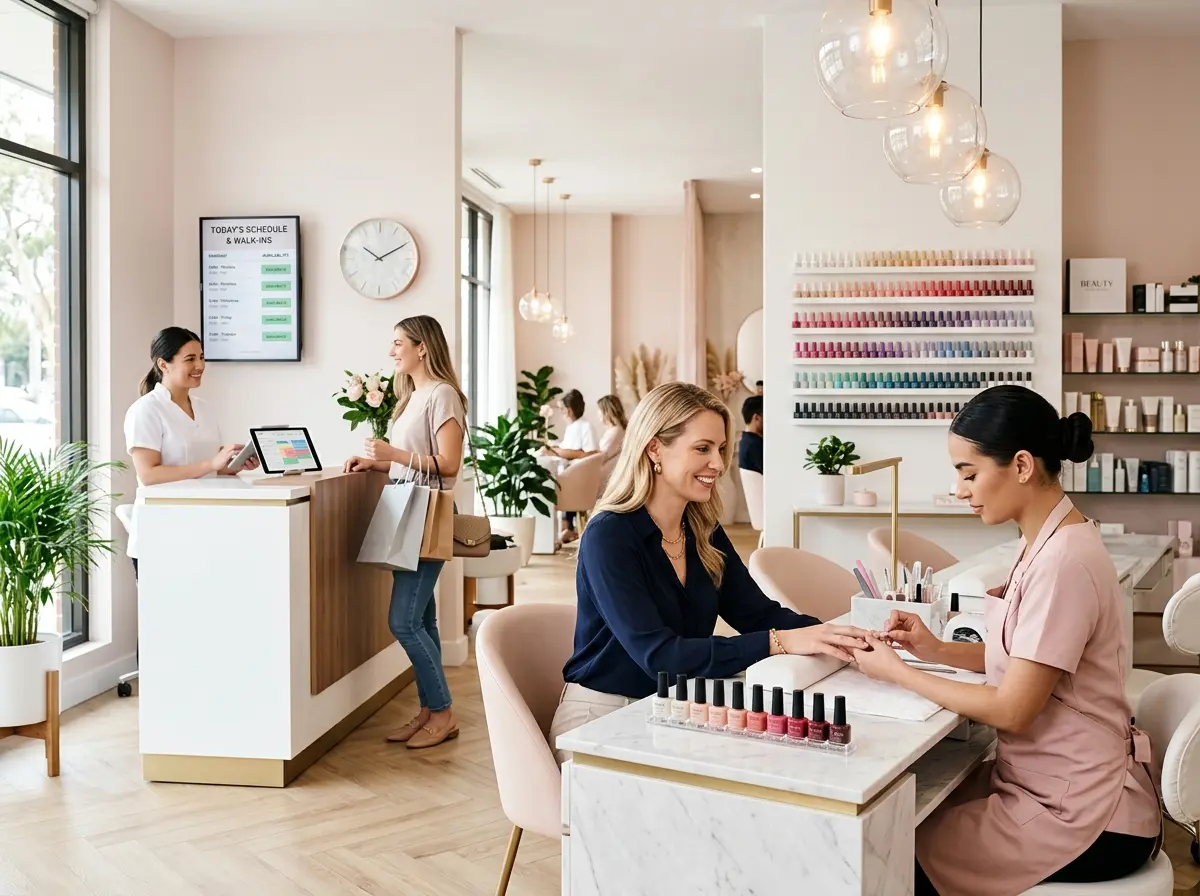
Picture this: It's a busy Saturday afternoon at your nail salon. Your appointment clients are sitting pretty, on time and ready to go. Then the door swings open and in walks a group of four friends who "just want a quick manicure." Your front desk staff freezes. Your scheduled clients notice. Chaos, meet nail salon.
If you've been in the nail business for more than five minutes, you already know that managing the coexistence of walk-in clients and booked appointments is one of the most persistent headaches in the industry. Lean too hard into appointments only, and you lose spontaneous foot traffic and revenue. Open the floodgates to pure walk-ins, and your booked clients feel disrespected — because, well, they kind of are.
The good news? There's a smarter way. A hybrid scheduling model gives you the structure of appointments without turning away the walk-in crowd. It's not magic — it's just smart operations. And when executed properly, it can meaningfully increase your revenue, improve client satisfaction on both ends, and reduce the daily panic behind your front desk. Let's break it down.
Building the Foundation of a Hybrid Scheduling Model
Understand Your Traffic Patterns First
Before you start redesigning your scheduling strategy, you need data — not gut feelings, actual data. Pull your appointment history and identify your peak hours. For most nail salons, Saturdays between 10 AM and 3 PM are absolute mayhem, while Tuesday mornings are practically a ghost town. Your hybrid model needs to reflect your reality, not a generic template.
Specifically, you're looking to answer three questions: When do most of your walk-ins arrive? When do your appointment clients tend to book? And where are the consistent gaps in your schedule that could absorb walk-in demand without disrupting booked services? Most salon management software can generate these reports. If yours can't, it may be time for an upgrade anyway.
Create Protected Time Blocks and Flex Slots
The core mechanic of a hybrid model is simple: some time slots are protected for appointments, and others are designated flex slots that can be filled by walk-ins or last-minute bookings. Here's a practical framework to get started:
- Protected appointment windows: Reserve these for pre-booked clients, typically during peak hours when demand is highest. These slots should never be given away to walk-ins, full stop.
- Flex slots: These are intentionally left open in the schedule and available on a first-come, first-served basis for walk-ins. Think of them as your "breathing room" — typically 20–30% of your daily capacity.
- Buffer time: Build 10–15 minutes of buffer between back-to-back appointments. This absorbs overruns and gives you flexibility to squeeze in a quick service if a flex slot opens unexpectedly.
A real-world example: a 10-station salon in a mid-size city might protect 7 stations for appointments during Saturday peak hours and leave 3 open for walk-ins. During Tuesday mornings, that ratio might flip entirely. The key is that the structure is intentional, not improvised.
Set Clear Policies — And Actually Communicate Them
Here's where many salon owners stumble: they design a reasonable hybrid model and then never tell anyone about it. Walk-in clients show up with no idea there might be a wait. Appointment clients don't understand why there are walk-ins at all. Confusion breeds frustration on both sides.
Post your walk-in availability policy visibly at the front desk, on your website, on your Google Business profile, and anywhere else clients look. Be transparent: "Walk-ins are welcome during flex hours. Waits during peak times typically range from 20–45 minutes." When clients know what to expect, they're far more forgiving of the occasional delay. Surprise wait times, on the other hand, will earn you a one-star review faster than a bad polish job.
How Smart Tools — Including Stella — Can Keep Things Running Smoothly
Automate the Front Desk Chaos
Let's be honest: your front desk during a busy Saturday is not a calm, organized environment. Staff are fielding phone calls, checking in appointment clients, managing the walk-in waitlist, and trying to upsell nail art upgrades all at the same time. Something always slips through the cracks — usually the ringing phone.
This is exactly where Stella, the AI robot employee and phone receptionist, earns her keep. As an in-store kiosk, Stella can greet walk-in clients the moment they step through the door, explain current wait times, collect their information, and even promote any current specials — all without pulling a human staff member away from a client mid-service. Meanwhile, her phone answering capability means no call goes unanswered, even during peak hours when your team simply cannot pick up. She can explain your walk-in policy, answer questions about services and pricing, and collect intake information from callers before they even arrive. That's not a small thing. Missed calls in a service business are missed revenue, plain and simple.
Managing the Walk-In Experience Without Sacrificing Appointment Quality
Implement a Waitlist System That Doesn't Insult People
Nobody enjoys waiting, but people absolutely despise waiting with no information. A well-run waitlist system transforms the walk-in experience from frustrating to acceptable — and sometimes even pleasant. Digital waitlist tools allow clients to add themselves to the queue, receive text updates about their estimated wait time, and even step out to grab a coffee nearby rather than sitting awkwardly in your lobby for 40 minutes.
Several salon-specific platforms offer this functionality, including Vagaro, Fresha, and GlossGenius. The investment is modest, and the impact on walk-in client satisfaction is measurable. When people feel informed and respected, they wait. When they feel ignored and uncertain, they leave — and they tell their friends.
Train Staff on the Triage Mindset
Your team needs to be comfortable making real-time judgment calls. When a walk-in arrives during a semi-busy period, staff should quickly assess: Is there a flex slot available? How long is the requested service? Will it conflict with any upcoming appointment slots? This isn't complicated decision-making, but it does require a shared framework and some practice.
Run a short monthly training session — even 15 minutes — where you review scheduling scenarios and remind your team of the walk-in policy. Role-play the awkward conversations: the walk-in who insists they'll "only be 10 minutes" for a full set, or the appointment client who arrives 20 minutes late and expects to jump the queue. Having a script helps enormously. Empower your staff to communicate clearly and kindly, and give them the authority to make decisions without running to the back to find you every time.
Protect Your Appointment Clients Like the VIPs They Are
Appointment clients have done something walk-in clients haven't: they've committed in advance. That commitment deserves acknowledgment. Simple gestures go a long way — greet them by name when they arrive, have their preferred tech ready, offer them a beverage. These touches signal that booking an appointment at your salon is worth it, which directly improves client retention and repeat booking rates.
According to industry data, retaining an existing client costs five times less than acquiring a new one. Your appointment clients are your most loyal revenue base. Protect their experience aggressively, and they'll reward you with consistent bookings, referrals, and reviews that bring in even more of both appointment and walk-in clients over time.
Quick Reminder About Stella
Stella is an AI robot employee and phone receptionist designed to handle the front-of-house work that falls through the cracks — greeting clients, answering calls 24/7, explaining services and policies, and collecting client information through conversational intake forms. She works inside your salon as a physical kiosk and answers your phones even when every human on staff is fully occupied. At just $99/month with no upfront hardware costs, she's one of the more sensible investments a busy salon owner can make.
Conclusion: Stop Winging It and Start Scheduling With Intention
A hybrid scheduling model isn't complicated in concept, but it does require intentional design, clear communication, and consistent execution. The salons that do this well don't just reduce daily chaos — they build a reputation for being both accessible and professional, which is a genuinely rare combination in this industry.
Here's your actionable checklist to get started this week:
- Pull your traffic data and identify your peak hours, slow periods, and patterns in walk-in vs. appointment demand.
- Define your flex slot ratio — start with roughly 25% of daily capacity designated for walk-ins and adjust from there based on real results.
- Update your public-facing policies on your website, Google profile, and in-store signage so clients know exactly what to expect.
- Implement a digital waitlist tool so walk-ins feel informed and respected rather than abandoned in your lobby.
- Brief and train your staff on how to make quick triage decisions and communicate clearly with both client types.
- Evaluate your front desk coverage — if phone calls and walk-in greetings are consistently slipping during busy hours, a tool like Stella may be worth a closer look.
The bottom line: your nail salon can absolutely serve both walk-in and appointment clients without one group undermining the other. It just takes a bit of structure, a bit of technology, and a lot less winging it on a Saturday afternoon.