Your Spa Phone Is Ringing. Is Anyone Actually Selling?
Here's a scenario that plays out in spas across the country every single day: a potential client calls to ask about a facial, gets a rushed, robotic answer about pricing, and hangs up to "think about it." Spoiler alert — they don't call back. They book at the spa down the street that made them feel like they were already relaxing in the waiting room.
The painful truth is that most spas lose a significant chunk of their first-time callers not because of pricing, not because of location, and not because of services — but because of the phone conversation itself. According to industry research, nearly 70% of new clients decide whether to book within the first 60 seconds of a phone interaction. That's less time than it takes to steam a towel.
A well-crafted phone script isn't about turning your receptionist into a sales robot (you have enough of those problems already). It's about giving every caller a warm, confident, consultative experience that makes booking feel like the obvious next step. Let's break down exactly how to do that.
The Anatomy of a High-Converting Spa Phone Script
The Opening: Warmth Wins Every Time
The first five seconds of your call set the emotional tone for everything that follows. A flat, distracted greeting like "Thank you for calling, can you hold?" is the conversational equivalent of a cold waiting room with flickering lights. Instead, your opening should be warm, specific, and energetic — without being annoyingly perky.
Try something like: "Thank you for calling [Spa Name], this is [Name] — are you calling to treat yourself today, or are you looking for a gift for someone special?" This does three things immediately: it sounds human and welcoming, it makes an assumption of positive intent (they're there to book, not just browse), and it opens the door to a discovery conversation rather than a transactional one.
Avoid generic openers that put the caller in the driver's seat with nowhere to go. You want to gently guide them — like a good aesthetician guiding a client toward the service they actually need, not just the cheapest one on the menu.
The Discovery Phase: Ask Before You Tell
This is where most spa receptionists get it completely backwards. The instinct is to launch into services and prices the moment someone asks a question. Resist that instinct with every fiber of your being. Before you describe a single service, ask at least two qualifying questions.
Good discovery questions include:
- "Have you visited us before, or would this be your first time?"
- "What's bringing you in — is there something specific you'd like to address, or are you looking to unwind and recharge?"
- "Do you have a particular date in mind, or are you flexible?"
These questions accomplish something critical: they transform the caller from a price-shopper into a person with a story. And once you know their story, you can recommend a service that actually fits — which makes your recommendation feel helpful rather than salesy. People don't resist being helped. They resist being sold to.
The Recommendation and Soft Close
Once you understand what your caller is looking for, make a specific, confident recommendation — not a menu dump. Something like: "Based on what you're describing, I'd actually suggest our 75-minute Signature Facial. It's specifically designed for exactly that, and our clients who come in with similar concerns absolutely love the results."
Then, rather than asking "Would you like to book?" — which invites a yes/no decision — try a soft close that assumes forward momentum: "We have availability this Thursday at 2pm or Saturday morning — which works better for you?" You've skipped the "whether" and gone straight to the "when." It's a small shift with a surprisingly large impact on conversion rates.
How Automation Can Handle the Calls You're Currently Losing
The Missed Call Problem Is Costing You Real Money
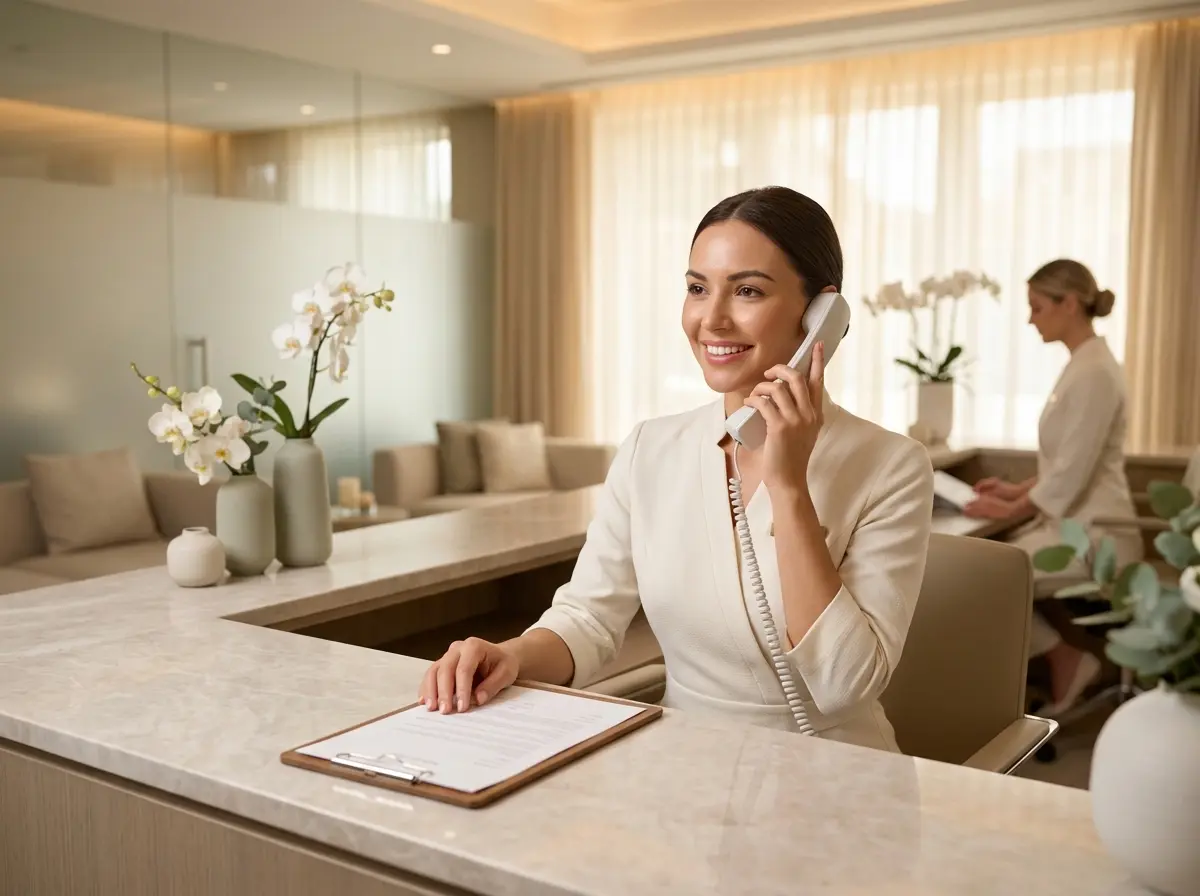
Let's be honest — your front desk is busy. Staff get pulled away, lunch breaks happen, and nobody's answering phones at 9pm on a Tuesday when a potential client suddenly decides they desperately need a massage before their mother-in-law's visit this weekend. Every unanswered call is a lost booking, and missed calls are far more common than most spa owners realize.
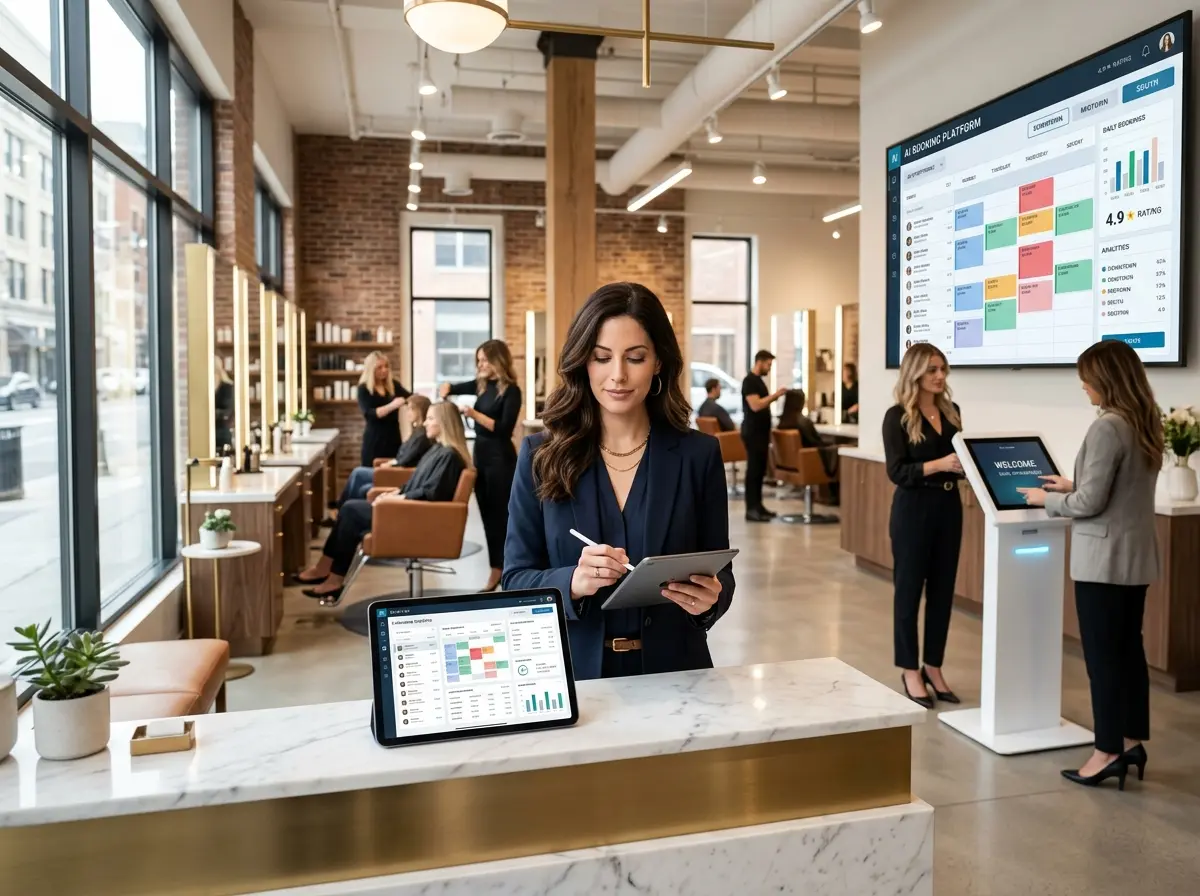
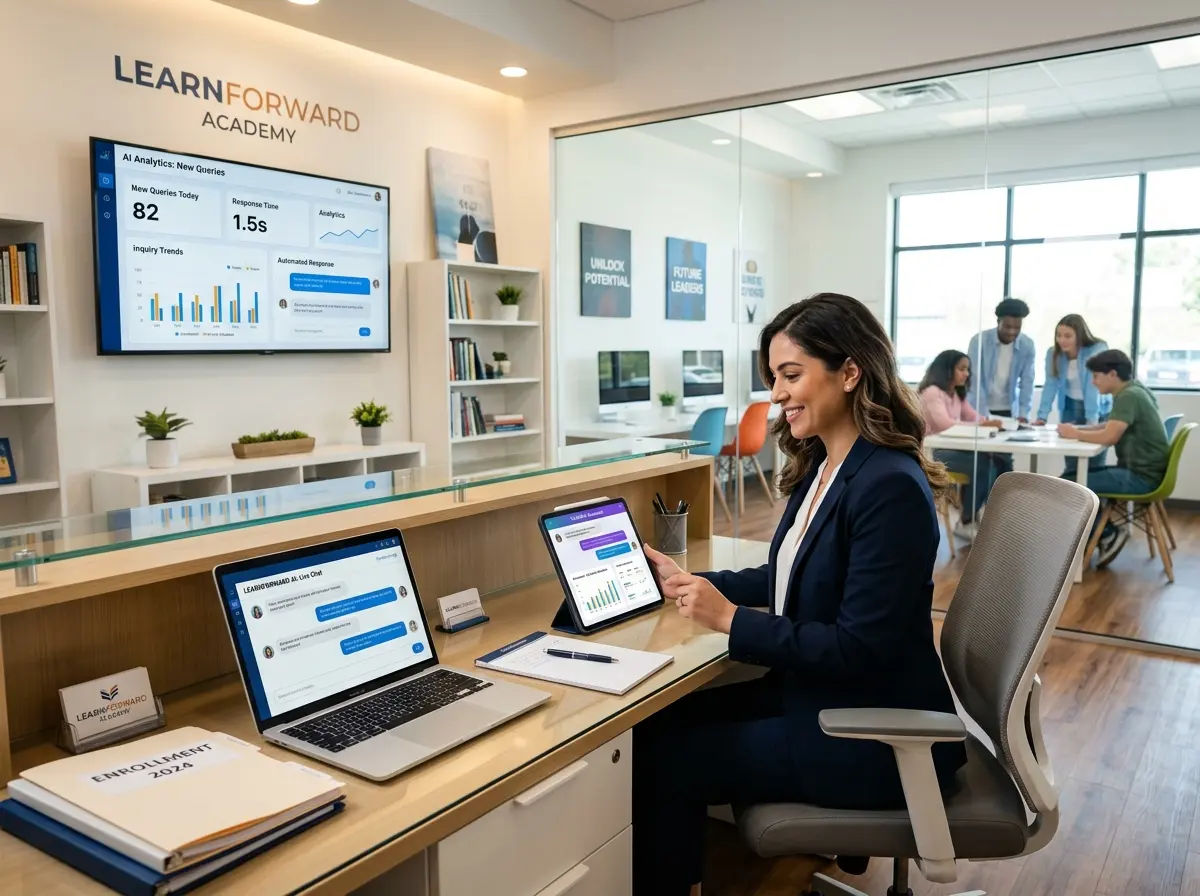
This is where Stella becomes genuinely useful for spa owners. Stella is an AI-powered phone receptionist and in-store kiosk that handles calls 24/7 using the same business knowledge a well-trained human would use — including your services, pricing, promotions, and booking process. She can conduct the kind of conversational, discovery-based intake that mirrors the script framework above, collecting client information through built-in intake forms and storing it directly in her integrated CRM with AI-generated profiles and custom tags. So even when your human team is elbow-deep in a hot stone massage, Stella is at the front desk and on the phones making sure no opportunity slips through the cracks.
Training Your Team to Actually Use the Script
Role-Play Is Uncomfortable and Absolutely Necessary
A script sitting in a Google Doc helps no one. The only way a phone script becomes natural is through deliberate, repeated practice — which means your team needs to role-play it out loud, regularly, even when it feels awkward. Especially when it feels awkward. Schedule a 15-minute team huddle once a week where staff take turns playing the caller and the receptionist. Record sessions when possible so people can hear themselves and self-correct.
Common mistakes to listen for include: talking too fast when nervous, launching into prices before asking discovery questions, and using filler phrases like "Um, so, we have like a lot of different options..." which erode confidence immediately. The goal is for the script to disappear — meaning your team has internalized it so thoroughly that it sounds like natural conversation, not a recitation.
Track Your Numbers and Iterate
You can't improve what you don't measure. Start tracking your call-to-booking conversion rate if you aren't already. A simple tally sheet works fine — calls received, bookings made from those calls, and a quick note on which services were most commonly requested. Over time, you'll see patterns that tell you where the script is working and where callers are dropping off.
If you notice, for example, that callers consistently disengage when pricing is mentioned, that's a signal to adjust how your team frames value before quoting a number. If Saturday morning calls convert at twice the rate of weekday calls, that tells you something about your caller's mindset and intent that you can use to refine your approach. Data doesn't have to be complicated — it just has to be collected consistently.
Incentivize the Right Behaviors
If your team's performance review focuses entirely on treatment execution and client satisfaction scores, don't be surprised when phone conversion isn't a priority for them. What gets measured and rewarded gets done. Consider introducing a small monthly incentive tied specifically to phone booking rates — nothing elaborate, just enough to signal that this skill matters and is being noticed. Recognition alone can go a long way in a team culture where front desk staff often feel like the unglamorous engine behind a very glamorous operation.
Quick Reminder About Stella
Stella is an AI robot employee and phone receptionist that works 24/7 — answering calls, greeting walk-ins at her in-store kiosk, promoting your services and specials, and collecting client information without ever needing a lunch break or a pep talk. She runs on a straightforward $99/month subscription with no upfront hardware costs, making her an accessible option for spas of any size. If your front desk is a bottleneck, she's worth a very serious look.
Start With One Call at a Time
Doubling your booking rate from first-time callers isn't a fantasy — it's a math problem with a very solvable formula. Warm openings, smart discovery questions, confident recommendations, and soft closes that assume the booking rather than beg for it. That's the framework. It works because it's built around how people actually make decisions, not around how businesses traditionally answer phones.
Here's your action plan to get started this week:
- Draft your script using the framework above, customized with your spa's actual services and language.
- Run one role-play session with your front desk team before the week is out — no perfection required, just a start.
- Set up a simple tracking system for call-to-booking conversions so you have a baseline to improve from.
- Identify your after-hours gap — are you losing calls outside business hours? If so, it's time to plug that leak.
The spa experience your clients rave about begins long before they walk through your door. It begins on the phone. Make sure what they hear on that first call sounds like the exceptional experience you've worked so hard to deliver in person — and watch your booking rates follow.