Growing Pains Are Real — Especially When Your Phone Won't Stop Ringing
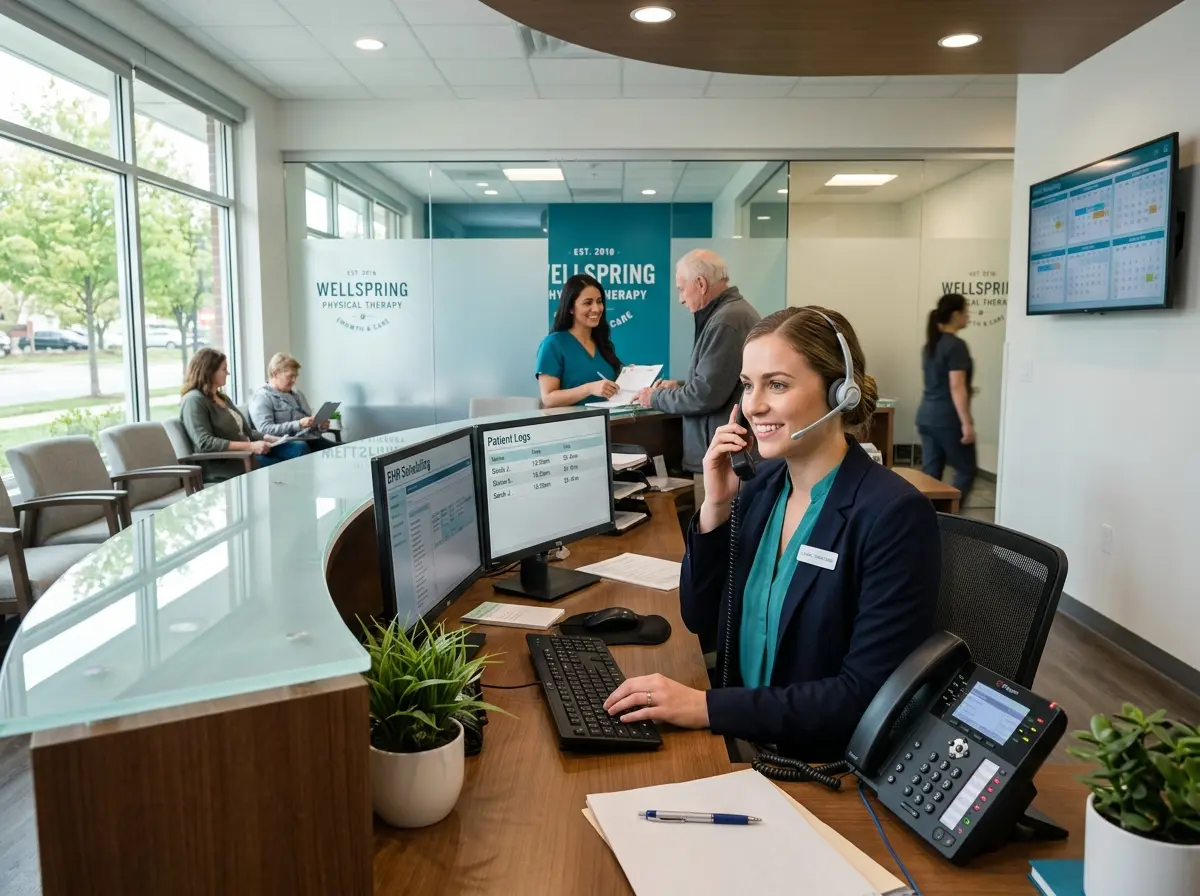
Congratulations — your physical therapy practice is growing. New patients are calling, your schedule is filling up, and your staff is... drowning. If you've ever watched your front desk coordinator juggle a ringing phone, a patient checking in, and an insurance verification all at once, you already know the problem. Scaling a PT practice isn't just about hiring more therapists. It's about building the support infrastructure that keeps the whole operation running smoothly without burning out your team — or your budget.
Understanding the Phone Staffing Problem in Physical Therapy
Your Front Desk Is Doing Too Many Jobs at Once
The Hidden Cost of Missed and Mishandled Calls
Here's a number that should make any practice owner pause: research from Invoca suggests that businesses miss up to 62% of inbound calls when they rely solely on in-house staff without overflow support. For a physical therapy practice where the average patient lifetime value can easily exceed $1,500 across a course of treatment, a handful of missed calls per week adds up to a very significant revenue leak.
Why Hiring More Staff Isn't Always the Answer
The instinct to hire is understandable, but let's be honest about what you're signing up for. A full-time front desk employee in the United States costs somewhere between $35,000 and $50,000 per year in wages alone — before you factor in payroll taxes, benefits, training time, and the very real possibility of turnover. The average turnover rate in healthcare administrative roles hovers around 20% annually. That means you could invest months training someone only to start over again by spring.
A Smarter Phone Infrastructure for Growing PT Practices
Layer Your Coverage Instead of Doubling Your Headcount
Stella, an AI robot employee and phone receptionist, is built exactly for this kind of layered approach. She answers calls 24/7 with consistent, knowledgeable responses about your services, scheduling availability, pricing, and policies — and she can forward calls to human staff based on whatever conditions you configure. For practices that also want an in-person presence, Stella's physical kiosk can greet patients as they arrive, answer questions in the waiting area, and even help with intake — freeing your front desk from the moment a patient walks in the door. Her built-in CRM and conversational intake forms mean patient information gets captured accurately and consistently, whether someone calls after hours or fills out information at the kiosk. At $99/month, she costs less than a single day of a full-time employee's salary — every month.
Building a Scalable Staffing Model That Actually Works
Define What Needs a Human vs. What Doesn't
Plan for After-Hours and Peak Volume — Before They Become a Problem
Track, Measure, and Optimize Your Phone Performance
A Quick Reminder About Stella
Stella is an AI robot employee and phone receptionist designed to help businesses — including physical therapy practices — handle calls 24/7, greet patients in person, collect intake information, and maintain a professional, consistent presence without the overhead of additional headcount. She starts at just $99/month with no upfront hardware costs and is built to grow with your practice.
Build the Infrastructure Now, Before You Desperately Need It
- Audit your current call volume and types — spend one week logging every inbound call by category to understand your actual demand.
- Identify your after-hours gap — how many calls are you missing outside of business hours? Even a rough estimate will likely surprise you.
- Define your tiered response model — decide which call types should be handled automatically and which ones require a human, then build your routing around that logic.
- Implement a tracking system — whether through your phone system, an AI platform, or a dedicated call analytics tool, start measuring performance now.
- Revisit your model every quarter — as your practice grows, your call volume and patient demographics will shift. Your phone infrastructure should evolve with it.