You Didn't Open a Restaurant to Work 80 Hours a Week (And Yet, Here You Are)
Let's be honest. When you imagined owning your own restaurant, you probably pictured a thriving dining room, loyal regulars, maybe a signature dish that people drive across town for. You did not picture yourself answering the same phone call for the fourteenth time today to explain that yes, you do have gluten-free options, and no, you can't seat a party of 22 on a Saturday night without a reservation.
And yet, here we are.
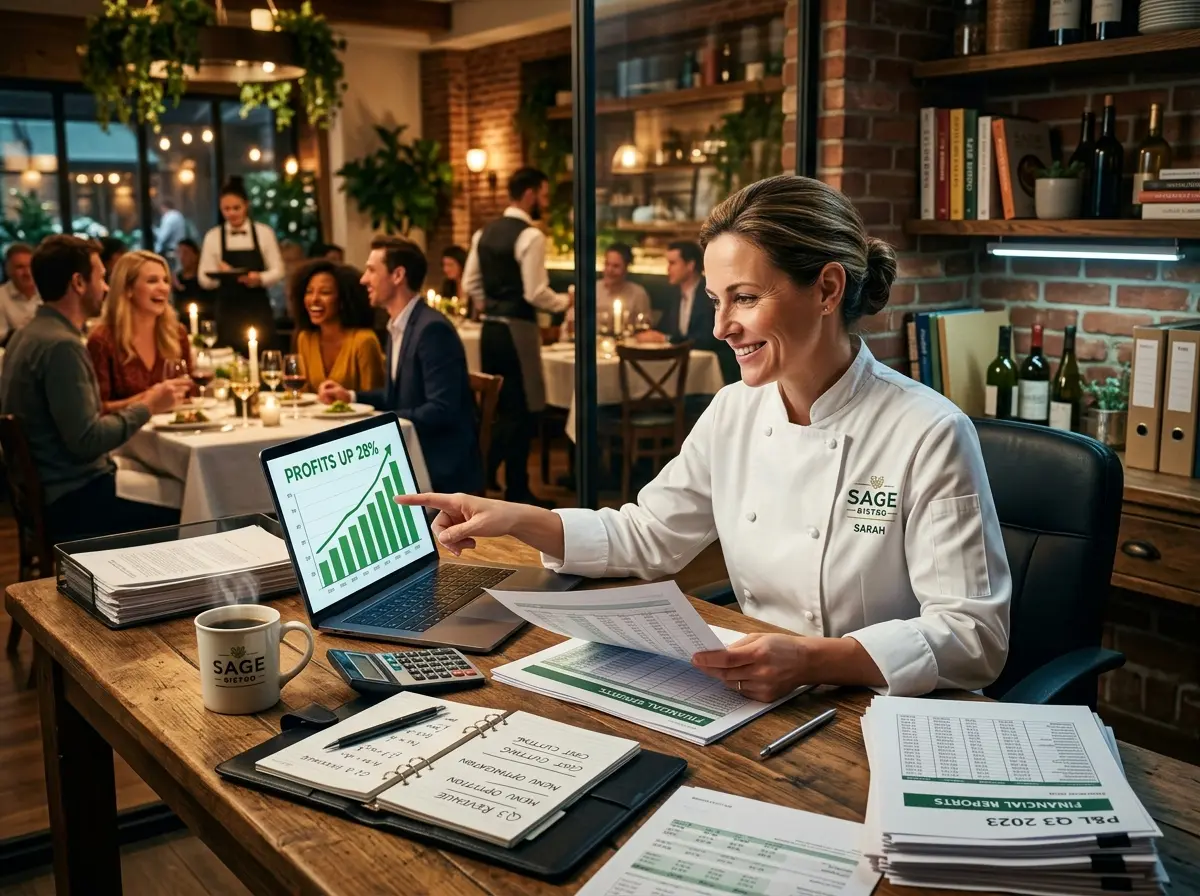
Independent restaurant owners are some of the hardest-working people in business — and unfortunately, some of the most underpaid for that effort. According to the National Restaurant Association, the average restaurant profit margin sits between 3% and 9%. That means for every $100 that comes through your door, you're keeping somewhere between $3 and $9. The rest? It vanishes into food costs, labor, rent, utilities, and the occasional mysterious plumbing emergency.
The good news is that profitability isn't some mythical concept reserved for chain restaurants with corporate efficiency teams. It's a formula — and it's one you can actually apply without burning yourself out further. Let's break it down.
The Real Drivers of Restaurant Profitability
Before you can fix something, you need to understand what's actually moving the needle. Most restaurant owners instinctively focus on revenue — pack more tables, sell more covers, run more promotions. But profitability is a two-sided equation, and ignoring the cost side is like trying to fill a bathtub with the drain open.
Food Cost: The Leak You Might Be Ignoring
Industry standard for food cost is typically 28% to 35% of revenue. If yours is creeping above that, you have a problem — and it's usually one of three things: over-portioning, waste, or a menu that isn't priced correctly. A surprisingly simple fix is a quarterly menu audit. Calculate the actual food cost percentage for each dish, identify your low-margin items, and either reprice them, re-engineer them, or quietly retire them. Nobody mourns a menu item they never ordered anyway.
Batch cooking, smarter inventory ordering, and cross-utilizing ingredients across multiple dishes can dramatically reduce waste without sacrificing quality. The goal is to make sure that the food on your menu is working for you, not against you.
Labor Cost: Scheduling Is a Superpower
Labor is typically the largest controllable expense in a restaurant, often running between 30% and 35% of revenue. The word "controllable" is doing a lot of work in that sentence, because most owners don't actually treat it that way. They staff by feel rather than data, keep overstaffing during slow periods out of habit, and then scramble during rushes when they're actually short-handed.
Modern POS systems give you access to historical sales data by day, hour, and even season. Use it. Build your schedule around actual traffic patterns, not assumptions. Cross-train your staff so you can flex roles without adding headcount. And take a hard look at which tasks are currently consuming paid labor hours that could be handled another way — more on that shortly.
The Upsell Opportunity You're Leaving on the Table
A customer who adds an appetizer, upgrades their drink, or orders dessert is dramatically more profitable than a customer who orders the minimum and leaves. The math is simple: if your average check is $28 and a trained server or a well-placed suggestion bumps it to $35, that's a 25% revenue increase on the same table, the same labor, the same overhead. That's not a small thing — that's the difference between a slow night and a good one.
Effective upselling isn't pushy — it's informative. Train your staff to mention specials enthusiastically, recommend pairings genuinely, and treat every interaction as an opportunity to create a better experience (that also happens to increase revenue). When customers feel guided rather than sold to, they spend more and tip better.
Work Smarter by Automating What Doesn't Need a Human Touch
Here's a question worth sitting with: how many hours per week does your team spend answering the same five questions over the phone? Hours. The answer is hours. And those are hours that could be spent on actual hospitality, food prep, or — radical concept — not being completely exhausted by 3pm.
Let Technology Handle the Repetitive Stuff
This is where tools like Stella become genuinely useful for restaurant owners. Stella is an AI robot employee and phone receptionist that can answer calls 24/7, respond to questions about your hours, menu, specials, and policies, and even promote current deals to callers — all without pulling a single staff member away from what they're supposed to be doing. For restaurants with a physical location, she also operates as a friendly in-store kiosk presence, greeting customers, highlighting promotions, and answering questions so your floor staff can stay focused on delivering great service.
The practical benefit is real: fewer interruptions, a more consistent customer experience, and a front-of-house that doesn't fall apart the moment things get busy. Stella runs on a $99/month subscription with no upfront hardware costs — which, for the labor hours she replaces, is a fairly remarkable return on investment.
Building Loyalty That Actually Shows Up in Your Numbers
New customer acquisition is expensive. A first-time guest who never comes back contributed very little to your long-term profitability, regardless of how great their meal was. The restaurants that build sustainable businesses are the ones that turn first visits into second visits, and second visits into habits.
Know Who Your Customers Are
You don't need a multi-thousand-dollar loyalty platform to start building customer relationships — you need a system, even a basic one, for capturing and remembering information. Which customers come in every Friday? Who orders the same thing every time? Who mentioned a birthday last month? These details feel small, but they're the foundation of hospitality that makes people feel genuinely known rather than just processed.
Start simple: a well-maintained contact list, consistent notes from regular interactions, and a habit of using that information to personalize the experience. When a regular walks in and you remember their usual order or ask about their kids' soccer tournament, you've created something no discount or promotion can replicate.
Promotions That Pull Their Weight
Not all promotions are created equal. A discount that brings in deal-seekers who never return isn't a marketing win — it's a margin hit dressed up as strategy. Effective promotions do one of three things: they bring in new customers who then convert to regulars, they increase visit frequency among existing customers, or they drive traffic during your slowest windows.
Think Tuesday night happy hours, loyalty rewards for a certain number of visits, or a "regular customer" perk that makes your best guests feel appreciated. Track which promotions actually change behavior and which ones just attract people who were going to spend money anyway. If you can't measure it, you can't improve it.
Online Presence: The Table You're Not Filling
A weak online presence is costing independent restaurants real revenue, and most owners underestimate by how much. Your Google Business Profile is essentially a free advertisement that appears at the exact moment someone nearby is looking for a place to eat. Keep it updated. Respond to reviews — both positive and negative, professionally and promptly. Post photos of your actual food (not stock images). Ensure your hours are accurate, especially around holidays.
This takes maybe 30 minutes a week and has a measurable impact on walk-in traffic. If you're not actively managing it, you're essentially handing potential customers to the competitor down the street who is.
A Quick Reminder About Stella
Stella is an AI robot employee and phone receptionist designed to help business owners — including independent restaurant owners — stop losing time and revenue to tasks that don't require a human. She greets customers in-store, answers calls around the clock, promotes your specials, and reduces the constant interruptions that keep your team from doing their best work. At $99/month with no hardware costs and easy setup, she's the team member who never calls in sick and never needs a break.
Start Here: Your Next Three Moves
Profitability isn't about working harder — you're already doing that, and it's not working at scale. It's about working on the right things, cutting the right costs, and building systems that don't require you personally to hold everything together.
If you're ready to move the needle, here's where to start:
- Run a food cost audit this week. Pick your top 10 menu items and calculate the actual food cost percentage for each one. You'll likely find at least two or three that are quietly draining your margins.
- Pull your labor data for the last 30 days. Compare scheduled hours to actual sales by shift. Identify your most over-staffed windows and adjust accordingly — even small changes add up quickly.
- Evaluate where your staff's time is going. If they're spending meaningful hours answering repetitive phone calls or fielding the same questions from walk-ins, that's a cost with a solution. Technology exists specifically to handle this so your team doesn't have to.
Running a profitable independent restaurant is genuinely hard — but it's not impossible, and it's not purely a matter of grinding more hours out of yourself and your team. It's about building a smarter operation, one decision at a time. You got into this business because you love food, hospitality, and community. With the right formula in place, you might actually get to enjoy it again.