Introduction: The Phone Is Ringing. Nobody's Picking Up. Somewhere, a Customer Is Already Gone.
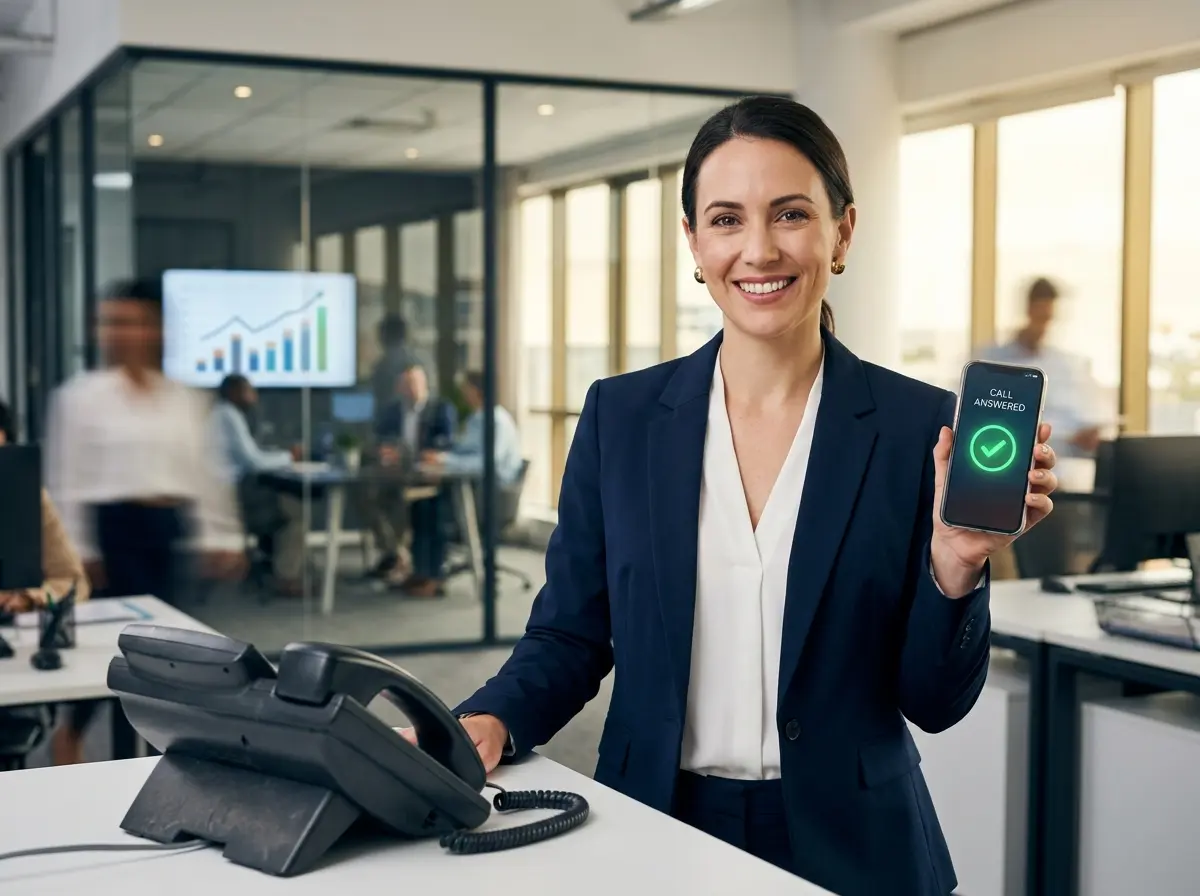
Let's paint a picture you might recognize. It's a Tuesday afternoon. Your best employee is helping a customer in person, another is elbow-deep in whatever it is your business actually does, and your phone is ringing. And ringing. And ringing. Eventually, it goes to voicemail — that dusty digital void where customer intent goes to die. The caller hangs up without leaving a message, pulls up your competitor on Google, and you never hear from them again. Congratulations. You just lost a customer to silence.
Here's the uncomfortable truth: 62% of calls to small businesses go unanswered, and the majority of those callers don't call back. They don't leave a voicemail. They just leave. In a world where customers expect instant responses, a missed call isn't just a minor inconvenience — it's a missed sale, a lost relationship, and a small but steady leak in your business's revenue bucket.
The good news? This is an entirely solvable problem. And no, the solution isn't hiring a full-time receptionist to sit by the phone eating crackers and waiting. There's a smarter, more affordable way to make sure every customer who reaches out actually gets a response — and that's exactly what this post is about.
Why Unanswered Calls Are Costing You More Than You Think
The Real Price Tag of a Missed Call
Most business owners think of a missed call as a minor annoyance. "They'll call back," you tell yourself, with the kind of optimism usually reserved for lottery tickets. But the data tells a different story. Studies show that 85% of people whose calls go unanswered will not call back, and a significant portion of them will contact a competitor within the hour. When you factor in the average lifetime value of a customer — not just a single transaction — a single missed call in some industries can represent hundreds or even thousands of dollars walking out the door.
And it's not just about revenue. Every unanswered call is a small hit to your brand reputation. Customers talk. They leave reviews. They mention to their friends that they "tried calling but couldn't get through." In a competitive market, your phone isn't just a communication tool — it's a first impression, and right now it might be giving people the silent treatment.
The Voicemail Trap
Voicemail was a revolutionary technology — in 1983. Today, it's largely where good intentions go to be ignored. Younger consumers in particular have a well-documented aversion to leaving voicemails, and even those who do leave one have a reasonable expectation of a callback that never seems to come fast enough. If your current strategy for handling missed calls is "they'll leave a voicemail and we'll get back to them," you're relying on a system that a growing percentage of your customers have already opted out of.
What customers actually want is simple: they want to feel heard, immediately. They want answers to their questions without having to schedule a callback like it's a meeting with a bank manager. The businesses that understand this — and act on it — are the ones quietly winning customers from competitors who are still faithfully checking their voicemail at 4:47pm.
After-Hours: The Land of Eternal Missed Opportunities
Your business hours are 9 to 5. Your customers' curiosity is 24/7. Someone is searching for a salon appointment at 10pm, trying to figure out if your auto shop handles their car make at 7am on a Saturday, or wondering about your law firm's consultation fees at midnight because anxiety doesn't keep office hours. These are real people with real intent, and every single one of them who hits your voicemail after hours is a warm lead that just went cold.
Smart Solutions for Always-On Phone Coverage
How Technology Can Close the Gap (Without Breaking the Bank)
The traditional solution to phone coverage was hiring a receptionist — a real human being whose entire job was to answer the phone, take messages, and occasionally water the office plants. That's still a fine approach if you enjoy paying salaries, benefits, and the existential cost of managing someone whose primary adversary is a telephone. But for most small and medium businesses, a full-time receptionist dedicated to phone coverage is neither practical nor affordable.
This is where Stella enters the picture. Stella is an AI robot employee and phone receptionist designed specifically for businesses like yours. She answers calls 24/7, handles customer questions about your products, services, hours, and policies with genuine business knowledge, and forwards calls to your human staff only when the situation actually warrants it. She can also take voicemails — but unlike your current voicemail system, she generates AI-powered summaries and sends push notifications to managers so nothing slips through the cracks. For businesses with a physical location, Stella also operates as a friendly in-store kiosk, greeting customers proactively, promoting current deals, and answering questions on the floor — so your staff can focus on what they do best instead of fielding the same questions forty times a day.
Better yet, Stella's built-in CRM means every customer interaction — phone, in-person, or web — is captured with AI-generated profiles, custom fields, tags, notes, and intake forms collected conversationally. You're not just answering calls; you're building a customer database that actually works for you.
Building a Phone Strategy That Actually Works
Set Clear Call Routing Rules
One of the most practical things you can do right now is sit down and actually think through what should happen when your phone rings. Not all calls are equal. A customer asking about your hours doesn't need to be transferred to your senior technician. A complaint that needs immediate attention shouldn't be buried in an automated menu. A new lead asking for pricing deserves a warm, informative response — not a prompt to "press 3 for more options."
Map out the most common reasons people call your business, and assign each scenario a clear outcome: who handles it, when it gets escalated, and what information needs to be collected. This kind of intentional call routing — whether handled by a human, an AI system, or a combination of both — dramatically reduces the chaos of an unmanaged phone line and ensures every caller gets the right response quickly.
Use Intake to Capture Lead Information Immediately
Every inbound call is a data opportunity, and most businesses waste it completely. When a new customer calls and you don't capture their name, contact information, and reason for calling in a structured way, you're leaving the relationship entirely to chance. Even if you do help them in that moment, they become a stranger the next time they call.
Conversational intake — collecting customer information naturally during the flow of a phone call rather than forcing someone to fill out a form later — is one of the highest-leverage habits you can build into your phone process. It feeds your CRM, enables follow-up, and signals to the customer that you're organized and professional. Businesses that do this consistently report better lead conversion, stronger customer retention, and a lot less scrambling when a customer says "I called about this last month."
Track What Your Callers Are Actually Asking About
Your phone line is one of the most honest focus groups you'll ever have access to — and most businesses ignore it entirely. The questions your customers ask repeatedly are telling you something. If you're getting ten calls a week asking about parking, your website needs better information about parking. If callers consistently ask about a service you offer but don't prominently advertise, that's a marketing opportunity sitting right in front of you.
Make it a habit to review call data regularly. What are the most common questions? Which calls are converting into appointments or sales, and which ones are dropping off? Are certain promotions generating more inbound interest? This information should be feeding your marketing, your operations, and your customer experience strategy. If it isn't, you're flying blind with a very loud airplane.
Quick Reminder About Stella
Stella is an AI robot employee and phone receptionist built for businesses of all sizes — from solo operators to multi-location retailers — available for just $99/month with no upfront hardware costs and no complicated setup. She answers every call, greets every in-store visitor, collects customer information, promotes your deals, and keeps your CRM organized — all without taking a lunch break, calling in sick, or asking for a raise. If the problem this post describes sounds painfully familiar, she's worth a very serious look.
Conclusion: Stop Letting the Phone Win
The unanswered phone is one of the most preventable problems in small business — and yet it quietly drains revenue from thousands of businesses every single day. The solution doesn't require a massive budget, a complex technology overhaul, or a new full-time hire. It requires intention, a clear strategy, and the right tools.
Here's where to start:
- Audit your current missed call rate. Pull your phone data for the last 30 days and find out exactly how many calls went unanswered or to voicemail. Put a number on the problem.
- Map your call routing logic. Write down the most common reasons customers call and define the ideal outcome for each scenario.
- Implement conversational intake. Make sure every new customer call results in captured contact information, either through your staff or an automated system.
- Review your after-hours coverage. If your phone is dead between 5pm and 9am, you have a gap that is actively costing you business.
- Explore AI-powered phone coverage. Tools like Stella exist precisely for this problem, and at $99/month, the math of even one recovered customer per month makes the decision straightforward.
Your customers are calling. Some of them are patient, some of them are not, and almost none of them are going to wait around indefinitely while you figure out your phone situation. The businesses that answer — literally and figuratively — are the ones that earn the sale, build the relationship, and win in the long run. The rest get a voicemail nobody's checking.
Time to pick up.