You Didn't Start a Business to Answer Phones All Day
Let's be honest. When you launched your business, you had a vision. Maybe it involved growth, freedom, financial independence — perhaps even the occasional lunch break that lasted longer than four minutes. What you probably did not envision was spending 80% of your week buried in daily operations, answering the same five questions on repeat, and wondering when exactly you'd get around to that "big picture" thinking everyone keeps talking about.
Welcome to the trap that catches nearly every service business owner: working in the business instead of on it. The concept isn't new — Michael Gerber famously laid it out in The E-Myth Revisited — but knowing about the trap and actually escaping it are two very different things. According to a study by the New York Enterprise Report, small business owners work twice as many hours as regular employees, and a significant portion of that time is swallowed by tasks that don't grow the business at all.
The good news? It's fixable. And no, the solution doesn't require hiring an army of staff or winning the lottery. It requires systems, strategy, and the willingness to let go of a few things you probably shouldn't have been holding onto in the first place.
Understanding the "In vs. On" Trap
What It Actually Means to Work IN Your Business
Working in the business means you are the business — the technician, the manager, the receptionist, the marketing department, and occasionally the janitor. You're handling customer calls, processing orders, solving daily fires, and keeping the whole operation afloat through sheer willpower and caffeine. This isn't inherently bad in the early stages, but if it never evolves, you've essentially built yourself a very exhausting job rather than a scalable company.
The real danger is that working in the business crowds out the time needed to work on it. Strategic planning, marketing development, team building, service innovation — these are the activities that actually move the needle. But they're also the first things to get sacrificed when your inbox is overflowing and the phone won't stop ringing.
What Working ON the Business Actually Looks Like
Working on the business means stepping into the role of owner and strategist rather than operator. It means auditing your processes and asking whether they're efficient. It means developing marketing systems that bring in customers without you personally chasing every lead. It means creating training materials so your team can handle situations without running to you every ten minutes. In short, it means building a machine that runs — at least partially — without you cranking every gear by hand.
Practically speaking, business owners who dedicate even a few focused hours per week to strategic work report significantly better outcomes. A report from the Small Business Administration found that businesses with documented processes and structured growth strategies are substantially more likely to scale successfully and survive beyond five years.
The Mindset Shift That Makes It Possible
Here's the uncomfortable part: the biggest obstacle between you and working on your business isn't time. It's identity. Many owners secretly believe that staying busy means staying valuable. If they're not in the thick of it, something will fall apart. But that belief is exactly what keeps the business dependent on them — and it caps the business's growth at whatever one person can physically manage.
The shift requires trusting systems over heroics. It means accepting that a process handled consistently by a tool or a team member is often better than a task handled brilliantly but inconsistently by you. Businesses that scale aren't run by superheroes. They're run by smart people who learned to delegate and automate the right things.
How Automation and Smart Tools Buy You Back Your Time
Automating Your Front Line with AI
One of the fastest ways to reclaim strategic time is to stop personally managing every customer touchpoint. Think about how many interruptions come from the front of your business in a given day — walk-in questions, phone calls, requests for hours and pricing, and basic inquiries that your staff fields on a loop. Every one of those interruptions is a tiny tax on your ability to think clearly and work strategically.
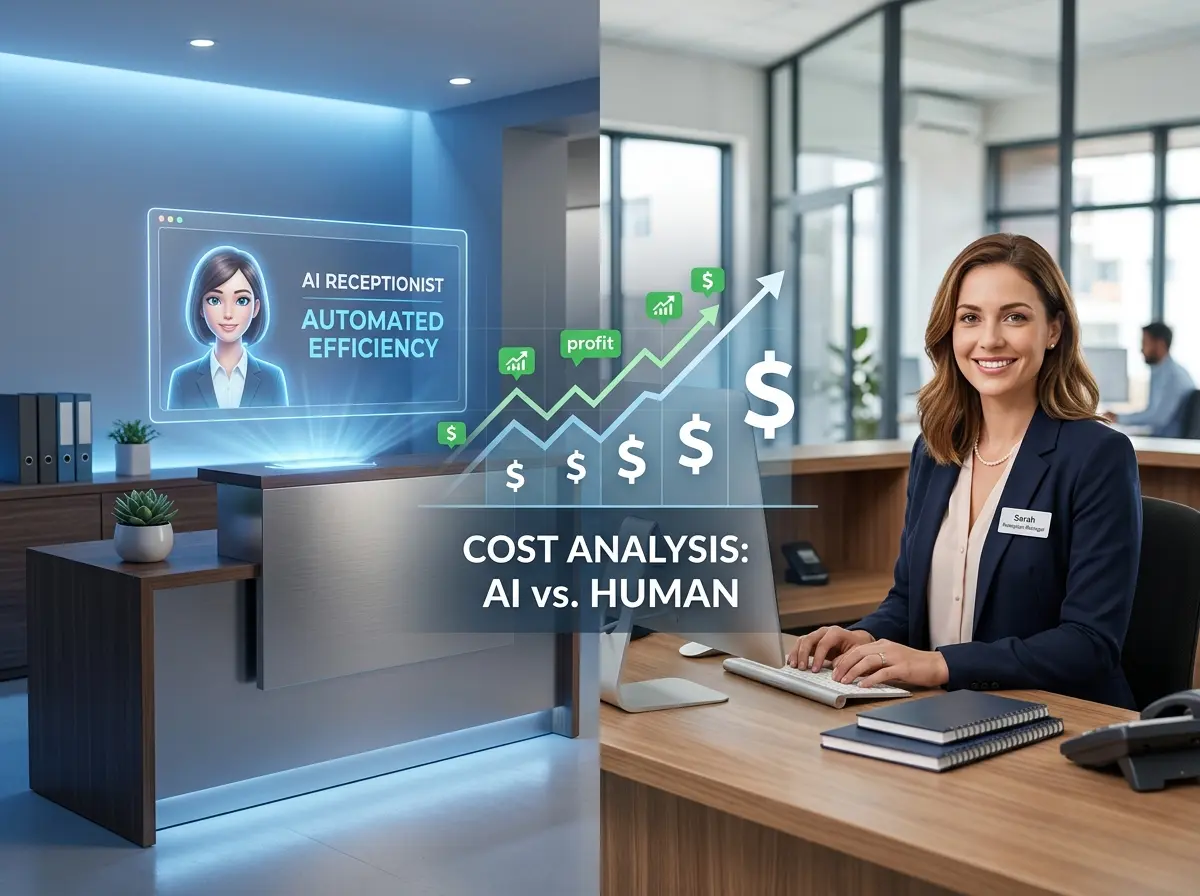
This is exactly where tools like Stella make a tangible difference. Stella is an AI robot employee and phone receptionist that works for your business around the clock — greeting walk-in customers from a physical kiosk inside your location, answering questions about products, services, specials, and policies, and handling phone calls 24/7 with the same business knowledge she uses in person. She can forward calls to human staff based on conditions you configure, or handle inquiries entirely on her own. For business owners who feel personally responsible for every customer interaction, Stella offers something rare: a reliable, professional presence that doesn't require your attention to function.
Stella also collects customer information through conversational intake forms, manages contacts through a built-in CRM with custom fields, tags, and AI-generated profiles, and provides insights into customer interactions and promotional effectiveness. At $99/month with no upfront hardware costs, she's one of the more practical investments a service business owner can make toward actually getting out of the weeds.
Building Systems That Scale Without You
Documenting Your Processes Before You Need To
If your business operations live entirely inside your head, you don't have a business — you have a very complicated personal commitment. Documenting your processes isn't busywork; it's the foundation of every scalable company that's ever existed. Standard operating procedures (SOPs) allow team members to handle situations correctly without your involvement, reduce costly errors, and make onboarding dramatically faster.
Start small. Pick the five tasks in your business that happen most frequently and write out how they should be done, step by step. It doesn't need to be fancy — a shared Google Doc works perfectly well. Once those are documented, move on to the next five. Over time, you'll build a playbook for your business that allows it to function predictably whether you're in the building or not. Franchises aren't successful because they have better products. They're successful because they have better systems.
Delegating the Right Things to the Right People
Delegation is not a sign of weakness. It is the entire point of having a team. The challenge is that many business owners delegate tasks they're comfortable letting go of while holding tightly to tasks they should release. The rule of thumb is simple: if someone else can do it at 80% of your quality, let them do it. Your time has a cost, and spending it on tasks that could be handled by others is one of the most expensive decisions you can make.
Effective delegation also requires giving people the authority and context to actually succeed. Dumping a task on someone without explanation isn't delegation — it's abdication, and it tends to result in you doing the task over again yourself. Invest time upfront in training and context-setting, and delegation starts to compound over time.
Scheduling Time to Work ON the Business — and Protecting It
Strategic time doesn't appear on its own. You have to schedule it the same way you'd schedule a client appointment, and then you have to protect it with the same ferocity. Many successful business owners block out two to four hours per week — often early in the morning before the operational chaos begins — specifically for strategic planning, process improvement, or marketing development. No customer calls during that window. No staff interruptions. No inbox. Just focused work on the things that actually grow the business.
It feels indulgent the first time you do it. Then you start to see results, and it starts to feel essential.
Quick Reminder About Stella
Stella is an AI robot employee and phone receptionist that greets customers at your physical location, answers phones 24/7, promotes your offerings, and handles intake — all for $99/month with no upfront hardware costs. She's one of the simplest ways to remove yourself from the front line without sacrificing the customer experience. If you haven't looked into her yet, it's worth a few minutes of your strategic time.
Your Next Steps Start This Week
Working on your business instead of just in it isn't a destination — it's a practice. It requires ongoing intention, the right tools, and a willingness to release tasks that feel important but are actually just urgent. The business owners who build something truly scalable are the ones who figure this out early enough to benefit from it.
Here's what you can do right now to start shifting the balance:
- Audit your week. Track how you spend your time for seven days. You'll quickly see which activities are strategic and which are operational noise.
- Identify your highest-leverage tasks. What are the two or three things only you can do that genuinely move the business forward? Protect time for those first.
- Document one process this week. Pick the task your team asks you about most often and write out a clear, step-by-step procedure. One down, many to go.
- Automate your front line. If customer questions, phone calls, and basic inquiries are eating your time, put a system in place to handle them without you.
- Block strategic time on your calendar. Two hours. This week. Don't cancel it.
You built this business to create something — not to be consumed by it. The tools, strategies, and mindset to actually step into an ownership role are more accessible than ever. The only thing standing between where you are and where you want to be is the decision to start treating your own strategic time as non-negotiable. Consider this your nudge.