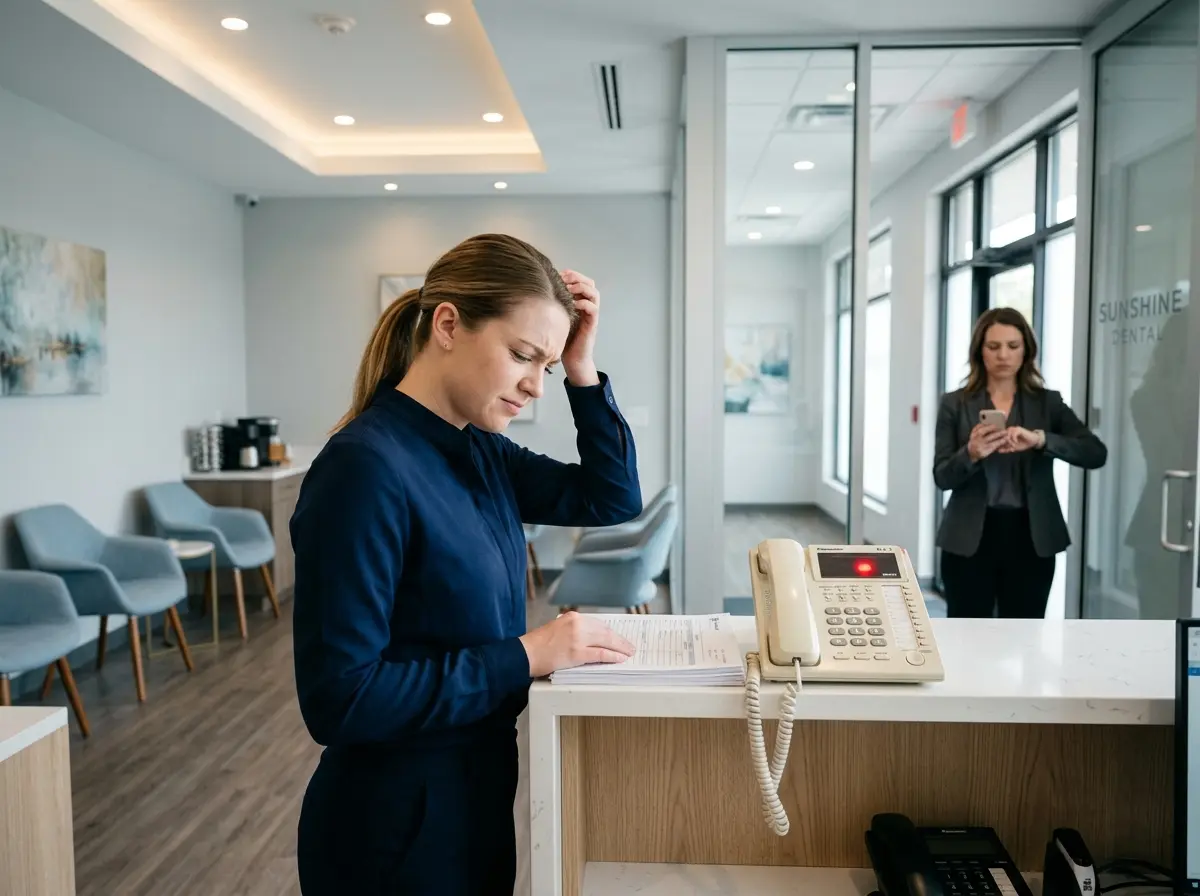
Introduction: The Patient Who Called and Nobody Answered
Picture this: it's 7:14 PM on a Tuesday. Someone just cracked a tooth on a piece of crusty bread (we've all been there), and they're anxious, in pain, and ready to book an appointment with the first dental office that picks up. They dial your number. And then... beep. "You've reached Sunshine Dental. Our office hours are Monday through Friday, 8 AM to 5 PM. Please leave a message and we'll return your call the next business day."
They don't leave a message. They call the next dentist on Google. That dentist picks up — or at least has a system that does — and just like that, you've lost a new patient before they ever sat in your chair.
This isn't a rare edge case. It's happening to dental practices across the country every single day, and most practice owners have no idea because, well, nobody left a voicemail to report it. The hard truth is that missed calls are missed revenue, and in the dental industry — where a single new patient relationship can be worth thousands of dollars over a lifetime — every unanswered phone is money walking out the door.
The good news? This is a completely solvable problem. Let's talk about why it's happening and what you can actually do about it.
Why Dental Practices Miss So Many Calls (And Why It's Not Your Staff's Fault)
The Front Desk Is Already Doing Three Jobs at Once
Let's be honest about what your front desk staff is actually managing on any given morning: they're checking patients in, verifying insurance, answering questions from the hygienist, processing payments, scheduling follow-ups, and trying to remember if Mrs. Henderson wants a reminder call or a text. The phone rings during all of this — constantly. And when someone is standing right in front of your receptionist, that ringing phone is going to wait.
This isn't a staffing failure. It's a structural one. The front desk at most dental practices is a single point of contact handling an unreasonable volume of simultaneous responsibilities. Expecting them to answer every call within two rings while also serving in-office patients is like expecting someone to juggle while also doing taxes. Technically possible, but not something you'd bet your practice on.
After-Hours Calls Are a Blind Spot Most Practices Ignore
According to various healthcare industry studies, a significant portion of appointment-related calls happen outside of traditional business hours — evenings, weekends, and early mornings. These are busy professionals, parents of school-age kids, and anyone whose own work schedule prevents them from calling during your 8-to-5 window. They're not being difficult; they're calling when they can.
If your practice's after-hours solution is a voicemail box that gets checked the next morning, you're essentially posting a "Gone Fishing" sign on your front door for twelve or more hours a day. Many of those callers won't leave a voicemail. Research consistently shows that a large majority of callers who reach voicemail simply hang up — especially first-time callers who have no existing relationship with your practice and no particular reason to wait around.
New Patients Are Less Forgiving Than Established Ones
Your longtime patients will call back. They know you, they trust you, and they're not going anywhere over one missed call. New patients are an entirely different story. They found you through a Google search or a friend's recommendation, and they have three or four other options listed right there on their screen. Their loyalty is conditional on you being easy to reach. If you're not, someone else will be.
In a competitive local market, the dental practice that responds fastest — and most helpfully — often wins the patient, regardless of who has the better reviews or the fancier website. Speed and availability are themselves a form of quality.
How Technology Can Plug the Gap (Without Replacing Your Team)
The Case for an AI Phone Receptionist in Your Practice
This is where Stella, the AI robot employee and phone receptionist, becomes genuinely relevant to dental practice owners. Stella answers every call your team can't — after hours, during lunch, when all three lines are ringing at once. She's trained on your specific practice information: your hours, services, insurance policies, appointment availability FAQs, and current promotions. She handles incoming calls with a natural, conversational tone that doesn't make patients feel like they've hit a dead end.
For dental offices with a physical location, Stella also operates as a human-sized in-store kiosk, greeting patients as they walk in, answering questions, and reducing the burden on your front desk during busy check-in periods. When a call does require a human touch — a complex insurance question, a dental emergency, or a patient who's clearly distressed — Stella can forward the call to your staff based on conditions you configure. And when she takes a voicemail, she generates an AI summary and sends a push notification to your manager, so nothing falls through the cracks. Her built-in CRM and conversational intake forms also mean that new patient information gets captured and organized automatically — no more scrambling to find a sticky note with someone's phone number on it.
What an Effective Phone Strategy Actually Looks Like for Dental Practices
Set Clear Call Handling Priorities
The first step is getting intentional about how calls are handled, rather than letting it happen reactively. Map out the types of calls your practice receives most often: appointment scheduling, insurance questions, billing inquiries, emergency calls, and general information requests. Each of these has a different urgency level and a different ideal handler. An emergency call needs a human immediately. A question about your Saturday hours does not.
Once you've categorized your calls, you can build a response system that routes each type appropriately — whether that's a live staff member, an automated system, or a combination of both. The goal is to make sure that every caller gets a useful, timely response, not just the ones lucky enough to call during your busiest staffing hours.
Stop Treating Voicemail as a Solution
Voicemail is not a patient communication strategy. It's a last resort, and it should be treated as such. If your current approach to after-hours calls is "they'll leave a message," it's worth asking honestly: how many of them actually do? And of those who do, how many are still available and interested by the time you call back the next day?
A more effective approach is to give callers something useful even when a live person isn't available. That might mean answering their most common questions automatically, offering them an easy way to schedule online, or at least acknowledging their call with something more responsive than a generic outgoing message. The bar here isn't high — you just need to do better than a beep.
Track Your Missed Calls Like You Track Your No-Shows
Most dental practices have robust systems for tracking no-shows and cancellations because they know those represent lost revenue. Missed calls represent the same thing — often more, because a no-show was at least a confirmed patient. A missed call might have been a new patient worth thousands of dollars in lifetime value, and you'll never know.
Start treating missed calls as a metric worth monitoring. How many calls is your practice receiving versus answering? What time of day are the gaps largest? What's your callback rate, and how quickly are you reaching people? These numbers will tell you a lot about where your patient pipeline is leaking, and they'll help you make smarter decisions about how to fix it.
Quick Reminder About Stella
Stella is an AI robot employee and phone receptionist built for businesses exactly like yours — available 24/7, knowledgeable about your specific practice, and capable of handling calls, greeting patients in person, collecting intake information, and keeping your team informed without adding to their workload. She runs on a straightforward $99/month subscription with no upfront hardware costs and no long onboarding process. Whether your biggest challenge is after-hours calls, front desk overload, or simply having a more consistent first impression, she's worth a look.
Conclusion: Every Ring Is an Opportunity — Don't Let It Go to Voicemail
The dental practices that are growing right now aren't necessarily the ones with the most advanced equipment or the most impressive credentials — though those things matter. They're the ones that make it easy to become a patient. Easy to call. Easy to get answers. Easy to book. That friction-free experience starts the moment someone picks up the phone to reach you, and if what they get is silence followed by a beep, you've already started that relationship on the wrong foot.
Here's what you can do right now:
- Audit your missed calls. Pull your call data for the last 30 days and identify when and how often calls go unanswered.
- Define your after-hours plan. Decide what you want to happen when your team isn't available — and make sure it's something better than voicemail.
- Categorize your call types. Know which calls need a human and which ones can be handled automatically without sacrificing patient experience.
- Invest in a reliable first contact system. Whether that's better staffing, a smarter phone system, or an AI receptionist like Stella, make sure someone — or something — is always ready to answer.
Your next best patient is out there right now, phone in hand, looking for a dentist. Make sure when they call, somebody answers.