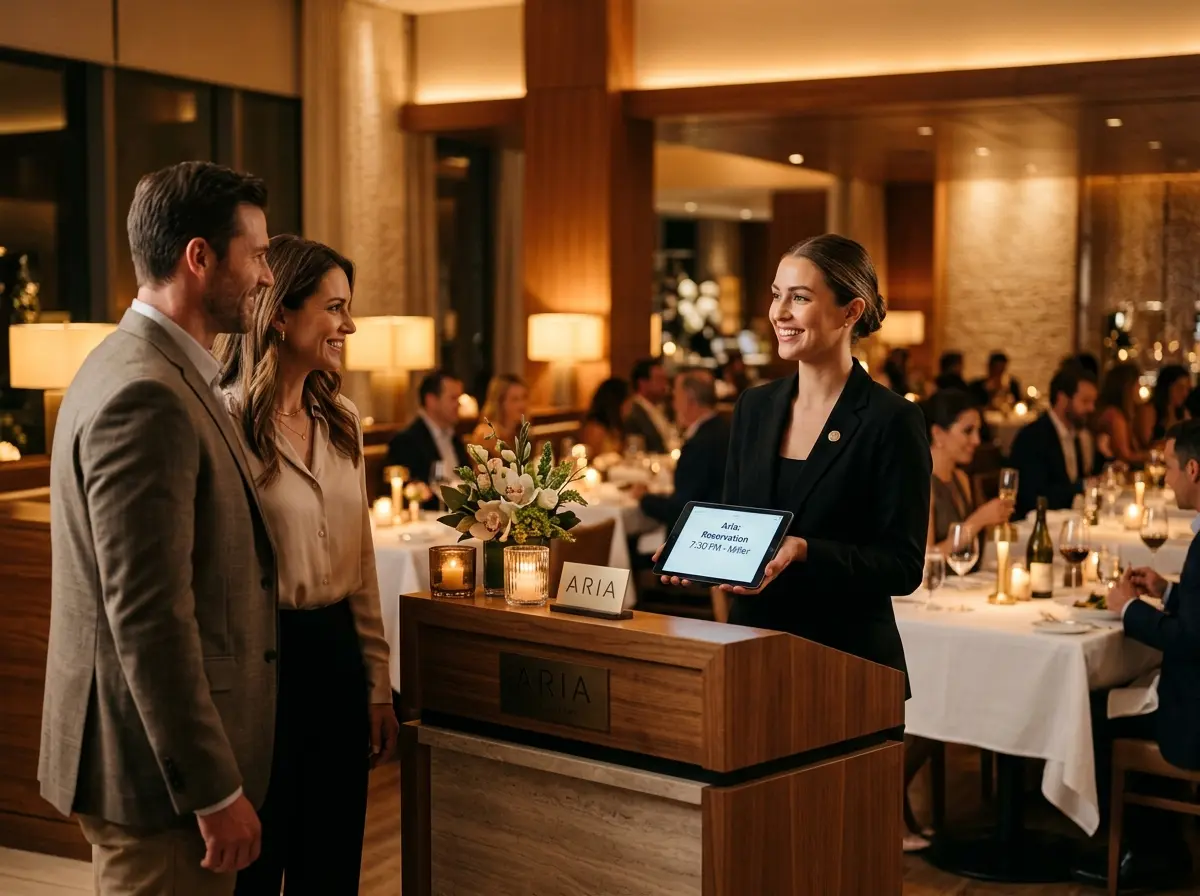
The Host Stand: Where First Impressions Go to Die (Or Thrive)
Picture this: a couple walks into your restaurant, slightly underdressed, slightly hungry, and entirely unsure whether they need a reservation. They approach the host stand. And there, in all its glory, sits... a laminated menu, a half-dead houseplant, and a sticky note that says "Back in 5 min." First impressions, indeed.
The host stand is arguably the most strategically important piece of real estate in your entire restaurant. It's the first thing customers see, the last thing they remember on the way out, and the singular moment where the tone of their entire dining experience is set. Yet somehow, most restaurants treat it like an afterthought — a place to park a bored teenager with a seating chart and call it hospitality.
The good news? You don't have to be one of those restaurants. Your host stand can be a genuine customer experience powerhouse — a revenue-generating, loyalty-building, impression-making machine. You just have to be intentional about it. Let's talk about how.
What the Host Stand Is Actually Doing (Or Not Doing) For You
The First Impression Problem
Research consistently shows that customers form their initial impressions of a business within the first seven seconds of walking in. Seven seconds. That's barely enough time to say "Welcome in, how many in your party?" — let alone communicate your brand, your specials, your vibe, and your value proposition. And yet, that's exactly what a well-positioned host stand interaction should be doing.
When a guest walks in and is immediately greeted with warmth, confidence, and useful information ("We've got a great table by the window opening up in about ten minutes, and tonight our chef is featuring a pan-seared halibut that's been flying out of the kitchen"), something remarkable happens: they feel cared for. They feel like they made a good choice by coming here. That feeling is worth more than any Instagram ad you'll ever run.
When they walk in and nobody acknowledges them for ninety seconds while two employees argue about a table assignment — well, that's a Yelp review in the making.
The Revenue Opportunity Most Restaurants Miss
Here's something most restaurant owners don't think about: the host stand is a sales position. Not in a pushy, car-dealership kind of way — but in a genuine, helpful, "let me make sure you have a great time" kind of way. A well-trained host who mentions the prix fixe menu, highlights the weekend cocktail special, or casually drops that the chocolate lava cake sells out every Friday night is doing real revenue work.
Studies in the restaurant industry suggest that upselling at the point of entry — before the guest even sits down — can increase average check sizes by 5 to 15 percent. That's not nothing. That's the difference between a mediocre month and a great one. Yet most hosts are given zero training on how to mention promotions naturally, how to read a guest's interest level, or how to make a recommendation feel like a gift rather than a sales pitch.
Consistency: The Achilles' Heel of Every Host Stand
The biggest operational challenge with any host position is consistency. Your best host is fantastic — warm, knowledgeable, proactive, makes everyone feel like a regular. Your second-best host is fine. Your third-best is... present. And whoever you had covering Saturday brunch? Let's not go there.
Inconsistency at the host stand is a silent killer. Guests who visit multiple times are quietly cataloguing the experience, whether they realize it or not. A wildly different greeting experience each visit chips away at trust and loyalty in ways that are hard to measure but very real. Building systems — training, scripts, checklists, and clear expectations — around the host stand experience is one of the highest-return investments a restaurant can make.
A Modern Upgrade Worth Considering
Bringing Technology to the Front of House
If your host stand struggles with consistency, coverage gaps, or simply getting customers the information they need quickly, it's worth knowing that some restaurants are now supplementing their front-of-house operations with AI-powered tools — both in person and over the phone. Stella, for example, is a friendly AI robot kiosk and phone receptionist designed for exactly this kind of environment. She can stand at or near your host area, greet customers proactively, answer questions about your menu, hours, specials, and policies, and even promote current deals — all without a bathroom break or a bad attitude.
On the phone side, Stella answers calls 24/7 with the same knowledge she uses in person, handles reservation inquiries, forwards calls to human staff when needed, and takes AI-summarized voicemails so nothing falls through the cracks. For a restaurant fielding dozens of calls a day, that kind of reliable coverage — at $99/month — is a pretty compelling addition to the team.
How to Actually Transform Your Host Stand Experience
Train for Hospitality, Not Just Logistics
Most host training focuses entirely on the mechanics: how to use the seating chart, how to manage the waitlist, how to quote accurate wait times. All of that matters. But it's table stakes, not a differentiator. The real training opportunity is in the soft skills that turn a transaction into a moment.
Teach your hosts to make eye contact immediately when someone walks in — even if they're mid-task. Train them to use the guest's name if they have a reservation. Coach them on how to deliver a wait time with warmth rather than a shrug ("It'll be about fifteen minutes — can I grab you a menu to browse while you wait, or would you like to try one of our house cocktails at the bar?"). These micro-interactions compound over time into a reputation for genuine hospitality that no amount of advertising can replicate.
Make the Host Stand a Marketing Asset
Your host stand should be doing active communication work on your behalf. That means thoughtful, well-designed signage that highlights your current specials, seasonal menu changes, upcoming events, or loyalty program. It means equipping your host with two or three specific talking points each shift — tonight's featured dish, this week's happy hour deal, the new dessert that just launched — so they can weave them naturally into the greeting conversation.
It also means thinking about the physical presentation of the stand itself. Is it clean and intentional, or does it look like a staging area for lost-and-found items? Small details — a fresh flower, a neatly displayed menu, consistent branding — signal to the guest that you care about details. And if you care about the details at the door, they'll assume you care about the details in the kitchen.
Use the Exit as Strategically as the Entrance
One of the most overlooked host stand opportunities is the departure moment. When a guest stops at the host stand on the way out — to retrieve a coat, ask about parking, or simply pass through — that's a golden touchpoint. A genuine "How was everything tonight?" paired with a heartfelt thank-you and a mention of an upcoming event or loyalty program can be the final note that turns a satisfied customer into a loyal regular.
If a guest had an issue during their meal that was handled well, the exit moment is your chance to reinforce that recovery. If they're clearly delighted, it's the perfect moment to invite them back. Most restaurants let guests walk out the door in silence. Don't be most restaurants.
Quick Reminder About Stella
Stella is an AI robot employee and phone receptionist built for businesses like yours — friendly, knowledgeable, and always on. Whether she's greeting guests at your host stand, answering questions about your menu and specials, or handling your phone calls at 2 AM when your team is long gone, she shows up consistently every single time. At $99/month with no upfront hardware costs, she's the reliable team member who never calls in sick on a Saturday.
Your Host Stand Can Be So Much More — Here's Where to Start
The host stand doesn't have to be a bottleneck, an afterthought, or a monument to missed opportunities. It can be the place where your brand comes alive, where revenue conversations begin naturally, and where guests feel — immediately and genuinely — that they made an excellent choice by walking through your door.
Here's a simple action plan to get started:
- Audit your current experience. Walk into your own restaurant as if you're a first-time guest. What do you see? What do you hear? What do you feel? Be honest.
- Build a host training guide that goes beyond logistics — include hospitality language, promotional talking points, and guidance on reading guest moods and needs.
- Refresh the physical stand. Clean it up, brand it intentionally, and add one or two pieces of compelling, current marketing material.
- Create a daily briefing habit where managers give hosts two or three specific things to mention during shifts — specials, events, new menu items.
- Measure the exit. Start tracking how many departing guests you're engaging versus letting walk out in silence. Set a goal. Improve it.
The restaurants that win long-term aren't always the ones with the best food (though that certainly helps). They're the ones that treat every touchpoint — including the humble host stand — as an opportunity to create a guest who can't wait to come back. That opportunity is already sitting right inside your front door. It's time to actually use it.