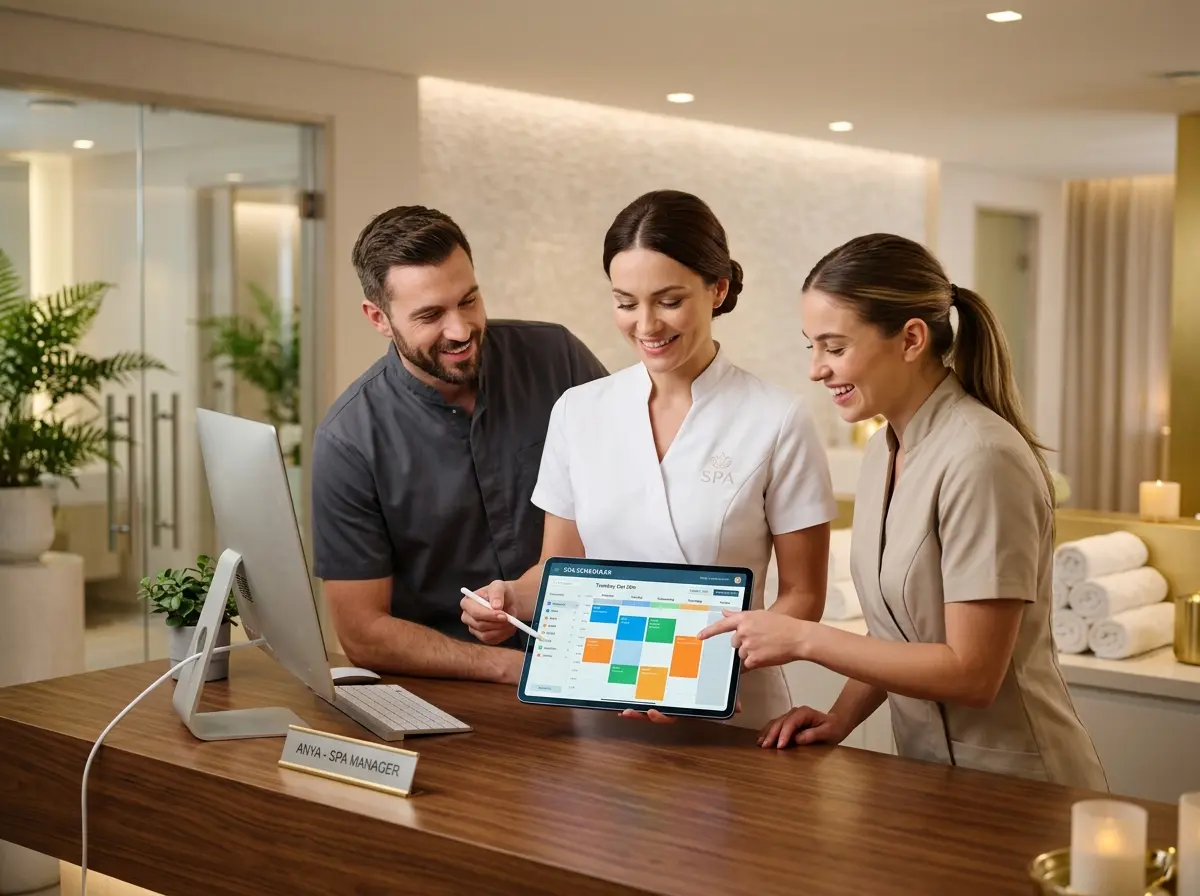
When Your Spa Schedule Looks Like a Game of Tetris Gone Wrong
If you run a busy spa with multiple service providers, you already know the special kind of chaos that comes with managing overlapping appointments, double-booked treatment rooms, and that one staff member who somehow ends up with three clients at 2 PM on a Saturday. Scheduling conflicts aren't just annoying — they're expensive. They lead to unhappy clients, stressed-out staff, and that awkward conversation where you have to explain to someone who drove 45 minutes for a hot stone massage that there's been a tiny mix-up.
The good news? Multi-staff calendar sync has become the backbone of conflict-free scheduling for spas across the country — and once it's set up correctly, it genuinely changes how your entire operation runs. In this post, we'll walk through exactly how one busy spa eliminated its scheduling headaches, what tools and strategies made the difference, and how you can replicate the same results without losing your mind (or your best esthetician) in the process.
The Root Causes of Spa Scheduling Conflicts
Before we talk solutions, it helps to understand why spa scheduling is so uniquely complicated. Unlike a simple appointment-based business, spas deal with a web of interdependencies: staff availability, room availability, service duration, product prep time, and client preferences — all happening simultaneously, all day long. When any one of those variables gets out of sync, the ripple effect is immediate and visible to everyone in the building.
The Siloed Calendar Problem
In many spas, each staff member manages their own calendar — whether that's a paper book, a personal Google Calendar, or a scheduling app they half-use. The result is that no one has a true real-time view of the entire operation. The front desk books a facial for Room 2 at noon without knowing that the massage therapist already has that room reserved until 12:30. Nobody's being careless; they simply don't have visibility into each other's schedules. It's not a people problem — it's a systems problem.
Manual Confirmation Gaps
Another major culprit is the gap between when an appointment is booked and when it's confirmed with the relevant staff member. A client calls, books a couples massage for two weeks out, and the front desk writes it down. Meanwhile, one of the therapists requests that Saturday off — and those two pieces of information never meet until the morning of the appointment. According to industry data, the average spa loses between 3–5 bookable hours per week to scheduling errors and last-minute reshuffling. Over a year, that's a significant chunk of revenue walking out the door while you're busy apologizing at the front desk.
The "Who's Using Which Room?" Dilemma
Treatment rooms are a finite resource, and unlike staff schedules, rooms don't negotiate or send reminder texts. When room assignments aren't tracked alongside staff calendars in the same system, conflicts are practically guaranteed during peak hours. A spa with four treatment rooms and six service providers during a Saturday rush is essentially playing resource allocation chess — without a board.
How the Right Tools (Including a Little AI Help) Can Fix This
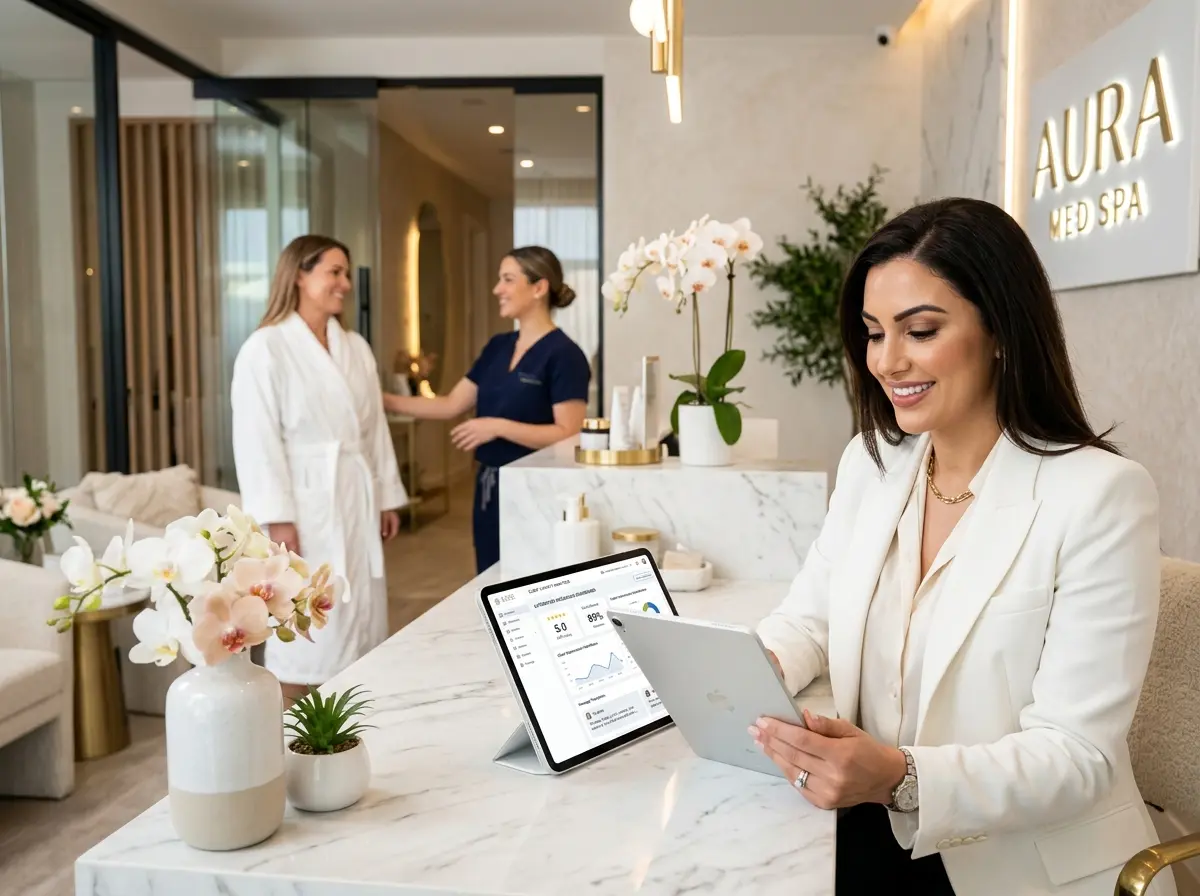
Technology has made multi-staff calendar sync genuinely accessible for small and mid-sized spas — not just the big resort chains with dedicated IT departments. The right setup connects staff calendars, room resources, and client bookings into a single live view, so conflicts are caught before they happen rather than discovered when a client is already standing at the front desk in a robe.
Where Stella Fits Into Your Front-of-House
One often-overlooked piece of the scheduling puzzle is what happens on the intake side — specifically, who's capturing new appointment requests and doing it accurately. Stella, the AI robot employee and phone receptionist, handles incoming calls 24/7 and can collect client intake information through conversational forms — meaning appointment requests that come in after hours are captured cleanly and pushed to your system with all the relevant details, not scribbled on a sticky note by a tired front desk associate at 6:58 PM.
Beyond phones, Stella's in-store kiosk presence means that walk-in clients or those waiting in your lobby can be greeted, informed about available services, and guided through the booking process without pulling your staff away from the treatment floor. Her built-in CRM also logs client information, preferences, and interaction history — giving your team the context they need to provide personalized service without having to dig through appointment history manually. For a spa where client experience is everything, that kind of front-of-house consistency is worth a lot.
Building a Conflict-Free Multi-Staff Calendar System
Getting to a genuinely conflict-free schedule doesn't require a complete operational overhaul. It requires the right architecture — and then actually using it consistently. Here's how to build it.
Step 1 — Choose a Platform Built for Multi-Resource Scheduling
Not all scheduling software is created equal. For spas specifically, you need a platform that can manage both staff availability and room resources simultaneously. Look for tools like Mindbody, Vagaro, or Boulevard — all of which are designed for service businesses with multiple providers and physical resources. The key feature to look for is the ability to assign both a staff member and a room to every single appointment, with real-time conflict detection that prevents double-booking at the point of entry rather than after the fact.
Step 2 — Establish a Single Source of Truth
This is the cultural shift that makes the technical shift actually work. Every staff member — from your lead massage therapist to your part-time nail tech — needs to be on the same scheduling system, updating their availability in real time. Personal Google Calendars, paper books, and text-message availability checks have to go. Yes, this requires some change management. Yes, someone will push back. Hold firm. A unified calendar is non-negotiable if you want conflicts to stop.
One spa owner in the Denver area described the transition this way: "The first two weeks were rough because people were still defaulting to their old habits. By week three, when the team started seeing how much smoother the days ran, they were converts." The pain of transition is temporary. The chaos of fragmented calendars is permanent — until you fix it.
Step 3 — Automate Confirmations and Reminders
Once your calendar is unified, layer in automated client confirmations and staff reminders. Most scheduling platforms offer this natively, and it closes the communication gap that causes so many last-minute conflicts. Clients confirm their appointments, staff get automatic alerts about their schedules, and your front desk spends less time playing telephone and more time actually serving clients. Set reminders at 48 hours and 24 hours out, and watch your no-show rate drop alongside your conflict rate.
Quick Reminder About Stella
Stella is an AI robot employee and phone receptionist designed to work inside your business as a kiosk and answer your phone calls around the clock — all for $99/month with no upfront hardware costs. She greets clients, answers questions, promotes your services, and captures booking information so your human staff can focus on delivering exceptional experiences rather than managing intake. For a spa trying to tighten up its scheduling and front-of-house operations, she's a natural fit.
Your Next Steps Toward a Conflict-Free Schedule
Scheduling conflicts at a busy spa aren't a sign that your team is failing — they're a sign that your systems haven't caught up with your growth. The fix is straightforward, even if the implementation takes some discipline: move to a unified scheduling platform, assign both staff and rooms to every appointment, automate your confirmations, and make sure your intake process is airtight so that new bookings are captured accurately from the start.
Here's a simple action plan to get moving this week:
- Audit your current scheduling setup. Identify every place where appointment information currently lives — apps, paper, texts, emails — and count how many of those sources don't talk to each other.
- Evaluate two or three platforms designed for multi-staff, multi-resource scheduling and request demos. Prioritize real-time conflict detection and room assignment features.
- Set a migration deadline and communicate it to your team. Define a clear cutover date after which the old system is officially retired.
- Review your intake process — especially for after-hours calls and walk-ins — to ensure appointment requests are being captured cleanly and fed into your unified calendar.
- Monitor for two weeks after going live, track conflict frequency, and celebrate the wins with your team when those numbers drop.
The spa that inspired this post went from averaging four to five scheduling conflicts per week to fewer than one per month within 60 days of switching to a unified system. That's not magic — that's just what happens when your tools finally match the complexity of your business. Your clients came to relax. Make sure your operations aren't the ones who need the massage.