Is Your Auto Shop Leaving Money on the Lift?
Here's a scenario that probably sounds familiar: a customer comes in for an oil change, your technician notices the brake pads are nearly metal-on-metal, the cabin air filter looks like it survived a dust storm, and the serpentine belt has seen better days — but none of it gets communicated clearly, the customer hears a vague "you might want to get those brakes looked at," and they drive off without authorizing a single additional repair. Congratulations, you just inspected a car for free.
This isn't a technician problem. It's a process problem. And the good news is that a formal Digital Vehicle Inspection (DVI) process can fix it — while also making your customers happier, your shop more trustworthy, and your average repair order significantly larger. Studies have shown that shops using a consistent DVI process see average repair order increases of 20% to 40%. That's not a rounding error. That's a new piece of equipment paid for itself.
Let's break down why your auto shop needs a formalized DVI process yesterday, and how to actually make it stick.
What a Digital Vehicle Inspection Actually Does (Besides Looking Impressive)
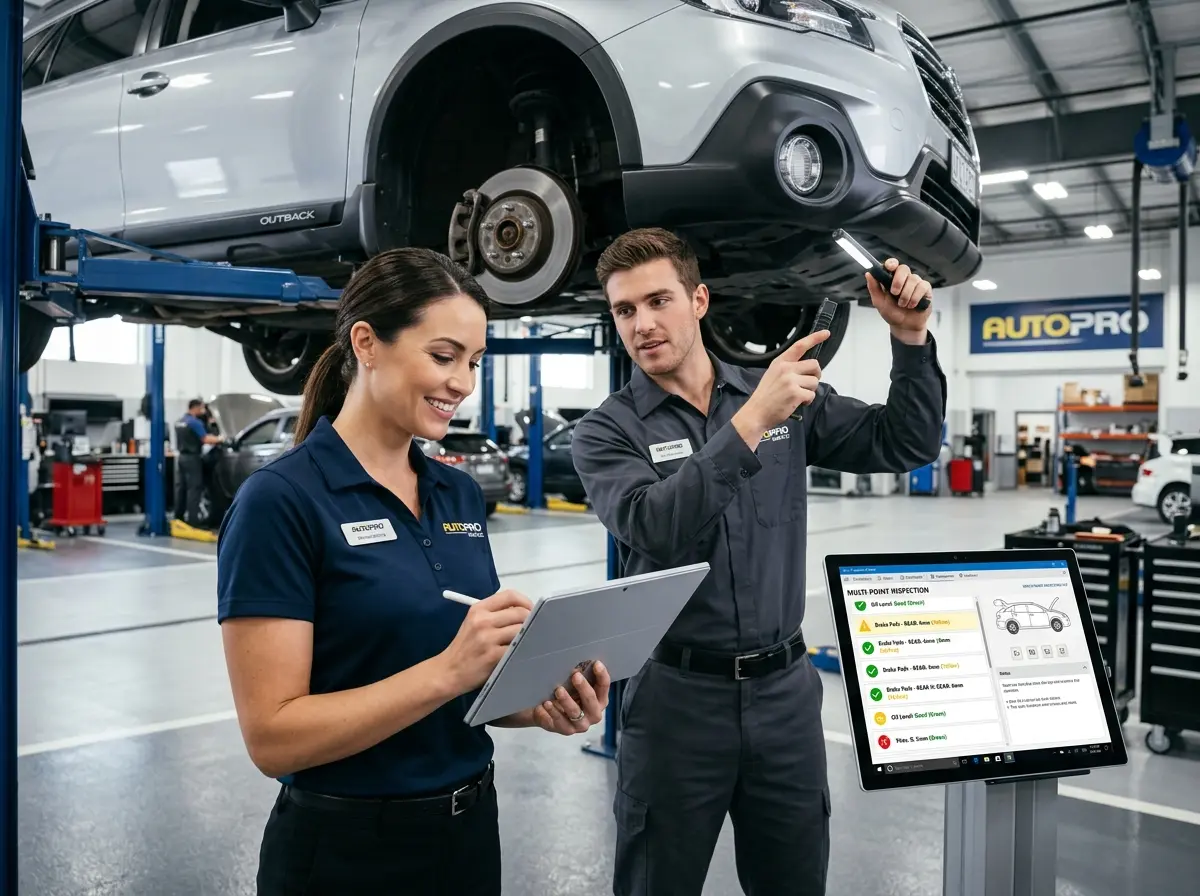
A Digital Vehicle Inspection is a structured, documented inspection process where technicians go through a standardized checklist — typically using a tablet or smartphone — and record the condition of every major system on the vehicle. Photos, videos, and notes are attached in real time and then sent directly to the customer, usually via text or email, before any conversation about repairs even begins. It sounds simple. It is simple. And yet, a shocking number of shops still rely on a paper form from 2003 and a technician shouting findings across the shop floor.
The Trust Factor: Seeing Is Believing
Here's the uncomfortable truth about why customers decline repairs: they don't trust you. Not you personally — the industry. Decades of "the mechanic ripped me off" stories have made car owners defensive. When your service advisor calls and says, "Your rear shocks are worn," the customer's internal monologue goes something like: "Is that real, or are they just trying to squeeze more money out of me?"
A DVI with photos and video eliminates that doubt almost entirely. When a customer can see a cracked CV boot on their phone with their own eyes, the conversation shifts from "do I believe you?" to "okay, what does it cost and how long will it take?" That's the conversation you want to be having. Shops that send photo-based inspections consistently report higher approval rates simply because customers no longer feel like they're being asked to take something on faith.
Standardization: The Secret to Not Missing Revenue
Without a formal process, inspection quality varies wildly — not because your technicians are careless, but because humans are inconsistent. One tech checks tire tread depth religiously. Another forgets to look at belts. A third skips the battery test when he's running behind. A standardized DVI checklist ensures that every car gets looked at the same way, every single time, regardless of who's in the bay or how busy the shop is.
This consistency does two things: it protects you legally by documenting what was and wasn't found, and it ensures you're never leaving a legitimate upsell on the lift. A missed brake recommendation isn't just lost revenue — it's a safety issue you could have caught. Standardization keeps both your business and your customers better protected.
The Numbers Don't Lie
According to data from shop management software providers, auto shops that implement a consistent DVI process report not only higher average repair orders but also improved customer retention and online review scores. Customers who receive a digital inspection — especially one with photos — feel more informed and more respected, which translates directly into Google reviews that say things like "they actually showed me what was wrong" instead of "felt like they were just guessing." That kind of social proof compounds over time and brings in new customers without you spending an extra dollar on advertising.
How Technology (Including Some Robots) Can Support Your Process
Tools That Keep the Workflow Smooth
A DVI process is only as good as the tools that support it. Most modern shop management systems — like Tekmetric, Shop-Ware, or Mitchell 1 — have built-in DVI functionality that integrates directly with your repair orders. The key is choosing a platform your technicians will actually use, training them properly, and making the inspection a non-negotiable part of every vehicle write-up. If it's not in the system, it didn't happen.
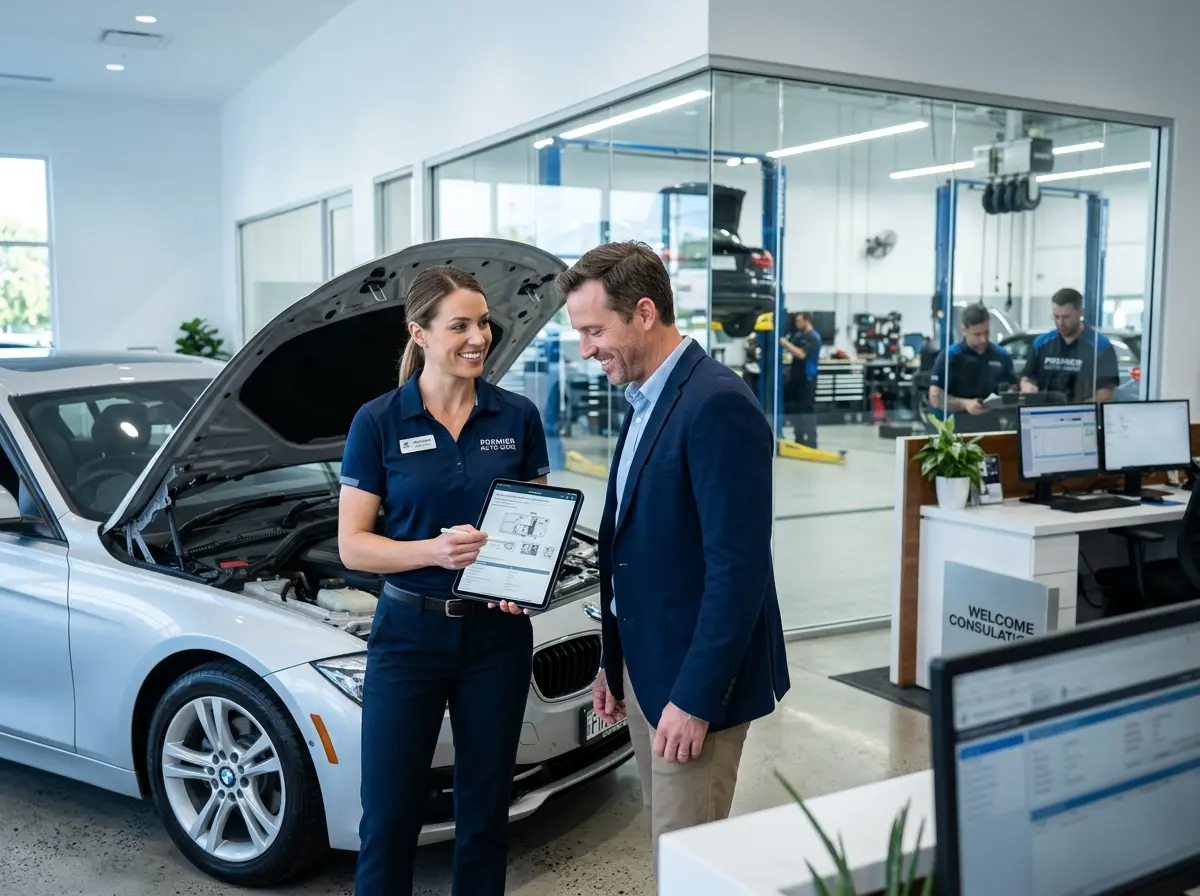
On the customer communication side, your service advisors need to be trained to present inspection results — not just read them off a screen. There's an art to saying "your brake pads are at 2mm, here's the photo, here's what we recommend, and here's why it matters" in a way that informs without pressuring. Role-play that conversation in your team meetings. It pays off.
Where Stella Fits Into the Picture
While your technicians are focused on inspections and your service advisors are following up on estimates, the front of your shop still needs to run. Stella, the AI robot employee and phone receptionist, can handle the steady stream of incoming calls — customers asking about appointment availability, service pricing, or whether their car is ready — without pulling your staff away from higher-value conversations. She works around the clock, so even the 8 p.m. "is my car done?" call gets answered professionally. Fewer dropped calls and fewer frustrated customers waiting on hold means your shop's reputation stays intact while your team stays focused. It's a small process improvement that adds up fast.
Building a DVI Process That Actually Gets Used
Rolling out a DVI process is easy. Getting your team to actually follow it consistently — that's where most shops stumble. Here's how to build one that sticks.
Start With the Checklist, Then Build the Culture
Your DVI checklist should be comprehensive but not overwhelming. Cover the major systems — brakes, tires, fluids, belts, filters, battery, suspension, and lights — and include clear condition ratings (typically a green/yellow/red system) so technicians can document quickly and service advisors can explain findings at a glance. Red means urgent. Yellow means watch it. Green means all good. Simple, visual, and universally understood.
More importantly, the DVI has to be treated as a shop-wide non-negotiable — not a suggestion. That starts with leadership. If the shop owner or service manager lets the process slide on a busy Saturday, technicians will learn that it's optional. Set the expectation clearly: every car that comes in gets a full inspection, every time, no exceptions. Track compliance weekly, and recognize the technicians who do it consistently.
Train Your Service Advisors to Sell With Empathy, Not Pressure
A great inspection is worthless if your service advisor stumbles through presenting it. Train your team to lead with safety and customer benefit — not shop revenue. The framing matters enormously. "Your brake pads are at 10% life and we're heading into winter — here's a photo of what we're seeing" lands completely differently than "you need brakes." One feels like advice from a trusted expert. The other feels like an upsell.
Encourage advisors to ask questions: "Do you do a lot of highway driving?" or "Do you have a long road trip coming up?" This creates context that makes the recommendation feel personalized rather than scripted. Customers who feel genuinely cared for authorize more work, come back more often, and refer their friends. It's the oldest business principle in the book, and it works just as well with a DVI as with anything else.
Measure, Adjust, and Celebrate Wins
Track your average repair order before and after implementing the DVI. Track your inspection completion rate. Track how many yellow-flagged items get approved on the same visit versus deferred. These numbers tell you exactly where your process is working and where it needs refinement. Set goals, share results with your team, and celebrate milestones. If the average repair order goes up $150 because the team is doing thorough inspections, that's worth acknowledging — loudly and specifically.
A Quick Reminder About Stella
Stella is an AI robot employee and phone receptionist built for businesses like yours. She greets customers in person at your shop kiosk, answers phone calls 24/7 with the same knowledge your staff would use, promotes your services and current specials, and keeps your front-of-house running smoothly — all for $99 a month with no upfront hardware costs. While you're busy optimizing your inspection process, she's making sure no customer goes unanswered.
Ready to Stop Leaving Repairs on the Table?
Implementing a formal Digital Vehicle Inspection process isn't a massive overhaul — it's a series of intentional decisions that compound into significant revenue and customer loyalty over time. Start with the right software, build a thorough checklist, set non-negotiable standards, train your advisors to communicate findings with confidence and empathy, and measure your results consistently.
Here's your action plan:
- Audit your current process. Are inspections being done on every vehicle? Documented? Communicated to customers with photos? If the answer to any of those is "sometimes," you have room to grow.
- Choose or upgrade your DVI software. Make sure it integrates with your shop management system and is easy for technicians to use in the bay.
- Build your checklist and train your team. Make the process clear, make it visual, and make it mandatory.
- Train service advisors on presenting results. Role-play the conversation until it feels natural — not rehearsed.
- Track your numbers and adjust. Data tells you what's working. Use it.
Your technicians are already finding the problems. Give them the process to communicate those findings in a way that gets customers to say yes — and give yourself the numbers to prove it's working. The lift is already doing its job. Now it's time for your process to do the same.