The Six Seconds You're Probably Wasting Right Now
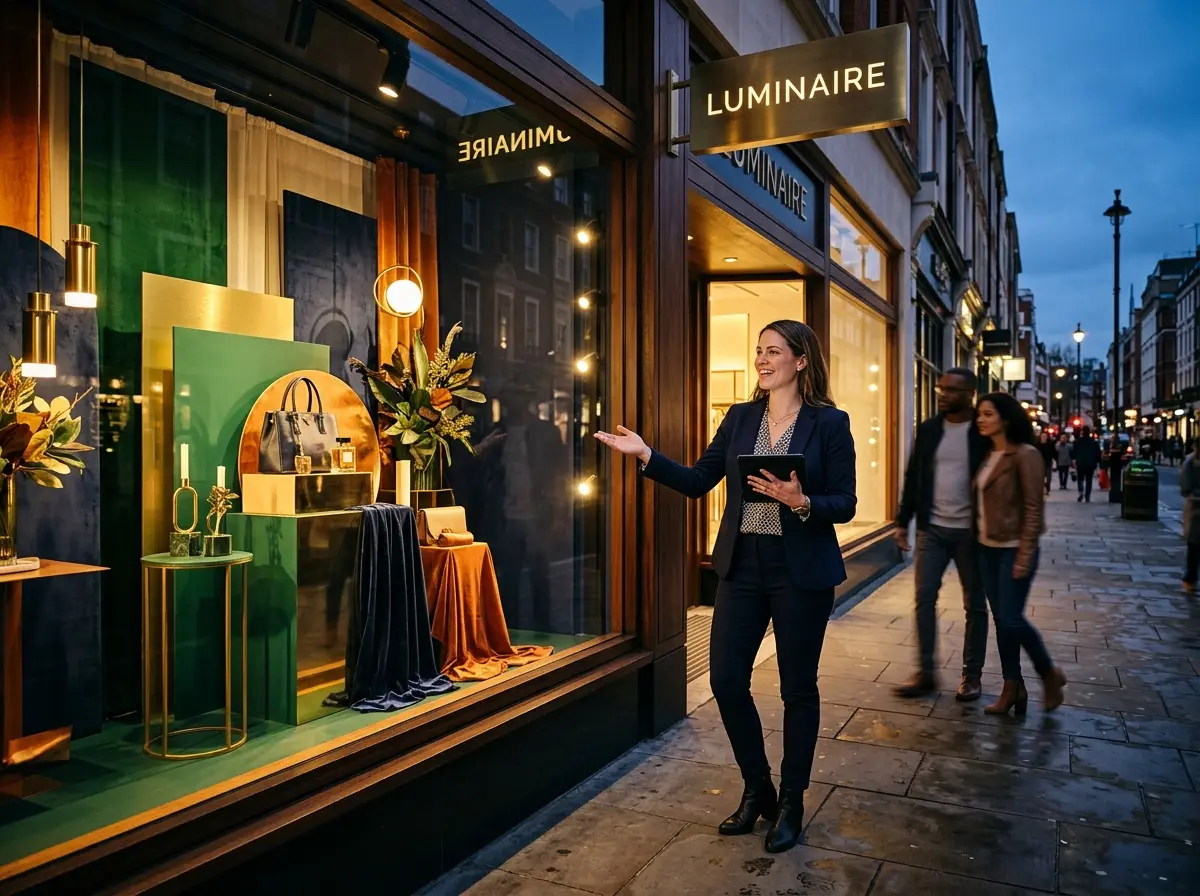
Here's an uncomfortable truth: the average pedestrian decides whether to enter a store within six seconds of glancing at your window display. Six seconds. That's barely enough time to read this sentence, let alone convince someone that your shop is worth abandoning their original destination for. And yet, countless business owners invest thousands in inventory, staff, and signage — then slap a hand-written "SALE" sign in the window and call it a day.
Window displays are one of the most underrated marketing tools in a brick-and-mortar business owner's arsenal. They're your silent salespeople, working 24/7, making first impressions on every single person who walks by. The problem is, most businesses treat them like an afterthought rather than a strategy. In this post, we're going to fix that — with practical, actionable advice that will turn your storefront from background noise into a genuine traffic magnet.
The Psychology Behind Displays That Actually Work
Before you rearrange your mannequins and call it a refresh, it helps to understand why certain displays stop people cold while others get cheerfully ignored. Spoiler: it's not just about looking pretty.
Tell a Story, Not a Catalog
The biggest mistake retailers make is turning their window into a product dump — stacking as many items as possible in the hope that something catches someone's eye. This is the visual equivalent of shouting random words at someone and hoping one of them means something. Effective window displays tell a story. They put the customer in a scene and let them imagine themselves there.
Think about a high-end luggage store that doesn't display six suitcases side by side. Instead, they create a vignette: an open suitcase with a passport, a sun hat, and a good book — suddenly you're not looking at luggage, you're already on vacation. That emotional transportation is what gets people off the sidewalk and through your door. Ask yourself: What life moment does my product or service make better? Build your display around that moment, not the product itself.
The Rule of Odd Numbers and Visual Hierarchy
Interior designers and visual merchandisers have known for decades that the human eye finds groupings of odd numbers more visually interesting than even groupings. Three items feel dynamic. Four feel static. It sounds like design voodoo, but walk through any high-performing retailer and you'll see this principle in action everywhere.
Equally important is visual hierarchy — guiding the viewer's eye deliberately from one element to the next. Your display should have a clear focal point (the hero product or message), a secondary element that supports it, and background details that add context without competing. If everything is fighting for attention, nothing wins. Use height variation, contrasting colors, and strategic lighting to create that hierarchy intentionally rather than accidentally.
Rotate Frequently — And Actually Track It
A display that never changes is wallpaper. Regular foot traffic — your neighbors, your loyal customers, your daily commuters — will stop seeing it entirely within a few weeks. Most visual merchandising experts recommend refreshing window displays every two to four weeks at minimum, or in sync with promotions, seasons, and local events. Tie your displays to a calendar, not to whenever someone finally gets around to it. And when you do change them, pay attention to what drives traffic and what doesn't — because not all displays are created equal, and your data will tell you more than your instincts will.
Bringing the Outside In — And Keeping Them There
Getting someone through the door is only half the battle. The other half is making sure the experience inside your store matches the promise your window made. This is where a lot of businesses quietly drop the ball.
The Threshold Experience Matters
There's a concept in retail design called the "decompression zone" — the first few feet inside your entrance where customers are still transitioning from outside to inside. They're adjusting to the lighting, the temperature, the sounds. They're not ready to buy yet. This area should be welcoming and uncluttered, easing people in rather than ambushing them with sale racks and impulse buys. Make the transition feel intentional and warm. Then, once they're past that zone, your merchandising can do its work.
Let Stella Handle the Welcome
Once foot traffic steps inside, someone — or something — needs to greet them with genuine enthusiasm. If your staff is busy, or if you're a lean operation, that greeting can fall through the cracks embarrassingly fast. Stella, the AI robot employee and phone receptionist, stands inside your store as a human-sized kiosk presence that proactively engages every customer who walks in — promoting your current deals, answering questions about products and services, and making sure no one feels invisible while your team is occupied. She also handles incoming phone calls 24/7 with the same business knowledge she uses in person, so while you're perfecting your window display strategy, she's making sure neither your walk-in traffic nor your phone traffic falls through the cracks. It's a seamless handoff from great storefront to great experience.
Seasonal and Event-Based Display Strategies That Drive Real Results
If you're only refreshing your display for the major holidays (Christmas, Valentine's Day, back-to-school), you're leaving a significant amount of foot traffic on the table. The businesses that consistently win at window displays are the ones that find reasons to be relevant year-round — not just when Hallmark tells them to.
Hyperlocal Relevance Is Your Secret Weapon
National chains have bigger budgets. What they don't have is the ability to feel genuinely local. A display that references a local sports team's big win, a neighborhood festival happening this weekend, or even the unseasonably weird weather everyone's been complaining about will always outperform a generic seasonal display. People notice when you're paying attention to their world, not just your marketing calendar. It signals that you're part of the community rather than just operating inside it — and that distinction is worth more than any professionally designed backdrop.
Tie Displays Directly to Promotions (and Measure the Results)
Your window display should never exist in isolation from your broader promotions strategy. If you're running a limited-time offer, your window should make it impossible to miss. Use bold, readable typography — legible from across the street, not just up close — and give the offer a sense of urgency. "This week only" works better than a date range that requires mental math from a passing stranger.
More importantly, track what works. Note the dates you changed your display, what the theme was, and whether foot traffic or sales shifted accordingly. Over time, you'll build a playbook of what resonates with your specific audience on your specific street. No marketing consultant can give you that data. Only you can collect it.
Low-Budget Doesn't Mean Low-Impact
Not every display needs a professional visual merchandiser and a Hollywood lighting rig. Some of the most effective window displays are built on creativity rather than budget. A single powerful image, a clever use of your product in an unexpected context, or even a thought-provoking question printed large can stop more people than a cluttered display of your entire product catalog. The constraint of a small budget often forces the kind of creative focus that big-budget displays lack. Work with what you have, but work with intention.
Quick Reminder About Stella
Stella is an AI robot employee and phone receptionist designed for businesses of all sizes — whether you have a storefront or operate entirely online. For physical locations, she stands inside your store as a friendly, knowledgeable kiosk presence. For every business, she answers calls 24/7, handles customer questions, and promotes your offerings without breaks, bad days, or turnover. At $99/month with no upfront hardware costs, she's one of the more painless additions you can make to your customer experience stack.
Your Storefront Is Talking — Make Sure It's Saying Something Worth Hearing
Window displays aren't decoration. They're marketing. They're your brand's first impression, your loudest silent salesperson, and one of the few customer touchpoints you have complete creative control over without spending a fortune. Treating them as an afterthought is essentially leaving a billboard blank and hoping people wander in anyway.
Here's your action plan: Start by auditing your current display honestly. Ask yourself whether it tells a story, whether it has a clear focal point, and whether it would make you stop walking. If the answer to any of those is no, that's your starting point. Then build a rotation calendar tied to your promotions, local events, and seasonal moments. Establish a simple tracking system — even a spreadsheet will do — to start identifying what moves the needle for your specific location.
Small, intentional changes compound over time. A better display leads to more foot traffic. More foot traffic leads to more opportunities to deliver a great in-store experience. And a great in-store experience — supported by engaged staff, smart merchandising, and yes, a friendly AI presence that ensures no customer gets overlooked — is what turns a passerby into a loyal regular. That's the whole game, and your window is where it starts.