Your Clients Deserve Better Than "So, What Brings You In Today?"
Picture this: A new client walks into your med spa. They've done their research, they're ready to invest in themselves, and they're excited. Then they sit down for their consultation and spend the first fifteen minutes answering questions you could have collected beforehand — while your highly trained aesthetician nods politely and fills out a paper form with a pen that's running out of ink. Not exactly the luxury experience your Instagram feed promises.
Here's the thing: consultation forms aren't just administrative paperwork. They're one of the most powerful tools in your client experience arsenal — and most med spas are completely underutilizing them. When done right, a well-designed consultation form transforms a generic appointment into a deeply personalized experience that makes clients feel seen, keeps your staff prepared, and frankly, makes your entire operation look a lot more polished than the competition.
Whether you're running a solo practice or managing a full team of injectors and aestheticians, this guide will show you how to use consultation forms strategically — not just to collect data, but to genuinely customize every client interaction from the very first touchpoint.
Building Consultation Forms That Actually Work
Ask the Right Questions (Not Just the Required Ones)
Most med spa intake forms are designed around liability, not experience. They capture the basics — allergies, medications, medical history — and stop there. That's necessary, but it's not sufficient. The real magic happens when you start asking questions that help you understand why someone is sitting in your chair.
Consider adding questions like:
- What is your primary skin concern right now? (Let them rank multiple options if needed)
- Have you had any cosmetic treatments in the past 12 months? If yes, what and where?
- What does success look like for you after this treatment?
- Are there any outcomes you specifically want to avoid?
- How would you describe your skincare routine at home?
- What's your comfort level with downtime or recovery?
These questions do double duty: they help your providers prepare a targeted treatment plan and they signal to clients that you care about outcomes, not just throughput. That distinction matters enormously in a market where clients have no shortage of options.
Segment Your Forms by Service Category
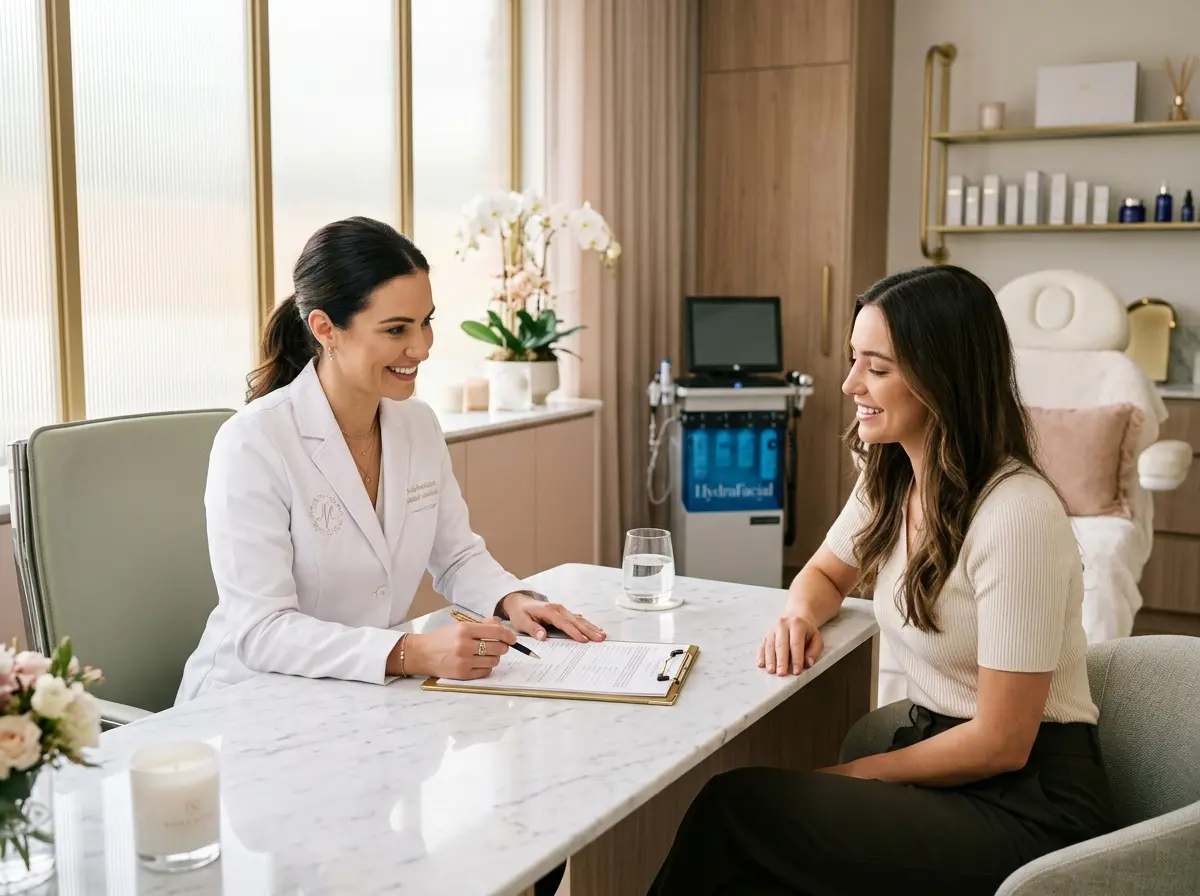
A one-size-fits-all intake form is like handing every client the same treatment plan — technically functional, deeply impersonal. A client coming in for a HydraFacial has very different needs, concerns, and relevant history than someone booking a consultation for neurotoxin injections or laser resurfacing.
Build service-specific consultation forms for your major categories: injectables, laser treatments, body contouring, facials, and any specialty services you offer. Each form should include the universal medical intake questions plus targeted questions relevant to that treatment type. Your injector doesn't need to know if someone exfoliates twice a week — but your laser technician absolutely does.
This approach also reduces cognitive load for the client. Shorter, more relevant forms get completed more thoroughly. And a well-completed form means your provider walks in prepared, which shortens the verbal intake process and gets clients into results-focused conversation faster.
Collect It Before They Arrive
Sending your consultation form at the time of booking — rather than handing it to someone on a clipboard when they walk in — is a small operational shift with a significant impact. Clients have time to think carefully about their answers. They can check their medication list at home instead of guessing. They arrive feeling prepared rather than ambushed by paperwork.
From a staff perspective, forms submitted in advance mean your team can review client history before the appointment, flag any concerns, and walk into the consultation already informed. That kind of preparation is what separates a rushed, reactive experience from one that feels curated and intentional. According to industry surveys, clients consistently rate feeling "listened to and understood" as one of the top factors in their satisfaction with aesthetic services — and it's very hard to feel listened to when the provider is reading your intake form for the first time in front of you.
How Technology Can Simplify Your Intake Process
Automate Collection Without Losing the Personal Touch
If your intake process still relies heavily on manual outreach, paper forms, or staff remembering to send links before appointments, there's a better way. Stella, the AI robot employee and phone receptionist, can collect client information through conversational intake forms — whether that's during a phone call, through your website, or right at the kiosk when a client walks in. Instead of a static form that clients fill out alone, it becomes an actual conversation, which tends to produce more complete and thoughtful responses.
Stella's built-in CRM stores all of that intake data with custom fields, tags, and AI-generated client profiles — so your team has a clear picture of each client before the appointment even starts. No chasing down incomplete forms, no deciphering handwriting, and no relying on a front desk staff member to remember to send the pre-appointment email. It's a quiet but meaningful upgrade to the client experience that also frees up your human team to focus on the work that actually requires human judgment.
Turning Form Data Into Personalized Experiences
Use Intake Data to Guide the Consultation Conversation
The consultation form is only valuable if someone actually uses it. This sounds obvious, but in busy med spas, providers often barely glance at intake forms before walking into a room. Build a simple pre-appointment review habit into your workflow: providers should spend two to three minutes reviewing the client's form and noting two or three things to address directly during the consultation.
For example, if a client noted that they previously tried filler at another practice and felt the results looked "unnatural," that's not a throwaway comment — it's a critical piece of context that should shape how your provider discusses treatment philosophy, volume, and expected outcomes. Referencing that concern proactively ("I noticed you mentioned your previous experience with filler — I'd love to hear more about that") immediately builds trust and demonstrates that you actually read what they wrote.
Personalize Treatment Recommendations and Retail Suggestions
Consultation forms also give you a structured way to identify upsell and cross-sell opportunities — but do it right, please. There's a meaningful difference between a provider who says "You should really try our vitamin C serum" to everyone who walks through the door, and one who says "You mentioned your biggest concern is hyperpigmentation — based on your skincare routine, adding a targeted vitamin C serum in the mornings could significantly extend your results."
When recommendations are clearly connected to something the client told you, they don't feel like a sales pitch. They feel like expert guidance. That distinction is what drives retail attachment rates, repeat bookings, and the kind of client loyalty that generates referrals. Use the data your forms collect to make every recommendation feel like it was made specifically for that person — because it should be.
Track Trends Over Time to Improve Your Offerings
If you're collecting consistent intake data across your client base, you're sitting on a goldmine of business intelligence. Are the majority of new clients coming in with concerns about skin laxity? That might inform your next promotional campaign or signal that it's worth investing in a new technology. Are clients consistently noting that they're confused about the difference between your treatment options during pre-appointment research? That's a content marketing opportunity.
Reviewing your intake data in aggregate — even quarterly — can surface patterns that help you refine your service menu, train your staff more effectively, and market your practice to the clients most likely to convert. Most med spas collect this information and do absolutely nothing with it beyond the individual appointment. Don't be that med spa.
Quick Reminder About Stella
Stella is an AI robot employee and phone receptionist that greets clients in person at your front area, answers calls 24/7, and handles intake through conversational forms — all for $99/month with no upfront hardware costs. She stores everything in a built-in CRM so your team always has the context they need before a client walks through the door. Easy to set up, always ready to work, and notably never calls in sick the day before a fully booked Saturday.
Start Treating Your Forms Like the Business Tool They Are
Consultation forms have spent too long living in the "administrative necessity" category. It's time to promote them. When built thoughtfully, distributed at the right moment, and actually used by your team, they become the foundation of a client experience that feels personalized, professional, and worth talking about.
Here's where to start:
- Audit your existing forms. Are they capturing anything beyond medical history? If not, it's time for a redesign.
- Build service-specific versions for your top three to five treatment categories.
- Move intake to pre-appointment. Send forms at the time of booking confirmation, not when someone is standing at your front desk.
- Create a pre-appointment review habit for your providers — even two minutes of preparation makes a measurable difference.
- Start tracking trends. Set a calendar reminder to review your intake data once a quarter and look for patterns worth acting on.
Your clients are telling you exactly what they need, what they've tried, what they're afraid of, and what success looks like to them — if you ask the right questions and actually listen to the answers. That's not just good client service. That's the whole job.