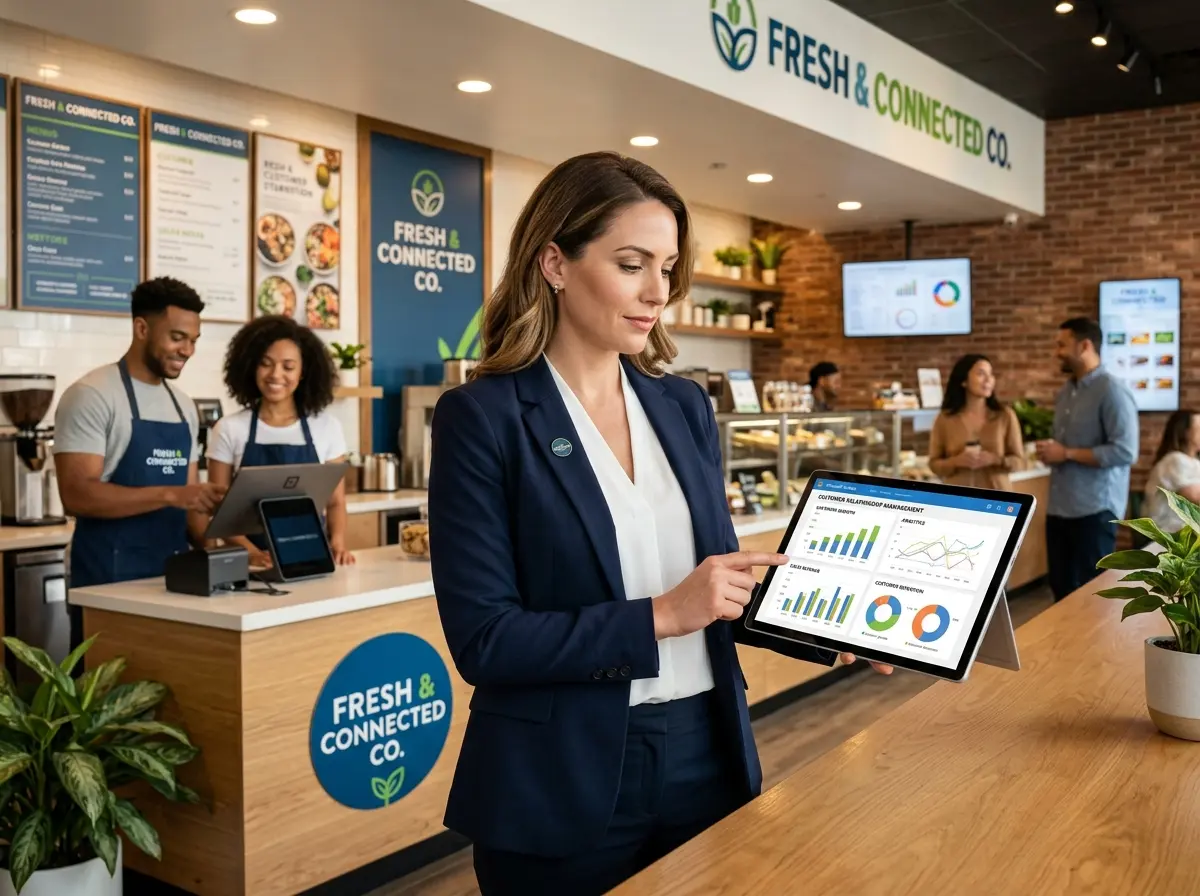
One Brand, Many Locations — and a CRM Mess to Match
Congratulations — you own a franchise location. You've got the brand recognition, the proven playbook, and the matching polo shirts. What you may not have, however, is a customer relationship strategy that actually reflects the unique community walking through your doors every day. And that's a problem.
Here's the uncomfortable truth that franchise systems don't always love to advertise: corporate gives you the brand, the training, and the supply chain. They do not give you a ready-made relationship with your local customers. That part is on you. Your regulars, your neighborhood demographics, your seasonal trends, your upsell opportunities — none of that is baked into the franchisor's CRM template, if they even provided one at all.
A CRM (Customer Relationship Management) system is only as powerful as the strategy behind it. And a one-size-fits-all strategy handed down from corporate headquarters is about as effective as a one-size-fits-all hat — technically it fits, but nobody looks great in it. This post is about building a CRM strategy that actually works for your location, your customers, and your goals.
Why Franchise CRM Strategies Can't Just Come From Corporate
Your Customers Are Local. Your Data Should Be Too.
Corporate CRM systems are built to track macro-level trends — systemwide sales, broad demographic data, national campaign performance. That's genuinely useful information for the people running the whole ship. But you're not running the whole ship. You're running one very specific location in one very specific market, and the customers coming in on a Tuesday afternoon in your town are not the same as the customers hitting a location in another city.
Local CRM data lets you identify your top customers, track your most popular offerings, and spot the patterns that are unique to your community. Maybe your location gets a surge of gym-goers every January, or a wave of students in September, or families every weekend after the farmers market down the street. That's gold — but only if you're capturing it.
The Danger of Relying on Brand Loyalty Alone
Brand loyalty is a wonderful thing. It's also not something you personally earned. When a customer walks into your franchise because they love the brand, that loyalty belongs to the franchisor. What you need to build is location loyalty — the feeling that your specific store, your staff, your atmosphere, and your service are worth coming back to, even if there's another franchise location across town.
That kind of loyalty is built through personal connection, and personal connection requires data. Knowing that a customer prefers a certain product, always asks about your weekend specials, or has a birthday coming up — that's the difference between a transaction and a relationship. Without a CRM strategy of your own, you're leaving all of that on the table and hoping the brand logo does the heavy lifting.
Compliance vs. Strategy: Know the Difference
Many franchisors require you to use their systems, report certain data, or follow specific customer communication guidelines. That's compliance, and yes, you should absolutely follow it. But compliance is the floor, not the ceiling. A smart franchise owner understands the difference between what they're required to do and what they're allowed to do — and then maximizes the space in between.
Build your local CRM strategy on top of whatever corporate requires. Add custom fields that track information relevant to your market. Use tags to segment your customer base in ways that actually drive local decisions. Take notes on customer preferences. The franchisor gets their data; you get a thriving local customer base. Everyone wins.
How the Right Tools Make Local CRM Manageable
Stop Letting Customer Data Walk Out the Door
One of the biggest CRM failures at the location level isn't strategy — it's collection. Franchise owners are often so focused on operations that capturing customer information becomes an afterthought. Staff are busy, customers are in a hurry, and somehow another interaction passes without a single piece of useful data being recorded.
This is where tools like Stella can quietly become one of your most valuable assets. Stella is an AI robot employee and phone receptionist that handles customer interactions — both in-person at the kiosk and over the phone — while simultaneously collecting customer information through conversational intake forms. She feeds that data directly into a built-in CRM with custom fields, tags, notes, and AI-generated customer profiles, so your database grows automatically with every interaction. No clipboard. No awkward "can I get your email?" moments. Just seamless data collection while customers are already engaged in a conversation.
Whether a customer walks in or calls in, Stella is gathering the information you need to build real relationships — without adding a single task to your staff's plate.
Building a CRM Strategy That Actually Fits Your Location
Start With Segmentation That Reflects Your Reality
Effective CRM strategy begins with knowing who your customers actually are — not who corporate thinks they are. Start by segmenting your contact database into groups that make sense for your location. Think about frequency of visit, average spend, product or service preferences, how they first heard about you, and what life stage they appear to be in. A spa location near a business district might segment corporate clients separately from weekend leisure visitors. An auto shop might tag fleet customers versus individual vehicle owners.
The point isn't to overcomplicate things. The point is to make sure that when you send a promotion or follow up with a customer, it's actually relevant to them. Irrelevant outreach is just noise — and customers have become very good at tuning out noise.
Set Up Triggers and Follow-Up Flows That Run Without You
A CRM strategy that requires you to manually follow up with every customer is not a strategy — it's a second job. The real power of a local CRM comes from setting up simple automations that keep customers engaged without demanding constant attention from you or your staff.
Consider triggers for things like: a customer's first visit, a long absence (say, 60 days without returning), a birthday or anniversary, or a recent purchase of a product that pairs well with something else you offer. These touchpoints don't need to be elaborate. A simple "we miss you" message or a relevant offer sent at the right moment does far more than a generic blast email to your entire list. Start small, measure results, and refine over time.
Use Your CRM to Measure What Corporate Can't
Here's where having a local CRM strategy really pays off: measuring the things that matter specifically to your location. Which promotions actually drove repeat visits? Which staff members tend to generate new customer sign-ups? What time of year do your high-value customers churn, and what can you do about it?
Corporate dashboards show you how you compare to the system average. Your local CRM shows you how you compare to yourself — and that's the data that helps you make better decisions next month, next quarter, and next year. Track what you can, review it regularly, and let it guide your operational choices. A franchise location that treats its CRM data seriously is one that compounds its advantages over time.
Quick Reminder About Stella
Stella is an AI robot employee and phone receptionist built for businesses like yours — she greets customers in person at her kiosk, answers calls 24/7, promotes your current deals, and collects customer data automatically through conversational intake forms. Her built-in CRM organizes everything into profiles with custom fields, tags, and AI-generated summaries, so your local customer database grows with every interaction. At $99/month with no upfront hardware costs, she's one of the more practical tools a franchise owner can add to their location.
Your CRM Strategy Starts Now — Not Whenever Corporate Gets Around to It
The franchise model is a remarkable thing. You get a running start that independent business owners would envy. But the running start only takes you so far — the rest of the race is run on the strength of your own customer relationships, your own local data, and your own strategic thinking.
Here's where to begin:
- Audit what you're currently capturing. If the answer is "not much," that's fine — now you know where to start.
- Define your key customer segments based on your actual location, not a corporate template.
- Set up at least two or three automated follow-up touchpoints — a welcome message, a re-engagement trigger, and a loyalty acknowledgment.
- Review your CRM data monthly and let it inform your promotions and staffing decisions.
- Use tools that collect data passively — so your team can focus on service while your database grows in the background.
You didn't invest in a franchise location just to be a passive node in someone else's network. You're building something — a business with a real community around it. A strong local CRM strategy is how you make sure that community keeps coming back, spends more when they do, and brings their friends along. Corporate can keep the national data. You focus on the people who actually walk through your door.