The Discharge Dilemma: Why Your Patients Disappear (And What to Do About It)
Picture this: A patient walks out of your clinic after their final session, feeling great, moving well, and armed with a home exercise program printed on paper they'll definitely lose by Thursday. You wave goodbye, they promise to "keep up with the exercises," and then… silence. Poof. Gone. Until eighteen months later when they re-injure themselves doing the exact thing you warned them about.
Sound familiar? You're not alone. Studies suggest that patient adherence to home exercise programs drops below 50% within just a few weeks of discharge — and that's being generous. The reality is that the discharge moment, which should feel like a triumphant finish line, often marks the beginning of a slow unraveling of everything you worked so hard to achieve together.
But here's the good news: keeping patients engaged after discharge isn't rocket science. It just requires intention, systems, and a willingness to stay in their lives in a way that's helpful rather than annoying. Let's break down exactly how to do that.
Building a Post-Discharge Communication Strategy That Actually Works
The biggest mistake physical therapy practices make after discharge is treating it like a hard stop. The therapeutic relationship doesn't have to end just because formal treatment does. A thoughtful communication strategy can keep patients connected to your practice — and more importantly, connected to their own progress.
The Follow-Up Timeline: Don't Ghost Your Own Patients
Most practices send a single "hope you're doing well!" email and call it a day. That's not a strategy — that's a participation trophy. A real follow-up timeline involves structured touchpoints over several months. Consider a check-in call or message at the one-week mark to address any early concerns, a more detailed follow-up at one month to review their home program adherence, and a three-month check-in that opens the door for a wellness visit or reassessment.
These touchpoints don't need to be long or labor-intensive. A brief, personalized message that asks a specific question — "How's the shoulder feeling during your morning runs?" — communicates that you remember them as an individual, not just a case number. That kind of personalization goes an extraordinarily long way in patient retention and word-of-mouth referrals.
Email Campaigns, SMS, and Knowing Which to Use When
Not all communication channels are created equal. Email is great for longer educational content — newsletters, exercise video links, seasonal wellness tips. SMS, on the other hand, has an open rate north of 90%, making it ideal for quick reminders, appointment nudges, or a brief "checking in on you" message. The key is not to overwhelm patients with both simultaneously and to always give them easy options to adjust their preferences.
For practices managing dozens or hundreds of discharged patients at any given time, automation is your best friend. Set up drip sequences triggered by discharge date, and let the system do the heavy lifting while you focus on actually treating people. Tools like email marketing platforms integrated with your practice management software can handle this with minimal ongoing effort once the sequences are built.
Educational Content as a Long-Term Engagement Tool
Patients who leave your practice with knowledge are far more likely to stay engaged — and far more likely to return when they need help. Consider building out a content library specific to the conditions you treat most: rotator cuff recovery tips, knee osteoarthritis management, postpartum core restoration exercises. Share this content regularly through your newsletter or social channels and make it easy for discharged patients to access it.
This approach positions your practice as an ongoing resource, not just a place people visit when something hurts. That subtle reframe — from reactive to proactive — is what separates practices with strong patient loyalty from those constantly scrambling to fill their schedules.
How Smart Front-End Systems Keep the Back-End Humming
You might be wondering what any of this has to do with your front desk. The answer: everything. A strong patient engagement strategy lives or dies by the quality of your intake data, follow-up logistics, and communication infrastructure — all of which depend on your front-end operations running smoothly.
Streamlining Intake and Follow-Up with the Right Tools
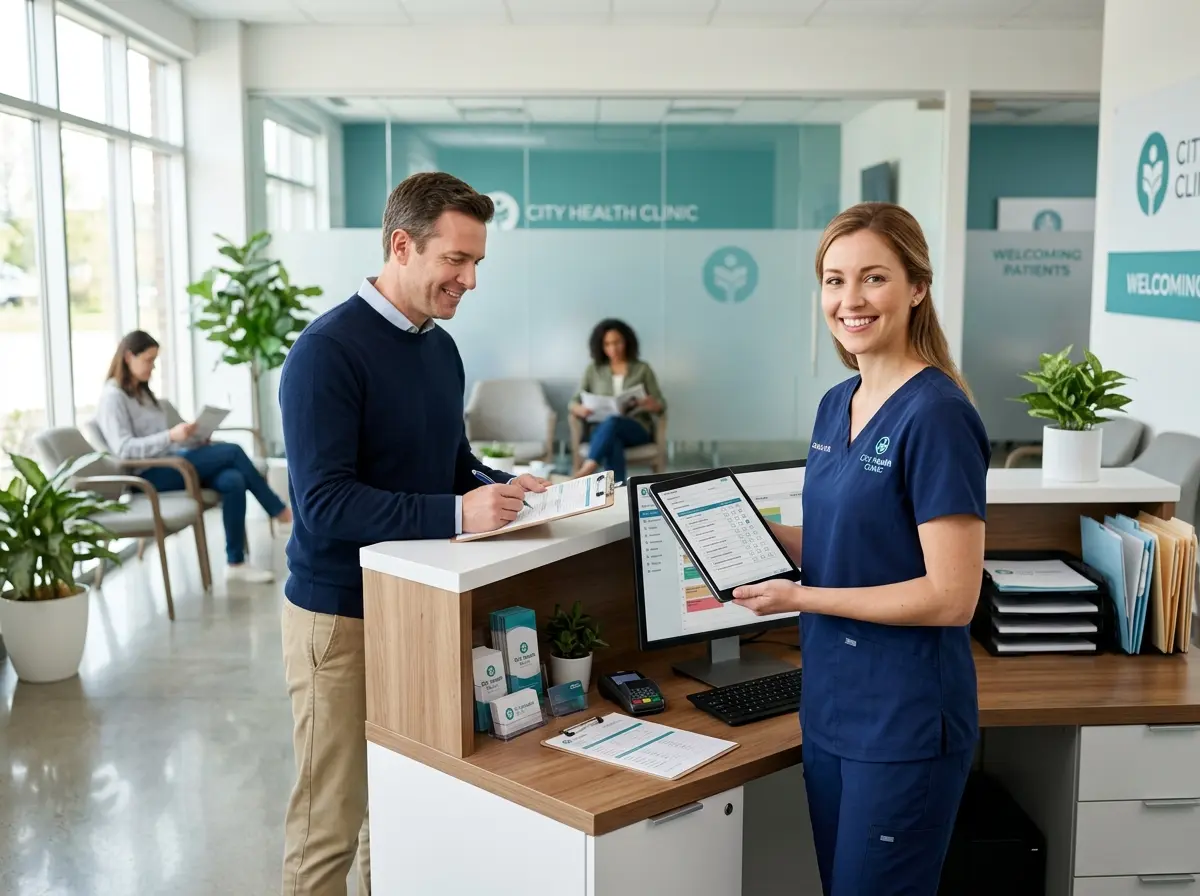
This is where Stella, the AI robot employee and phone receptionist, can genuinely take some weight off your team's shoulders. Stella handles incoming calls 24/7 — meaning a discharged patient who calls at 7pm wondering whether they should schedule a reassessment doesn't hit voicemail and forget to call back. She can collect patient information through conversational intake forms during phone calls or at the in-person kiosk, and she stores everything in a built-in CRM with custom fields, tags, and AI-generated profiles that help your team stay organized without drowning in administrative tasks.
For a physical therapy practice, that means fewer dropped balls, better data on who's calling and why, and a front-end experience that reflects the quality of care you provide in the treatment room. Stella's CRM capabilities are particularly useful for flagging discharged patients who re-engage, so your staff can respond with the context they need rather than starting from scratch.
Wellness Programs, Maintenance Care, and the Art of Staying Relevant
Engagement after discharge doesn't have to be purely digital. Some of the most effective retention strategies involve bringing patients back through the door — just for different reasons than before.
Wellness and Maintenance Programs That Make Clinical Sense
Offering periodic "movement screenings" or maintenance sessions as a natural extension of care gives discharged patients a reason to return before something goes wrong. Frame these not as upsells — nobody likes being upsold at their physical therapy clinic — but as a logical continuation of the work they've already done. A quarterly check-in for a post-surgical patient or an annual movement screen for an active adult is genuinely valuable, and most patients appreciate the proactive approach when it's explained well.
Group classes, workshops, or injury prevention seminars are another excellent option. These provide high value at a lower time cost for your clinicians, create community among your patient base, and generate the kind of organic word-of-mouth that no ad budget can replicate. Topics like "Returning to Running After Injury" or "Managing Chronic Low Back Pain Long-Term" speak directly to your discharged population and give them a reason to stay in your orbit.
Referral Programs That Leverage Your Strongest Asset: Happy Patients
A discharged patient who achieved their goals is arguably your most powerful marketing tool, and most practices wildly underutilize them. A simple, non-pushy referral program — even just a reminder that you love when patients share their experience with friends and family — can meaningfully impact new patient volume over time.
Consider asking for testimonials or Google reviews at the point of discharge when satisfaction is highest. Make it easy with a QR code or a direct link texted to their phone. Pair this with a referral incentive if it aligns with your practice's culture, and you've created a low-cost engine for growth that also happens to keep discharged patients thinking about you positively.
Tracking Outcomes and Using Data to Refine Your Approach
You can't improve what you don't measure. Tracking outcomes at discharge and then again at follow-up intervals gives you meaningful data on how well your post-discharge engagement is actually working. Which patients are re-injuring? Which ones are returning for elective wellness care? Which communication channels are driving the most re-engagement? These questions, answered over time, allow you to continuously sharpen your strategy rather than running the same playbook indefinitely and hoping for different results.
Use outcome measurement tools you're already familiar with — functional scales, patient-reported outcomes — and consider adding a simple patient satisfaction survey at the one-month mark. The data will surprise you, and more importantly, it will tell you exactly where to focus your energy.
A Quick Reminder About Stella
Stella is an AI robot employee and phone receptionist built for businesses of all kinds — including physical therapy and healthcare practices. She greets patients at your front desk, answers calls around the clock, manages intake through conversational forms, and keeps your CRM organized so your team can focus on delivering exceptional care. At just $99/month with no upfront hardware costs, she's worth a look if you're serious about tightening up your front-end operations.
Conclusion: The Long Game Is Worth Playing
Keeping patients engaged after discharge is one of those things that feels like extra work until you realize it's actually the foundation of a sustainable, thriving practice. The patients who feel genuinely cared for — who receive thoughtful follow-ups, useful educational content, and invitations to stay involved in their own health — are the ones who come back, refer their friends, and leave you five-star reviews that bring in the next wave of new patients.
Here's where to start: audit your current discharge process this week. Is there a structured follow-up timeline? Is someone responsible for those touchpoints? Is your intake and CRM data clean enough to support personalized communication at scale? If the answer to any of those is "not really," pick one and fix it first. Progress over perfection.
The patients you discharged last month are out there doing their home exercises — or, more likely, not doing them. Either way, a well-timed, genuinely helpful message from your practice could be exactly what brings them back into the fold. Go get them.