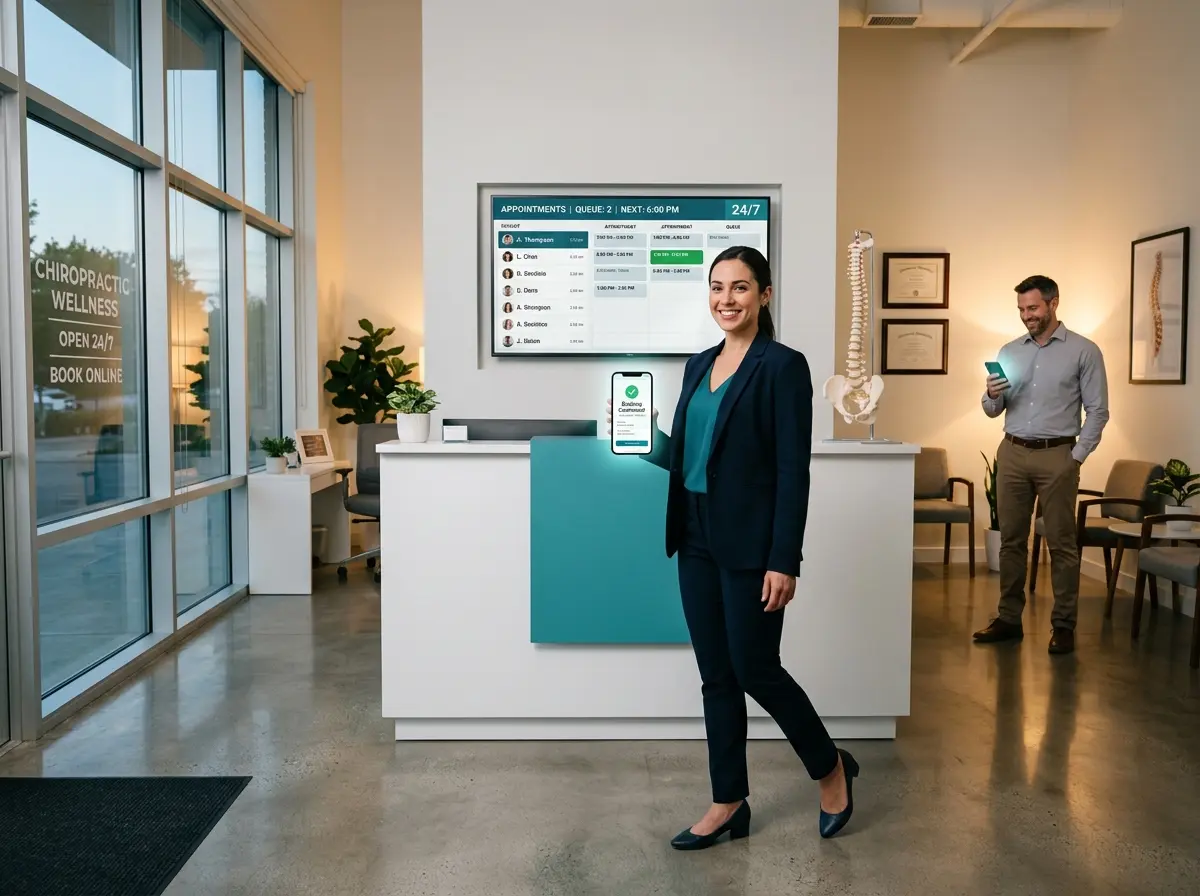
Your Chiropractic Office Closes at 5. Your Patients' Back Pain Doesn't.
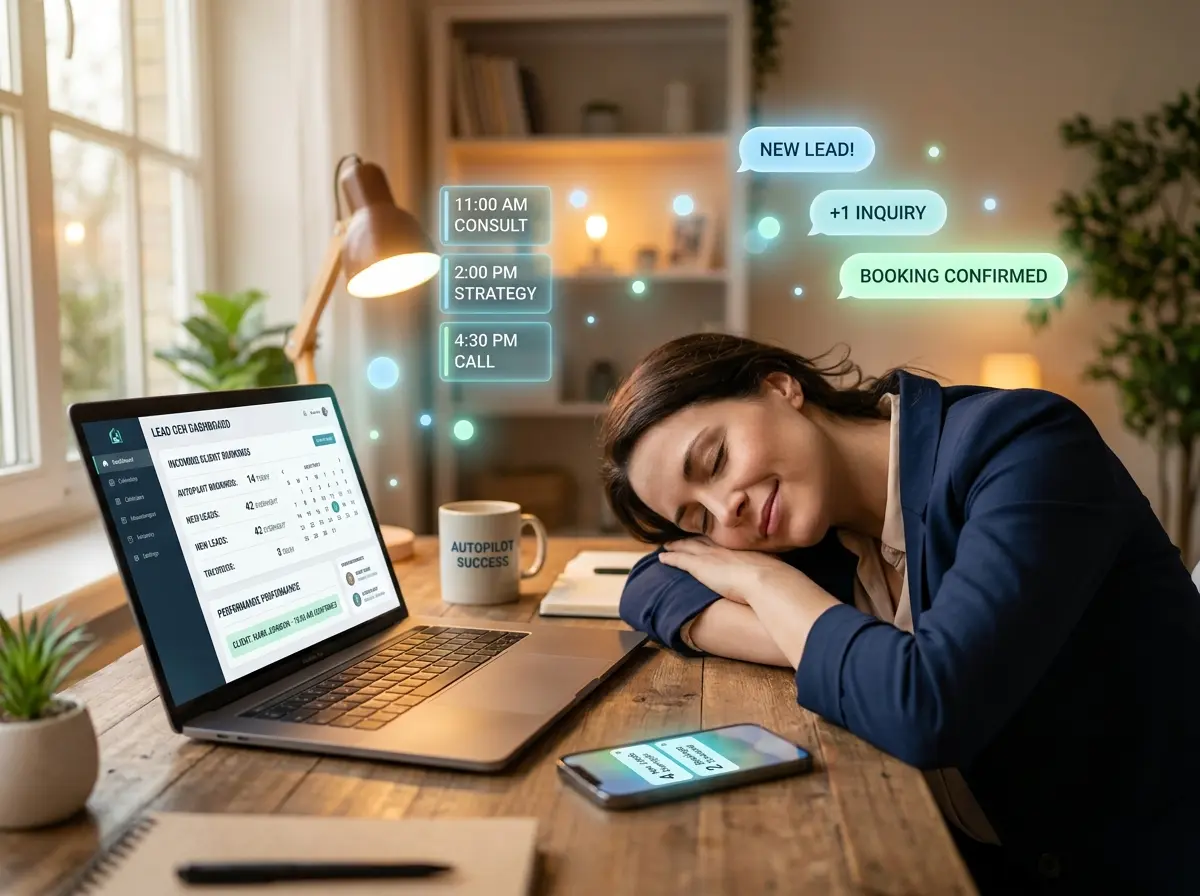
Picture this: it's 9:47 PM on a Tuesday. Someone just threw out their back lifting a box of holiday decorations (classic), and they're desperately searching for a chiropractor who can see them tomorrow. They find your website, they're impressed, they're ready to book — and then they hit a wall. Your office is closed. No one answers. There's no way to schedule online. So they move on to the next chiropractor on the list, who conveniently has an after-hours solution waiting for them.
You just lost a patient while you were sleeping.
The good news? This is entirely fixable — and it doesn't require hiring a night-shift receptionist or sacrificing your evenings to answer calls. The after-hours booking problem is one of the most common (and most expensive) silent revenue leaks in chiropractic practices today. According to research from Software Advice, nearly 70% of patients prefer to book appointments outside of regular business hours when given the option. The demand is there. The question is whether your systems are set up to capture it.
Let's talk about what an effective after-hours booking system actually looks like, what it needs to do, and how to stop leaving new patients on the table every single night.
The Real Cost of Missing After-Hours Calls and Bookings
Missed Calls Are Missed Revenue — Full Stop
Most chiropractic office owners dramatically underestimate how many calls they're missing. Between patients in the room, staff juggling check-ins, and the general beautiful chaos of a busy practice, the phone gets ignored more than anyone wants to admit. And after hours? It just rings into the void.
Consider the math. If your average patient relationship is worth $800–$1,500 over their care plan (a conservative estimate for most practices), and you're missing even three to five new patient calls per week, that's potentially $12,000–$30,000 in lost revenue every single month. Not annually. Monthly. That number has a way of making business owners sit up straight — which is ironic, given your profession.
The problem isn't just the lost booking. It's the lost relationship. Patients who can't reach you after hours don't leave a voicemail and patiently wait. They move on. They book with someone else, they start a care plan elsewhere, and they bring their referrals with them. You don't just lose one appointment — you lose everything that patient could have represented over years of care.
Voicemails Aren't a Strategy
Let's be honest about voicemails for a moment. They pile up. They get checked late. Staff members have to manually listen, transcribe, call back, and play phone tag for days. By the time your team reaches out, the prospective patient has already booked somewhere else, forgotten they called, or simply assumed you don't prioritize responsiveness. None of those outcomes are good for your practice.
A voicemail inbox is not an after-hours system. It's a digital waiting room where leads go to get cold. If your current "solution" is a voicemail greeting that says "leave us a message and we'll call you back during business hours," you are essentially telling prospective patients: "We'll get to you whenever it's convenient for us." That's not the message a competitive chiropractic practice should be sending in 2024.
What Patients Actually Expect Today
Patient expectations have shifted significantly, accelerated by years of on-demand everything. People can order groceries at 2 AM, stream any movie ever made, and video chat with a doctor on their lunch break. The bar for responsiveness has been raised across every industry, including healthcare. A patient who experiences friction when trying to book with you — especially after hours — will simply find a practice that makes it easier. Convenience is now a clinical differentiator, whether we like it or not.
How Smart Chiropractic Offices Are Handling After-Hours Communication
Let AI Handle the Phones So You Don't Have To
This is where things get genuinely exciting for practice owners who are tired of the staffing carousel. Stella is an AI robot employee and phone receptionist that answers calls 24/7 with the same knowledge and professionalism as your best front desk staff — without the sick days, turnover, or overtime pay. For chiropractic offices specifically, Stella can answer calls after hours, collect new patient intake information through conversational intake forms, explain your services and pricing, and deliver AI-generated voicemail summaries with push notifications directly to you or your office manager so nothing slips through the cracks.
For practices with a physical location, Stella also operates as a human-sized kiosk inside the office — greeting patients, answering questions, and promoting your current offers — which means your front desk staff can focus on the patients right in front of them instead of triaging every question that walks through the door. Her built-in CRM automatically builds patient profiles, logs interactions, and keeps your contact records organized without adding a single task to your team's plate. At $99/month with no upfront hardware costs, the math is frankly embarrassing compared to what a part-time receptionist would cost.
Building an After-Hours Booking System That Actually Works
Start With Online Scheduling — But Don't Stop There
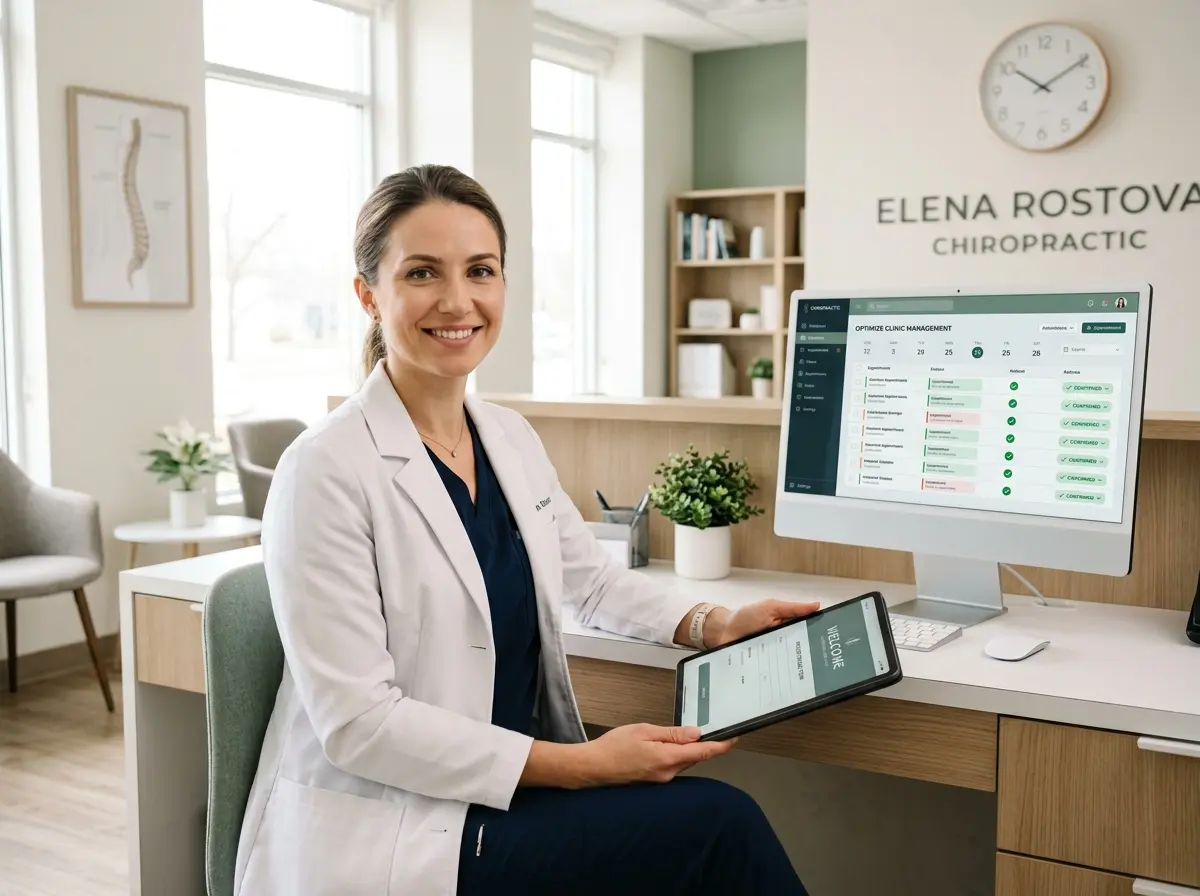
Online scheduling is table stakes at this point. If patients can't book an appointment directly from your website or Google listing at any hour of the day, you're operating at a structural disadvantage. Platforms like Jane App, ChiroTouch, or EHR-integrated booking tools can handle the calendar side of things. But here's the part most practice owners overlook: online scheduling alone doesn't capture every patient. Some people want to call. Some people have questions before they'll commit to booking. Some people want to know what to expect at their first appointment, whether you accept their insurance, or how long their first visit will take. If that phone call goes to voicemail after hours, you've already lost momentum — even if the booking link is right there on your website.
An effective after-hours system combines 24/7 phone coverage and online booking, so patients can choose their preferred path and actually complete it without hitting a dead end. The goal is zero friction between "I need a chiropractor" and "I have an appointment confirmed."
Automate the New Patient Intake Process
New patient paperwork is one of the biggest time sinks in any chiropractic office. Between health history forms, insurance information, consent documents, and intake questionnaires, your staff spends a surprising amount of time collecting information that could be gathered automatically before the patient ever walks in the door. After-hours booking systems that include conversational intake forms — where a patient answers questions naturally over the phone or through a web form — mean that by the time your team arrives Monday morning, the new patient who called Sunday night is already fully processed and ready to be scheduled. This is the kind of automation that makes office managers weep happy tears.
Set Up Intelligent Call Routing and Escalation Rules
Not every after-hours call is a new patient inquiry. Some calls are urgent. A patient in significant pain who needs guidance, a question about post-adjustment symptoms, or an existing patient with a scheduling emergency — these situations sometimes warrant a human response even outside business hours. A well-configured after-hours system should be able to distinguish between routine calls it can handle independently and situations that genuinely need to be escalated to a staff member or provider. Configurable call forwarding rules that route based on caller input, urgency signals, or specific keywords give your practice the flexibility to automate the routine while still being reachable when it truly matters.
Quick Reminder About Stella
Stella is an AI robot employee and phone receptionist built for businesses exactly like yours — answering calls 24/7, collecting patient intake information, managing contacts through a built-in CRM, and even greeting patients in person through her kiosk presence inside your office. She runs on a simple $99/month subscription with no upfront hardware costs and is designed to be up and running quickly, without a lengthy implementation process or a dedicated IT team.
Your Next Steps Toward a Practice That Never Misses a Patient
The after-hours booking gap is real, it's costing you money right now, and it is entirely solvable with the tools available in 2024. Here's a practical path forward for any chiropractic practice ready to plug the leak:
- Audit your current after-hours situation. Call your own office number after hours right now and experience exactly what a prospective patient experiences. Be honest about what you find.
- Implement or upgrade your online scheduling. Make sure patients can book directly from your website, your Google Business Profile, and anywhere else they might find you.
- Add 24/7 phone coverage. Whether through an AI receptionist or a live answering service, your phone should never go unanswered with nothing but a generic voicemail greeting.
- Automate your intake process. Start collecting patient information conversationally before the first appointment, and watch your Monday mornings transform.
- Configure escalation rules. Make sure genuinely urgent calls can reach a human when necessary, while routine inquiries are handled automatically.
The chiropractic practices that will thrive over the next decade are the ones building systems that work even when the team is off the clock. Your competition is already doing this — or they will be very soon. The question is whether you want to be ahead of that curve or catching up to it.
Your patients' back pain doesn't observe business hours. Your booking system shouldn't either.