Introduction: Because Shoplifters Don't Take Days Off
Here's an uncomfortable truth: shoplifting costs U.S. retailers over $100 billion annually, according to the National Retail Federation. That's not a typo. One hundred billion dollars — gone, vanished, five-finger-discounted right out of businesses just like yours. And while you can't stop every determined thief, you absolutely can make your store a much less appealing target.
The good news? Most shoplifters are opportunists. They're not Ocean's Eleven — they're looking for the path of least resistance. That means a few smart, strategic changes to your store environment can send them packing in favor of somewhere easier. Think of this checklist as your store's new armor — practical, effective, and (unlike that one employee who "didn't see anything") always paying attention.
Whether you're running a boutique, a convenience store, a pharmacy, or anything in between, these 15 tips will help you tighten up your security, protect your inventory, and give shoplifters a very good reason to shop somewhere else. Let's get into it.
Physical Layout and Environmental Design
1–5: Set Up Your Space to Work Against Theft
Your store layout is either working for you or against you — there's no neutral ground. Poor sightlines, cluttered shelves, and dimly lit corners are practically an open invitation. Start by taking a walk through your store as if you were a shoplifter. (No judgment.) Where could someone easily pocket something without being seen? That's your problem area.
Here are five foundational layout tips to build your physical defense:
- Keep shelves at eye level or below. Tall shelving creates hidden zones. Keep displays low enough that staff can see over them from anywhere on the floor.
- Use mirrors strategically. Convex security mirrors in corners and blind spots are inexpensive and highly effective. They also make your space look bigger — bonus.
- Position high-value items near the register. Jewelry, electronics, and anything small and pricey should live close to where your staff naturally stands. Out of reach, in sight.
- Reduce clutter near exits. A clear, unobstructed view of the entrance and exit lets your staff (and cameras) see exactly who's coming and going.
- Light every corner. Dim lighting is cozy in a restaurant, dangerous in a retail store. Bright, even lighting is one of the simplest and cheapest deterrents you have.
6–8: Signage, Cameras, and Visible Deterrents
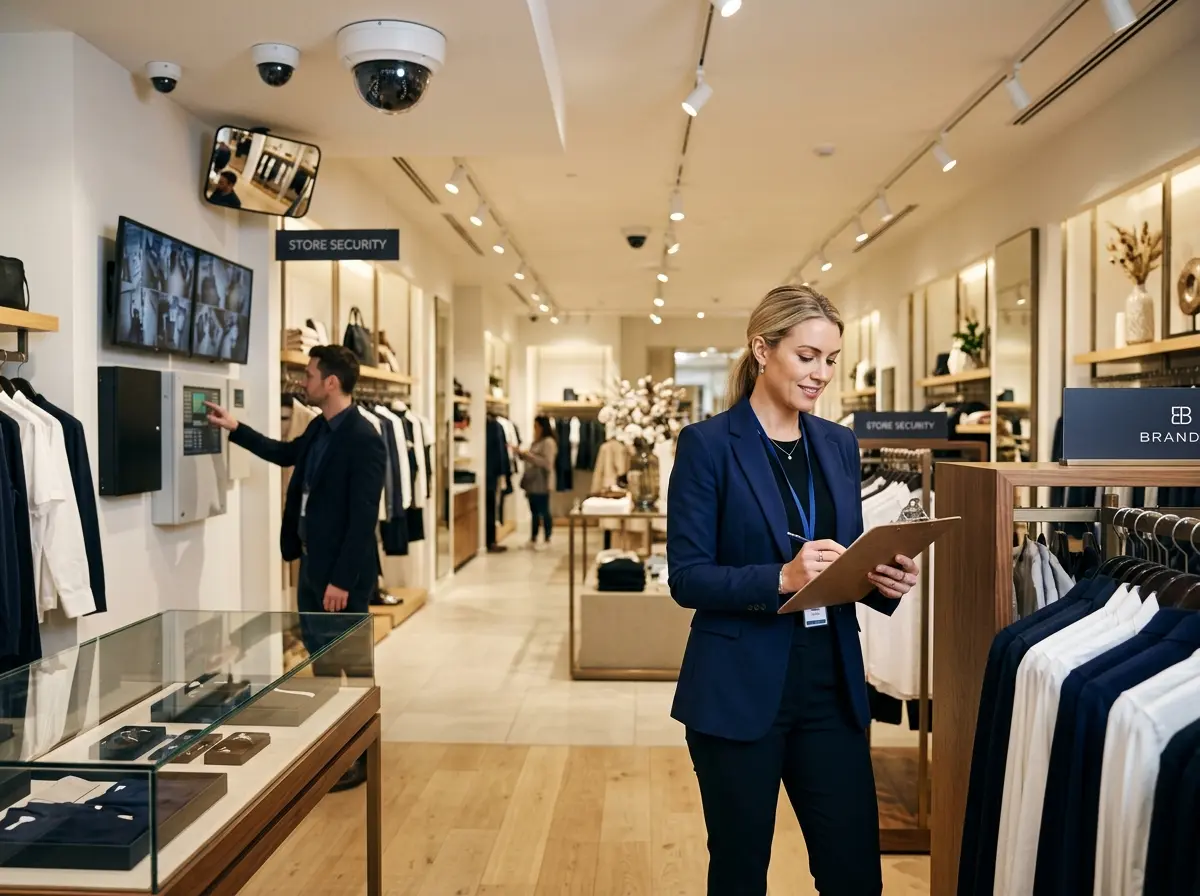
You don't have to be a fortress — you just have to look like one. Visible deterrents are often enough to make an opportunistic shoplifter reconsider. Prominently placed security cameras (real or dummy, though we recommend real) communicate that someone is watching. Pair them with clear signage like "Smile, You're on Camera" or "We Prosecute Shoplifters" — not to be aggressive, but to be clear.
Consider these additional visibility-based deterrents:
- Camera placement matters. Mount cameras at entrances, checkout areas, and high-value product zones. Make sure they're visible — the point is partly to be seen.
- Electronic Article Surveillance (EAS) tags on merchandise and detection systems at the door are standard in clothing retail for a reason. They work.
- Display your security system provider's sticker on the window or door. Even that small signal can redirect foot traffic to less guarded destinations.
Your Team Is Your Best Security System — And So Is Stella
9–10: Staff Awareness and Customer Acknowledgment
Here's the single most effective shoplifting deterrent that costs almost nothing: acknowledge every customer who walks in. A simple "Hey, welcome in!" from a staff member tells a would-be shoplifter one important thing — you've been seen. Most petty theft happens when people feel invisible. Destroy that invisibility, and you destroy the opportunity.
Train your team to make eye contact, greet proactively, and check in with browsing customers naturally. It doesn't have to feel like surveillance — it can just be good customer service. The dual benefit here is real: you deter theft and you improve the customer experience. Win-win.
This is also exactly where Stella shines. As a friendly, human-sized AI robot kiosk stationed inside your store, Stella greets every customer who walks by and engages them proactively — promoting deals, answering product questions, and providing that all-important "you've been noticed" signal without requiring a staff member to be glued to the door. She handles the front-of-store engagement so your human team can stay focused and attentive elsewhere. And when customers call in, Stella answers the phone 24/7 with the same knowledge she uses in store — so your team isn't constantly ducking away to grab the phone, leaving the floor unattended.
Operational Policies and Technology
11–13: Smart Store Policies That Close the Loopholes
Sometimes shoplifting isn't just about grabbing and running — it's about exploiting gaps in your return policies, fitting room procedures, or inventory systems. A little operational tightening goes a long way.
Receipt-required return policies are non-negotiable if you're not already enforcing them. Without them, someone can steal an item and "return" it for store credit with minimal friction. Require receipts, set return windows, and train staff to inspect returned merchandise carefully.
Fitting room management is a classic weak spot in clothing retail. Limit the number of items allowed in at once, number your fitting room doors, and have staff count items in and out. It takes thirty seconds and eliminates a major theft vector.
Finally, regular inventory audits aren't glamorous, but they're essential. If you're not counting your stock regularly, you may not even know you have a theft problem until it's already cost you thousands. Monthly or even weekly cycle counts on high-value items can catch discrepancies early and help you identify patterns — like which products keep disappearing and from which areas of the store.
14–15: Technology and Access Control
Modern retail security technology has come a long way, and you don't need a big-box budget to access it. Here's where to invest smartly:
Point-of-sale (POS) system controls matter more than most owners realize. Employee theft is a significant portion of overall retail loss — the NRF estimates it accounts for roughly 28% of shrink. Require manager approvals for voids, refunds, and discounts. Audit your transaction logs. Know who's doing what at the register and when.
For access control, keep stockrooms, offices, and back-of-house areas locked and limited to authorized staff only. Key card systems or coded locks are inexpensive relative to what they protect. A customer wandering into your stockroom isn't just a security risk — it's also a liability. Keep the public in public spaces and the private areas private.
Quick Reminder About Stella
Stella is an AI robot employee and phone receptionist available for just $99/month — no upfront hardware costs, no complicated setup, and no sick days. She stands inside your store engaging customers and deterring the kind of anonymity shoplifters rely on, while simultaneously handling your phone lines, answering questions, and supporting your staff around the clock. If you're looking for a reliable, professional presence that multitasks better than any human (no offense), Stella's worth a serious look.
Conclusion: A Safer Store Starts Today
Shoplifting is a problem you can't eliminate entirely — but you can make your store a significantly harder target. The businesses that get hit hardest aren't always the ones with the worst luck; they're often the ones that never got around to tightening things up. Don't be that business.
Here's your action plan to get started this week:
- Walk your store like a shoplifter would. Identify your blind spots and fix them — mirrors, lighting, layout adjustments.
- Audit your camera placement and make sure your signage communicates that you take security seriously.
- Review your return and fitting room policies and close any obvious loopholes.
- Talk to your team about the importance of proactive customer acknowledgment and make it a non-negotiable part of the job.
- Check your POS controls and inventory tracking systems to ensure you'd actually know if something was off.
None of these steps require a massive budget or a security specialist on staff. They require attention, intention, and follow-through. The goal isn't to turn your store into a paranoid surveillance state — it's to create an environment where honest customers feel welcomed and potential thieves feel watched. That balance is absolutely achievable, and it starts with a checklist exactly like this one.
Now go take that walk through your store. We'll wait.