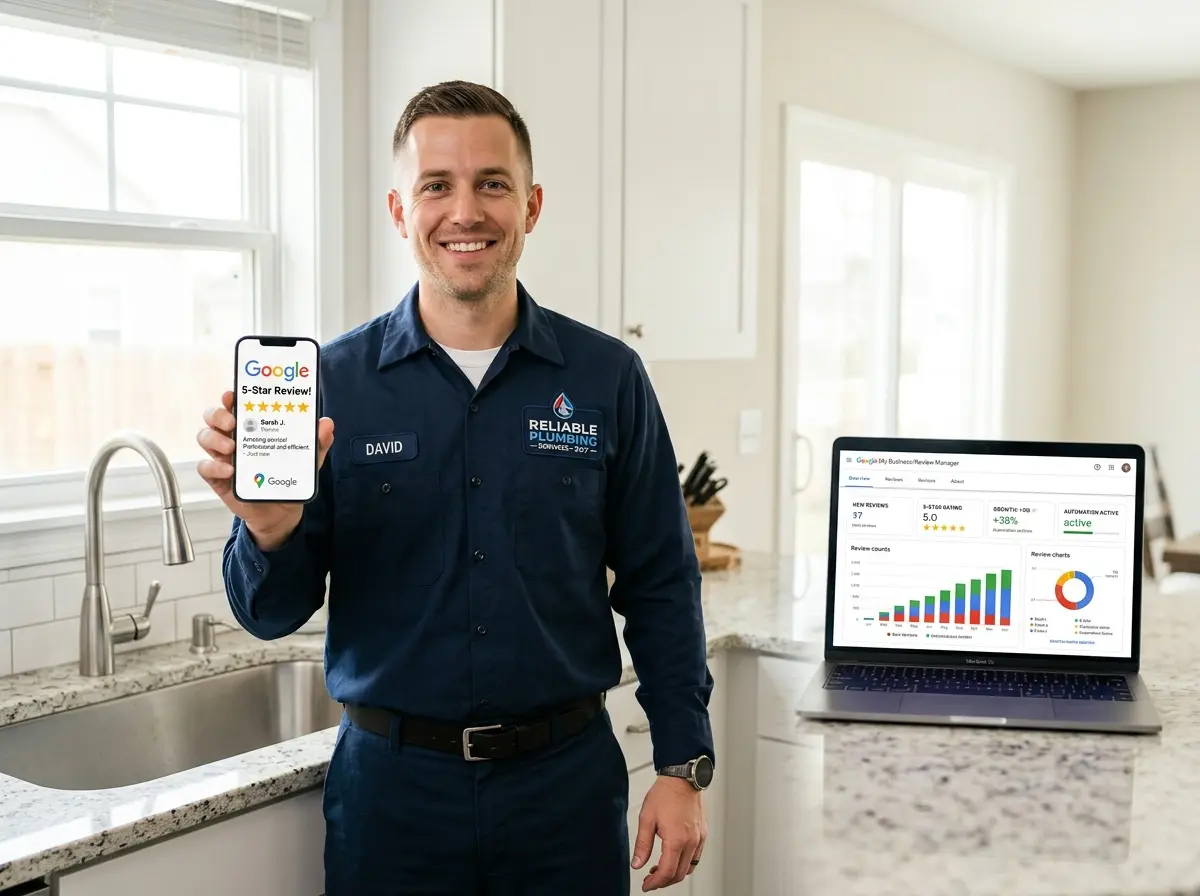
From a Handful of Stars to a Full Galaxy: How One Plumber Changed the Game
Let's be honest — asking customers for reviews feels about as comfortable as telling someone their haircut doesn't suit them. Most business owners know reviews matter, but actually doing something about it consistently? That's where the plan quietly dies somewhere between a busy Tuesday afternoon and a pile of invoices.
Meet Marcus, a plumber running a small but solid operation in the suburbs. A year ago, he had 10 Google reviews — which, to be fair, is 10 more than some competitors. But in a world where 93% of consumers say online reviews influence their purchasing decisions, 10 reviews isn't a reputation. It's a footnote. Today, Marcus has over 200 reviews, a steady stream of new customers who found him on Google, and — here's the kicker — he didn't have to awkwardly beg anyone for a single one of them.
What changed? He stopped relying on hoping customers would leave reviews and started running an automated review request campaign that did the heavy lifting for him. If you're a service business owner staring at a sad little review count, buckle up. This one's for you.
Why Most Businesses Fail at Getting Reviews
The Awkward Ask Problem
There's a reason your review count is stuck. It's not because your customers are unhappy — it's because satisfied customers are busy people. They experience your excellent service, think "I should really leave a review," and then get distracted by literally everything else in their lives. Without a prompt, that good intention evaporates faster than a puddle in July.
Most business owners either ask in person (awkward, easy to forget, easy to ignore) or don't ask at all (worse). The ones who do ask in person get a polite nod, and then... nothing. The moment passes. The customer goes home. Life happens. You're still sitting at 10 reviews.
The Timing Problem
Even when business owners do manage to remember to ask, they almost always ask at the wrong moment. Catching someone mid-job or right when they're paying isn't ideal — people are distracted. The sweet spot for a review request is shortly after the service is complete, when the customer's satisfaction is freshest and they've had just enough time to appreciate the result. For Marcus, that meant sending a follow-up text or email within a few hours of completing a job — not three days later, not the next week, and definitely not never.
The Consistency Problem
Even the most well-intentioned business owners are inconsistent. Maybe they ask on good days, forget on busy ones, and skip it entirely when things get hectic. The result is a review trickle instead of a review stream. Automation solves this completely. Once the system is set up, every single customer gets a request at the right time, every time, without Marcus having to think about it. That consistency is what turned 10 reviews into 200 in 12 months.
Building the Campaign That Actually Works
The Simple Automated Follow-Up Sequence
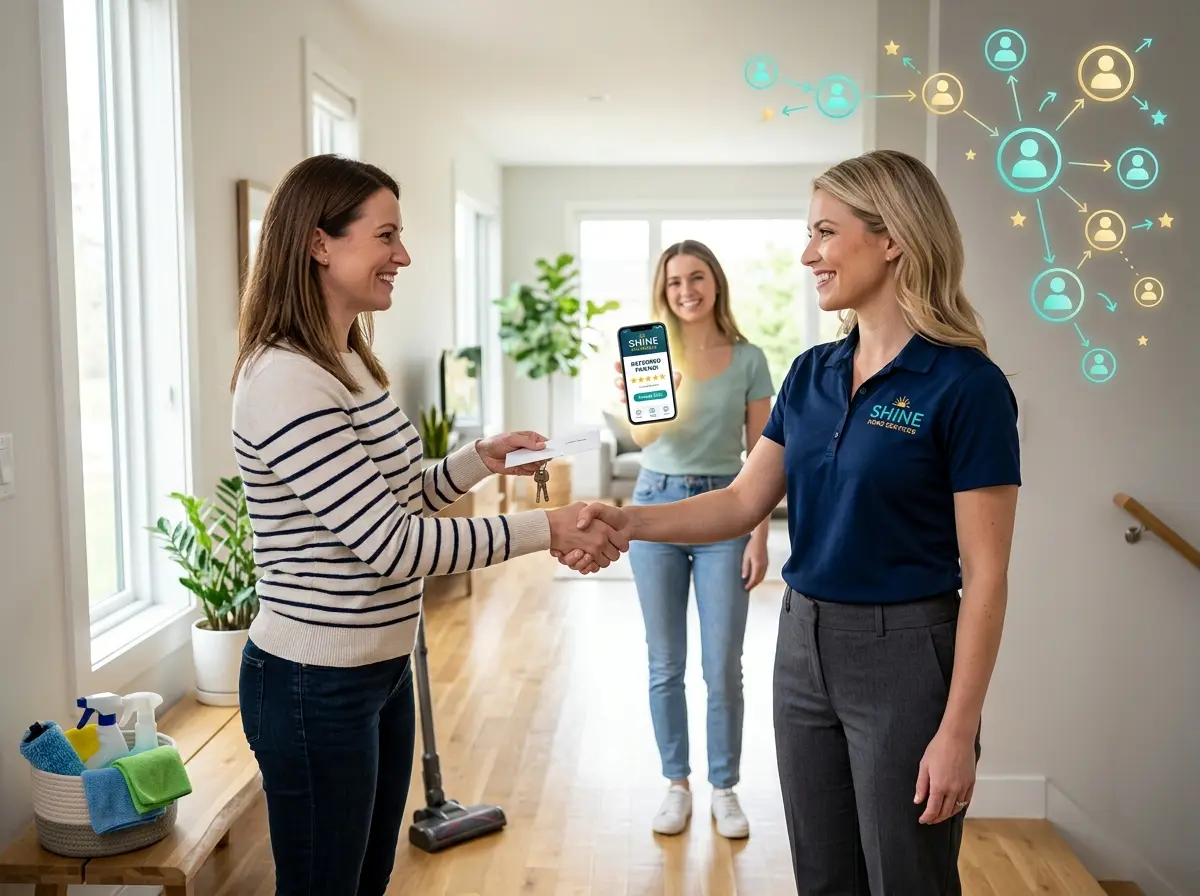
Marcus kept it beautifully simple. After completing a job, his system automatically sent a personalized text message to the customer a few hours later. The message thanked them by name, referenced the service completed, and included a direct link to his Google review page. No hunting, no friction, no excuses for the customer not to click. Studies show that review request response rates drop by over 50% when customers have to search for where to leave the review themselves — so eliminating that step is non-negotiable.
If the first message went unanswered, a gentle follow-up email went out 48 hours later. That was it. Two touches, well-timed, totally automated. His conversion rate on review requests hovered around 20% — meaning roughly one in five customers who received the request actually left a review. When you're completing dozens of jobs per month, that math adds up fast.
The Message That Doesn't Sound Like a Robot Wrote It
The wording matters more than most people realize. A stiff, corporate-sounding message gets ignored. Marcus used something close to this:
"Hi [Customer Name] — Marcus here from [Business Name]. It was great helping you out today! If you have 60 seconds, an honest Google review would mean the world to us and helps other homeowners find us when they need help. Here's the link: [Direct Link]. Thanks so much!"
Warm, personal, low-pressure, and honest. No bribery, no manipulation — just a genuine ask. Google's guidelines prohibit incentivizing reviews anyway, so keep it clean and keep it real.
How Stella Fits Into a Service Business Like This
Automated review campaigns are powerful, but they only work if your customer data is organized and your follow-up process is airtight. This is where Stella, the AI robot employee and phone receptionist, becomes genuinely useful for service businesses like Marcus's.
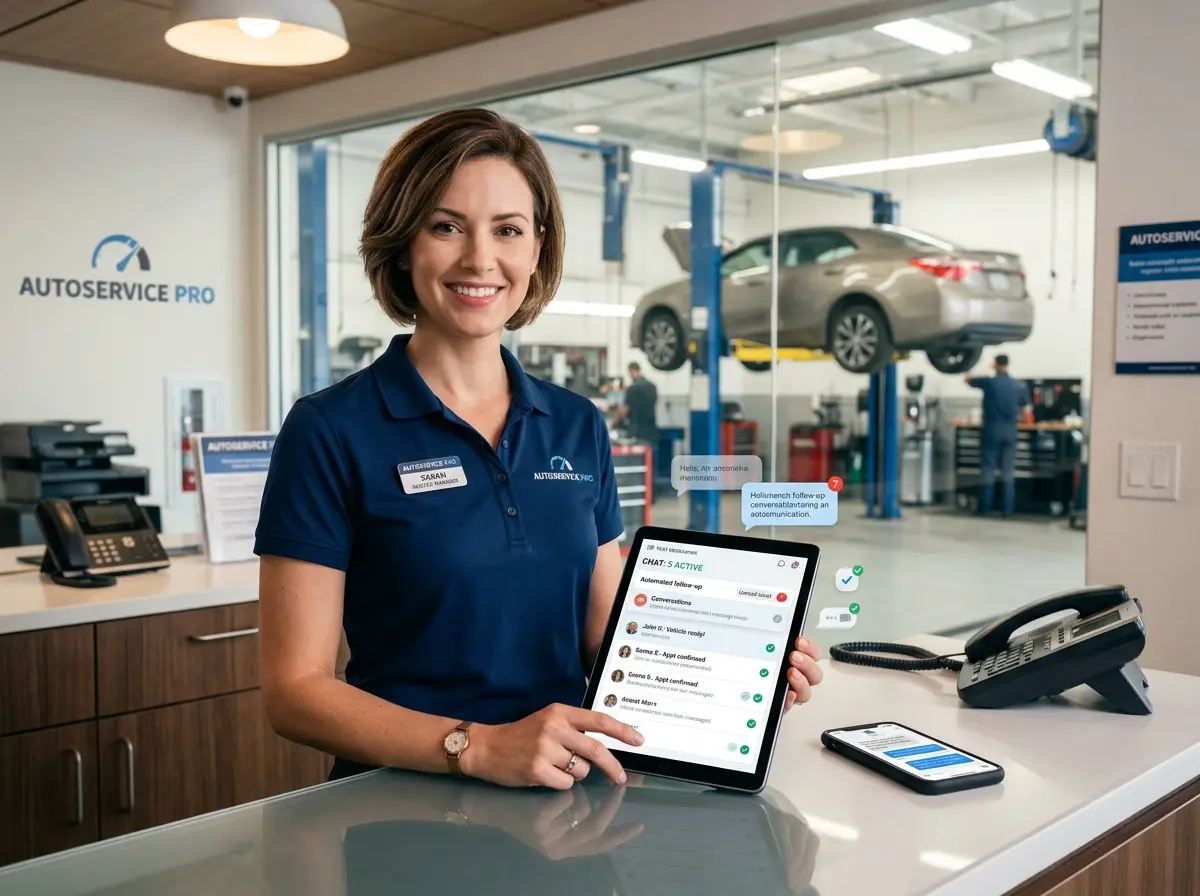
When a customer calls to book a job, Stella answers 24/7, handles the intake conversationally, and logs the customer's contact details directly into her built-in CRM — complete with custom fields, tags, and AI-generated profiles. That means every customer who calls gets properly captured in the system, so no one falls through the cracks when the review request campaign fires off. For businesses with a physical location, Stella's in-store kiosk presence can also collect customer information on-site, feeding directly into the same CRM. No more sticky notes, no more "I forgot to get their email" moments — just clean, organized data ready to power your follow-up automation.
Scaling Up Without Losing the Personal Touch
Segmenting Your Review Requests for Better Results
Once the basics are working, you can get smarter. Not every customer has the same experience, and not every service call ends on the same note. Smart operators tag customers in their CRM based on job type, satisfaction signals, or spend level, and customize their review request messaging accordingly. A customer who just had a major emergency fix handled flawlessly is in a very different headspace than someone who needed a minor routine service. Tailoring the message — even slightly — improves response rates and tends to attract more detailed, enthusiastic reviews.
Responding to Reviews to Fuel More of Them
Here's an often-overlooked multiplier: businesses that respond to their reviews receive 12% more reviews on average than those that don't. Why? Because it signals to future reviewers that their words will actually be seen and appreciated. Marcus made it a habit to respond to every review — positive or negative — within 24 hours. A short, genuine response to a five-star review takes 30 seconds and communicates to every person reading your profile that you're an engaged, professional operator. For the rare negative review, a calm and solution-focused response can actually increase consumer trust rather than damage it.
Keeping Momentum Going Month After Month
The final piece of the puzzle is simply not stopping. Review velocity — how frequently new reviews come in — is a factor in local search rankings. A business that gets 20 reviews in January and zero for the next six months looks stagnant compared to one that earns five or ten reviews every single month. Automation handles this naturally because the campaign runs whether Marcus is on a job, at dinner, or on vacation. Set it up right once, and it runs indefinitely with minimal maintenance.
Quick Reminder About Stella
Stella is an AI robot employee and phone receptionist designed for businesses of all sizes — she greets customers in-store, answers phone calls around the clock, manages contacts through a built-in CRM, and keeps your operation running smoothly without breaks, bad days, or turnover. At $99/month with no upfront hardware costs, she's the kind of employee every small business wishes they could afford — and actually can. Whether you're a plumber, a salon owner, or a retailer, Stella brings consistent professionalism to every customer interaction.
Your Next Steps Start Today
Marcus didn't do anything magical. He didn't have a marketing degree or a big budget. He just stopped leaving reviews to chance and built a simple, automated system that worked quietly in the background while he focused on being a great plumber. The results — going from 10 to 200 reviews in one year — speak for themselves, and they translate directly to higher local search rankings, more inbound calls, and customers who already trust him before he ever shows up at their door.
Here's what you can do this week to start your own momentum:
- Audit your current review count and set a realistic 12-month goal.
- Make sure your customer contact data is being captured consistently — phone, email, and name at minimum — for every new customer.
- Choose a simple automation tool (many CRMs and reputation management platforms offer this) and write one warm, personal review request message.
- Set up a two-touch sequence: an initial text within a few hours of service completion, followed by one email follow-up 48 hours later.
- Commit to responding to every review, starting today, to signal engagement and encourage more.
Two hundred reviews didn't happen because Marcus got lucky. They happened because he built a system. You can build one too — and the best time to start was a year ago. The second-best time is right now.