So You Want Orthopedic Surgeons to Send You Patients? Here's How to Actually Make That Happen
Let's be honest — getting consistent referrals from orthopedic surgeons is the holy grail for physical therapy clinic owners. It's also, historically, about as easy as explaining to a patient why their "little knee twinge" has been going on for three years. But here's the thing: surgeons are desperate for someone to handle the pre-surgical side of joint replacement with competence, consistency, and clinical rigor. They just need to trust that you're that someone.
Enter the joint replacement pre-habilitation program — or "pre-hab" for those of us who like efficiency. A well-structured pre-hab program doesn't just improve patient outcomes (though it absolutely does that). It positions your clinic as an indispensable partner to orthopedic practices, creates a steady referral pipeline, and gives your team a clinical niche that sets you apart from the PT clinic three miles away that's mostly treating weekend warrior hamstring pulls. This guide will walk you through building and running a pre-hab program that surgeons will actually want to refer to — repeatedly.
Building a Pre-Hab Program That Earns Clinical Credibility
Before a single surgeon sends you a patient, your program has to be worth sending patients to. That starts with clinical substance, not just a catchy name on your website.
Designing a Protocol That Surgeons Respect
Orthopedic surgeons are evidence-based thinkers. They've spent years in medical training and they will absolutely notice if your pre-hab program is vague or improvised. Research consistently supports pre-operative physical therapy for joint replacement patients — studies have shown that patients who undergo pre-hab before total knee arthroplasty demonstrate faster functional recovery, reduced post-operative length of stay, and in some cases, reduced need for inpatient rehabilitation. Lead with that data when you talk to surgeons.
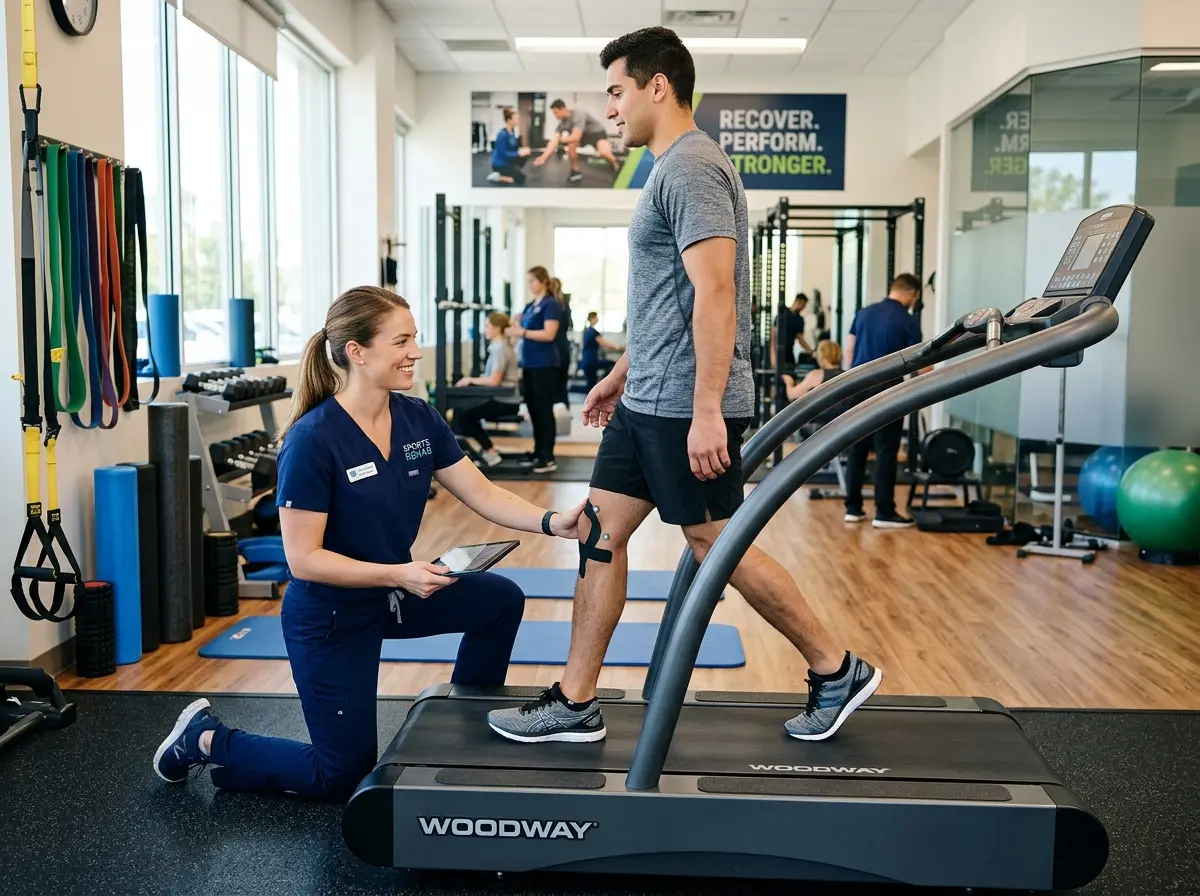
Your protocol should include standardized functional assessments (Timed Up and Go, 30-second Chair Stand Test, and knee range-of-motion measurements are solid starting points), progressive strengthening focused on quadriceps, hip abductors, and core stability, patient education on post-operative expectations and mobility milestones, and a clear 4–6 week structured timeline that fits within a surgeon's typical pre-op window. Document everything meticulously. When a surgeon sees that you're tracking outcomes with the same rigor they'd expect from a clinical trial, you stop being "a PT clinic nearby" and start being a clinical partner.
Creating a Seamless Communication Loop With Referring Surgeons
Communication is where most PT clinics drop the ball — and where you can easily stand out. Surgeons want to know what's happening with their patients. They do not want to wonder. Build a communication workflow that sends a brief, professional progress summary to the referring surgeon after the initial evaluation and again at program completion. Keep it concise: functional baseline, goals addressed, any red flags or concerns, and a discharge note with post-op readiness indicators.
This sounds simple because it is. But the number of clinics that actually do it consistently? Surprisingly low. Being the clinic that reliably closes the communication loop will make you memorable in the best possible way. Bonus points if you can offer to fax or electronically send notes directly into the surgeon's EMR workflow — ask their office manager what they prefer and make it frictionless on their end.
Training Your Team to Deliver a Consistent Patient Experience
A pre-hab program is only as strong as the therapists delivering it. Invest in standardizing your team's approach so that every patient, regardless of which therapist they see, receives the same quality of care and the same messaging. Create a program manual, run internal case reviews, and ensure your team can confidently explain the research behind pre-hab to patients who are skeptical about doing physical therapy before surgery. (And there will be skeptical patients. There always are.)
Streamlining Patient Intake and Clinic Operations
Reducing the Administrative Friction That Kills Referral Relationships
Here's a referral-killing scenario that plays out in clinics every week: a surgeon's office calls to refer a pre-hab patient, nobody answers, they leave a voicemail, the voicemail sits unheard for a day, and the frustrated coordinator calls the next clinic on their list. That's it. That's how you lose a referral relationship before it ever starts.
Stella, the AI robot employee and phone receptionist, solves exactly this kind of problem. She answers every phone call — 24/7, including after hours — with full knowledge of your clinic's services, programs, and intake process. When a surgeon's coordinator calls to refer a joint replacement patient to your pre-hab program, Stella can handle the call professionally, collect patient information through a conversational intake process, and ensure your team gets an AI-generated summary with a push notification the moment the call ends. No missed calls, no dropped referrals, no awkward voicemail tag. For clinics with a physical location, Stella also greets patients at the door as a friendly, human-sized AI kiosk — reducing front desk pressure while keeping the patient experience polished and welcoming from the first moment they walk in.
Marketing Your Pre-Hab Program to Orthopedic Practices
You can have the best pre-hab program in the region and still get zero referrals if orthopedic surgeons don't know you exist or don't understand what you're offering. Marketing to surgeons is a relationship game, not an advertising game — and it requires a different approach than marketing to patients.
Getting in the Door: Outreach That Actually Works
Cold emails to orthopedic offices rarely work. What does work is leveraging existing connections — ask your current patients who their surgeons are and request permission to introduce yourself to those offices. A warm introduction via a mutual patient carries significantly more weight than a brochure dropped off at a front desk. When you do get a meeting with a surgeon or their practice manager, come prepared with a one-page program overview that includes your protocol outline, outcome tracking metrics, and a clear explanation of what you'll communicate back to them and when. Make their decision to refer feel low-risk and high-value.
Building Long-Term Referral Relationships Through Outcomes Data
The best marketing you can do for an orthopedic referral relationship is tracking and sharing your outcomes. After your first 20 or 30 pre-hab patients, compile your data — average functional improvement scores, patient satisfaction, any notable post-surgical feedback you've received. Present this to your referring surgeons as a quarterly update. Surgeons make decisions based on outcomes. Show them the outcomes, and the referrals follow. This also gives you something concrete to bring to new surgical practices you're trying to build relationships with — credibility backed by numbers is far more persuasive than enthusiasm backed by nothing.
Hosting Surgeon-Facing Educational Events
Consider hosting a small lunch-and-learn at a local orthopedic practice or inviting surgeons to a continuing education event at your clinic focused on pre-operative rehabilitation research. This positions your clinic as a clinical thought leader rather than just a service provider. It creates face time that builds trust, opens dialogue about the types of patients who benefit most from pre-hab, and gives surgeons a chance to see your team's expertise firsthand. Keep it clinical, keep it brief, and always bring food. No one has ever regretted bringing food to a surgeon's office.
Quick Reminder About Stella
Stella is an AI robot employee and phone receptionist that works around the clock — greeting patients at your front desk as a friendly in-person kiosk and answering every phone call with professional, knowledgeable responses about your services. At just $99/month with no upfront hardware costs, she's built to make clinics like yours run more smoothly and never miss an opportunity — including that all-important referral call from a surgeon's coordinator at 5:15 on a Friday.
Your Pre-Hab Program Won't Build Itself — But Here's Where to Start
The opportunity in front of physical therapy clinic owners willing to invest in a structured joint replacement pre-hab program is genuinely significant. Orthopedic volume is growing — the American Academy of Orthopaedic Surgeons projects that total knee and hip replacement procedures will continue to increase substantially over the next decade as the population ages. Surgeons need trusted PT partners. Most clinics aren't positioning themselves to fill that role with any intentionality. You can be different.
Here are your concrete next steps to get moving:
- Build or refine your protocol. Define your assessment tools, treatment framework, and program timeline. Make it standardized and documentable.
- Create your communication templates. Draft the evaluation summary and discharge note formats you'll send to referring surgeons after every pre-hab patient.
- Identify your first target practices. Start with orthopedic surgeons your current patients already see and request warm introductions.
- Fix your intake and phone process. Make sure no referral call goes unanswered and no patient falls through the cracks during scheduling.
- Start tracking outcomes from day one. Build a simple spreadsheet or use your EMR to capture functional scores at evaluation and discharge so you have data to share within a few months.
Running a pre-hab program that earns consistent orthopedic referrals takes clinical rigor, reliable communication, and a front-end operation that makes surgeons' offices feel confident every time they call. Get those three things right, and you won't be chasing referrals — they'll come to you.