Introduction: Because "We Only Take Cash" Is No Longer Charming
Picture this: a customer walks into your store, finds exactly what they're looking for, walks up to the counter ready to buy — and then you tell them you only accept cash or, worse, checks. (Checks. In this economy.) They smile politely, put the item back, and walk out. That sale? Gone. That customer? Probably not coming back.
Here's the reality: today's retail customers have options, and so do their wallets. A 2023 Federal Reserve report found that cash now accounts for just 18% of all U.S. payments — down from 31% in 2016. Meanwhile, digital wallets, tap-to-pay, and buy-now-pay-later options are skyrocketing in popularity. If your payment setup hasn't evolved with your customers' habits, you're not just being old-fashioned — you're actively leaving money on the table.
This guide breaks down the modern payment options your retail customers actually expect, helps you figure out which ones make sense for your business, and gives you a practical roadmap for getting up to speed without losing your mind — or your margins.
The Payment Landscape Has Shifted (A Lot)
Credit and Debit Cards: The Non-Negotiable Foundation
If you're not accepting credit and debit cards in 2024, we need to have a very serious conversation. Card payments are the bedrock of modern retail transactions, accounting for over 50% of all U.S. point-of-sale purchases. Accepting cards isn't a perk anymore — it's table stakes.
The good news is that setting up card acceptance has never been easier or cheaper. Providers like Square, Stripe, and PayPal Zettle offer affordable card readers with no monthly fees and simple per-transaction pricing (typically 2.6%–2.9% + a small flat fee). For higher-volume businesses, dedicated merchant accounts through your bank or a payment processor may offer better rates. The key is to understand your transaction volume and average sale size before committing to a pricing structure.
Don't overlook the importance of EMV chip readers and contactless terminals. Magstripe-only readers not only feel prehistoric to customers — they also expose your business to greater fraud liability. Upgrading your hardware is a small investment that pays dividends in customer trust and chargeback protection.
Digital Wallets: The Future Is Already Here
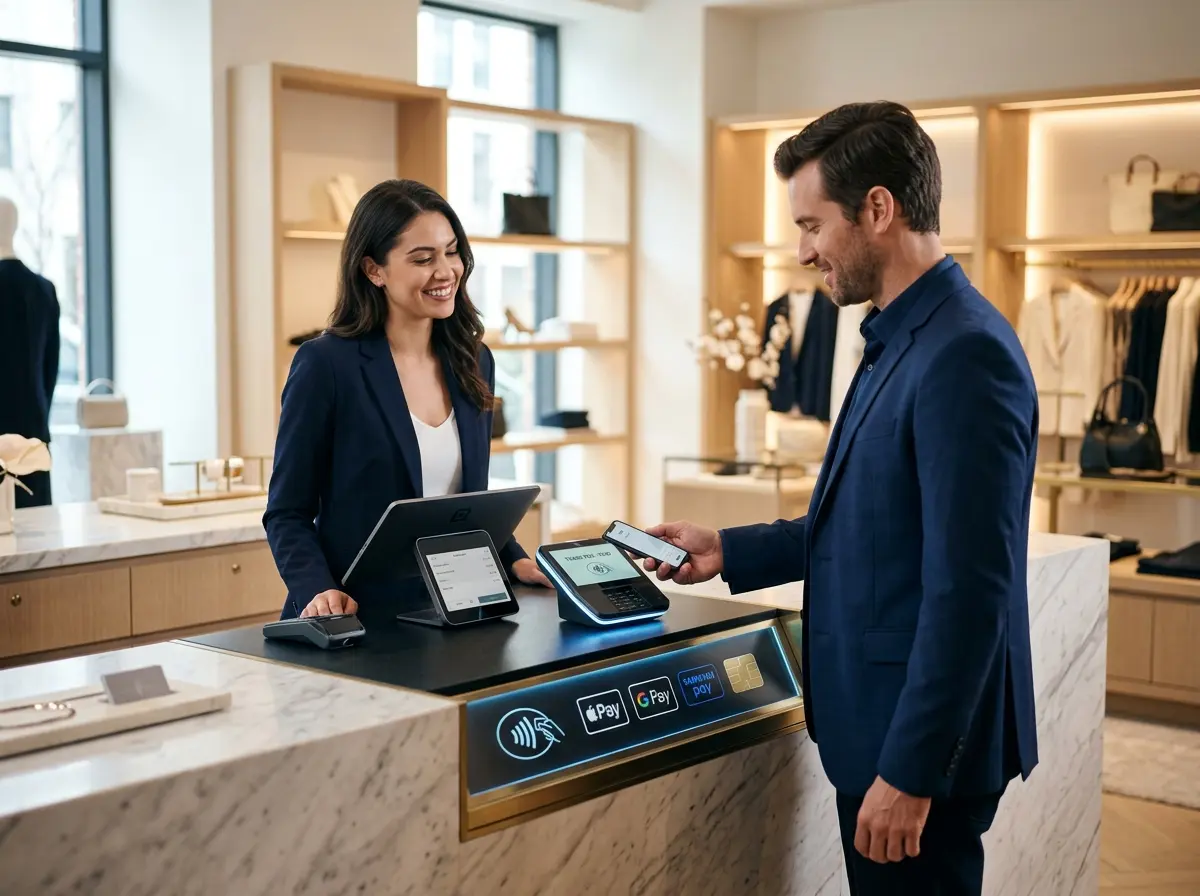
Apple Pay, Google Pay, Samsung Pay — these aren't just conveniences for tech-savvy millennials anymore. Digital wallet usage has exploded across all demographics, with over 53% of U.S. consumers reporting they've used a mobile payment method in the past year. Even more telling: customers who use digital wallets tend to spend more per transaction because the friction of pulling out a physical card is removed.
The even better news? If you already have a contactless card terminal, you likely already accept digital wallets. NFC (Near Field Communication) technology powers both tap-to-pay cards and mobile wallets through the same hardware. It's one upgrade that checks multiple boxes simultaneously — which is exactly the kind of efficiency a business owner can appreciate.
Buy Now, Pay Later: The Option That Converts Browsers Into Buyers
Buy Now, Pay Later (BNPL) services like Klarna, Afterpay, and Affirm have fundamentally changed how customers think about larger purchases. Rather than putting a $300 item on a credit card, customers can split it into four interest-free payments — and studies show this dramatically reduces cart abandonment and increases average order values by up to 45%.
BNPL isn't just for e-commerce anymore. Many providers now offer in-store solutions via QR codes or dedicated card products. If you sell higher-ticket items — furniture, electronics, spa packages, fitness equipment — BNPL could be the difference between a "let me think about it" and a completed sale. Yes, there are merchant fees involved (typically 2%–8%), but when weighed against increased conversions and larger basket sizes, the math usually works out favorably.
How Stella Can Help Modernize Your Customer Experience
From Payment Confusion to Seamless Service
Modern payments aren't just about the transaction — they're part of a broader customer experience. Customers who feel confused, ignored, or poorly informed at any point in their visit are less likely to complete a purchase, regardless of how many payment options you offer. That's where Stella, the AI robot employee and phone receptionist, can genuinely change the game for retail businesses.
In your physical store, Stella greets every customer who walks by, proactively engages them about products, services, and current promotions, and answers common questions — including questions about accepted payment methods, financing options, and current deals. No more customers wandering around unsure whether you accept Apple Pay or offer payment plans. Stella handles those inquiries instantly, freeing up your staff to focus on closing sales rather than answering the same questions on repeat.
On the phone side, Stella answers calls 24/7 with the same business knowledge she uses in person. If a customer calls to ask whether you accept Afterpay or what your return policy is for card purchases, she's got it covered — day or night, without putting anyone on hold.
Choosing the Right Payment Mix for Your Business
Assessing Your Customer Base and Transaction Profile
Not every payment method makes sense for every business, and chasing every shiny new option is a great way to complicate your operations without meaningfully improving your bottom line. The smart approach is to start with your actual customers and your actual transactions.
Think about who walks through your door. Are they primarily younger shoppers who are highly likely to pay with a phone tap? Older customers who still prefer chip cards? High-income buyers who might respond well to BNPL for larger purchases? Your payment strategy should reflect your customer demographics, not just industry trends. If you're not sure, ask your customers — informally, through a quick survey, or by simply tracking what payment methods they attempt to use.
Transaction size matters too. If your average sale is under $20, BNPL is probably overkill. If you regularly sell items over $200, offering installment options could meaningfully increase your close rate. Align your payment infrastructure with the reality of your business, not with what looks impressive on paper.
Managing Fees Without Losing Your Mind
One of the most common concerns business owners raise about expanding payment options is fees. Fair enough — payment processing costs are real, and they add up. But the instinct to avoid fees by limiting payment options often backfires spectacularly, because every lost sale due to payment friction costs far more than any processing fee ever would.
A few practical strategies for managing payment costs intelligently:
- Negotiate rates once your volume justifies it. Most processors will offer better terms to businesses processing $10,000+ per month.
- Consider cash discounting programs, which pass the processing fee to card-paying customers (while offering a small discount for cash). These are legal in all 50 states but must be implemented transparently.
- Bundle your payment processing with your POS system where possible to reduce redundant fees and simplify reconciliation.
- Review your statements quarterly. Fees creep up. Processors change pricing. Staying on top of your costs is not glamorous, but it matters.
Integrating Payments With Your Broader Business Systems
A payment method is only as good as its integration with the rest of your business. Accepting Apple Pay through one device while running your inventory on a separate system and tracking customer data in a spreadsheet is a recipe for operational chaos — and missed opportunities.
Look for payment solutions that integrate cleanly with your point-of-sale system, inventory management, and customer relationship tools. Modern POS platforms like Square, Shopify POS, Lightspeed, and Clover offer robust ecosystems that connect payments to inventory, sales reporting, and customer profiles automatically. When your systems talk to each other, you gain visibility into which payment methods are most popular, which products are moving, and which customers are worth investing in further — and that information is genuinely valuable.
Quick Reminder About Stella
Stella is an AI robot employee and phone receptionist built for businesses like yours — a friendly, human-sized kiosk that engages customers in-store and answers phone calls 24/7. She promotes your deals, answers product and policy questions, and delivers a professional, consistent experience without breaks, turnover, or bad days. At just $99/month with no upfront hardware costs, she's one of the most affordable team members you'll ever hire.
Conclusion: Stop Making Customers Work for the Privilege of Giving You Money
Modernizing your payment options isn't about technology for technology's sake. It's about removing every possible obstacle between a customer's intent to buy and an actual completed transaction. Every payment method you don't accept is a door you've quietly closed on a segment of your customer base — and in today's competitive retail environment, that's a luxury very few businesses can afford.
Here's your actionable checklist for getting started:
- Audit your current setup. What payment methods do you accept today? Where are you seeing abandoned transactions or customer hesitation?
- Upgrade to a contactless terminal if you haven't already. It covers cards, chip, tap-to-pay, and digital wallets in one device.
- Evaluate BNPL options if your average transaction exceeds $100. Klarna, Afterpay, and Affirm all have straightforward merchant onboarding processes.
- Integrate your payments with your POS and CRM so your data works for you instead of sitting in silos.
- Train your team — and consider tools like Stella to handle customer questions about payment options, promotions, and policies so your staff can focus on service.
Your customers are ready to pay you. Make sure you're ready to accept it — in whatever form they're offering.