The Chaos Is Real — But So Is the Opportunity
Picture this: A parent walks into your store with two kids in tow. One is quietly asking questions about everything within arm's reach. The other has already knocked something off a shelf and is now sprinting toward your most expensive display. Meanwhile, the parent — your actual customer — is trying to make a purchasing decision while simultaneously playing defense.
Sound familiar? If you run a retail shop, restaurant, gym, salon, or really any business where families might appear, you've lived this scene. And here's the uncomfortable truth: most businesses either go full "kid zone" and accidentally alienate adults, or they ignore children entirely and watch parents cut their shopping trips short. Neither extreme is good for your bottom line.
The good news? Creating a kid-friendly environment that doesn't make adults feel like they've accidentally wandered into a Chuck E. Cheese is entirely achievable — and it's genuinely good for business. Families represent enormous purchasing power, and parents who feel comfortable in your space stay longer, spend more, and come back. Let's talk about how to actually pull this off.
Designing a Space That Works for Everyone
Think in Zones, Not Compromises
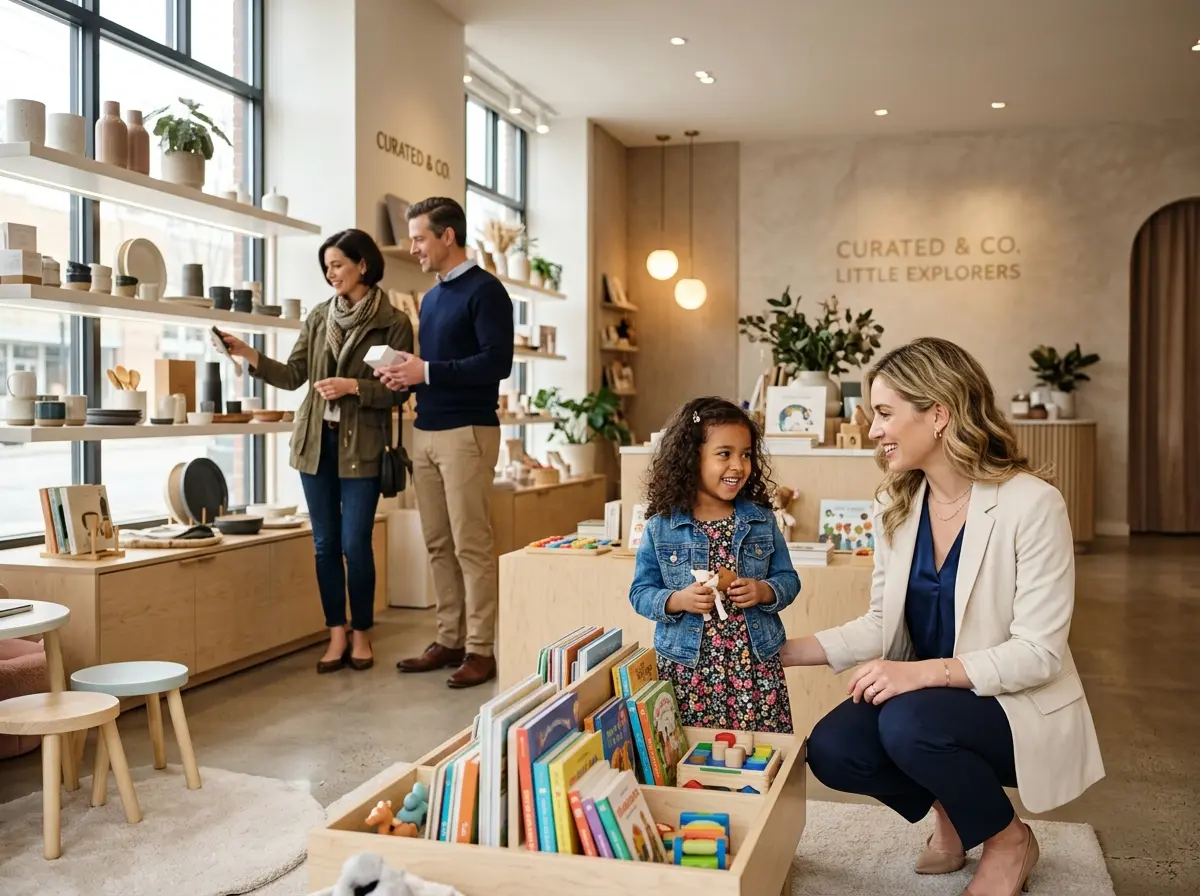
The most effective family-friendly spaces don't sacrifice adult ambiance — they add a dedicated layer of kid-friendliness that complements the overall experience. Think of it as zoning. A coffee shop might carve out a small corner with low tables, crayons, and a couple of board books. A clothing boutique might keep a small basket of toys near the fitting rooms. A medical office waiting room might section off a small play area near a window, away from adults filling out paperwork.
The key principle here is containment with engagement. You're not building a playground — you're creating a small, intentional space that holds a child's attention long enough for their parent to actually focus on your products or services. Even a modest investment in a designated kid area can meaningfully increase how long families stay in your store, and research consistently shows that dwell time correlates directly with spending.
Keep It Tidy, Keep It Safe
Nothing sends a parent into high-alert mode faster than a kid-friendly area that looks like it hasn't been cleaned since 2019. If you're going to create a space for children, commit to maintaining it. Wipe down surfaces regularly, cycle out broken toys, and make sure there are no sharp edges, choking hazards, or unstable furniture anywhere near the area.
Beyond hygiene, consider visibility. Parents won't relax if they can't see their kids. Position your kid zone in a line of sight from where adults typically spend time — near the checkout counter, the consultation area, or your main product floor. When parents can keep one eye on their child without craning their neck, they're free to give you their attention. That's exactly when the sale happens.
Aesthetics Matter More Than You Think
Kid-friendly doesn't have to mean loud primary colors and cartoon characters plastered everywhere — unless, of course, you run a children's store, in which case, go wild. For most businesses, the goal is to integrate family-friendly elements into your existing aesthetic in a way that feels intentional rather than tacked on. Think wooden toys instead of plastic ones, a small chalkboard wall in a neutral corner, or a simple digital display showing a nature video on loop. These touches signal "we thought of you" without screaming "this place is only for six-year-olds."
How Technology Can Smooth the Family Experience
Reducing the Friction Points for Busy Parents
One of the biggest frustrations for parents shopping with kids is waiting — waiting for staff to become available, waiting on hold, waiting for someone to answer a basic question. Every minute of unnecessary friction is a minute a distracted parent considers just leaving. This is where smart technology can genuinely make a difference, and where Stella, the AI robot employee and phone receptionist, fits naturally into the picture.
Stella stands in your store as a friendly, human-sized kiosk that proactively greets customers, answers questions about products, services, and promotions, and handles interactions without pulling your staff away from other tasks. For a parent juggling a toddler and a to-do list, being able to quickly ask a kiosk "do you have this in a size 6?" or "what are today's specials?" — and actually get a real, helpful answer — is a genuine relief. On the phone side, Stella answers calls 24/7, which matters a lot for parents who often do their planning and research during nap time or after bedtime, well outside normal business hours.
Training Your Team to Engage Families Effectively
A Little Warmth Goes an Exceptionally Long Way
Your physical space and technology can do a lot of the heavy lifting, but your staff still sets the tone. A team member who visibly tenses up when a family walks through the door communicates something — even if they never say a word. On the flip side, a genuine smile directed at both the parent and the child creates immediate goodwill that's hard to manufacture any other way.
Train your staff to acknowledge children directly — not in an over-the-top, performative way, but naturally. A quick "Hey, cool shoes" or "Are you helping Mom pick something out today?" takes three seconds and makes a parent feel like their child is welcome rather than tolerated. This small shift in approach can be the difference between a family that lingers and one that makes a hasty exit.
Empowering Staff Without Overwhelming Them
Here's a tension worth naming: asking your team to simultaneously manage customer service, sales, inventory questions, and spontaneous family entertainment is a lot. Staff who feel overwhelmed are less patient, less engaging, and — let's be honest — more likely to look visibly pained when a child starts rearranging your product displays.
The solution isn't to hire more people for every scenario (though sometimes that's the right call). It's to reduce the unnecessary demands on your team so they have the bandwidth to actually be warm and present. Streamlining how common questions get answered, reducing interruptions for routine inquiries, and ensuring there's always a welcoming presence at the front of the store — even during busy periods or when staff are occupied — keeps the experience smooth for families without burning out your people.
Handling the Occasional Chaos with Grace
Kids spill things. Kids knock things over. Kids occasionally have a full emotional breakdown in the middle of your store for reasons that are entirely unclear to everyone present, including the parent. Having a clear, calm protocol for these moments matters. Stock some paper towels in accessible spots. Train staff to approach these situations with a lighthearted "no worries at all" rather than a barely concealed grimace. A business that handles small disasters gracefully earns enormous loyalty from the parents who witness it. They will remember that moment — and they will come back.
Quick Reminder About Stella
Stella is an AI robot employee and phone receptionist available for $99/month with no upfront hardware costs — she works in-store as a human-sized kiosk that greets and assists customers, and she answers your business phone calls 24/7 with the same knowledge she uses in person. She handles questions, promotes deals, collects customer information, and keeps things running smoothly so your staff can focus on delivering the kind of warm, attentive experience that keeps families coming back. Setup is easy, and she's always ready to work — no sick days, no bad moods, no side-eyeing the toddler who just touched everything.
Building a Family-Friendly Business That Actually Thrives
Creating a kid-friendly shopping experience isn't about overhauling your entire business model or installing a ball pit in the corner of your salon. It's about making deliberate, thoughtful choices that signal to families — you are welcome here, and we thought about you. Those signals compound over time into loyalty, word-of-mouth referrals, and the kind of customer relationships that sustain a business for years.
Start with one concrete action this week. Maybe it's designating a small corner of your waiting area as a kid zone with a basket of books and a few toys. Maybe it's briefing your team on how to greet families more warmly. Maybe it's auditing your current layout for visibility so parents can keep an eye on their kids without stress. Or maybe it's exploring how tools like Stella can reduce friction and keep your customer experience smooth even during the busiest, most chaotic family rushes.
The businesses that figure out how to serve the whole family — without making adults feel like they're shopping inside a theme park — are the ones that build a genuinely loyal customer base. And in a world where customers have endless options and short attention spans, that loyalty is worth everything.