When a Haircut Becomes a Story Worth Telling
Let's be honest — there are approximately 47 barbershops within driving distance of your customers right now. Maybe more. So when someone drives past three perfectly good barbershops to get to yours, parks in a questionable spot, and then tells all their friends about it afterward, something remarkable has happened. You haven't just cut their hair. You've given them a story.
That's the difference between a transaction and a signature experience. And while most barbershop owners are busy worrying about chair count and product margins (important, yes), the shops that build genuine communities around their brand are the ones clients talk about at dinner parties, tag on Instagram, and refer without being asked. Word-of-mouth isn't dead — it's just selective. It only happens when you've actually earned it.
The good news? Creating that kind of experience isn't reserved for high-end Manhattan flagship shops with leather chairs and a jazz quartet. It's a strategic, repeatable process that any barbershop owner can implement — starting today. Here's how to turn your shop into the kind of place clients can't stop talking about.
Building the Foundation of a Signature Experience
Before you start ordering custom merch and designing a loyalty card, let's talk about what a "signature experience" actually means. It's not a gimmick. It's the intentional, consistent feeling a client gets every single time they walk through your door — before, during, and after the cut.
Define What Your Shop Actually Stands For
A signature experience starts with identity. What is your barbershop, beyond scissors and clippers? Are you the old-school neighborhood institution where regulars have sat in the same chair for 20 years? The modern grooming lounge targeting young professionals who want a straight razor shave and a cold brew? The family shop where dads bring their sons for their first haircut?
The clearest example of this done right is the concept of "the third place" — a term coined by sociologist Ray Oldenburg to describe places that aren't home or work but where people genuinely want to be. Barbershops are one of the oldest third places in human culture. When you lean into that identity deliberately, you stop competing on price and start competing on belonging. Clients don't leave a place they belong.
Write it down. What three words would you want a first-time client to use when describing their experience to a friend? Now audit everything in your shop against those three words. The music, the décor, the way staff greets clients, the products on the shelf — does it all tell the same story?
Engineer the Touchpoints, Not Just the Cut
Research consistently shows that customers remember the beginning and end of an experience most vividly — what psychologists call the "peak-end rule." That means the quality of the cut, while obviously important, is only part of what clients will remember and repeat.
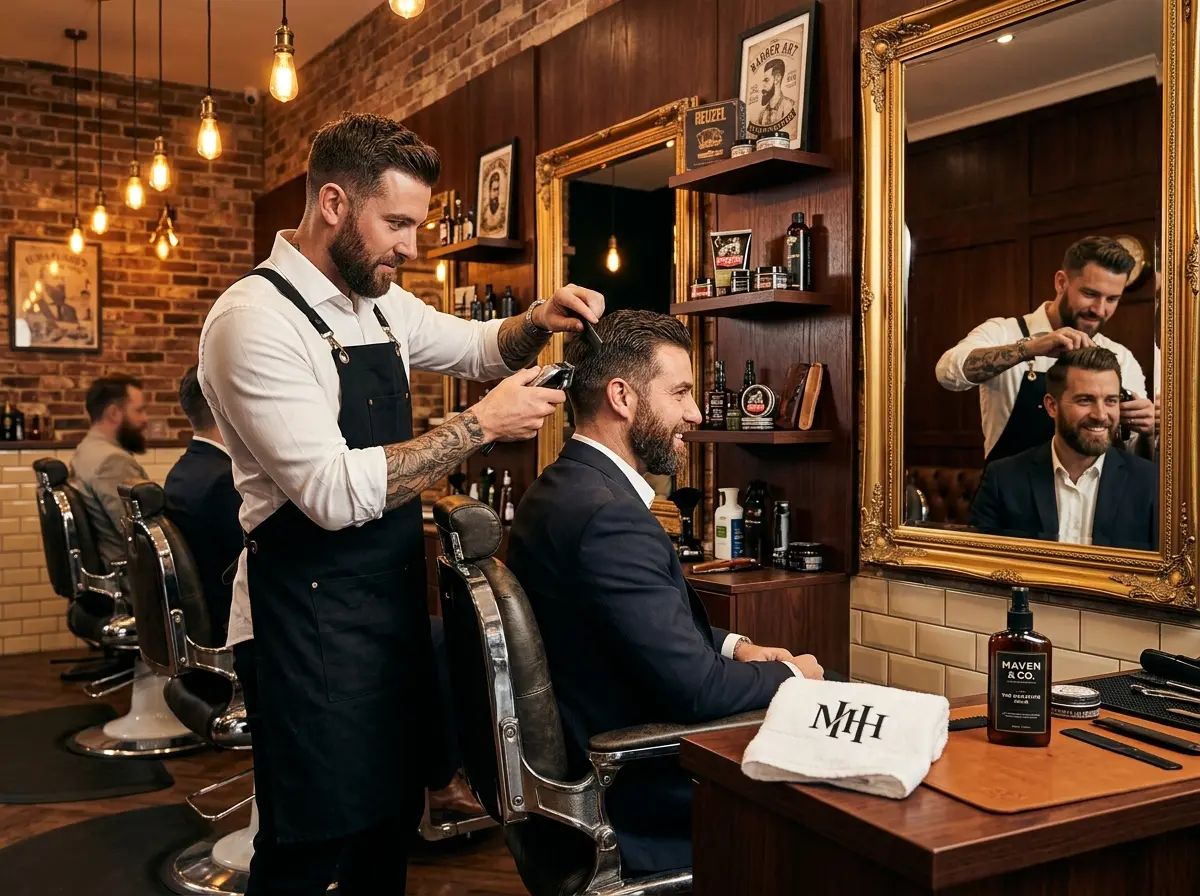
Map out every touchpoint in a client's journey: the phone call to book an appointment, the walk-in greeting, the wait time, the consultation, the cut, the finishing touches, the checkout, and the follow-up. Now ask yourself: which of these touchpoints are currently forgettable? A warm towel at the end of a cut costs almost nothing but creates a moment clients mention for years. A barber who remembers your kid's name costs nothing at all but creates loyalty that no discount can replicate. Specificity in these details is what separates a good barbershop from a beloved one.
Using Smart Tools to Deliver a Consistently Great First Impression
Here's where a lot of barbershops quietly drop the ball: the experience before the client even sits in the chair. A missed phone call, a confusing voicemail, or a front desk that's too busy to answer questions properly can undo all the atmosphere you've worked so hard to build inside your shop.
Never Let the Phone Ruin the Vibe
Think about it — your barbers are mid-cut, your music is right, the energy is good, and the phone rings. Someone picks up, distracted, gives a clipped answer, and goes back to their client. That caller? They might not bother calling back. This is where Stella, the AI robot employee and phone receptionist, becomes genuinely useful for barbershop owners. Stella answers calls 24/7 with full knowledge of your services, pricing, hours, and promotions — and she does it without pulling your best barber away from a fade at the worst possible moment.
For shops with a physical location, Stella also operates as a human-sized in-store kiosk that greets walk-ins, answers questions, and promotes current deals — so your staff can stay focused on what they do best. She can collect client information through conversational intake forms, and her built-in CRM lets you tag clients, add notes, and build profiles that make personalization at scale actually achievable. When your barber knows a returning client prefers a low taper and always asks about parking before they visit, that's not magic — that's good data put to use.
Turning Satisfied Clients Into Active Brand Ambassadors
Getting clients to talk about you isn't about begging for Google reviews (though those don't hurt). It's about creating moments so specific and personal that people genuinely feel compelled to share them. Referrals are the byproduct of an experience worth referring.
Give Clients Something to Talk About
A study by Nielsen found that 92% of consumers trust recommendations from friends and family over any form of advertising. You can outspend your competition on Instagram ads and still lose to the shop down the street whose owner remembers every client's name and sends a birthday text. The currency of word-of-mouth is specificity — "you have to try this place, they gave me a hot towel and remembered exactly how I like my beard trimmed" is infinitely more compelling than "it's a pretty good barbershop."
Shareable moments can be intentionally designed. A custom neon sign that clients want to photograph. A branded cape with a clever tagline. A signature finishing product that smells incredible and sparks conversation. A "Wall of Fame" for clients who've been coming since opening day. None of these are expensive. All of them are memorable and repeatable content for your clients' social feeds.
Build a Referral Culture, Not Just a Referral Program
Referral programs with formal discount structures can work, but they're not magic. What works better is creating a culture where clients want to refer — because doing so feels like sharing something good, not cashing in a coupon. Train your staff to ask genuinely curious questions, celebrate milestones with clients, and follow up after appointments. A simple "how did the new style hold up?" text two days after a first visit is the kind of thing people remember and mention.
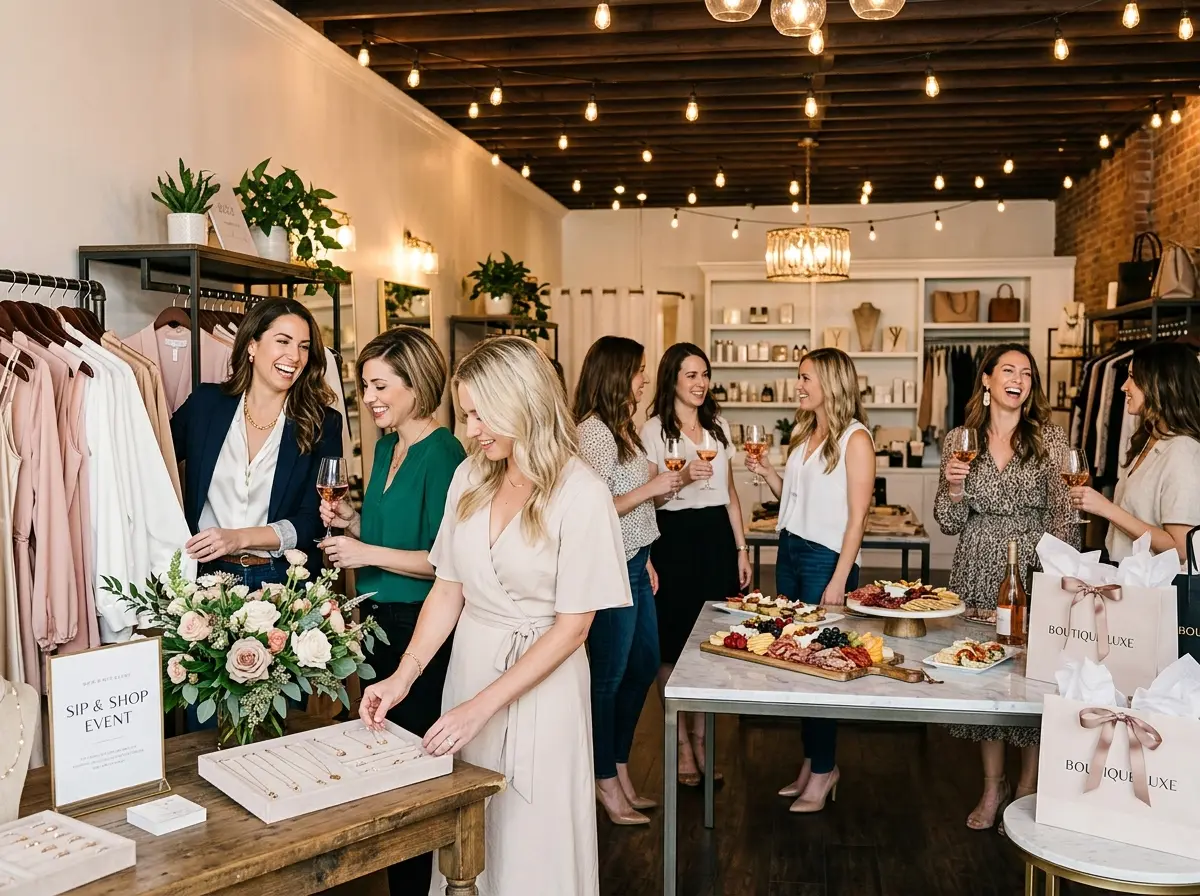
Consider a "bring a friend" event — a Sunday afternoon where regulars can bring someone new, everyone gets a complimentary service add-on, and the shop gets a room full of warm introductions. One well-executed event like this can generate more new clients than months of paid advertising, and at a fraction of the cost.
Make Your Online Presence Match Your In-Shop Experience
Brand ambassadors do their most effective work online, so your digital presence needs to hold up its end of the deal. If someone raves about your shop on Instagram and a curious friend clicks over to your profile to find three posts from 2021 and a phone number that goes to voicemail, you've lost them. Keep your social content consistent with the atmosphere you've built in person, respond to reviews — especially the awkward ones — and make it easy for curious newcomers to take the next step.
Quick Reminder About Stella
Stella is an AI robot employee and phone receptionist built for businesses exactly like yours — she greets clients in-store, answers calls around the clock, and keeps your client information organized so every interaction feels personal. At $99/month with no upfront hardware costs, she's the front-of-house upgrade most barbershops didn't know they needed. While your barbers focus on delivering the experience, Stella makes sure no opportunity walks out the door or hangs up the phone.
The Barbershop That Gets Talked About Is the One That Gets Intentional
Here's the bottom line: brand ambassadors aren't recruited, they're created. They're the natural result of a business that has decided — deliberately and repeatedly — to make every single interaction worth remembering. The barbershops that build loyal communities don't do it by accident. They do it by defining their identity, engineering their touchpoints, staying consistent across every channel, and giving clients something specific and genuine to share.
So, your actionable next steps — because vague inspiration doesn't pay the bills:
- Write down your three identity words and audit your shop against them this week.
- Map every client touchpoint from first phone call to post-visit follow-up and identify the weakest link.
- Design one shareable moment — physical or digital — that reflects your brand and gives clients something worth posting.
- Start a simple follow-up practice for new clients — even a single text goes a long way.
- Evaluate your phone and walk-in experience and ask honestly whether it matches the quality of the cut you deliver.
The barbershops people talk about aren't necessarily the most expensive, the most polished, or the most social-media-savvy. They're the ones that made someone feel genuinely seen and taken care of — and then gave them a reason to tell somebody. That's entirely within your reach, starting with your very next client.