So, You Want to Welcome Pets Into Your Store
Whatever your reason, creating a pet-friendly store policy is genuinely one of the smarter moves a retail or service business can make. Studies show that over 70% of U.S. households own a pet, and pet owners are increasingly loyal to businesses that accommodate their furry companions. But here's the thing — "we allow pets" scrawled on a Post-it note by the door is not a policy. A real pet-friendly policy protects your customers, your staff, your merchandise, and yes, even the pets themselves. Let's build one that actually works.
Building the Foundation of Your Pet Policy
Know the Rules Before You Make the Rules
Before you start designing cute little paw-print signs for your storefront, you need to do some homework. Health codes, local ordinances, and insurance requirements vary significantly by city, state, and industry. Food service establishments, for example, are generally prohibited from allowing pets under health department regulations — with the obvious exception of service animals, which are federally protected under the Americans with Disabilities Act (ADA) and are not optional. You don't get to say no to a service animal. Ever.
Define What "Pet-Friendly" Actually Means for Your Business
- Which types of animals are welcome (most businesses stick to dogs, often with a size or breed consideration)
- Whether pets must be leashed, harnessed, or carried at all times
- Owner responsibility for any damage, accidents, or incidents caused by their pet
- Behavior expectations — aggressive, excessively disruptive, or uncontrolled animals may be asked to leave
- Designated pet-free zones (food prep areas, fitting rooms, medical spaces, etc.)
Communicate the Policy Clearly — Before Customers Walk In
How Technology Can Help You Manage the Details
Let Your AI Receptionist Handle the Questions So You Don't Have To
Here's a truth most business owners don't fully appreciate until they've lived it: once you go pet-friendly, you will get a lot of questions about your pet policy. Over the phone, at the door, and from that one customer who sends three follow-up emails asking if their emotional support ferret qualifies. This is where Stella, the AI robot employee and phone receptionist, quietly becomes your best hire. Stella can greet customers as they walk into your store and proactively share your pet policy, answer specific questions about what animals are allowed, and keep that information consistent across every single interaction — no matter how many times someone asks.
On the phone side, Stella answers calls 24/7 with the same knowledge she uses in person, meaning a customer calling at 9 PM to ask whether they can bring their Labrador tomorrow morning gets a real, accurate answer instead of a voicemail. She can also collect customer information through conversational intake forms, which is genuinely useful if you want to track which customers are bringing pets or gather feedback on the experience. At $99/month with no hardware costs, it's a remarkably low-friction way to keep your team focused on actual customers in-store rather than fielding repetitive policy questions.
Making the In-Store Experience Work for Everyone
Set Your Staff Up for Success
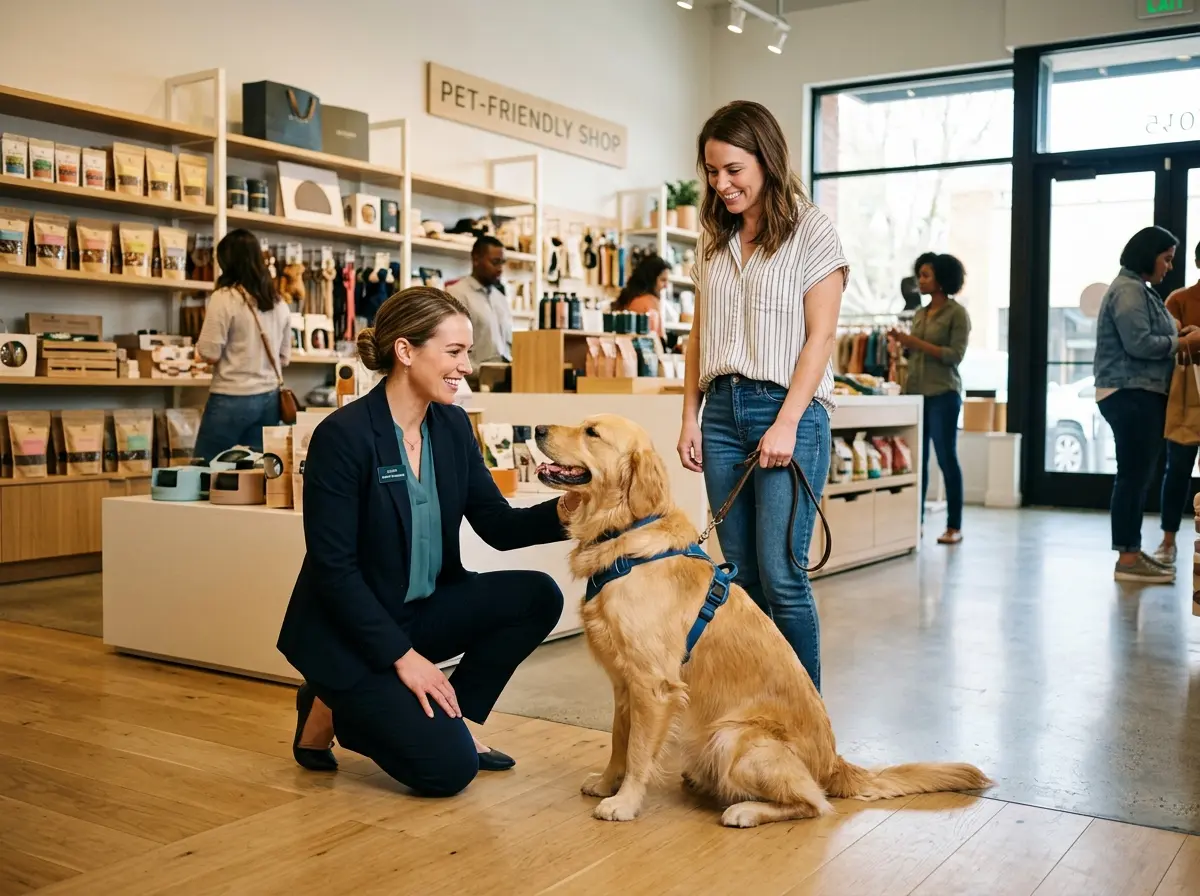
Create a Genuinely Welcoming Experience — Not Just a Tolerated One
These touches matter because pet owners talk. According to the American Pet Products Association, Americans spent over $147 billion on their pets in 2023, and those owners are actively seeking out businesses that treat their animals as valued guests rather than a grudging exception. Word of mouth in this community travels fast — mostly on social media, and mostly because someone's dog did something adorable in your store and someone took a photo. Make sure the backdrop is worth posting.
Review, Adjust, and Don't Be Afraid to Evolve Your Policy
A Quick Reminder About Stella
Stella is a friendly, human-sized AI robot kiosk and phone receptionist built for businesses of all kinds — retail shops, salons, medical offices, gyms, and more. She greets customers in-store, answers phones 24/7, promotes your current deals, and handles repetitive questions (like, say, your pet policy) so your team doesn't have to. At $99/month with no upfront hardware costs, she's the team member who never calls in sick, never forgets the policy details, and never looks annoyed when someone asks the same question for the fourth time today.
Your Next Steps Toward a Pet-Friendly Policy That Actually Holds Up
- Check your legal and insurance requirements before announcing anything publicly. A five-minute call to your insurer and a quick review of local health codes will tell you what you're working with.
- Draft your policy in plain language — define which animals are welcome, what behavior is expected, and what happens when something goes wrong.
- Train your staff thoroughly, address individual concerns, and create a clear incident response protocol.
- Communicate the policy everywhere — your door, your website, your booking process, and through whoever answers your phones (hopefully someone reliable and tireless).
- Invest in the experience — a water bowl, some treats, and a genuine welcome go a long way toward turning pet owners into regulars.
- Revisit and refine on a regular cadence based on real-world feedback.