Closing Big Deals Without Ever Leaving Your Chair
Let's be honest — the idea of selling a $5,000, $10,000, or even $50,000 product or service over a video call used to sound like wishful thinking. Sales wisdom for decades insisted that high-ticket items required firm handshakes, fancy dinners, and a lot of awkward small talk in conference rooms. Then the world changed, buyers got comfortable on Zoom, and suddenly the rules got rewritten.
Here's the reality: high-ticket remote sales are not only possible — they're often more efficient, more scalable, and more profitable than in-person sales cycles. The businesses that figured this out early are quietly printing money while their competitors are still debating whether video calls feel "too casual." If you're selling premium products, luxury services, professional consulting packages, or anything else with a meaningful price tag, video consultations might be the most underutilized tool in your arsenal. Let's fix that.
Building the Foundation for High-Ticket Video Sales
Before you fire up your webcam and start pitching, it's worth understanding that successful remote high-ticket sales don't happen by accident. They're the result of deliberate setup, process, and presentation. Buyers spending serious money need to feel serious confidence — and that confidence starts long before the call begins.
Creating the Right Environment and Presence
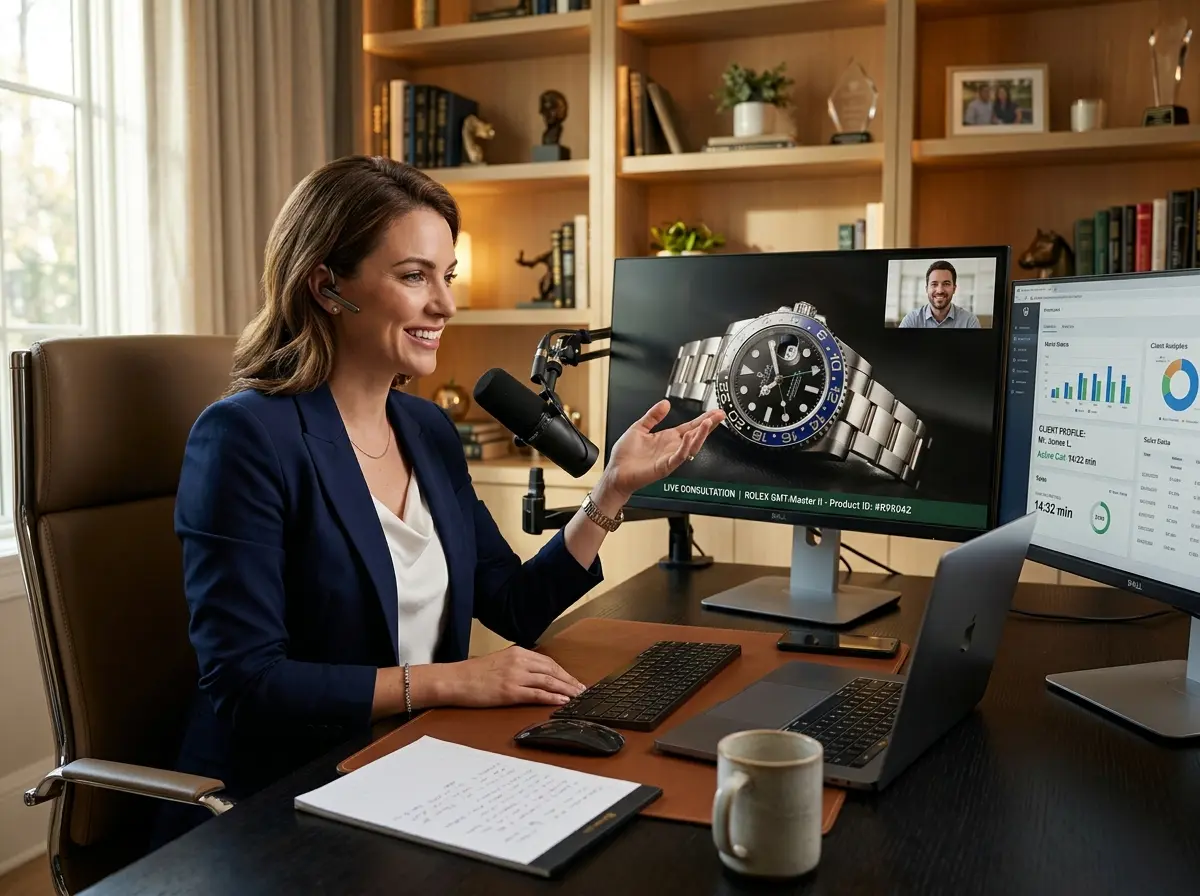
Your video environment is your virtual office, your showroom, and your first impression all rolled into one. A blurry webcam, a cluttered background, and tinny laptop audio will quietly destroy buyer confidence in ways they may never explicitly mention but absolutely feel. Invest in a decent camera (a quality USB webcam or mirrorless camera with a capture card), a ring light or softbox, and a USB microphone. These investments are measured in hundreds of dollars and can pay for themselves on a single closed deal.
Your background should communicate professionalism and personality without distraction. A clean, branded backdrop, a tasteful bookshelf, or a tidy office corner all work well. Virtual backgrounds look artificial to discerning buyers, so use them only as a last resort. Dress as you would for an important in-person meeting — your visual presence signals how seriously you take the conversation.
Pre-Call Qualification: Don't Waste Anybody's Time
One of the biggest mistakes high-ticket sellers make is jumping on video calls with prospects who were never going to buy. A thorough pre-qualification process protects your time and actually increases perceived value — if getting a call with you requires some effort, the call itself feels more exclusive and worth attending.
Build a qualification intake process that collects key information before the call is even scheduled. Ask about budget range, decision-making authority, timeline, and specific goals. Use scheduling tools like Calendly paired with intake forms to automate this. You'll enter every consultation with context, and buyers will sense that you've done your homework — because you have. A prospect who has already invested ten minutes answering thoughtful questions is far more psychologically committed to the conversation than someone who clicked a random booking link.
Structuring the Consultation for Maximum Conversion
A high-ticket video consultation is not a product demo. It's a structured diagnostic conversation. The best framework follows a simple arc: establish rapport, understand the problem deeply, present the solution in context of that specific problem, handle objections, and guide toward a decision. Resist the urge to lead with features. Buyers paying premium prices are buying outcomes, transformation, and confidence — not specs.
Plan to spend roughly 60-70% of the call asking questions and listening. Use screen sharing to present tailored proposals, case studies, or visual breakdowns of ROI. End every consultation with a clear, low-friction next step — whether that's a follow-up call, a proposal document, or a direct close. Ambiguity kills deals. Know where you're taking the conversation before it starts.
Streamlining Lead Capture and Follow-Up Before the Call Happens
The consultation itself is only part of the equation. What happens before the call — how leads are captured, qualified, and managed — often determines whether the best prospects even make it to the calendar. This is an area where many businesses quietly leak revenue without realizing it.
Let Technology Handle the Front End So You Can Focus on Closing
Stella, the AI robot employee and phone receptionist, is particularly useful here. For businesses with a physical location — think luxury retail, medical spas, law offices, or high-end auto dealerships — Stella stands in-store and proactively engages visitors, collects their information, and introduces them to your premium service offerings before they even speak to a human. On the phone side, she answers calls 24/7, handles initial inquiries, and uses conversational intake forms to gather the qualifying details your sales team needs. Her built-in CRM then organizes those leads with AI-generated profiles, custom tags, and notes — so when your closer gets on that video consultation, they're walking in prepared, not winging it.
The point is simple: the more seamlessly you capture and qualify leads on the front end, the more your high-value consultation time is spent on actual high-value conversations.
Running Consultations That Actually Close
Getting a qualified prospect on a video call is a victory. Converting that call into a closed deal is the art. This is where process discipline, emotional intelligence, and a few smart techniques make all the difference between a "let me think about it" and a signed agreement.
Building Trust Rapidly in a Remote Environment
Trust is the currency of high-ticket sales, and building it remotely requires intentional effort. Start every consultation with genuine small talk — not scripted, not rushed. Reference something from their intake form that shows you paid attention. Use their name naturally throughout the conversation. These aren't manipulation tactics; they're basic human respect, and buyers notice when it's present and when it's absent.
Social proof is your best friend on video. Keep case studies, testimonials, and results-based examples ready to share on screen. If you can show a prospect that someone in a similar situation achieved a specific, measurable outcome through your offering, you've done more for trust than any feature list ever could. Video calls also let you read facial expressions and body language in ways phone calls don't — use that information. If a prospect's face clouds over during a pricing discussion, address it directly rather than plowing ahead.
Handling Objections Without Flinching
High-ticket objections almost always fall into a handful of predictable categories: price, timing, authority (needing to consult a partner or spouse), and skepticism about results. Prepare for all of them in advance. When price comes up — and it will — resist the reflex to discount immediately. Instead, return to the value conversation. Ask what achieving their goal would be worth to them. Let the math do the work.
For prospects who need to consult someone else before deciding, offer to schedule a second consultation that includes the decision-maker. This keeps momentum alive without pressure. For skeptics, lean on specificity — vague promises evaporate under scrutiny, but concrete case studies and data hold up. The goal is never to steamroll an objection but to genuinely address the underlying concern that created it.
Following Up Like a Professional, Not a Pest
Most high-ticket deals don't close on the first call. Research consistently shows that a significant portion of sales require five or more follow-up touches — yet most salespeople give up after one or two. A structured follow-up sequence is non-negotiable. Send a personalized recap email within an hour of the call summarizing what was discussed and the agreed-upon next step. Follow up at scheduled intervals with value-added content — a relevant article, a case study, an answer to a question they raised. Keep the conversation alive without becoming the person they dread seeing in their inbox.
Use your CRM to track every interaction, set follow-up reminders, and note objections or concerns so each touchpoint feels continuous rather than like a cold restart. This level of organization signals professionalism and keeps you top of mind during a prospect's decision window.
Quick Reminder About Stella
Stella is an AI robot employee and phone receptionist designed to handle the front-line work that pulls business owners away from high-value tasks. She greets customers in person, answers phone calls around the clock, manages lead intake, and keeps your CRM organized — all for $99 a month with no upfront hardware costs. While you're closing deals on video, she's making sure nothing falls through the cracks at the front door or on the phone line.
Your Next Steps Toward Closing More High-Ticket Deals Remotely
High-ticket remote selling is a skill, a system, and a mindset — and all three are entirely learnable. Start by auditing your current setup: Is your video environment conveying the professionalism your price point demands? Do you have a qualification process that filters for real buyers before they reach your calendar? Is your consultation structured around the buyer's outcome, or are you still leading with features and hoping for the best?
Then look at your infrastructure. Are leads being captured consistently? Are follow-ups happening on schedule, or falling victim to the chaos of daily operations? Plug the leaks before you scale the volume.
The businesses winning at high-ticket remote sales aren't necessarily the ones with the best product. They're the ones with the most professional experience, the tightest process, and the best use of available tools. Set up your environment, build your qualification system, structure your consultation, follow up relentlessly, and let smart technology handle the pieces you don't need to touch personally. The handshake was never really what closed the deal — your expertise, preparation, and credibility were. Those travel just fine over video.