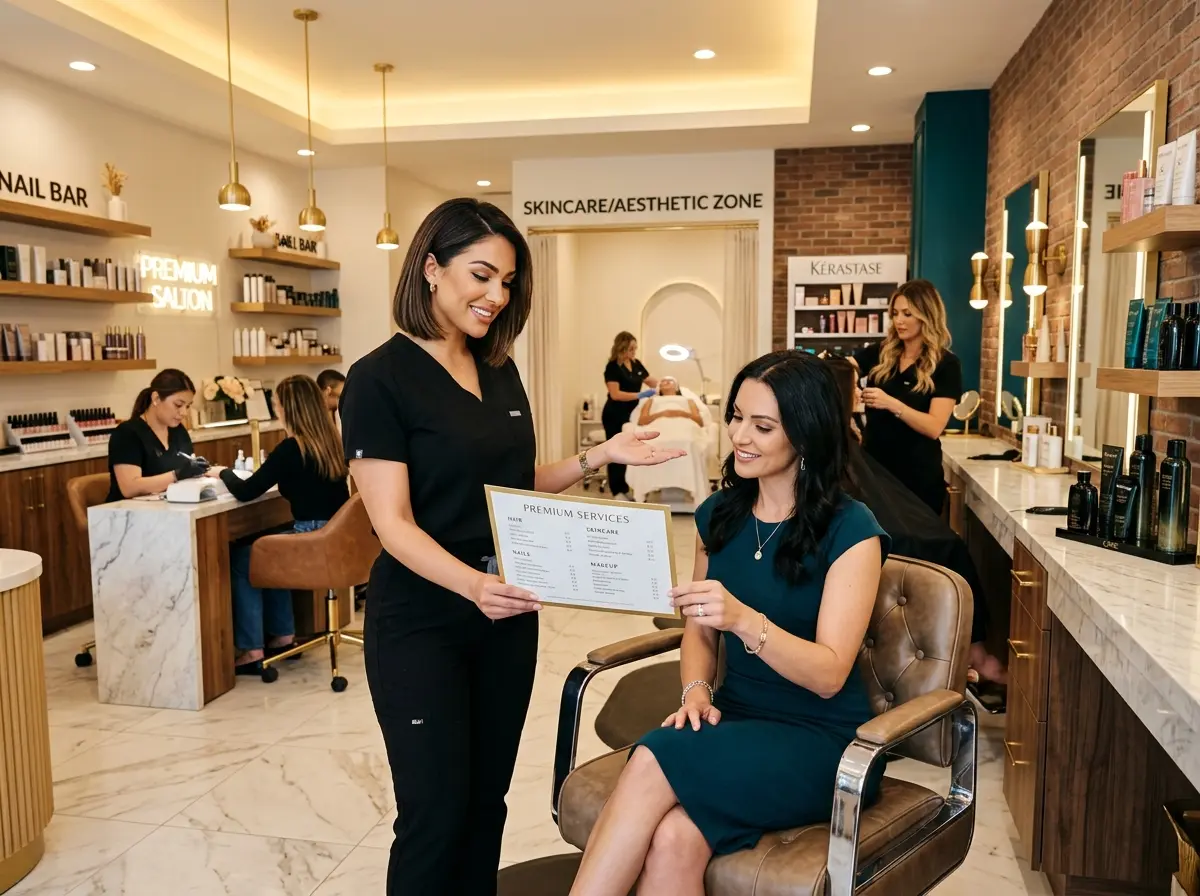
From "Just a Haircut" to "Take All My Money": The Power of the Add-On
Picture this: a salon owner opens her doors offering one service — haircuts. Business is decent, clients are happy, and the schedule is full. But at the end of every month, she's staring at her revenue numbers wondering why the math isn't quite adding up the way she'd hoped. Sound familiar? She had foot traffic. She had loyal customers. What she didn't have was a strategy to make each visit worth more — to her and to her clients.
The answer wasn't to work harder or squeeze in more appointments. It was smarter: build an add-on strategy that transformed her single-service salon into a full-blown beauty destination. And the results? Higher average ticket prices, happier clients who felt genuinely taken care of, and a business that finally felt like it was growing instead of just spinning its wheels.
If you run a salon — or honestly any service-based business — this is the article you didn't know you needed. Let's talk about how to build an add-on strategy that actually works, without making your clients feel like they're being upsold at a car dealership.
Building Your Add-On Menu: What to Offer and Why It Matters
Start With What Your Clients Already Want (They Just Don't Know It Yet)
The best add-ons aren't random — they're the natural next step in a client's experience. If someone is already sitting in your chair for a haircut, a deep conditioning treatment isn't a hard sell; it's a logical upgrade. The key is identifying services that complement what you already offer and that your clients would genuinely value if they knew about them.
Start by auditing your current service menu and asking yourself: What do clients ask about that we don't currently offer? What do they walk out needing that they'll get somewhere else? Common high-performing add-ons for salons include scalp treatments, glosses and toners, eyebrow shaping, express manicures, and retail product recommendations. These are services that take relatively little time but can meaningfully boost your revenue per appointment.
Industry data backs this up: upselling and cross-selling can increase revenue by 10–30% on average, and in the beauty industry specifically, clients who purchase add-ons tend to have significantly higher retention rates. They feel more invested in the experience — and they come back.
Price It Right, Position It Better
One of the most common mistakes salon owners make is either underpricing add-ons (treating them like freebies) or slapping on a price with zero explanation. Neither works. Underpriced add-ons erode your margins and train clients to expect discounts. Unexplained prices make people feel ambushed.
The sweet spot is transparent, confident pricing paired with a clear explanation of the benefit. Instead of "Would you like a gloss for $25?" try "I'd love to add a gloss today — it'll seal in your color and give you that mirror shine you're looking for. It's $25 and takes about 10 minutes." Same service, same price, completely different experience. Clients are far more likely to say yes when they understand what they're getting and why it's worth it.
Build your add-on offerings into your booking system, your front desk conversation, and your in-salon signage. Visibility drives sales — if clients don't know something exists, they certainly can't ask for it.
How the Right Tools Make Add-Ons Effortless
Let Technology Do the Talking (Seriously)
Here's the uncomfortable truth: your staff is busy. Between managing appointments, executing services, and keeping the vibe pleasant, remembering to pitch every add-on to every client is a big ask. This is exactly where technology — specifically a tool like Stella, the AI robot employee and phone receptionist — earns its keep.
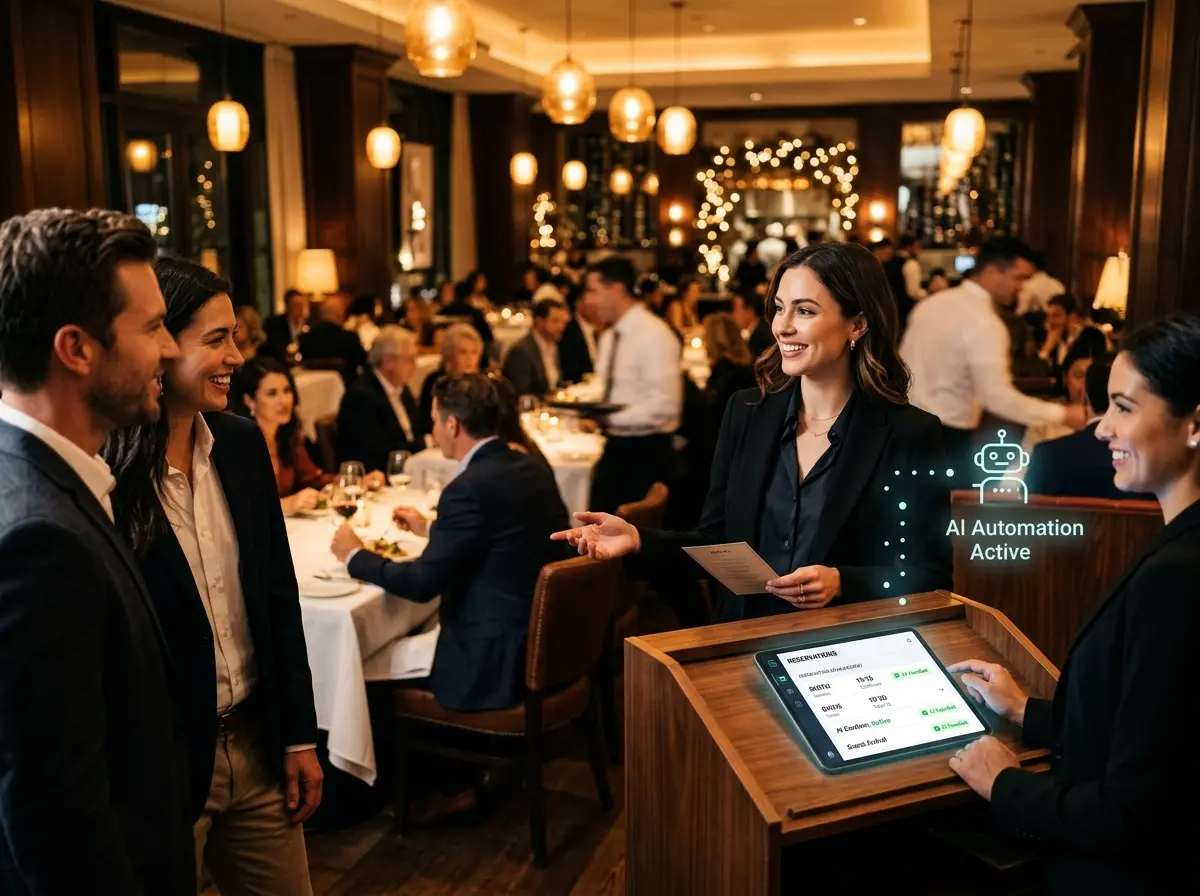
As a friendly, human-sized AI kiosk stationed inside your salon, Stella proactively greets customers, highlights current promotions, and naturally introduces add-on services in conversation — without your stylists having to break focus mid-blowout. She's consistent, she never has an off day, and she doesn't forget to mention the scalp treatment special just because the 3 o'clock rush got hectic. On the phone side, she answers calls 24/7, meaning a client calling after hours to ask "do you offer brow shaping?" gets an actual answer instead of a voicemail that never gets returned.
For salons looking to capture client preferences and build richer profiles, Stella's built-in CRM and conversational intake forms let you collect information during calls or at the kiosk — so you know exactly what each client has tried, what they loved, and what to suggest next time. That's not just upselling; that's personalized service at scale.
Making Add-Ons Stick: Training, Timing, and the Client Experience
Train Your Team to Recommend, Not Pressure
There's a fine line between a warm, helpful recommendation and a pushy sales pitch, and your clients can feel the difference immediately. The goal is to train your staff to approach add-ons as genuine suggestions — the way a knowledgeable friend would say "honestly, your hair would love a deep treatment right now" rather than a scripted upsell they're required to deliver.
Role-play conversations during team meetings. Make it a normal part of your culture to talk about services casually and confidently. Create a simple cheat sheet for your stylists that maps common client concerns to relevant add-ons — dry and damaged hair points to a conditioning treatment, someone mentioning a special event opens the door to styling upgrades, a client asking about color maintenance leads naturally to a gloss or toner conversation. When recommendations feel organic, clients respond positively and your staff feels less awkward delivering them.
Time It Right for Maximum Yes's
Timing is everything. The best moment to introduce an add-on is typically during the consultation — before the service begins, when the client is engaged, comfortable, and still making decisions. Once a service is underway, it becomes harder for clients to commit mentally and logistically. Open the door early: "While I'm looking at your hair today, I want to mention a couple of things we can add on if you're interested…"
You can also use the waiting area and digital touchpoints strategically. In-salon signage, a menu of services at the reception desk, and even your booking confirmation emails are all opportunities to plant the seed before clients even sit down. By the time they're in the chair, they've already been thinking about it.
Create Bundles That Feel Like a Deal (Because They Are)
Bundling is one of the most effective add-on strategies in the beauty industry. Instead of selling individual services à la carte, package complementary services together at a slight discount and market them as a complete experience. A "Color + Gloss + Blowout" package, for example, is far more appealing than three separate line items — it feels curated, intentional, and like the client is getting more for their money.
Bundles also simplify decision-making, which is a genuine psychological advantage. Clients don't have to evaluate each add-on independently; they just decide whether the full package is worth it. Spoiler: when it's presented well, it usually is. Rotate your bundles seasonally to keep things fresh and give returning clients a reason to try something new every time they visit.
A Quick Note on Stella
Stella is an AI robot employee and phone receptionist built for businesses exactly like yours. She stands inside your salon as a friendly, conversational kiosk, engaging walk-ins and promoting your services — and she answers your phones 24/7 with the same knowledge and professionalism. At just $99/month with no upfront hardware costs, she's the team member who's always on, always consistent, and never calls in sick on your busiest Saturday of the year.
Your Next Steps Toward a Full Beauty Destination
Transforming a single-service salon into a full beauty destination doesn't happen by accident, and it doesn't require a complete overhaul of your business. It requires intention — a deliberate strategy around what you offer, how you present it, when you introduce it, and how you train your team to talk about it naturally and confidently.
Start small if you need to. Pick two or three add-ons that genuinely complement your core service, price them clearly, and give your team the language and confidence to recommend them. Then build from there. Add bundles. Use your in-salon signage and digital tools to do the heavy lifting. Let technology handle the reminders and the after-hours inquiries so nothing falls through the cracks.
The salon owners who grow aren't necessarily the ones with the most talent or the biggest marketing budgets. They're the ones who figured out that every client who walks through the door is an opportunity — not just to deliver a great haircut, but to offer a complete experience they can't get anywhere else. Build that experience intentionally, and your revenue numbers will start telling a much better story at the end of every month.
Now go build your add-on menu. Your clients are ready — they're just waiting for someone to ask.