Introduction: Two Brands Walk Into a Store…
Picture this: a boutique fitness studio sets up a small retail corner inside a local health food store. Within three months, both businesses report increased foot traffic, stronger brand loyalty, and a noticeable uptick in sales. No gimmicks, no viral marketing campaign — just two complementary brands sharing space and customers. Welcome to the world of the store-within-a-store.
Brand collaborations through shared retail space aren't exactly a new concept — Target has been hosting mini shop-in-shops for brands like Apple, Ulta, and Disney for years — but what is relatively new is how accessible this model has become for small and mid-sized businesses. You don't need a national footprint or a Fortune 500 marketing budget to make it work. You need a good partner, a clear agreement, and enough spatial awareness to not accidentally block the emergency exit with a display stand.
Done right, a store-within-a-store collaboration can expand your audience, reduce overhead, and create a customer experience that neither brand could have pulled off alone. Done wrong, it becomes an awkward living situation — like having a roommate who rearranges your furniture without asking. This guide will help you do it right.
Finding the Right Brand Partnership
Complementary, Not Competing
The golden rule of store-within-a-store partnerships is simple: your brands should complement each other, not cannibalize each other. A coffee shop inside a bookstore works beautifully because one gives people a reason to linger while the other gives them something to do while they linger. A competing coffee shop inside a coffee shop, on the other hand, is just chaos with espresso.
Start by mapping out your customer's lifestyle. Who are they? What else do they buy, where do they go, and what problems do they solve before and after visiting your business? A yoga studio might partner with a wellness supplement retailer. A bridal boutique might host a jewelry designer. An auto detailing shop might collaborate with a car accessories brand. The overlap doesn't have to be perfect — it just has to make intuitive sense to the customer standing in the space.
Vetting a Potential Partner
Enthusiasm is not a business plan. Before you start measuring wall space and splitting electrical outlets, do your due diligence on any potential partner. Consider their brand reputation, their customer service standards, and yes — their online reviews. A partner with a 2.8-star rating and a pattern of no-shows is going to reflect poorly on your business regardless of how cleverly you've arranged the signage.
Ask the hard questions early: What are their peak hours? Do they have staff on-site or are they expecting you to field their customer questions? What happens if their products or services generate complaints? Getting aligned on expectations before the handshake is worth far more than any promotional flyer you'll design together.
Defining Mutual Goals
Every successful brand collaboration needs shared metrics for success. Are you primarily trying to drive foot traffic, increase average transaction value, or break into a new demographic? Define what winning looks like for both parties. A formal written agreement — even a simple one — that outlines revenue sharing, space usage, promotional responsibilities, and exit terms will save you an enormous amount of stress down the road. Think of it as a prenup for your business relationship. Romantic? No. Wise? Absolutely.
Structuring the Space and Experience
Design for Clarity and Flow
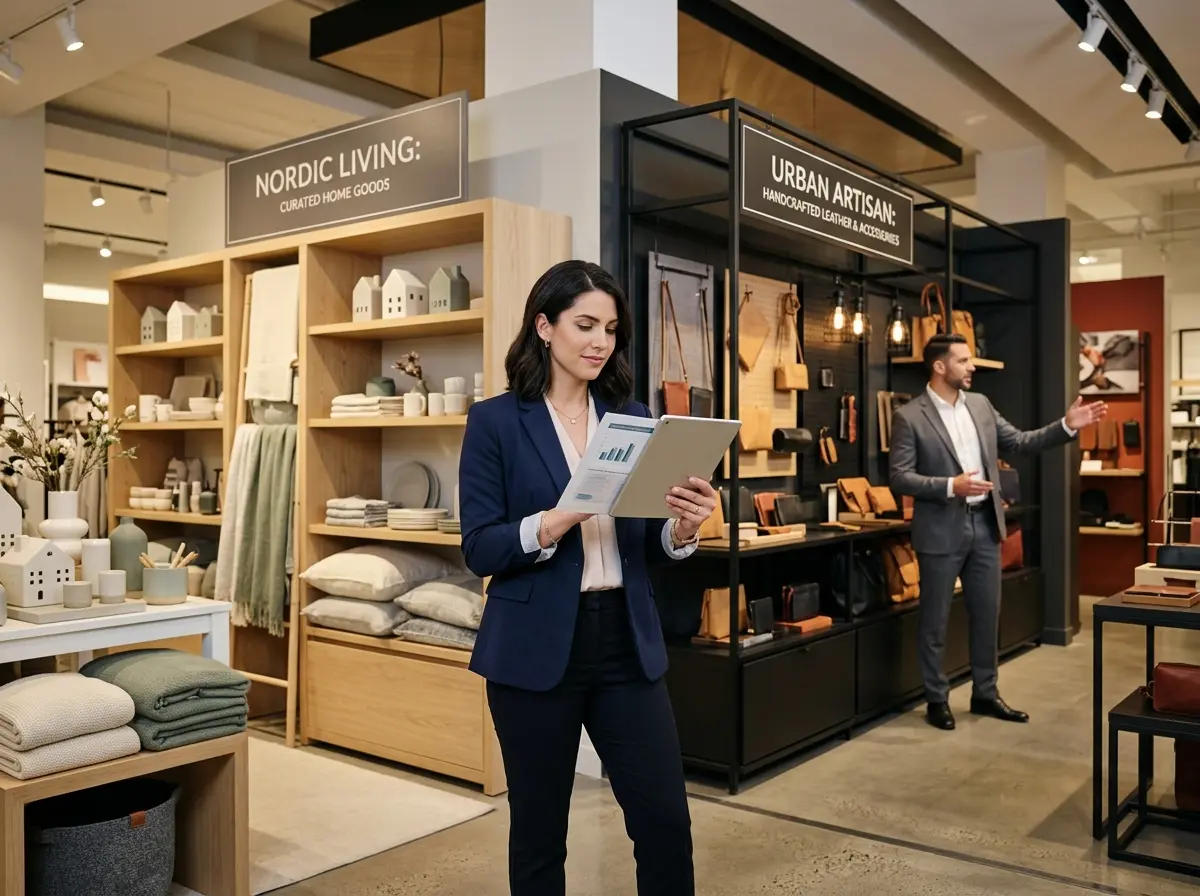
When two brands share a physical space, the biggest risk is customer confusion. If people can't quickly understand where one brand ends and another begins, or why both are in the same room, you've lost them before you've even had a chance to sell anything. Invest in clear visual branding for each zone — consistent signage, distinct color blocking, and intentional product arrangement go a long way toward making a shared space feel curated rather than cluttered.
Foot traffic flow matters enormously. The guest brand's section should ideally be positioned to enhance the customer journey through your primary space, not interrupt it. Think of it like a well-placed dessert menu — it shows up at the right moment and adds value to the experience rather than distracting from the main course.
Keeping Customers Informed — Without Overwhelming Your Staff
Here's a practical challenge that many business owners underestimate: when you introduce a partner brand into your space, your staff suddenly needs to know twice as much. Customers will ask your employees questions about the guest brand's products, prices, and promotions — and "I'm not sure, that's not really our thing" is not the answer that builds confidence or drives sales.
This is where Stella, the AI robot employee and phone receptionist, becomes genuinely useful. Stella can be stationed in your store to greet customers, answer questions about both your offerings and your partner brand's products, and proactively highlight any joint promotions — all without pulling your human staff away from what they're already doing. She also answers phone calls around the clock, which means customers calling in to ask about the collaboration, hours, or special events get accurate, helpful answers whether it's Tuesday afternoon or 11 PM on a Sunday. No missed calls, no outdated information, no "let me check with someone" limbo.
Promoting the Collaboration Effectively
Launch with Intention
A store-within-a-store collaboration is a marketing event, not just a spatial rearrangement. Treat the launch accordingly. Coordinate a joint announcement across both brands' social media channels, email lists, and local press contacts. Consider hosting an in-store launch event — even a modest one with light refreshments and an exclusive opening-day promotion — to generate early buzz and give customers a concrete reason to visit.
Cross-promotion is the entire point, so don't be shy about it. Feature your partner brand in your own marketing materials, and make sure they're doing the same for you. Each brand brings its own audience to the table, and the launch period is your best opportunity to make warm introductions between those two groups. Customers who discover you through a trusted partner are far more likely to convert than cold leads from a paid ad.
Keep the Momentum Going Long-Term
The launch buzz will fade — it always does — which means you need a plan for sustained engagement. Rotate joint promotions seasonally, create bundled offerings that span both brands, and look for natural calendar hooks like holidays, local events, or industry awareness months that give you an excuse to refresh the collaboration's visibility.
Regularly review performance data together. Which promotions drove the most traffic? Which products got the most questions? Are customers from one brand converting into customers of the other? This kind of shared intelligence helps both businesses make smarter decisions and reinforces the value of the partnership over time. A collaboration that stops communicating is one that's quietly heading toward an uncomfortable breakup — and nobody wants to have that conversation over shared square footage.
Knowing When to Evolve or Exit
Not every collaboration is meant to be permanent, and that's perfectly fine. Some partnerships are seasonal, some are experimental, and some simply run their natural course. The key is to evaluate honestly and exit gracefully when the time comes. If the partnership has stopped delivering measurable value for either party, acknowledge it, honor your agreement's exit terms, and move on without burning bridges. The business community is smaller than it looks, and today's concluded collaboration could become tomorrow's referral relationship.
Quick Reminder About Stella
Stella is an AI robot employee and phone receptionist that works inside your store as a friendly, human-sized kiosk and answers your business phone calls 24/7 — no breaks, no turnover, no bad days. She greets customers, promotes your offerings, answers questions, and keeps things running smoothly for just $99/month with no upfront hardware costs. Whether you're managing a store-within-a-store collaboration or simply trying to stay on top of daily operations, she's the kind of reliable presence that makes everything a little easier.
Conclusion: Share the Space, Grow the Pie
The store-within-a-store model works because it's built on a genuinely smart premise: two brands with overlapping audiences can create more value together than either one can alone. It's not a shortcut, and it's not a magic fix for slow foot traffic — but when executed thoughtfully, it's one of the most cost-effective growth strategies available to independent business owners.
Here's your action plan to get started:
- Identify two or three complementary local brands whose customers closely resemble your own ideal customer profile.
- Reach out with a clear, mutual-benefit pitch — lead with what's in it for them, not just you.
- Draft a simple written agreement covering space, revenue, promotion, and exit terms before anyone moves a single display shelf.
- Design the shared space intentionally — clarity and flow are non-negotiable.
- Plan a real launch that leverages both brands' audiences and creates genuine excitement.
- Review performance data regularly and keep the communication open, honest, and ongoing.
The best collaborations don't just divide a space — they multiply opportunity. Start the conversation with a potential partner this week. The worst they can say is no, and the best case scenario is a partnership that grows both businesses in ways you haven't yet imagined. That's a pretty good risk-to-reward ratio by anyone's math.