Introduction: The Wild West of Auto Shop Estimates
Picture this: A customer drops off their car for what they think is a simple brake job. Two hours later, you call them with a final bill that's $400 more than what was discussed at the counter. Now they're angry, you're frustrated, and your service advisor is somewhere hiding in the parts room. Sound familiar? You're not alone — and the problem almost certainly isn't your technicians' work. It's the estimate process, or more accurately, the lack of one.
Customer disputes are one of the most costly and reputation-damaging problems an auto shop can face. According to the Better Business Bureau, auto repair shops consistently rank among the top industries for consumer complaints — and a significant portion of those complaints come down to pricing disagreements that could have been avoided with a clear, formal written estimate process. The good news? This is entirely fixable, and it doesn't require reinventing the wheel (no pun intended).
In this post, we'll walk through why a formal written estimate process isn't just a "nice to have" — it's a business survival strategy — and how to build one that protects your shop, your customers, and your sanity.
Why Estimate Disputes Happen (And Why They're Costing You More Than You Think)
The Communication Gap Is Real
Most estimate disputes don't happen because a shop is dishonest. They happen because of the gap between what was said and what was heard. A service advisor says, "It'll probably run around $300, but we might find more issues once we get in there." The customer hears, "It'll be $300." That's it. That's the whole dispute. When the bill comes in at $520, the customer isn't just surprised — they feel misled, even if technically nothing inaccurate was communicated.
Verbal estimates are inherently unreliable. Memory is imperfect, stress distorts perception, and customers are often half-listening while juggling their phone and figuring out their ride situation. A formal written estimate eliminates the ambiguity. It creates a shared, documented reality that both parties can reference — before, during, and after the repair.
The Hidden Cost of "Handling It"
When a dispute does arise, the instinct for many shop owners is to just eat the cost and move on to avoid conflict. That sounds like customer service, but it's actually a slow financial bleed. Consider what a single disputed invoice really costs: the time your service advisor spends arguing or explaining, the potential discount you offer to keep the peace, the negative online review that still gets posted anyway, and the word-of-mouth damage from a customer who leaves unhappy. Studies suggest that acquiring a new customer costs five times more than retaining an existing one — and a single bad experience can cancel out years of good ones. A strong written estimate process is, quite literally, an investment in your bottom line.
Legal Exposure You Might Not Know About
Here's the part that tends to wake shop owners up quickly: many states have consumer protection laws that specifically regulate auto repair estimates. In California, for example, the Automotive Repair Act requires written estimates for repairs exceeding a certain dollar amount, and shops can face fines and license issues for non-compliance. Even in states with less stringent requirements, a documented estimate process is your best defense if a dispute ever escalates to a chargeback, small claims court, or a licensing board complaint. When a customer disputes a charge with their credit card company, written authorization from the customer is often the difference between winning and losing that chargeback — and losing chargebacks costs you the money and the merchandise.
How Stella Can Support a Smoother Customer Experience at Your Shop
First Impressions and Information Gathering Before the Estimate Even Starts
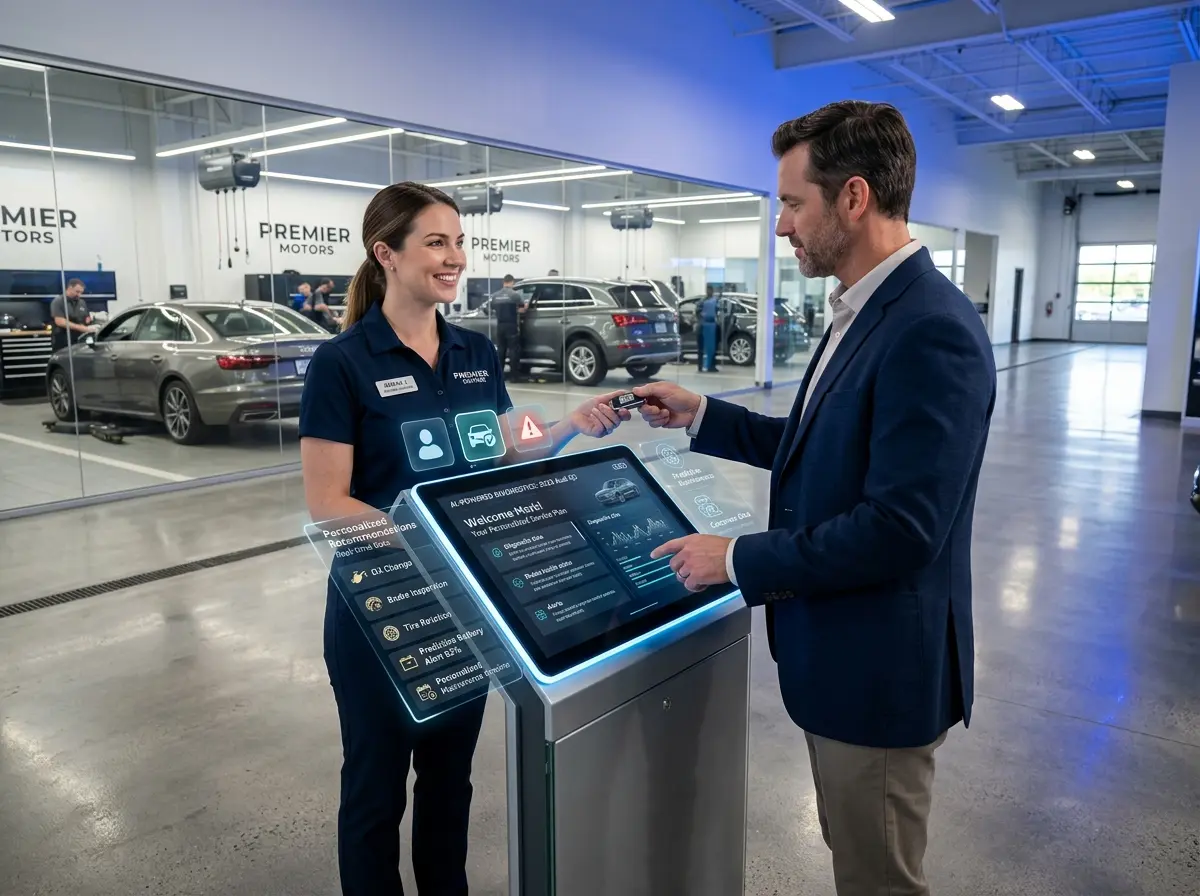
A clean estimate process starts before anyone picks up a wrench — it starts the moment a customer contacts your shop. Stella, the AI robot employee and phone receptionist, can answer incoming calls 24/7, greet walk-in customers at your front counter, and collect preliminary intake information through conversational forms — before your service advisor is even involved. That means when a customer calls after hours to ask about a noise their car is making, Stella can capture their name, contact information, vehicle details, and a description of the issue, and push a summary straight to your manager's phone. By the time your team opens the next morning, they already know who's coming in and why.
Stella's built-in CRM also stores that customer data with notes, tags, and AI-generated profiles — so if that same customer calls back two weeks later, your team isn't starting from scratch. It's the kind of organized, professional front-end experience that naturally sets the tone for a transparent, well-documented service process throughout.
Building a Formal Written Estimate Process That Actually Works
The Non-Negotiable Elements of a Strong Written Estimate
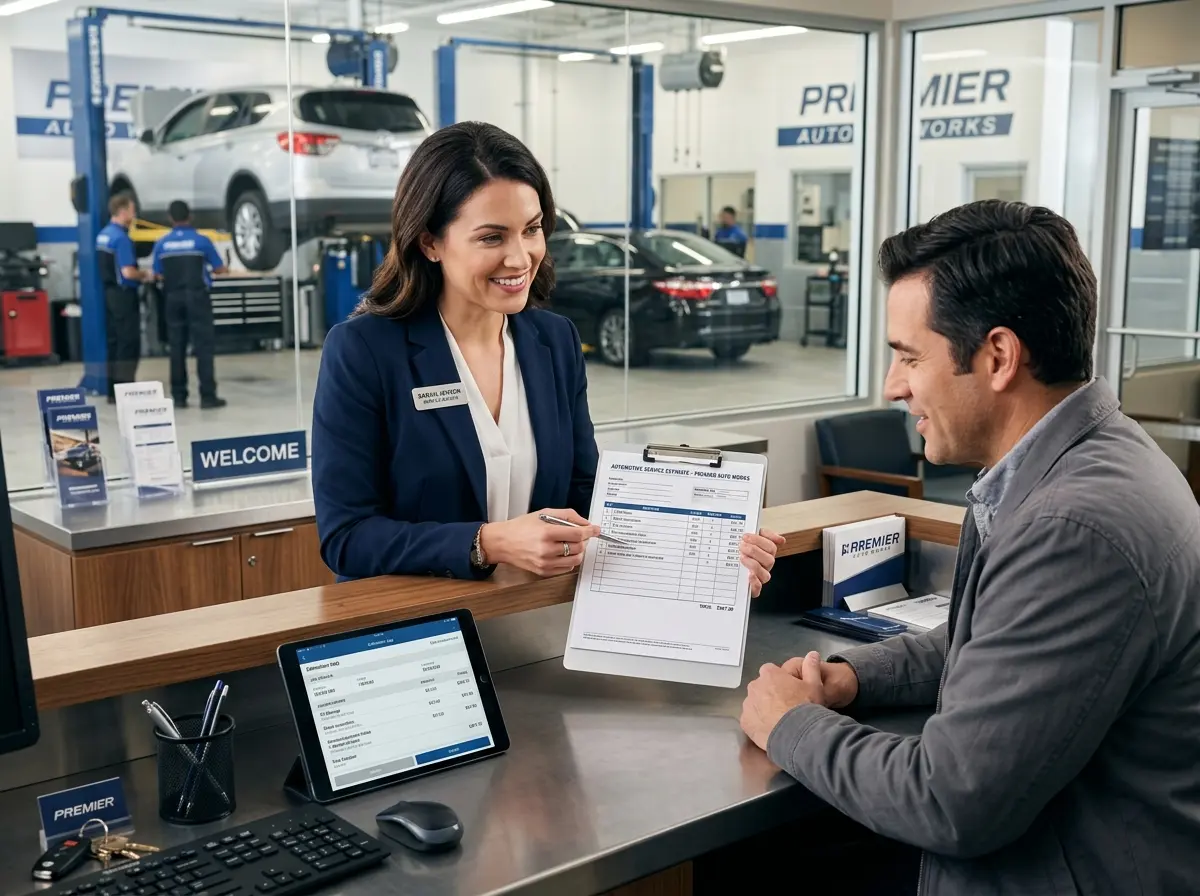
Not all written estimates are created equal. A scribbled number on a work order doesn't protect you nearly as well as a properly structured estimate document. At minimum, every written estimate at your shop should include the customer's full name and contact information, the vehicle's year, make, model, and VIN, a clear description of the work to be performed, an itemized breakdown of parts and labor costs, the estimated completion time, and — critically — a line for the customer's signature authorizing the work to proceed.
That authorization signature is your golden ticket. It transforms the estimate from a suggestion into a contract. It also changes the psychological dynamic: when a customer signs something, they've acknowledged and agreed to the terms. That simple act dramatically reduces the likelihood that they'll dispute the price later, because they've already made a conscious, documented decision.
Handling Scope Changes Mid-Repair Without Blowing Up the Relationship
One of the most common sources of estimate disputes isn't the original quote — it's the unexpected work discovered mid-repair. Your technician pulls the wheel off and finds a caliper that needs replacing too. Now what? The answer is a documented change order process, and it needs to be as formal as the original estimate.
When additional work is identified, your policy should be to pause, call the customer, clearly explain what was found and why it needs to be addressed, provide a revised cost, and get verbal authorization followed by written confirmation — whether that's a signed supplemental estimate, an email confirmation, or even a text message thread you keep on file. Some shop management software systems allow customers to approve additional work digitally in real time, which is a game-changer for both efficiency and documentation. The key principle is simple: no new work without documented authorization, full stop. Build this into your culture and train every service advisor on it without exception.
Training Your Team and Making It Stick
Processes only work if people follow them, and in a busy shop, shortcuts happen. The best way to ensure consistency is to make the estimate process so systematized that skipping steps feels harder than following them. Build estimate templates directly into your shop management software. Create a checklist that service advisors complete before any vehicle is dispatched to the tech bay. Conduct brief monthly reviews of any jobs that resulted in customer complaints or discounts, and trace them back to the estimate stage to identify where the process broke down.
Role-playing customer conversations in staff meetings might feel silly, but it works. Practice how to explain an estimate line by line, how to present unexpected findings with confidence, and how to respond when a customer pushes back on price. Confidence and clarity in those moments go a long way toward defusing tension before it escalates into a dispute.
Quick Reminder About Stella
Stella is an AI robot employee and phone receptionist that greets customers in-store at a kiosk, answers phone calls around the clock, collects intake information, manages customer contacts through a built-in CRM, and keeps your front-end operations running professionally — all for just $99/month with no upfront hardware costs. She's the kind of employee who never calls in sick and never forgets to capture a customer's contact information before they walk out the door.
Conclusion: Stop Winging It — Start Documenting It
The auto repair industry runs on trust, and trust is built through transparency. A formal written estimate process is one of the simplest, highest-leverage changes you can make to your shop's operations — and yet so many shops are still running on handshakes and verbal agreements and then wondering why their reviews include phrases like "felt blindsided by the final bill."
Here are your actionable next steps to get started today:
- Audit your current process. Pull five recent invoices and check whether each one had a signed written estimate attached. That number will tell you everything you need to know about where you stand.
- Create or upgrade your estimate template. Make sure it includes all the non-negotiable elements outlined above — itemized parts, labor, customer signature, and authorization language.
- Build a change order policy. Document it, train your team on it, and make it a non-negotiable standard operating procedure.
- Evaluate your shop management software. If your current system doesn't support digital estimate approvals and customer communication logs, it might be time for an upgrade.
- Professionalize your front-end customer experience. First impressions shape customer expectations. Tools like Stella can help ensure that every customer interaction — from the first phone call to the walk-in greeting — is handled professionally and with the right information captured from the start.
The shops that win in today's competitive market aren't just the ones with the best technicians — they're the ones with the most professional, transparent, and consistent customer experience from start to finish. Your estimate process is the foundation of that experience. Build it right, and the disputes will be few. Build it poorly, and, well — enjoy the drama.