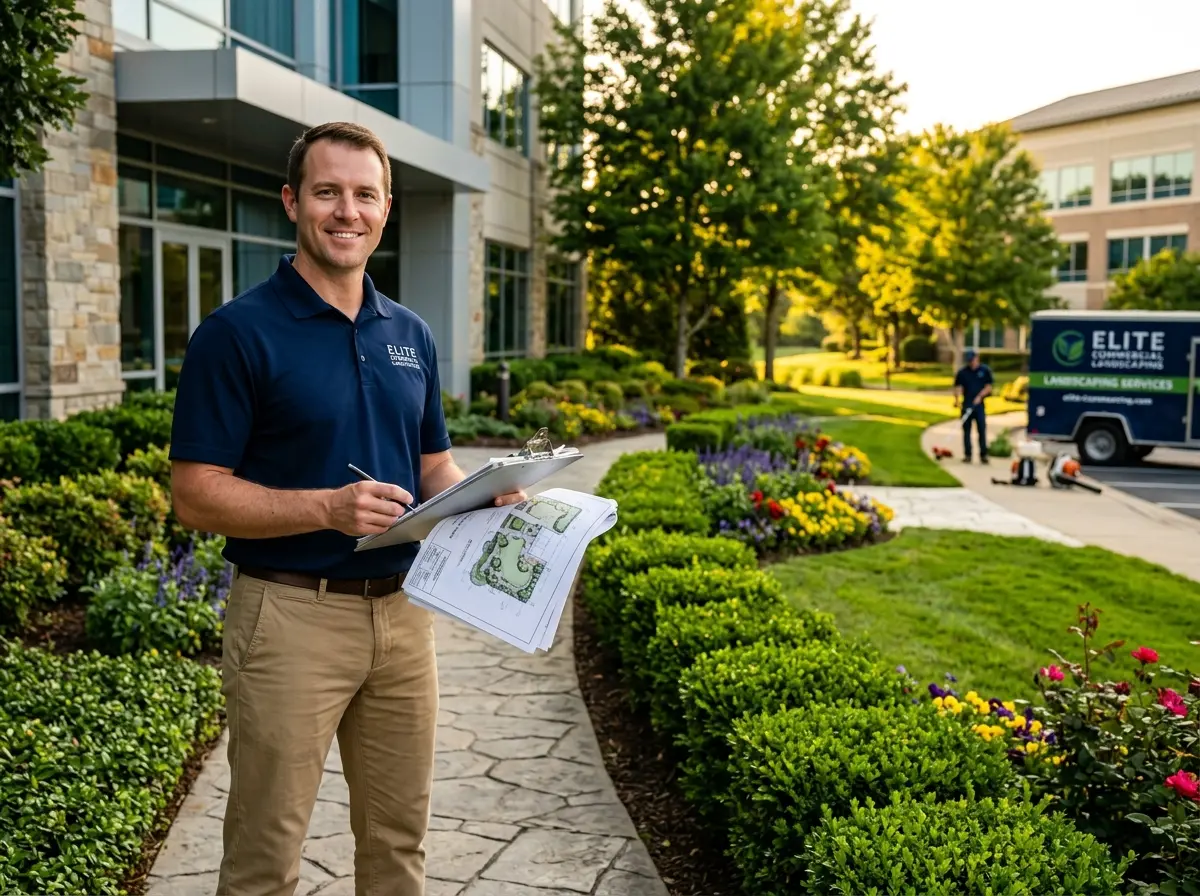
So You Want to Land Commercial Contracts? Let's Talk.
You've been mowing residential lawns for years. You know your equipment, your crew is solid, and your work looks great. But somewhere along the way, you started eyeing those sprawling office parks, retail plazas, and apartment complexes — and thinking, "We could handle that." You're probably right. You probably could. The question isn't whether you're capable. The question is whether you know how to convince a facilities manager, property management company, or HOA board of that fact before your competitor does.
Commercial landscaping contracts are the holy grail for growing landscape businesses. They offer predictable recurring revenue, larger job sizes, and long-term relationships that can anchor your entire operation. But winning them requires more than a good-looking trailer wrap and a firm handshake. It requires strategy, professionalism, and a clear understanding of what commercial clients actually want — which, spoiler alert, is reliability, communication, and documentation. Not just pretty flowers.
This guide breaks down exactly how to position your landscaping company to win commercial contracts, keep them, and build a reputation that generates even more. Let's get into it.
Positioning Your Business to Compete for Commercial Work
Before you send a single proposal, you need to make sure your business looks the part. Commercial clients aren't just buying a service — they're buying confidence. They need to trust that you won't disappear after the first snowstorm, miss a scheduled visit without notice, or send an uninsured crew onto their property. Getting your foundation right isn't glamorous, but it's non-negotiable.
Get Your Licensing, Insurance, and Certifications in Order
This might seem obvious, but you'd be surprised how many landscaping companies try to pitch commercial clients without the proper insurance coverage. Commercial property managers will ask for your Certificate of Insurance before they even consider your bid. At minimum, you'll need general liability insurance — typically $1 million per occurrence and $2 million aggregate is the baseline expectation — and if you have employees, workers' compensation is non-negotiable.
Beyond insurance, relevant certifications signal professionalism and expertise. Consider pursuing certifications through the National Association of Landscape Professionals (NALP), or if you offer irrigation services, the Irrigation Association's Certified Irrigation Technician (CIT) designation carries real weight. In states with pesticide application requirements, make sure your licensing is current and visible in your proposals. These credentials aren't just paperwork — they're competitive differentiators.
Build a Commercial-Ready Portfolio and Brand Presence
Your residential portfolio won't close commercial deals on its own. Decision-makers at property management companies want to see that you've handled properties of comparable scope and complexity. If you're transitioning from residential to commercial, consider taking on a few smaller commercial accounts — a small medical office complex, a neighborhood retail strip, a community HOA — to build relevant experience and photography you can actually use.
Your website, email address, and printed materials also need to look professional. A Gmail address and a Facebook page built in 2016 aren't going to cut it when you're competing against established commercial landscaping firms. Invest in a clean website, branded proposals, and a professional email domain. First impressions matter enormously, and in commercial landscaping, you rarely get a second chance to make one.
Streamlining Client Communication Before and After the Sale
Here's something commercial clients value above almost everything else: responsiveness. Property managers are juggling dozens of vendors, dozens of properties, and a constant stream of tenant complaints. When they call your company with a question or a service issue, they need an answer — and they need it fast. Missing calls, slow follow-ups, or vague voicemail boxes are guaranteed ways to lose a contract you already have, let alone win a new one.
Never Miss a Call — Even When You're on a Job Site
This is where a lot of landscaping companies quietly bleed opportunity. The owner is running equipment. The office manager is handling invoices. The phone rings, nobody answers, and the property manager you've been trying to land for six months calls your competitor instead. It's a brutal and completely preventable problem.
Stella, the AI robot employee and phone receptionist, was built precisely for situations like this. She answers every inbound call 24/7 with the same knowledge your best team member would have, handles questions about your services, schedules callbacks, and collects caller information through conversational intake forms so no lead ever slips through the cracks. Her built-in CRM lets you track every prospect and client interaction, add custom tags and notes, and review AI-generated contact profiles — all without hiring a dedicated office staff. For a landscaping company trying to project professionalism and land bigger clients, Stella at $99/month is frankly a no-brainer.
Writing Proposals That Actually Win Contracts
The proposal is where commercial contracts are won or lost. A weak proposal — even from a highly qualified company — will lose to a polished one almost every time. Commercial decision-makers are evaluating multiple bids, and your proposal needs to communicate not just your price, but your professionalism, your process, and your understanding of their specific needs.
Customize Every Proposal for the Specific Property
Generic proposals are a fast track to the recycling bin. Before you write a single line, walk the property. Photograph it. Note the turf conditions, the irrigation system, the hardscape, the seasonal planting areas, and any visible maintenance challenges. Then write a proposal that demonstrates you actually paid attention.
Reference the specific property in your scope of work. Mention the existing landscape features by name. Outline your proposed maintenance schedule with specificity — not "regular mowing" but "mowing and edging every seven days from April through October, with a reduced schedule of bi-weekly service November through March." Commercial clients read proposals carefully, and specificity builds trust in a way that vague language simply cannot.
Price Strategically — and Explain Your Value
Underbidding to win commercial contracts is one of the most common — and most damaging — mistakes in the industry. Yes, price matters. But most experienced commercial property managers have been burned by the lowest bidder before, and they know what too-good-to-be-true looks like. According to NALP industry data, landscape maintenance contracts typically range from $0.03 to $0.10 per square foot of managed area depending on service scope and region. Know your market, know your costs, and price for profitability.
More importantly, use your proposal to justify your pricing. Include your certifications, your insurance summary, your equipment list, and testimonials from comparable commercial clients. If you offer a service guarantee or a dedicated account manager, say so explicitly. You're not just selling lawn care — you're selling peace of mind and professional accountability. Make that case clearly, and the right clients will pay for it.
Follow Up Like You Mean It
Submitting a proposal and waiting is not a strategy. Commercial clients are busy, decisions move slowly, and a well-timed follow-up call can be the difference between winning and being forgotten. Send a follow-up email within 48 hours of submission confirming they received your proposal and inviting questions. Follow up by phone one week later. If you don't hear back after two attempts, send one final message a week after that. Persistent professionalism signals that you're serious — and serious vendors win serious contracts.
Quick Reminder About Stella
Stella is an AI robot employee and phone receptionist who answers calls 24/7, collects lead information, manages your customer contacts through a built-in CRM, and keeps your business sounding professional even when you're elbow-deep in a job site. She runs on a simple $99/month subscription with no upfront hardware costs and is easy to set up. For landscaping companies serious about winning commercial clients, making sure every call gets answered is one of the easiest wins available.
Your Action Plan Starts Today
Winning commercial landscaping contracts isn't about luck — it's about preparation, presentation, and persistence. Here's where to focus your energy right now:
- Audit your credentials. Confirm your insurance coverage meets commercial minimums, and identify any certifications worth pursuing before your next bid season.
- Build a commercial portfolio. Take on one or two smaller commercial accounts specifically to generate photos, testimonials, and relevant experience.
- Professionalize your brand. Update your website, get a proper business email, and invest in branded proposal templates that reflect the quality of your work.
- Walk every property before you bid. Specificity in proposals wins contracts. Generic language loses them.
- Price for profit, not just to win. Know your numbers, explain your value, and don't race to the bottom.
- Fix your phone presence. Missing calls from prospective commercial clients is silent revenue loss. Solve it before it costs you a contract you never knew you were close to winning.
Commercial landscaping is a competitive market, but it rewards businesses that show up professionally, communicate reliably, and deliver exactly what they promise. The companies winning the big contracts aren't necessarily the most talented — they're often just the most prepared. Now you know what that looks like. Go get after it.